Part VII. Locations on Earth
Chapters 47–54. How to adapt general decisions to infrastructure, population and event size.
On Earth, external help is usually more accessible, but the number of dependent people and organizations can be much larger. The laboratory has a documented flow of materials; the hospital is obliged to continue treatment; settlement depends on transportation; the city is connected by networks to neighboring territories. These differences determine who to include in the decision and which consequences to examine first.
The chapters in this part can be read as a comparison of conditions. With the same report of illness, the hospital first distributes assistance, the transport team prepares the transfer, and the community checks the ability to receive support before the weather worsens. General cards are retained, but each local task receives its own executor, resources and clear result.
47 Laboratory, production, storage and transportation
Navigation: NAV · p. 003 · Contents: OGL · p. 010
Where does the loss of control test begin?
In a laboratory, production or storage environment, a signal could be an employee's illness, a packaging failure, a security failure, an recordkeeping discrepancy, or an unknown location of the material. The manager first finds out what kind of deviation was observed. Job security and material access control are related, but address different issues. The assessment must cover both directions within the powers of the participants [1, 7].
The team arranges for people to be assisted and, if safe to do so, stops associated non-essential activities. Trained personnel stop equipment according to local instructions. The examination of unknown material requires a separate risk assessment, appropriate capabilities and a validated procedure. An organizational review of an event does not give the employee permission to initiate such a review on their own.
Five parallel directions
1. The shift supervisor records the deviation: time of discovery, operations affected, and source of the report. He separates the observed fact from the suspected cause.
2. The medical officer in charge assesses the need for urgent care and possible exposure. Employees receive route P02 · p. 156 or P03 · p. 157; seeking help does not await disciplinary proceedings.
3. A safety specialist and an engineer check the protective functions and permissible mode of the object. They list operations that can continue and operations that are suspended.
4. The person responsible for materials and quality verifies the movement of batches, samples, equipment and waste. He names recipients and transactions for verification, separately noting yet unclear connections.
5. The authorized manager notifies the necessary services in accordance with the applicable procedure. He appoints those responsible for investigation, helping people, communication and restoration of work.

Figure 28. Complex with different operations and responsibilities
Laboratory work, production, storage, reception and dispatch require separate assessment and responsibility. Reconciliation of documents clarifies the boundaries of discrepancies; Amber accents do not indicate an identified hazard.
Figure 28 is useful to read as several areas of responsibility. Reception confirms that the item has actually been received; storage is responsible for the conditions of stay; work area - for a permitted operation; dispatch - for the agreed transfer. Between sites, the history and name of the next person in charge must be preserved. The transparent cut combines them into one building, but does not make their checks interchangeable.
How to restore material history
The team maintains records of process, maintenance, access and transfers along with source and time. By correcting the error, it leaves it possible to read the previous entry. Gathering information does not require entrusting an untrained person with carrying suspicious material or taking samples. Acceptable actions are determined by a qualified team.
In production, they check which batches and recipients are actually associated with the deviation. Authorized persons will organize temporary retention, recall and information, taking into account applicable regulations and supply implications. As the story becomes more precise, the scope of measures changes. The coincidence of release time does not establish the same danger of all [19] products.
Training analysis R2: Where is the container located
The organization Sever sent a sealed container to the organization Bereg. The copy of the log available to the sender contains no confirmation of receipt. Neither a breach of the casing nor exposure of people has been established. Two questions now need answers: where the container actually is and who is responsible for it. Its properties and further use will be assessed separately.
The sender could immediately declare it lost or simply resend the document. The first option is ahead of fact checking; the second leaves the same uncertainty. The person in charge chooses direct confirmation through the established channel. The recipient provides the actual location and names the person who accepted the task. The transfer control gap now disappears, although the container's suitability assessment has not yet been completed.
Upon reconciliation, it turns out that the sender opened an old copy of the journal. The actual recording existed, but was not included in his working picture. This explains the discrepancy between the documents. The manager saves both versions, the reconciliation time and the recipient's confirmation. The appointed specialist separately checks the grounds for further use of the container within his competence. Correction of a record does not translate into a conclusion about the content.
The team is also addressing a broader question: did the log flaw affect other programs? If yes, the check extends to them due to an recordkeeping error. If not, this reason to limit the scope of the inspection is also recorded. Later, in chapter 58, this case will serve as an example of correcting the procedure. A simple reminder to “read the documents carefully” will not explain why the old copy appeared to be valid.
Resumption of work
Before resumption, the recovery manager reviews the protective functions, the procedure, the training of people and the quality of the inspection performed. Outcome criteria and data limitations are determined prior to interpretation [31]. If a problem is corrected but the underlying cause remains, the plan must take into account the possibility of recurrence. The approval is specific to the specific operation and material.
The operation remains suspended if a significant common cause of failure has not been corrected, trained personnel are not available, or necessary controls are not available. Independent functions are considered separately: their continuation requires its own foundation. To check the barrier, use P04 · p. 158, to establish the cause - P06 · p. 160, for the decision on authorization - P13 · p. 167.
48 Hospital, long-term care and congregate living
Navigation: NAV · p. 003 · Contents: OGL · p. 010
The institution is obliged to continue assistance
The hospital must help the people associated with the new event and continue treating the remaining patients. A long-term care facility adds another responsibility: it is the permanent place of residence for its residents. Therefore, any protective measure is checked for compatibility with emergency care, usual treatment, nutrition, care and communication with loved ones. The urgency of care is determined by the person's condition, taking into account the estimated risk of transmission separately.
Standard precautions provide the basis for preventing infections in the care setting. Additional measures are selected taking into account the expected transmission route and circumstances [22, 23]. While the cause is unknown, the local medical team will set a temporary order and reasons for its revision. The engineer checks the suitability of the premises and air systems [15]. The name of the new zone must correspond to its real capabilities.
Local responsibility
1. The senior clinician organizes the urgency assessment and initial care. For each person in need, he determines a responsible doctor, a place of assistance and supervision. If it gets worse, the team immediately moves to P02 · p. 156.
2. The infection preventionist suggests an order of interactions and flows based on the current working hypothesis. Staff receive clear instructions for patients, visitors and specific procedures.
3. The engineer and operations check whether the selected premises are suitable for the task. They communicate the limitations and resources needed; critical systems are changed only in a prescribed manner.
4. The facility coordinator provides people and supplies. Before expanding a new direction, he checks who will continue the remaining vital functions.
5. The person responsible for the transfer coordinates movements within the institution and between organizations. The receiving team receives the necessary information and confirms readiness.
Disagreements between specialists need to be translated into a specific issue. For example, a doctor explains the need for additional care space, and an engineer explains why the selected room is not suitable for the planned task. The leader decides on another location, resource or route. Administrative renaming of a premises does not change its technical capabilities.
How to maintain your usual support
A person with dementia, hearing loss, limited mobility or ongoing support needs may find it difficult to adjust to a new location. The team prepares in advance a clear explanation, assistance with movement and the necessary support. The possibility of the presence of an accompanying person is assessed according to the circumstances and available protection. If visits are limited, the person is provided with a working connection and the measure [12] is revised.
Staff should know who to report symptoms, possible exposure, and shortages. The manager plans replacement taking into account qualifications and actual workload. Before transferring an employee to another department, the transfer of tasks and possible event connections are checked. The mere presence of a surname in the new schedule does not mean that the vacated duty has been accepted by someone.
Case Study R3: Free Room and Available Help
People connected by a common place of stay are admitted to the district hospital. One needs urgent assessment; the other's condition is still stable. The possibility of a common cause is investigated and other patients continue to receive usual care. The manager is offered to use an additional ward. There is space on the building plan, but a trained team is already providing care for dependent patients.
Two options are being discussed. You can quickly expand admissions within the hospital by redistributing staff. You can maintain the current workload and agree on external support or transfer of some patients. The first option seems faster, until it is taken into account what kind of help will be left without the person responsible. The second will require coordination and time; it cannot be considered available until confirmed by the receiving party. Both options are assessed along with people's clinical urgency.
The coordinator asks the senior clinician to name the necessary support functions, and the heads of departments to confirm the performers. This way it becomes clear which responsibilities can be transferred, which require strengthening and which cannot yet be removed from the working team. The engineer simultaneously checks the suitability of the chamber. The decision to expand is made only within the limits of the capabilities actually provided; support is requested for the missing part and a different route is agreed upon.
Then new information emerges that requires testing the original explanation for one patient's condition. This changes his clinical plan, but does not change the hospital's responsibilities to others. The coordinator maintains separate records of treatment, possible case connections and department provision. All three directions are transferred to the next shift so that a change in diagnosis does not lose the unresolved supply or care task.
Success in this case is visible in the person: he received the appropriate help, and the necessary care for another patient continued. The number of beds prepared does not in itself show this. As the hospital returns to normal operations, it will also review pent-up needs; this stage is discussed in chapter 57.

Figure 29. Hospital and long-term care: care must continue
On the left is a hospital admission and ongoing routine care; on the right is long-term care living space, mobility support, nutrition and connection with loved ones. The new assessment task must retain the necessary help functions.
Figure 29 compares two purposes served by a space. Hospital intake helps assess the urgency and choose where to treat. In long-term care, a person continues to live, eat, move around and communicate. When a new measure is introduced, it is useful to mentally go through the day with him: who will help carry out the usual actions and which service is responsible for each gap that arises?
Several different termination decisions
Clinical discharge, termination of individual restrictions, opening of the premises and closure of the incident are justified separately. The discharged person is given a continuation plan, clear instructions, and a contact for questions. The authorized manager authorizes the use of the premises after the necessary checks. authorization is issued through P13 · p. 167, and deferred assistance and remaining needs are included in the plan P14 · p. 168.
49 Village, island, expedition and remote settlement
Navigation: NAV · p. 003 · Contents: OGL · p. 010
Distance changes the organization of care
In a remote location, it is important whether the resource can be used on time. This is affected by weather, transport, communications, the arrival of specialists and the ability of the local team to continue working. If one person juggles several responsibilities, his illness can immediately disrupt care, supplies and management. Such dependencies are clarified in advance and a replacement is prepared in case of delay in external support.
The WHO emergency risk management framework includes community preparedness, health resilience and service collaboration [37]. For a settlement, this means an early division of tasks: what the team is capable of doing now and what already requires an external participant. Volunteers are assigned work within the limits of their training.

Figure 30. Remote settlement and help window
Remote river community: local team, aid station, communications, resources and dock support assistance when external transport availability is limited. Weather and distance affect its organization.
In Figure 30, the connection between the pier, the aid station and the supplies is important. The arrival of transport gives results only when the cargo is accepted, delivered and available to those who need it. For a person, the path of help can begin at home and end far beyond the boundaries of the settlement. This entire sequence should be checked, including feedback from the recipient.
First organizational actions
1. The local manager and deputy contact the medical and territorial services. They tell participants who makes decisions when a connection is lost and where the current record of events is located.
2. A medical professional or available care dispatcher assesses the urgency of people's conditions. For a critical event, a specific route is determined, even if the cause of the event has not yet been established.
3. The Supply Coordinator checks critical inventory, flow and delivery. In the request, he specifies what is required, where to deliver it, who will accept it, and what will happen if there is a delay.
4. The transport coordinator checks the possibility of people being removed and help arriving. He confirms the crew, the route and the receiving organization, and also finds out under what conditions transportation will become unavailable.
5. The resident support person identifies those who need ongoing medications, nursing care, translation, or assistance with information. These needs include supply and distribution of responsibilities.
Simple records and trust
The local team selects a record that can be maintained even under heavy load: event, time, person responsible, action completed, and unmet need. If there is no network, the agreed offline method is used. When the connection is restored, the records are verified by source and time so that the re-received message does not become the second case in the record.
In a small settlement, a person can be identified by several details even without publishing his name. Therefore, in a public message they leave information necessary for protection and assistance. An authorized representative explains what is known, acknowledges gaps, and provides a time for the next update. The choice of measures takes into account the ability of people to seek help, the consequences of restrictions and the necessary support [12, 13].
Educational analysis R4: Kedrovoe is waiting for help
In the fictional Kedrovoye, there is only one medical worker. Several cases of illness have been reported; the connection between them has not yet been established. At the same time, the carrier warns about deteriorating route availability. There are people in the settlement who, regardless of the new event, need constant medicine and care. The team's task is to maintain assistance until the next reliable message about transport.
The first suggestion is to wait for the reason to be clarified and then send a single request. The second is to confirm medical urgency, routine supply requirements, and possible transportation now. Waiting may reduce the number of clarifications, but leaves weather dependence unanswered. The team chooses the second order. The medical worker conveys clinical questions, the supply coordinator conveys a specific list of needs, and the transport representative conveys a request for available route options.
The carrier's response does not yet equate to confirmed acceptance of the patient. Therefore, the coordinator separately contacts the receiving organization, reports the necessary assistance and checks its readiness. At the same time, he finds out who will accept the cargo in Kedrovoye if the delivery takes place. Missing confirmations remain open journal entries even after the email has already been sent.
Weather changes the availability of the original route. The team checks the new option against the current state of people and supplies. If the previous plan can no longer be carried out, the manager informs all participants in the transition and requests a decision for a specific shortage: medical support, transportation, replacement or supplies. It does not turn the lack of transport into a medical conclusion that the wait is acceptable.
Once support is confirmed, the local team checks to see if it has reached people. Delivery of routine medications and care may require a separate provider while the health care provider is occupied with a new event. Kedrovoye completes the next stage with a well-known plan of care and remaining questions about the cause of the ailment. These questions continue to be tested without stopping ordinary life.
When to bring in external help and how to delegate remaining tasks
The basis for external assistance is a specific lack of capacity: the team cannot provide the necessary surveillance, care, communications or supplies. This need is communicated without waiting for mass disease. If control or resources fail, use P12 · p. 166, when expanding the event - P11 · p. 165.
Before lifting measures, medical reasons and the availability of necessary services are checked. The returning transport must still provide delivery and care. The absence of messages is assessed taking into account the communication performance. By P14 · p. 168 is assigned a contact for monitoring and support, and local residents are included in the analysis of the implementation of instructions.
50 School, workplace and public event
Navigation: NAV · p. 003 · Contents: OGL · p. 010
General assessment and miscellaneous responsibilities
School, workplace and event bring people together for a certain activity, after which they disperse. But the responsibilities to the child, employee and visitor are different. The team considers length of stay, interactions, access to care, and the impact of job changes. The number of people present alone is not enough to select a measure.
The WHO Mass Event Tool helps map hazards, conditions, risk mitigation measures and preparedness to respond [40]. It asks questions to evaluate a specific event. The decision to cancel is made by the authorized team, taking into account the circumstances; This tool does not set a general numerical threshold for any meetings. The school and employer also check applicable local requirements.
General procedure
1. The manager or organizer checks the signal, appoints a person responsible for communication with services and his deputy. Participants are informed who is hosting the event.
2. A health worker or called service assesses people's urgency and arranges help. Medical information is retained within the required circle of participants.
3. The security officer and the operations department check the premises and routes. Proposed changes must maintain fire safety, rescue access and environmental suitability.
4. The manager and the competent sanitary service determine temporary measures. For each, the purpose, activities affected, resources, and basis for revision are identified.
5. The communications coordinator explains to participants where to get help, schedule changes, and where to report errors in information received.
Features of the three places
At school, an adult is responsible for the child until the agreed release to an authorized chaperone or medical team. The plan takes into account nutrition, medications, mobility support, and accessible explanation. When activities change, determine how instruction and necessary support will continue. Parents receive the guidance they need without sharing other children's personal medical information.
The workplace reviews tasks and connections between shifts, contractors, transportation, and common areas. The employer explains how to report problems and ensures that protective measures are in place. Absence pay, replacement and support are determined by applicable law and the organization's terms and conditions. If there are not enough people to work, the person in charge conveys to the manager the specific shortage and its consequences.
For a mass event, stopping a program requires its own plan. The organizer will coordinate exit, transport and assistance, including support for people with mobility difficulties. The security service checks the availability of routes and their capacity. Ads should help people complete the plan; Unauthorized blocking of exits is unacceptable.
In the training example, the general impact message refers to one room of the complex. The coordinator provides assistance and checks what activities link this room to others. Based on the data received, the authorized team determines the scope of temporary changes. When expanding a measure, it must explain what new relationship changed the original estimate.

Figure 31. Three meeting places - three different responsibilities
From left to right: school - the child remains with an adult until the agreed transfer; work - communication between the employee and the manager and available help; the event is an accessible outlet with support for a participant with limited mobility.
Continue or cancel
New information about the disease population or mechanism, lack of care, and the inability to implement agreed measures require reconsideration. Before resumption, the manager confirms the specific conditions and readiness of the personnel. Families, staff and visitors are explained what has changed. The main routes are P01 · p. 155, P02 · p. 156, P11 · p. 165 and P13 · p. 167; Providing for people under restrictions is discussed in Chapter 19.
51 Train, ship, plane, airport and port
Navigation: NAV · p. 003 · Contents: OGL · p. 010
Moving object and receiving area
During an event in transport, the operator, crew, medical service, terminal owner and authorities at the place of arrival interact. They need a designated coordinator so that assistance is not interrupted at the boundary of authority. WHO guidelines for ships and air transport provide for agreement on assessment and response between participants [38, 39].
The vehicle commander makes decisions within the limits of his authority and traffic rules. The medical assessment is carried out by an available qualified service, if necessary through an established remote consultation channel. Sanitary decisions are consistent with the safety of flight, navigation or train movement and with the operating instructions of the operator.
Miscellaneous restrictions
Place | Significant limitation | What needs to be agreed upon in advance |
airplane | Limited in-flight assistance options; decisions are related to flight safety | Communication channel for crew and ground services; procedure for admission by the medical team |
Vessel | Duration of transition; dependence on port reserves and capabilities | Available assistance on board, supplies, coordinated reception and transfer of patients |
Train | Relationship between the route and the infrastructure and capabilities of stations | Place of organized meeting of services, access to the carriage and transfer of responsibility |
Airport or port | Large flows of people, transfers and distribution in different directions | Service Coordinator, Waiting Assistance and Traceable Communications |

Figure 32. Board, path and host place
From left to right, top to bottom: confined space of the aircraft; living environment of the vessel; train at the agreed meeting place; waiting and support in the terminal. Space constraints and people's needs determine the organization of care.
Event Actions
1. The crew accepts the message and provides available assistance within the limits of preparation. The responsible commander is relayed information about the urgency of the condition and the observed circumstances.
2. The commander notifies the operator and the necessary services through the established channel. The point of arrival should learn about the need for assistance and possible exposure before transferring people.
3. The medical coordinator will agree on the receiving team, the meeting location and the course of action if the condition worsens. He verifies that the help offered is actually available.
4. The operator and the competent service clarify the necessary information about the route and participants. Data is transferred to authorized recipients for a specific purpose in compliance with information security rules.
5. The arrival coordinator confirms readiness and conducts the handover. Their further routes are explained to the patient, accompanying persons and other travelers. Material objects are transferred separately.
Waiting also requires support
During delays, people need water, food, toilets, regular medications and connection with loved ones. The coordinator takes into account unaccompanied children, people with disabilities, the need for transfer and continued treatment. In the announcement, he explains the current procedure and timing of the new message while maintaining medical confidentiality.
In the training example, the receiving site reports that the agreed upon medical care has become unavailable. The operator, commander and medical coordinator check for another valid arrival option. Until it is agreed upon, an open task with a responsible person remains in the journal. A departmental dispute does not relieve the obligation to continue helping people on the move.
Completion of the transport part
For international movements, those responsible will check the current national regulations and the applicable edition of the International Health Regulations [14]. 2016 Guides help organize collaboration in your field; legal requirements are checked against valid documents.
Transfer of the patient, release of luggage, further use of transport and termination of individual restrictions are formalized by separate decisions. An authorized person will allow a re-flight after the necessary checks. The remaining observation is transmitted via P14 · p. 168, urgent assistance is provided by P02 · p. 156, resource shortage - according to P12 · p. 166.
52 City, water, food chains and connected networks
Navigation: NAV · p. 003 · Contents: OGL · p. 010
City boundary is not equal to impact boundary
The city is connected to other areas by water, food supplies, transport, jobs, medical care and waste removal. Therefore, one signal may relate to a separate party or network node, and events in different areas may have a common dependence. Analysts check actual connections. The administrative map helps distribute powers, but does not in itself explain distribution.
The city team takes on tasks that exceed the capabilities of a single facility: interaction of services, distribution of scarce resources, conservation of assistance and information to residents. These functions include surveillance, communication, and coordination of medical capabilities [10]. The general order in the book is given by U0 · p. 169 and P11 · p. 165.
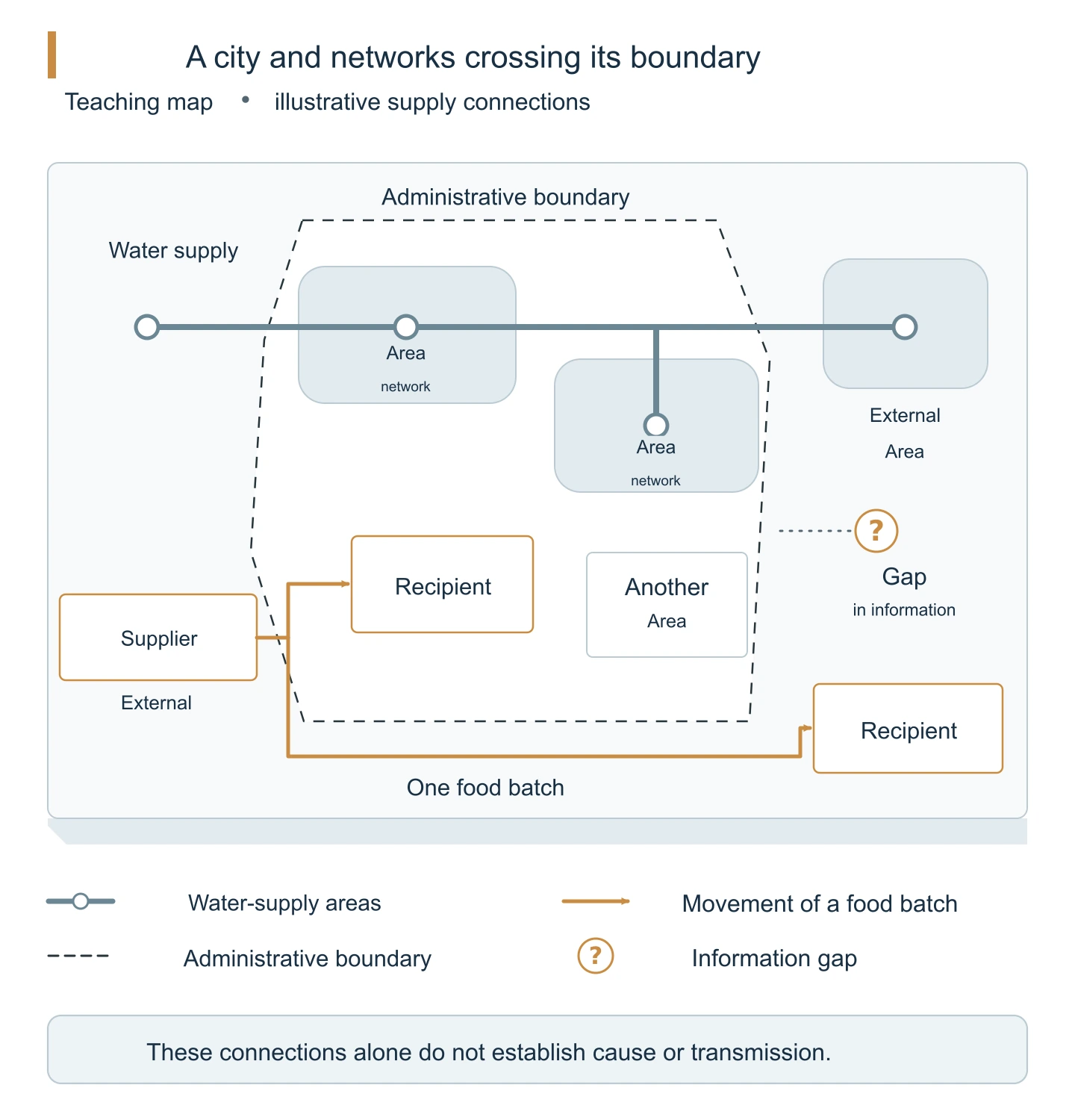
Figure 33. The city and the networks that cross its borders
A conventional map divides the administrative border, the sections of the network served and the movement of a specific food batch. Highlights follow the connections shown; the knowledge gap remains unknown. The diagram does not confirm real distribution.
The work procedure of the city team
1. The Analytical Manager consolidates messages with source, timing, and degree of confirmation. He distinguishes between observations, assumptions and missing information, and also identifies duplicate entries.
2. Network operators show real connections and service limitations. They explain who is dependent on the intended source and who will be affected by the proposed measure.
3. The medical coordinator checks the workload and availability of care. He maintains emergency treatment routes and routinely needed care during an investigation.
4. The Supply and Social Support Coordinator will arrange for replacement of limited services. Residents must have a feasible way to meet basic needs.
5. The authorized manager makes an interim decision and orders a review. He indicates the action, the person in charge, the territory and the confirmed security.
Water supply and food connections
The water safety plan links supply risk assessment to supplier and supervisory performance [42]. In the event of an event, the operator and the competent services clarify the affected part of the system and the permissible use of water. Residents are explained specific actions and available alternatives. For unknown contamination, one home treatment method cannot be considered suitable in advance; The system mode is changed by specialists.
In the food chain, the manufacturer, batch, transportation, storage and recipients are checked. Established communication with the party helps determine the scope of measures. Operators and authorities will agree to withhold, withdraw, notify and restore supplies as appropriate. If necessary, veterinary and environmental services are involved as part of the “One Health” interaction [18].
Educational analysis R5: Two regions and one version online
In the educational city, reports of illness came from two districts. An explanation through water has appeared online, but there is no initial evidence of this connection yet. The hospital and residential buildings continue to need supplies. The city team assigns message review, medical needs assessment and network operator contact.
A broad measure for both areas and a more limited measure testing specific links are being discussed. The choice cannot be made only by the number of messages: it is not known how many independent observations there are behind them. The analyst checks the sources and time, the medical coordinator clarifies the need for help, the operator reports the real boundaries of service. If a competent assessment requires an immediate protective measure, it is introduced with an indication of the basis and security, leaving the question of the reason open.
The check shows that some of the messages from the same area are repeated transmissions from the same source. Independent observations remain in another area. This changes the pattern of appeals, but does not yet establish the waterway of exposure. The team corrects the number of messages and clarifies where further evaluation is required. The decision about a specific section of the network is based on profile data, and medical care for people continues based on their condition.
The public update explains what exactly has changed: some messages appeared to be duplicates; for others, verification continues. If the scope of the measure is revised, the new action and the reason for the change are named. Residents receive one valid source of updates. Acknowledging a correction preserves the ability to check the progress of a decision and helps distinguish new information from hearsay.
The coordinator separately checks the consequences of current restrictions. Has the hospital received the supplies it needs? Is a replacement available for people who have difficulty getting to the pickup location? Is help lost in houses on the border of the service area? These responses determine the feasibility of the measure. Even if the cause of the event is not yet clear, the team can correct a specific security failure.
Checking the result
The city summary should show the outcome for residents: whether water, medicine, assistance, and verifiable updates are available. To do this, those in charge confirm execution on site. Before the final assessment, the team determines what data is needed and how detailed it should reflect the situation for the decision [31] to be made.
Measures are reviewed by function and area. A single node fix is evaluated along with its dependencies; confirmed independence may allow the removal of unnecessary restrictions. For authorization, P13 · p. 167 is used, for remaining needs - P14 · p. 168. Loss of a critical service requires P12 · p. 166 even when no new cases have been identified.
53 Region, country and international interaction
Navigation: NAV · p. 003 · Contents: OGL · p. 010
Common goal under different conditions
The region and the country coordinate the work of the territories, provide rare resources and organize external interaction. Local teams implement decisions in their own conditions. The overall goal must take into account the different capabilities of medicine, transport and facilities. Therefore, the on-site manager reports what exactly is preventing implementation; the central level decides whether to support or change the task.
The overall summary differentiates between reports, confirmed cases, calls for help and people under surveillance. The Think Tank publishes the definitions used and notes changes to them. If the new formulation changes the numbers, the limits of comparison with the previous summary are explained nearby. The disagreement among experts is retained as a specific issue for further consideration.

Figure 34. One country, different opportunities for help
Conditional geography compares different possibilities of transport, communication and assistance. Shared goals require achievable local goals and committed teams; the image does not represent actual national boundaries or the distribution of resources.
Task distribution
1. The regional or national leader sets overall goals and authority. He determines what the center decides, what is left to local teams, and how conflicts are resolved.
2. The Risk Assessment Center collates data from areas and industries. Management gets a picture of sources, gaps and possible next steps.
3. The Mutual Aid Coordinator checks the capabilities of dispatched teams and equipment. The recipient confirms the need, location, supplies and working conditions.
4. Those responsible for international relations send notifications and requests through established channels. For each significant message, the addressee and confirmation of receipt are stored.
5. The Public Communications Coordinator explains current measures, available assistance and assessment changes. He communicates the grounds and procedure for the next review.
International obligations
For international notification, the state assesses the event according to the scheme of Annex 2 IHR (International Health Regulations). If the event is notifiable, Article 6 provides for the transmission of information to WHO through the National IHR Contact Point within 24 hours of assessment of the health information. Those responsible check the applicable edition and status of amendments - they are given in addition 1 of the consolidated text 2026 of the year [14].
Provisional notification may be required until the origin of the event is definitively determined. In this case, unknown information is identified directly, separating the medical and epidemiological assessment from the political versions. International traffic restrictions are considered according to the applicable rules, taking into account the rationale, consequences and needs of travelers [14].
Resources and trust
Help is distributed according to need and ability to use it. Good reporting in one territory does not negate the needs of another, where communication is disrupted. The coordinator determines the consequences of the delay, the required support package, and the responsible recipient. Personal data is transferred for a legitimate purpose in accordance with the established access procedures.
In the training example, the region has requested equipment, but does not have a trained team. The coordinator clarifies what function needs to be provided, then agrees on support, training or other available method. The public summary distinguishes between departure, arrival and start of work. These states allow people to understand when help will actually become available [13].
Let's return to the city from the analysis of R5. After eliminating duplicates, the total number of messages decreased, but this does not provide grounds to automatically reduce the entire request for help. Independent surveillance is being maintained in one area, and the hospital is still operating at the same capacity. The regional coordinator matches each requested function with its current need. This way, correcting statistics does not turn into a mechanical reduction of resources.
If another territory has not sent a report due to loss of communication, the center separately restores contact and checks its position. An empty row in a table remains a knowledge gap. The distribution decision contains not only the final amount of assistance, but also questions that need to be checked at the next exchange.
Exiting emergency mode
When measures are relaxed, the territories, functions and reasons for the changes are indicated. Emergency management transfers monitoring, treatment of consequences, restoration of supplies and financial obligations to permanent organizations. Recipients acknowledge these tasks. The successes of some territories are taken into account along with the continuing needs of others. The transfer is processed according to P14 · p. 168, specific authorizations - according to P13 · p. 167.
54 Agriculture, Wildlife and Territories
Navigation: NAV · p. 003 · Contents: OGL · p. 010
The signal may appear outside of human medicine
The signal may first appear in animals, plants, or environmental conditions. It may require a joint assessment before people are reported to be sick, although the unusual nature of the observations does not yet prove a common cause. The One Health approach links the health of people, animals and the environment [18]. WOAH addresses preparedness of veterinary services and interdepartmental communication in emergency situations [41].
Each specialist maintains his own area of decision: veterinary, phytosanitary, environmental or clinical. The general leader ensures the exchange of information and coordinates actions. In testing the connections between the farm, the natural area and the settlement, it relies on actual movement and impact; Geographical proximity alone is not sufficient for a general explanation.

Figure 35. Economy, nature and settlement in one landscape
The landscape unites the economy, the natural environment and the settlement as areas of joint assessment. Amber circles represent isolated observations rather than proven transport pathways; actual connections and competencies of specialized services are established separately.
Organization of assessment
1. The owner of the farm, an employee of the natural area or an eyewitness transmits the location, time and description of the observation via an established channel. For the sake of clarifying the message, he does not independently come into contact with suspicious material.
2. The competent veterinary, phytosanitary or environmental authority evaluates the signal. It appoints a person in charge and determines the appropriate professional method for further verification.
3. The medical coordinator assesses the possible exposure of people. If necessary, workers and residents are provided with assistance and observation routes.
4. The Business Relations Coordinator verifies records related to the event regarding animals, products, feed, water, workers and transport. He highlights connections for testing and marks remaining gaps.
5. The authorized manager will agree on temporary measures and provisions. He sets out the boundaries of the restriction, the conditions for the care of the animals, the support for the people and the basis for the review.
Measures with consequences for the living environment
The movement of animals, handling of products and interference in the territory are permitted by the competent authorities after assessment. An unknown signal in itself does not justify mass destruction of animals or damage to habitats. If a special measure is necessary, the professional plan takes into account legality, animal welfare, worker safety and environmental consequences.
While farm operations are limited, animal care, supplies, and worker protection must continue. In the author’s model of the book, these tasks are included in the plan along with a mechanism of organizational and material support that is permissible under local law. Specific grounds and payments are determined by authorized bodies. People are explained where to report a problem and how to get the help provided.
In a case study, residents submit photographs of unusual finds in a natural area. The service clarifies the places, times and sources, after which it organizes a qualified inspection. In a public post, it explains a safe way to report a new sighting. When recording, a distinction is made between independent finds and repeated transfers of the same photograph.
Recovery has several deadlines
Medical, veterinary and environmental tasks may be completed at different times. The absence of new sick people does not answer all questions about the state of the environment. Material found in the environment, in turn, requires an assessment of meaning for people. The criteria relate to the planned use of land, water, products and facilities.
Before resuming activities, specialized services check the necessary conditions and order observation. Individual performers are assigned to care for animals, support workers and restore the farm. Possible impact on people is through P03 · p. 157, work with the source - through P09 · p. 163, approval - through P13 · p. 167, further support through P14 · p. 168.