Part III. Barriers and continuity of functions
Chapters 14–20. How to limit exposure while maintaining care and vital systems.
Protection works because of specific people, devices and conditions. The door can be closed, but air, water, maintenance and the human need for help remain. In this part we will look at how to describe the operation of the barrier and check what it saves when it fails.
Then we move on to moving people and materials, training staff and supplies. In the last chapters of the part, difficult choices will arise: how to limit the impact when the restrictions themselves change people's lives, and how to organize rescue when the picture of the threat is incomplete. In the analysis of the Kedrovoye settlement, these questions will arise simultaneously.
14 Protection design and common causes of failure
Navigation: NAV · p. 003 · Contents: OGL · p. 010
Start your security design with the event you want to prevent. One barrier holds the source, another helps maintain the route of assistance, the third allows you to notice the change before the next move. For each, the working conditions and consequences of failure are indicated. Even if several tasks use the same equipment, each has its own person responsible.
The NIOSH Hierarchy of Controls gives priority to eliminating the hazard and other actions closer to the source when feasible. Engineering protection, work organization and individual means perform different tasks. Their combination is assessed in relation to a specific job. [11] If the mechanism of harm is unknown, the team explicitly records the assumptions on which the choice of protection is based.
From function to testable barrier
1. The work manager and the relevant specialist determine the undesirable event. They name who or what they protect and show the boundaries of the system in question and transmissions through them.
2. An engineer describes what technology can do now. Checks power, communications, maintenance, environmental conditions, and operator participation. The record includes the actual condition of the equipment.
3. The security manager determines how to test each security function. He designates a recipient of the information and explains when the control data can no longer be trusted.
4. Management approves acceptable work and failure actions. Before the operation begins, the person responsible knows when to stop it and what reserve to use.
5. The reviewing party evaluates the general causes of failure and the consequences of protective actions. If there is a significant change in the source, operation or equipment, the assessment is repeated.
Verification level | Main Question | Required entry |
Single element | Does it fulfill its function? | Validation conditions and output limitation |
Combination of elements | Do they interfere with each other? | Dependencies and Consistent Mode |
System as a whole | What remains in the event of a general failure? | Saved functions and next person in charge |
A common cause can override multiple protections at once
Multiple tools may depend on a single vulnerability. Two devices are powered from a common circuit; different programs receive information from the same source; two teams use the same false guess. Therefore, independence is checked according to individual dependencies: energy, measurements, data, people and the original threat model.
In the tutorial example, the second screen continues to show a healthy state after the first one fails. Upon inspection, it turns out that both use the same data stream. The second screen helps display information, but does not independently validate it. The fix should address how the status is checked and what happens when the validity is lost.
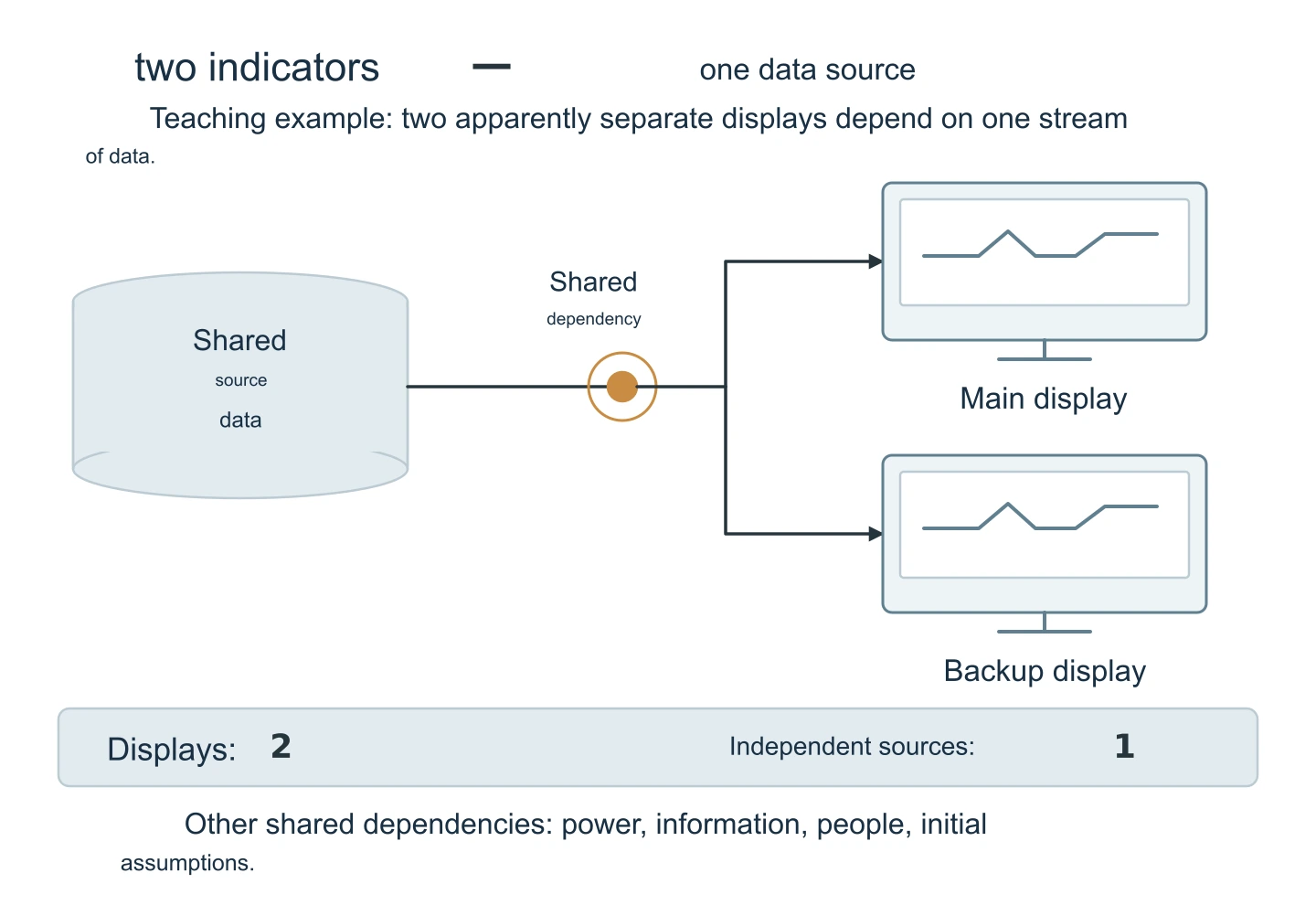
Figure 07. Two indicators - one data source
Case study from the chapter: two screens share the same data stream. The number of indicators does not determine the number of independent bases; general relationships are also tested for energy, people, and underlying assumptions.
Continuation of the analysis of R1: What the second screen confirms
A failure of one measurement channel was detected on the Sfera. The crew member suggests using the second screen: it shows a summary of the same system. The proposal is clear - the team needs a way to evaluate the compartment while the first channel is being tested. However, first the engineer finds out where the second screen is getting its information.
In this tutorial, both views are associated with the same data source. The second mapping may inherit the same failure and therefore does not provide an independent assessment of the environment. The manager maintains the exact boundary in the summary: additional display is available, confirmation independence is absent.
The team has two different questions. The first is how to restore a faulty product. The second is how to evaluate the admissibility of a particular job beforehand. The repair contractor answers first. The authorized engineer, together with the supervisor, determines the available confirmations and mode for the second. The very fact of starting repairs does not complete the decision to work in the compartment.
Comparing options involves the consequences of expectation. If you postpone an optional operation, you need to know which station functions will be affected. If you use the provided backup mode, you must confirm its conditions and available monitoring facilities. To call something that depends on the same faulty source a reserve would be a mistake in the protection model itself.
An independent audit later clarifies the technical fault. The team returns to the previously recorded question: What conditions of the selected job are now confirmed? The engineer's conclusion relates to a technical problem. The medical officer continues his assessment of the person; the technical result does not assign to it a ready-made cause of the ailment.
It is useful to store the found general dependence in the barrier passport. Then, during the next check, the team will count independent bases, and not the number of devices on the screen. This is also a way for the reader to look at any multi-layered defense: to find out what common cause is capable of depriving it of several functions at the same time.
Protection must maintain habitability
Before restricting access to a premises, they check how people will receive help, escape in the event of a fire, and maintain the necessary living conditions. The ventilation mode is changed by a competent site procedures engineer. CDC guidelines for healthcare facilities address ventilation performance and maintenance in their area of application. [15] A decision for another system requires its own evaluation.
Violation of protection leads to P04 · p. 158, and return to work - to check according to P13 · p. 167. Training, maintenance and fault reporting are required throughout use. A designed barrier becomes an available defense when the organization has the people and resources to maintain it.
15 Air, water, waste and process streams
Navigation: NAV · p. 003 · Contents: OGL · p. 010
Air, water and maintenance connect the premises. Therefore, when assessing protection, a map of actual flows is needed. The wall shows the boundary of the room, but does not yet explain what systems are shared with neighbors. Unspecified connections are also indicated on the map; the proposed route of exposure remains a matter of verification.
The engineer collects information from operational services. The medical director explains what care is available for each network. The security specialist assesses the possible impact, and the overall manager agrees on the consequences of the regime change. The management of the system is assigned to someone who has the required authority and training.
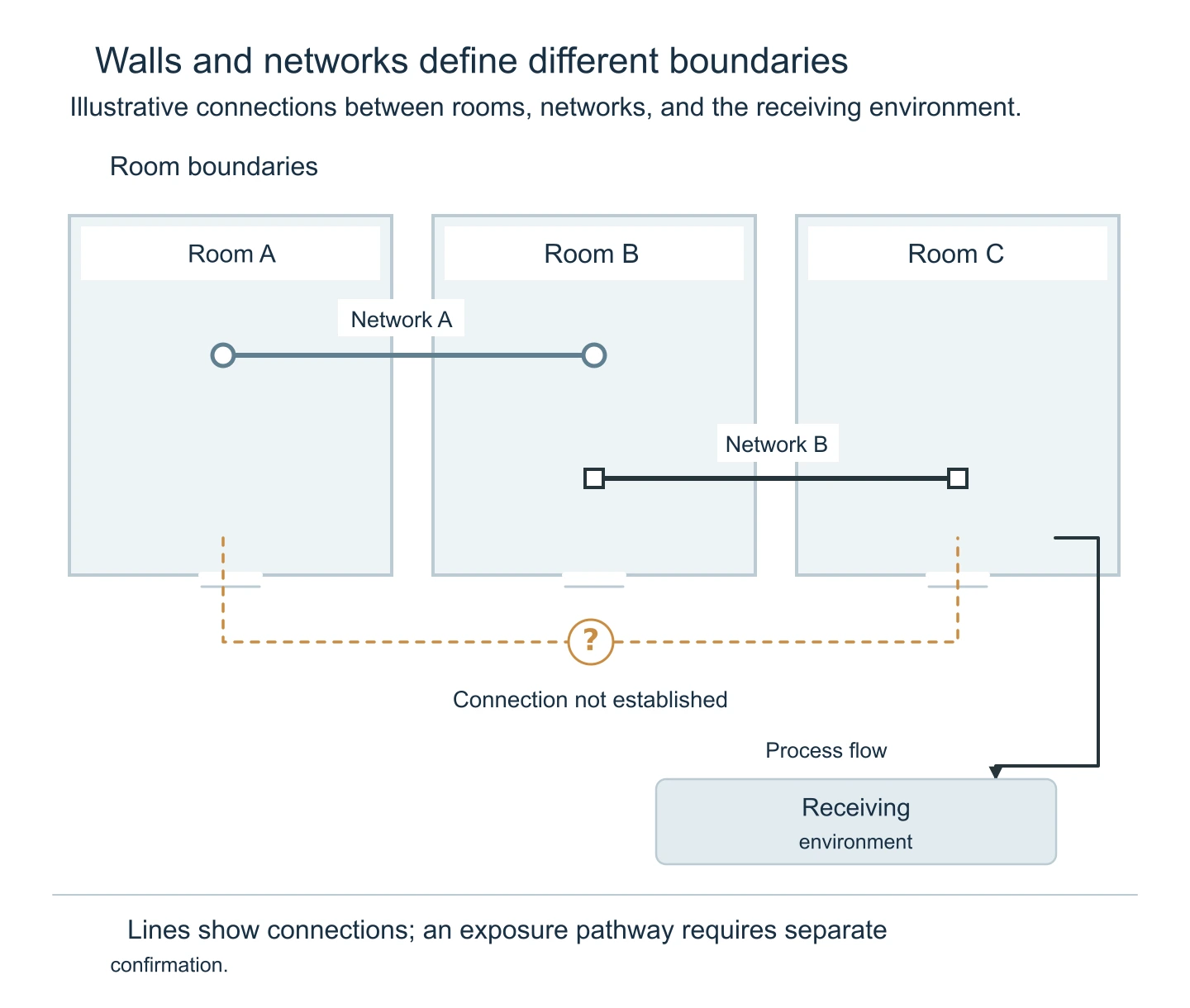
Figure 08. Walls and networks define different boundaries
The schematic diagram shows that the boundaries of premises and service networks may not coincide. The unspecified connection remains indicated; the admissibility of a particular regime requires an assessment of the functions and consequences in a given object.
Air and conditions of stay
First, find out what conditions the system supports for people and equipment. Then they check the accuracy of information about its condition and the available standard modes. Changes in operation may affect adjacent spaces, fire protection, temperature and assistance. All of these consequences are included in the evaluation of a particular decision.
The engineer presents the available options and conditions of each. The manager selects an acceptable regime, assigns observation and determines the grounds for changing it. If a safe standard decision is not available, the team requests the next level of support and indicates the remaining uncertainty. For a medical facility, appropriate engineering guidelines apply. [15]
Water and related services
When a water supply problem is suspected, the operator works together with the public health authority and water-dependent institutions. They specify which users and uses the signal concerns: drinking, food, care or technical work. The further decision must be consistent with this assessment area.
The operator shows serviced areas and known deviations. The authorized service prepares a clear message with the terms of the review. If it is necessary to limit use, supply will simultaneously organize an available alternative. WHO guidance on water safety plans links risk management to system design and monitoring of its operation. [42]
Waste and completion of the technological chain
The plan must cover the entire waste path to the authorized recipient. Otherwise, after processing one object, an unaccounted flow may remain, which again requires a decision. Specialized handling methods are chosen by competent performers. This organizational chart helps verify the completeness of the task and does not replace the technical procedure.
1. The flow owner describes the origin, destination, and known transfers. In the overall chain, he notes gaps in information.
2. A specialized specialist determines reasonable restrictions. He distinguishes between established danger, speculation and lack of data.
3. The engineer and supply check whether the chosen plan can be carried out. They call a reserve and a resource that limits work.
4. The receiving organization confirms the possibility and conditions of admission. A specific recipient is assigned for the transfer.
5. The overall manager determines who will revise the plan if there is new information, deviation, or loss of reliable control.
For each network, a short operational summary is sufficient: what it provides, what its status is, who is affected by the decision, and when it will be reviewed again. Loss of a vital function leads to P12 · p. 166. Renewal of use is issued according to P13 · p. 167, naming a specific service and permission boundaries.
16 Moving people, materials and vehicles
Navigation: NAV · p. 003 · Contents: OGL · p. 010
The transfer is completed when the recipient has actually accepted the person, material or equipment and has the necessary information and means. Dispatch is just the beginning of this process. Between organizations, it is especially important to confirm the last step: otherwise, each may assume that the other is already doing the rest of the work.
The patient, research material, equipment, and waste require different handling decisions. For a person, they proceed from medical need. For the material, the permissible purpose and authority of the recipient are specified. If they travel by the same vehicle, the corresponding decisions are still stored separately. Laboratory safety guidelines consider the handling of materials and information as a management task in their own right. [1, 7]
Decision before departure
1. The initiator explains the purpose of the move: what task cannot or is inappropriate to be solved here. This entry allows you to compare the need to move with other possibilities.
2. The medical or specialty director describes the condition and significant unknowns. For the patient, the director specifies assistance and observation; for the material, the known status and handling restrictions.
3. The transport coordinator coordinates the route, personnel, communications and actions when conditions change. He checks the ability to maintain the necessary conditions throughout the journey.
4. The recipient names the reception point and the responsible employee, confirms the means to complete the task. This information will be agreed upon prior to the scheduled arrival.
5. The sender transmits the necessary data, records the shipment and remains available for clarification. The recipient confirms actual receipt and reports any discrepancies.
What to convey along with responsibility
Subject of transfer | Essential information | Who confirms acceptance |
Patient | Condition, assistance, expected impact, expected results | Host medical team |
Material or equipment | Purpose, status, restrictions and history of critical transfers | Authorized Profile Recipient |
Waste | Agreed treatment category and transfer conditions | Organization with appropriate authority |
The amount of information is determined by the safe execution of the task. Medical data is not included in publicly available passenger and cargo lists. If a digital system is not available, a prepared local recording and an available secure channel are used. Then the general transmission history is restored.
When the route changes
When a patient's condition changes, transportation fails, a receiving facility closes, or new information about a hazard occurs, the coordinator contacts both parties. The previous plan is revised if its essential conditions have disappeared. For immediate rescue, a separate procedure is provided in advance so that registration does not delay the necessary assistance.
In the case study, the hospital agreed to accept the patient, but lost the necessary follow-up along the way. The transport team notifies the medical coordinator, who will coordinate an alternative route with the confirmed recipient. Until transfer, the patient remains under the responsibility of the accompanying team. The original application is retained along with the change record.
After the transfer, those responsible for the further use of transport and equipment, the condition of the personnel and the necessary supervision are appointed. Urgent deterioration leads to P02 · p. 156; inability to maintain the route - by P12 · p. 166. Elimination of pollution and authorization of transport are considered through P09 · p. 163 and P13 · p. 167.
17 Personnel protection and implementation control
Navigation: NAV · p. 003 · Contents: OGL · p. 010
An employee can perform a protective procedure when he understands the task, is trained in using the tools, and has the right to report a difficulty. The manager checks these conditions along with the condition of the equipment. The product in the warehouse becomes available for operation after confirming its suitability and people's readiness for use.
Protective equipment is selected based on expected exposure, operating conditions, and applicable requirements. If the hazard is unknown, the reasons for the choice are recorded. A familiar set from a different situation is tested for suitability for a new task. In the hierarchy of controls, personal protection is part of a broader system of exposure prevention. [11]
Access to a specific task
1. The manager describes the assigned work and the expected result. The employee understands what actions are included in the task and what requires separate permission.
2. The security specialist works with subject matter experts to determine preparation and protection for the anticipated exposure.
3. The Training Officer verifies that the approved procedure is being followed in a safe training environment. Participation in the briefing is recorded separately from the practical test.
4. Supply confirms suitable products, consumables and replacement in case of failure.
5. The shift manager checks the condition of people, communications, work supervision and stopping conditions. If the required function is not available, the beginning of the task is revised.
6. The contractor confirms that he understands the boundaries of the work and reports any deviations. The leader receives the signal and writes down the further decision.
Fatigue and interaction
The length of a shift is determined by the job, the condition of the people, and the resources available. Someone who notices a decrease in the ability to perform a task is appointed in advance, has the right to stop the work and organizes a replacement. If there is no reserve, the manager must know about it before the operation begins.
A colleague can help notice a mistake if he himself is prepared for observation and has time for it. When he simultaneously controls equipment, communicates and monitors several people, this load must be assessed separately. The supervisor's assignment must be consistent with what the person is capable of performing.
Error and possible impact
If the guard is damaged or contact is suspected, the employee stops the associated work in a safe manner and notifies the supervisor. The medical route is chosen through P03 · p. 157 or P02 · p. 156. First, they organize help and save important information; the reasons for the error are considered separately from the medical need.
In a training situation, an employee notices that he cannot reliably complete a control step. The procedure allows stopping, replacement and re-evaluation. The manager records a timely noticed difficulty as a useful result of the defense’s work. If you mark only completed operations, the information that helps prevent the problem from recurring will disappear from the log.
Before the employee returns to work, his condition, training and task conditions are checked. After a change in equipment or procedure, the corresponding check is repeated. WHO guidelines serve as sources for specialized training, and permission to work locally is issued by the specific organization. [1, 7]
18 Energy, communications, medicine and supply during failures
Navigation: NAV · p. 003 · Contents: OGL · p. 010
During a prolonged event, assistance may be limited to loss of energy, water, people, transportation, or conventional medications. Therefore, the manager keeps two reports side by side: what is known about the threat and what necessary services the organization is able to continue. This makes it possible to notice deterioration in supplies before aid stops.
The WHO Health EDRM framework links preparation, response and recovery to the work of different sectors and the needs of vulnerable groups. [37] For a specific object, this approach means: naming the person responsible for each important function, checking its dependencies and reserves, determining the basis for requesting support.
Identify features that cannot be lost
The manager requests from departments a list of services, the loss of which would harm people. The medical team directs treatment and care; engineering - life support and safe modes; supply - deliveries; communication service - management and requests for help. The list includes people's routine needs, even if they are not related to the suspected outbreak.
For each function, record the available resource, consumption, expected load, and forecasting assumptions. Instead of saying “there are enough reserves,” specify the work and conditions for which they suffice. Consider equipment together with its power supply, maintenance, consumables, and trained staff.
Actions in case of deterioration of security
1. The person responsible for the function reports a likely shortage before it stops if available information allows it to be anticipated.
2. The supply and engineer check the reserve: delivery, connection, maintenance and availability of the required shift.
3. The manager reviews non-essential work and allocates funds to agreed upon priorities. He records the reasons for the choice and the expected consequences.
4. The medical service is assessing the ability to remain on site and continue assistance. If necessary, it coordinates the transfer taking into account the availability of transport.
5. The external support coordinator specifies in the request the required function, shortage, delivery conditions and recipient. He checks the received answer for feasibility.
Working without a common digital system
During the exercise, both the communication reserve and the authority to work without a common system are tested. Local recording saves time, author, decision made, and unfinished tasks. Once the network is restored, a designated manager will collate records and resolve discrepancies. He takes into account the timing and content of information, even if new information is first written down on paper.
Educational analysis R4. There is one medical specialist working in the Kedrovoye settlement. Several cases of illness have been reported; their cause and connection are still unknown. At the same time, the carrier warns that the weather is making the route less accessible. Some residents continue to have ongoing needs for medications and care.
In a summary, it's easy to focus only on the new event. Then the usual medications and help for dependent people will be postponed until the cause is clarified. But the weather restriction applies regardless of the investigation. Therefore, the local manager requests two estimates: the medical need now and what will no longer be available when the route is closed.
The provider determines who needs urgent assessment and support, and which routine services cannot be interrupted. The supply coordinator checks with the carrier about the actual delivery capability and the recipient of the cargo. The manager checks the replacement of personnel: a single specialist cannot simultaneously perform all new and previous tasks without limiting the load.
The first option is to wait for the cause to be clarified before requesting external support. It may appear wary of an unspecified threat, but leaves the known deterioration of transport accessibility unaddressed. The second option is to coordinate assistance and supplies in advance for already identified needs while continuing the investigation. The team chooses the second one because medical and household tasks exist regardless of the event's final name.
The request describes a specific function. Instead of “send everything you need,” the coordinator indicates what supplies are needed, where they should go, who will accept them, and the dangers of delay to ongoing assistance. Medical information is transmitted to the required extent; the general transport application does not turn into a public list of diagnoses.
The weather changes, and the carrier clarifies the route possibilities. Now we need to reconsider not only the promised delivery, but also the plan for the waiting time. The manager receives an updated medical assessment, details of local provision and confirmation of available alternatives. An unconfirmed agreement remains an open task for which a person is assigned.
The decision contains change conditions: deterioration of condition, loss of necessary assistance, change of route, or response from the receiving service. It does not set the same waiting period for all residents. By the time of the next update, the team should know what has actually been secured, what has not yet been delivered, and what issue has been escalated to an external recipient.
In chapter 19 we will consider the everyday consequences of restrictions for the residents of Kedrovoye. Chapter 20 will continue with moving selection. The settlement itself will be discussed in chapter 49, where the features of distance, a small team and trust between familiar people will be added to these decisions.
Return to normal provision
After the resource arrives, the person in charge checks the operation of the function under the expected load and reports the result to the manager. Supplies replenish the used reserves, the personnel manager assesses fatigue, deferred medical and social tasks are assigned to performers. The current failure is carried out through P12 · p. 166, extended support request - via P11 · p. 165, permission to specific work - through P13 · p. 167.
19 Limiting contact and meeting human needs
Navigation: NAV · p. 003 · Contents: OGL · p. 010
A measure must have a goal and a limit
Limiting contacts must serve a specific purpose. Isolation of a sick person, observation after possible exposure, stopping a work operation and restricting the movement of the population have different reasons and consequences. The contact describes the circumstance, but the disease requires a separate assessment. The result of the study is considered taking into account the method and conditions of its receipt.
WHO ethical guidance links restrictions on freedom to necessity, proportionality, support for people and fair decision-making. [12] In practice, the person responsible explains the expected benefits of the measure, available alternatives, assistance to affected people and the conditions for review. When the cause is unknown, events directly indicate what uncertainty remains and how it is tested.
Purpose and execution
1. A medical or health professional describes the risk: for whom, in what interaction and according to what information. From this assessment follows the purpose of the measure.
2. The authorized manager selects the least restrictive option likely to achieve the goal and reviews the legal basis. He indicates the boundaries of the measure, the person responsible and the next revision.
3. The support coordinator finds out living conditions: housing, food, medications, care for children and dependent relatives, availability of communication and regular assistance. For each identified need, an executor is assigned.
4. The person responsible for communication explains in clear language the procedure for action and seeking help. A person should know how to report a deterioration, lack of security or an error in their data.
5. The appointed specialist re-evaluates the basis of the measure and its consequences. The decision to continue, change or terminate is updated along with checking the availability of the necessary services.
Support is part of implementation
If a person does not have food, adequate space, or substitutes to care for a relative, it may not be possible to complete the order. The coordinator organizes provision or, together with the medical team, changes the way the measure is carried out. Support is provided without unnecessary public disclosure of the diagnosis. The recipients of the data and their volume are determined by the task.
Continuation of analysis of R4. A Kedrovoye resident requires evaluation after a possible exposure and is caring for a family member with limited mobility at home. When planning such a measure, continuation of care is simultaneously organized. If protection is needed immediately, the person in charge includes assistance to the dependent relative among urgent tasks. The social coordinator looks for a replacement, the medical specialist assesses the circumstances of both people, the manager agrees on a feasible plan.
To test this plan, it is useful to go through a person's day through his or her usual needs. Who will bring the food? How will regular medications be obtained? Who will help a relative if communication is interrupted? The response is the confirmed action of a specific person responsible. Just contacting the service does not mean that help is already available.
Here two organizational options arise: to support the implementation of the measure at the place of residence or to agree on another available accommodation or method of assistance. The choice depends on medical assessment, housing conditions, care options and legal grounds. The general book asks questions for this comparison; the local team tests real options with the person.
The weather restriction from the previous episode changes this plan as well. Promised delivery may be delayed. Then the coordinator informs the medical officer in charge of the violation of support so that he can assess the consequences and the need for revision. The record stores the need, the assigned person, and the actual result. The words “support arranged” are acceptable after confirming that the person can use it.
This is how the restrictive measure receives verifiable execution conditions. At the next review, the specialist evaluates both its medical basis and the life difficulties that have arisen. If a less burdensome, effective option becomes available, it is considered with the same justification and feasibility requirements.
For people who have difficulty understanding instructions, using digital services, or protecting their rights, accessible formats and assistance are provided in advance. If necessary, a translator or legal representative is involved. The public message must explain actions and correct mistakes while remaining respectful of the people affected. [13]

Figure 09. House in which the restriction can be fulfilled
Household support makes agreed upon restrictions feasible. In the case study, substitute care for a dependent relative, supplies, and accessible communications are included in the plan; the image does not specify a mandatory housing layout.
Revision
An unscheduled review is needed when there is new information about the mechanism, deterioration in health, violation of security, or the emergence of a more acceptable effective alternative. If there is no new data, the continuation of the measure still requires justification. Completion is completed via P13 · p. 167, further assistance through P14 · p. 168. The person is explained what else needs to be done and who to contact.
20 Rescue and evacuation at risk of transfer
Navigation: NAV · p. 003 · Contents: OGL · p. 010
Two risks of one decision
The decision to move has consequences in both directions. Evacuation may reduce immediate hazards and create the risk of transfer of exposure. Staying in place may mean deterioration of care, loss of nutrition, or inability to care. The manager compares available options with their means and unknown conditions.
Rescue operations require a specific leader and clear transfer of tasks. [9] Medical urgency is being assessed while the investigation into the cause continues. If the condition requires immediate assistance, the team acts in the appropriate order. Arriving specialists are informed in advance about the possible impact to the extent necessary for the work.
Decision to move
1. The head of the rescue work finds out what is threatening people now and how conditions are changing. He describes realistic options for shelter, on-site assistance, and movement.
2. The medical officer in charge determines the urgency and necessary support. He communicates to the manager and recipient how the delay is affecting patient care.
3. The engineer checks the suitability of the route and intermediate places for people, equipment and life support. An option with obviously unacceptable physical conditions is not included as available.
4. The coordinator agrees on transport, personnel, recipient and backup option. The receiving organization confirms readiness; the named responsible person is retained until the actual transfer.
5. The authorized leader makes a decision taking into account the urgency and possibilities of rescue. Performers receive a route, communication order, reasons for stopping, and a way to change the plan.
The recordings provide assistance to an extent that does not create unnecessary delay. In the event of an immediate threat to life, an approved emergency procedure is used, including actions without communication. After stabilization, the records are supplemented, indicating the basis for decisions and information about the possible impact. Such preparation is included in the organization of response to emergency events. [37]
People and materials require different decisions
The need to rescue a person is assessed separately from the removal of property and research material. Medicines, medical devices and communications are considered for their role in care. The rest of the cargo receives a separate decision and responsible person. By deferring unnecessary transportation, the team can preserve space and resources for the patient.
Support is planned taking into account the person’s condition and needs: disability, age, impairment of consciousness or dependence on medical devices. If separation from loved ones is contemplated, the clinical and practical implications are assessed. Ethical assessment includes fair access to limited resources and support for vulnerable people. [12]
Continuation of analysis of R4. In Kedrovoye, the medical officer in charge discusses on-site support and the possibility of an agreed transfer. The weather window limits transport, but does not in itself determine the same decision for everyone. Each person is assessed for urgency, availability of necessary assistance and support requirements.
Comparison of options begins with confirmed conditions. To remain on site, available assistance, supervision and support are required; for moving - suitable transport, accompanying persons and a ready recipient. If one of the components has not yet been confirmed, it is marked as an unfinished task. Comparing the current option with an imaginary fully secured option would be a mistake.
The coordinator receives updated information from the carrier. The previous route agreement is no longer sufficient. He communicates the change to the medical director and the receiving party, reviews the alternative, and communicates what remains feasible. The medical responsible person re-evaluates the consequences of the wait; the general manager agrees on the updated plan within the scope of authority.
Ongoing accountability is important at this step. The message “reception agreed” does not mean that the patient has already been transferred. Until the recipient actually confirms, the named team is responsible for assistance. If there is a delay, the person responsible, the method of communication and the reasons for the next decision remain clear.
When the transfer is complete, the record contains the actual recipient, the status of the transfer, and the remaining issues. Delivery of routine medications and care for other residents may still continue. The manager does not close the entire episode just because one transport task is completed.
The analysis ends with several results, each with its own owner. Help for a specific person continues with the receiving team; the supply of the settlement is controlled by the coordinator; The investigation remains unclear about the connection between the cases. The next part of the book will take a closer look at medical decisions and show how new information changes them.
When to change route
The route is revised if the patient is unstable, life support is lost, the route is closed, or the recipient's readiness changes. After the transfer, the condition of the accompanying persons, the availability of transport and the remaining tasks are checked. Return to the abandoned zone is decided separately through P13 · p. 167. Urgent assistance is provided by P02 · p. 156, organizational failure - according to P12 · p. 166, exceeding local capabilities - according to P11 · p. 165.