Part VI. Space missions and return
Chapters 43–46. How to take into account autonomy, closed life support and reception conditions.
Up to this point, the book has analyzed actions according to their purpose: to help a person, check an explanation, maintain a defense, evaluate the result. Now the same decisions have to be made in a specific place. In orbit, the usual advice to move to another room immediately raises a new question: will the crew still have air, communications and the ability to help the sick? Environmental constraints become part of any decision.
Space chapters follow the course of the mission: life on the station, work after landing, return and reception on Earth. They consider both common illnesses and technical failures and hypothetical events of unknown nature. For every crossing, it is important to preserve two things: assistance to people and a clear record of what is known about the material being transported.
43 Orbital station and closed life support
Navigation: NAV · p. 003 · Contents: OGL · p. 010
Why the station’s condition influences every decision
At the station, the crew uses a common habitat. If a compartment is temporarily closed, necessary rooms, equipment, or supplies may become unavailable. Therefore, the commander evaluates the perceived danger simultaneously with the consequences of the chosen measure for life and helping people. The available options depend on the specific mission device. NASA medical support requirements include preparations for evacuation and post-return assistance [6].
Illness, an unusual instrument reading, loss of material retention, or failure of protection may trigger the evaluation. The first actions are described in P01 · p. 155, P02 · p. 156 and P04 · p. 158, short scenario - in S1 · p. 171. Until the cause is determined, the team considers common illness, environmental exposure, instrument malfunction, and a combination of events. An unusual signal in itself does not confirm an extraterrestrial origin.

Figure 24. Orbital station as a total habitable volume
Fictional station: Human assistance, engineering checks, and return options depend on the overall habitable environment. The layout and transparent shells are conventional; specific decisions are determined by the mission architecture.
In Figure 24, trace the relationship between the work compartment and the place where people live. The transparent shell allows you to see the proximity of functions, but does not show a proven diagram of their independence. Before restricting access, the engineer must answer what services and avenues of assistance will be affected. It is this question that connects the image with the commander's decision.
Who helps the person and who checks the station
The commander appoints those responsible for medical and engineering assessments, determines priorities and transmits confirmed information to Earth. The medical officer in charge assesses the urgency of the condition, arranges available care and requests consultation. The engineer checks the protective functions and explains what will change under the proposed operating mode. The ground team attracts specialists and coordinates supplies, docking and possible reception of the crew.
The first record indicates the time of observation, the location of people, known movements of equipment and the state of systems. This information helps check possible connections. If the movement history is incomplete, a gap is indicated as such. A record of being in the general compartment does not establish that this is where the exposure occurred.
The commander suspends associated non-essential operations if they may increase the impact not yet assessed. Before changing life support, the engineer reviews the implications and applicable station procedure. Commands like “turn off all circulation” cannot be transferred from the general reference book to a specific device: their consequences depend on the craft’s design.
Choosing between staying and moving
Before moving, the team weighs the urgency, the expected assistance at the destination, and the difficulties of the journey. It finds out what new contacts will arise and how vital functions will be maintained on the road. Person, equipment and material may need different routes; permission for one of them applies only to the specified task.
To decide on return, mission management receives a medical assessment of the crew, information about the possibilities of assistance on board, time until external assistance, the condition of the ship and readiness for reception. The authorized mission structure collates this data. The perceived risk of transmission is taken into account when preparing the route and the receiving team; the need for rescue remains an independent basis for the decision.
Training analysis R1: Two signals at the Sfera station
Six people live on the fictional Sfera station. An unusual monitoring signal has appeared in the work compartment; one of the crew members later reported feeling unwell. There are two observations in the log. The team doesn't yet know if they are connected by a common cause. For the commander, the practical question is what actions can be continued while the check is underway, and how to maintain care for the sick person.
Two options are being brought up for discussion: temporarily limit non-essential work in the compartment or continue it under supervision. The first option reduces the number of new actions in an unclear situation, but may deprive the crew of the necessary resource. The second preserves the work, but requires sufficient grounds to consider it acceptable. The engineer first clarifies what systems the housing module depends on and what functions the limitation will actually affect. The medical responsible person evaluates the person separately. Without these two assessments, the choice would be only the name of the measure.
In this training case, the check allows the commander to suspend non-essential work in the bay while maintaining essential station functions. The decision is recorded along with the grounds and conditions for the review. Both observations and the issue for which consultation is needed are communicated to ground control. The message does not infer a single cause.
Later, the engineer discovers that one measurement channel has failed. This is an important change: the original signal can no longer be used as reliable evidence of environmental change. However, the person still needs medical evaluation. The commander reviews the technical basis for the limitation, and the medical officer maintains his task. If the team had immediately lumped the two events into one “confirmed case,” the explanation for the glitch might have mistakenly closed the medical case as well.
The following check clarifies the technical fault. The question of the work compartment moves on to assessing its suitability for a particular job; The decision about a person's condition rests with the medical team. Sharing does not require pretending that everything has already been explained. The log shows which uncertainty has been removed and which remains. The book will return to these two decisions in chapter 55.
How to continue working without connection with the Earth
If Earth is unavailable, the commander uses pre-approved autonomous authority. A local copy of the plan should explain the priorities for preserving life, the conditions for transition to reserve, the limitations of experiments, and the procedure for subsequent transfer of the log. The decision note notes that consultation was unavailable and what information had to be assessed on board.
Before completing the stage, the team reviews information about the status of people and the operation of critical systems, assigns a person responsible for monitoring, and records the next action. Access to the compartment, resumption of the experiment, docking and return require separate decisions according to P13 · p. 167. The remaining issues and events in which the decision must be immediately reconsidered are transferred to the next shift.
44 Lander, external work and remote base
Navigation: NAV · p. 003 · Contents: OGL · p. 010
Three connected spaces
After landing, the team works with three spaces at once: the vehicle, the external platform and the habitable base. As you move between them, access to help and the load on systems changes; Material may move along with people and equipment. Therefore, the order of transitions is prepared before the exit. It distributes the powers of the commander, medical officer, engineer and planetary protection specialist.
COSPAR (Committee on Space Research) policy distinguishes between mission types and Solar System bodies; it also contains principles for manned exploration of Mars. For a specific mission, experts determine which provisions are applicable. These documents do not provide a single ready-made instruction for any comet, planet or base. There is also no scientifically proven universal treatment protocol after contact with extraterrestrial life. [3, 4].

Figure 25. Vehicle, external platform and habitable base
The simulated vehicle, external operating platform and habitable base show three different mission spaces. The artistic cut opens up the residential functions; the order of transitions and technical conditions are established for a specific mission.
Preparing transitions and first response
Before leaving, the work manager explains the purpose, appoints someone responsible for recording participants, and indicates the conditions for terminating the operation and the route of return. The engineer checks facilities and emergency procedures. The medical responsible person determines what assistance can be provided in case of injury or deterioration of the condition. The person responsible for scientific activity designates the permitted actions with the material within the approved program.
Having noticed an unusual event, the participant reports the place, time, observed signs and condition of people. Further actions are chosen according to P01 · p. 155 and S2 · p. 172. If a person urgently needs help, the team applies a prepared rescue plan. He is not required to first find out the nature of the object or complete the investigation.
The commander suspends non-essential actions that could extend the transfer of material whose effects have not yet been assessed. The engineer checks available return routes and their impact on the habitat. The movement history notes what has already gone inside, what has remained outside, and where information is missing. The procedure for processing equipment is taken from suitable proven procedures: its choice depends on the design, material and compatibility of the equipment.
Limiting Resources
At a remote base, any measure consumes limited supplies and time. For the selected option, the team determines which resource will be depleted first, who monitors its status, and when another option will be needed. If people are asked to limit contact, the air, water, energy, access to care and suitability of the place where they will stay are simultaneously checked.
When communication latency is high, the team uses delegated authority and local directories. In a message to Earth, it separately indicates the facts, working explanations and the issue that needs to be resolved. Having received the answer, the person in charge compares it with the current state of the person and the systems: during the exchange, the initial conditions could have changed.
Decision | Who evaluates | What needs to be confirmed |
Continue external work | Work manager and commander | Purpose of work, suitable conditions and feasible termination procedure |
Move the victim | Medical Responsible and Commander | Urgency, route, assistance on the way and reception |
Transfer equipment or material | Designated specialized service | Permitted purpose of transfer, history of the item and confirmed conditions of acceptance |
Resume the scientific program | Mission leadership | Analysis of the event and fulfilled authorization conditions |
Time-based decision
In the training example, after returning the equipment, an unusual coating was discovered. Its origin is still unknown. The team records the movement history, restricts associated unnecessary transfers and requests a specialist assessment. When choosing a further action, the engineer checks compatibility with critical equipment. Trying to remove plaque at random can create additional failure before the original cause becomes clear.
It is useful to compare two plans that appear equally cautious on the surface. The first suggests waiting for an external conclusion, leaving people in the chosen place. The second involves waiting, but connects it in advance with a reserve of resources and the ability to move to a prepared reserve. Only the second one explains what to do if the answer is delayed. The entry should contain an observable wait limit and a person who will announce the transition, rather than a vague promise to “wait for specialists.”
After receiving new data, the commander first checks which issue it relates to. A finding on equipment may change how it is used, without authorizing removal of the material from the planet. Information about the participant's condition may change the urgency of return without authorizing the scientific program. This way, time, resource and subject matter remain linked throughout the mission.
The stage can be transferred to the next team when the available actions, their performers and the conditions for revision are named. Permission to resume outside work applies to this work; returning the material to Earth requires its own decision. Its preparation continues in chapter 45, where the received data is transferred along with the limits of their applicability.
45 Return of the crew and samples collected by robots
Navigation: NAV · p. 003 · Contents: OGL · p. 010
Who and what is accepted on Earth
When returning, you need to decide what kind of assistance the crew needs, whether the device is working, what is the status of the materials and whether the ground side is ready to receive it. These questions have different performers and reasons. Applicable planetary protection requirements vary by mission. For example, NASA NPR 8715.24 refers to NASA robotic extraterrestrial missions; its limited sample return provisions cannot be automatically transferred to any manned flight [4, 5].
For the crew, the medical team assesses the need for assistance and the ability to receive it after landing. Evacuation and reception are being prepared as part of the medical support for mission [6]. If a person needs urgent help, this fact is reflected in the medical decision. The unclear status of the accompanying material is stored in a separate record.

Figure 26. Two returns - different reception items
Two independent training scenarios: on the left - the crew is received by the medical team; on the right is the reception of a closed unmanned capsule with material. The statuses of the person, the apparatus and the material are assessed separately. The panels do not define a common area or uniform order for all missions.
Before the decision to return
Mission leadership determines who is involved in the decision and the applicable return conditions. The medical team communicates the people's condition, assistance needed, and transportation restrictions. The engineering team confirms information about the device and critical systems. The planetary protection specialist presents the material requirements and data on their implementation. The ground coordinator checks the receiving services, resources, communications and alternate route.
For each item of transfer, a passport is issued: what is being transferred, where it came from, who was responsible for it, and what events could change its condition. Unresolved questions and missing entries are noted directly. Even a standard fit does not make up for the unknown part of the history of the material.
The route is discussed for both the normal and disrupted course of events. What will change if the site is unavailable, the connection is lost, the person becomes worse, or the actual state of the device differs from the transmitted one? Where possible, options are agreed upon in advance. The receiving party must be able to honestly report the unavailability of a declared resource so that the mission has time to reconsider the plan.
Transfer at the border of organizations
Responsibility passes after confirmation of the specific receiving person. The log contains the time of transmission, the state of people and systems, the measures in force and the immediate task. Medical information is transmitted via a secure clinical channel to the extent necessary for assistance. A separate cargo record does not replace patient handover.
If boarding or reception deviates from the plan, the manager activates the agreed emergency procedure. Local services receive a clear description of the hazards and their tasks. The discovery, research and processing of unknown material is entrusted only to authorized, trained groups with suitable conditions.
In the training example, the craft landed normally, but there was a gap in the material containment system record. The ground crew continues to receive people according to the medical plan. A separate check is assigned for the material; an incomplete record is transferred to the person responsible. A successful landing solved one problem, but did not answer the question of the condition of the contents.
Reasons for authorization and follow-up
Before work, the team agrees on the criteria for future authorization: what exactly is planned to be done, what information is needed and who will check its quality. Take into account the condition of systems and independent verification to the extent required by the requirements. One negative result only answers its research question; absence of symptoms describes a person's condition at the time of assessment. The decision on the entire return requires a combination of relevant grounds.
After reception, those responsible for medical observation, storage of records and further evaluation of the material are appointed. For each direction, the reason for revision is indicated: a new disease, an updated history, a system failure, or a result that changes the conclusion. Scientific work and medical observation are completed separately, as explained in chapter 55.
If the current rules do not cover the proposed mission, its organizers contact the competent authorities and relevant specialists in advance. This chapter helps frame questions for such consideration. Authority and permissions are established accordingly before the mission is carried out.
46 Unknown object on Earth
Navigation: NAV · p. 003 · Contents: OGL · p. 010
What is known from the first message
An unknown object may be found after a fall, an emergency landing, or cargo movement. Sometimes its history is entirely unavailable. Appearance cannot establish its origin or its ability to cause disease. The initial assessment retains several possible hazard categories: physical, chemical, radiological, and biological. WHO's approach to risk assessment covers different hazards regardless of their source [19].
The eyewitness uses P01 · p. 155 and S3 · p. 173: informs emergency services what he sees and whether there are victims, avoids unnecessary approach and independently carrying an object. Assistance to a person is organized taking into account the safety of the place and the training of the participant providing it. The message can be complemented by a photograph taken from an already safe position; you don't need to get close to take it.
Actions of arriving services
The first response manager takes control, organizes assistance and engages relevant services. The medical team evaluates people according to their condition. Hazard experts report what they can conclude and what issues still need testing. The identified owner of the facility or mission representative provides documents; the team matches them with the item found.
Competent authorities determine access taking into account observed conditions, terrain, population and infrastructure. They evaluate possible exposure pathways and then set boundaries and permitted actions. The universal distance for any unknown object is not specified here. With new data, the manager revises the decision and retains its basis.
According to the local plan, the manager organizes places of assistance, management and specialized work. Prepared services select appropriate schemes, protection and technical actions. The log records the service entry into the restricted area and the transfer of responsibility so that the subsequent team can restore progress.
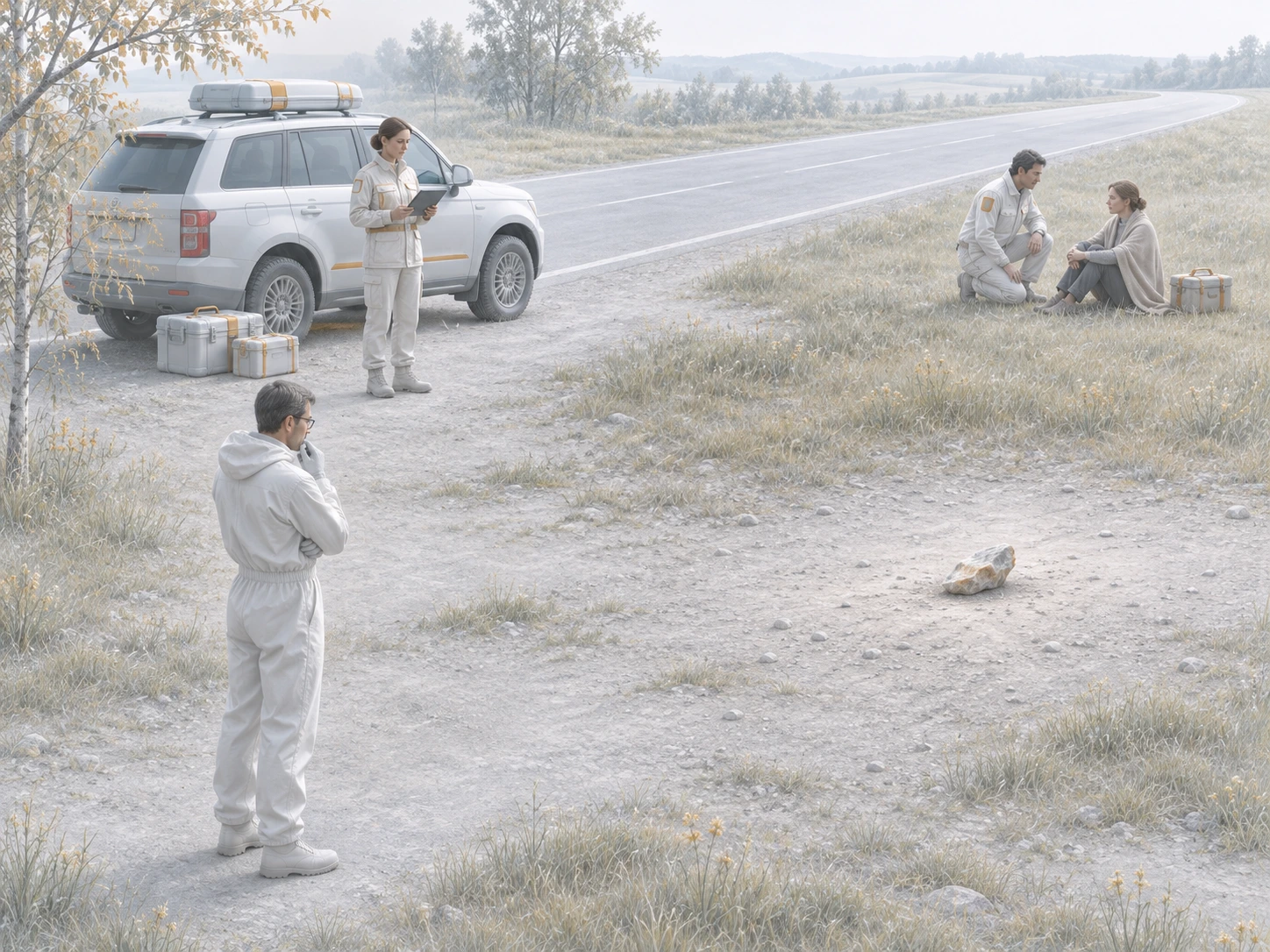
Figure 27. Location of discovery of an unknown object
Location of detection of an unknown fragment: helping a person, coordinating and assessing an object are performed as different tasks. The conventional plot does not establish the origin or danger of the object.
People, information and evidence
The person in charge confidentially clarifies with people the place and time of presence, observed circumstances, symptoms and contact information. He explains where to go if things get worse and who will report new findings. In this case, a distinction is made between proximity to the object, possible exposure and established infection. The absence of complaints also has its limits: it does not in itself complete the impact assessment.
Specialists are responsible for handling the object and associated materials. Preservation of evidence is consistent with the task of rescue. If an offense is suspected, the powers of medical and law enforcement participants are delimited in advance. Receipt of assistance does not depend on the person’s consent to interrogation or research [12].
In the training example, an eyewitness reports eye irritation, and online the object is already referred to as “alien spore.” The manager confirms only the discovery and the assessment that has begun. The doctor examines the person’s condition and possible exposure. The public message explains the current steps, how to get help, and where to get the next update. The origin of the item remains an open question.
Transfer and completion
Before the transfer of the object, the receiving organization confirms its authority, suitable conditions and readiness to be responsible for the next work. If the verified history indicates that space material is being returned, mission officials and applicable planetary protection requirements are involved [4, 5]. The word “cosmic” in an eyewitness report does not in itself establish these requirements.
Further work diverges in several directions: assistance and observation - P03 · p. 157 and P07 · p. 161, establishing nature - P06 · p. 160, source elimination - P09 · p. 163, territory authorization - P13 · p. 167. The removal of an object only completes its movement. The manager checks who has been assigned the remaining tasks: helping people, assessing traces of exposure, and identifying associated movements.