|

Eudgene Brenev
Mira Veyran
Reality Has
No Perimeter
Responding to Unidentified
and Extraterrestrial Threats
Protecting People · Investigating Threats
Strategy · Countermeasures · Diplomacy
A Scenario-Based Guide with Proposed Protocols
2026
Contents
Act Before an Explanation Is Available 7
What we know and what we assume 7
Three lines instead of one confident story 8
Severity of the event and certainty of the cause 9
Do What Is Actually Possible 9
How different levels are connected 11
The crisis continues after the first shift 13
Check That Help Reaches the Person 15
Part II. Scientific Work and a Map of Unknown Threats 17
When the usual picture stops helping 17
What constitutes a threat description? 18
The First Action and the Local Situation 30
Scale, Multiplicity, and Distance 37
Unknown environment far from Earth 41
How to get an actionable answer 46
The event continues in its aftermath 57
How to test the scientific procedure itself 68
Part III. People, Shelters, and Life After the First Decision 71
Person and family: immediate action 73
A place to stay and a route to the next place 90
Settlement and city: connect separate assistance 104
Sustaining Life and Returning 113
Preserving the Result and Testing the Plan 124
Part IV. Governance, Strategy, and Contact 127
Governance That Withstands the Unknown 127
From Observation to Countermeasures 143
Contact: Understand, Help, Reach Agreement 156
Part V. Test It Before You Need It 174
What exactly does the barrier protect? 174
Count the Function Delivered, Not the Reports 175
Extended Exercise: Northern Hub 184
Case 1. Item at the repair site 188
Case 2. Three Settlements and One Log 191
Case 3. Source changes behavior 194
Case 4. The Passage Leads to the Wrong Place 197
Case 5. Several years near the source 200
Working Forms 207
Index of Protocols and Forms 221
Sources and limits of their application 225
Facing the Unknown
Imagine an evening that was ordinary just a few minutes ago. The power has gone out in two blocks. A stationary patch of light is visible above an industrial area. One person thinks it is a reflection, another a craft, and a third is already writing about an attack. In a nearby building, a device on which a patient's life depends has stopped working. While people argue about the light's origin, help is needed at a very specific address.
This is a fictional scene [S]. It poses the book's central question: how should we act when consequences are already being felt but there is no explanation yet?
Naming a hazard suggests whom to call, which plan to open, and what to expect. An unidentified event removes that support. It may turn out to be an ordinary accident. But the scenarios in this book also allow for threats for which familiar ideas about distance, boundaries, time, and intentions prove insufficient.
It is easy to invent an extraterrestrial adversary and provide a means of defeating the properties assigned to it. We consider a harder problem: how people recognize the limits of their knowledge, maintain assistance, test assumptions, and change decisions. Survival, investigation, strategy, and diplomacy meet here.
The scale ranges from a person cut off from communications to a state trying to reach an agreement with an unknown party. Responsibility changes with scale. A family does not have to establish an event's physical nature to help a loved one. A city leader cannot simply declare a district closed: they must support the lives of the people affected by that decision. A researcher needs to find an explanation, but the conclusion must also be understandable to those who have to act.
The book follows a path from the first decision to life after a crisis. Part I examines the general logic of action. Part II considers ways to describe the unknown and conditional models of unusual threats. Part III follows an individual, a family, a settlement, and a city. Part IV considers governance, countermeasures, and contact. Part V lets us test all of this in exercises, where a decision has costs as well as merits.
The chapters contain protocols with permanent codes. These help you return to a practical task; the surrounding text explains the reasoning behind a decision and its limits. Forms, a glossary, and indexes are collected at the end.
We cannot promise that a barrier can be placed against every unknown threat. We can require something else: that assumptions are not presented as facts, people do not disappear behind a line in a report, and decisions remain open to correction. The limits of knowledge must be visible to the person making a decision. Beyond them, there is then room for the next step.
Eudgene Brenev · Mira Veyran
Finding Your Route
For sequential reading, start with Part I. If you need an answer to a specific problem, choose a row below. Its code leads to the relevant protocol; the complete index is at the end of the book. The protocols are the authors' proposed designs [P], which must be considered in relation to current local procedures and your actual capabilities.
Your Situation | Start Here |
You have just noticed a possible hazard | |
Someone needs first aid for a recognizable condition | C21; summon available emergency assistance |
You need to coordinate with your family; a loved one's location is unknown | C02; C17 for searching and contacting relatives; C15 if isolated |
You are choosing shelter, movement, or a reception site | |
You coordinate a settlement, city, hospital, or specialized facility | |
You are investigating an unusual observation | S11, then the relevant S protocol |
You are responsible for strategy and countermeasures | |
There is an opportunity to communicate with an unknown party | |
You are preparing a plan or exercise |
If an immediate danger is already recognizable, such as fire, structural collapse, injury, or life-support failure, assistance begins under the available emergency procedure. An explanation of the unusual cause may come later. Completing a form must not delay rescue.
The first three paragraphs of each card answer these questions: who uses it, where to start, and when to hand over the task. The reasoning, limitations, and conditions for reconsideration follow. Use P01 when combining cards and P02 when responsibility changes hands. If there is no ready-made plan or outside help, C15 helps identify a smaller objective the group can actually accomplish.
The letters in the codes denote five areas: P, general decisions; S, investigation and unusual environments; C, civil protection; G, governance, strategy, and contact; T, readiness testing. F denotes a working form. The number provides a permanent reference; the chapter's subject determines the order of the protocols.
Part I. The First Decision
Act Before an Explanation Is Available
At the start of an unknown event, the most useful resource is usually missing: clarity. Something is visible, witnesses report other things, and some instruments are silent. Yet people already have to decide whether to stay where they are, who needs help, and whether normal work can continue. The first decision is rarely final. Its purpose is to preserve lives and the ability to take the next step.
Let's remember the scene from the preface. Lights outage, unusual lighting, and medical device shutdown may have one cause, multiple causes, or just coincide in time. Helping a person is justified in all these cases. But the assertion of an attack requires additional grounds. By separating one from the other, we free the action from the need to wait for a comprehensive explanation.
Therefore, until there is sufficient evidence, the book uses the words “phenomenon,” “source,” and “threat.” The word "enemy" appears where the scenario involves targeted hostile action. The hazardous effect may be the result of a natural process, a human accident, the operation of an autonomous system, or an observational error. Strangeness by itself does not tell us about intention.
Next you will need two skills. The first is to describe what is happening so that the other person can understand what is actually known. The second is to associate each decision with the conditions under which it remains reasonable. These skills are equally needed by families and large organizations, although the scope of their tasks differs.
What we know and what we assume
All protocols of the book are the author’s projects [P]. They require local scrutiny: who is entitled to act, what equipment is available, what procedures are already required and how the new measure will affect neighboring services. The text does not attribute any lack of preparation to the reader. Engineering switches, medical decisions, working with unknown materials and the use of force require appropriate competence and authority.
The [O] mark means that a published source is named next to it. Its meaning is limited to its own subject. The Radiation Accident Manual helps discuss a specific channel of influence, but does not confirm the existence of an energetic entity. A document about searching for an extraterrestrial signal does not become a plan to repel an invasion. At the end of the book it is indicated on what materials the relevant arguments are based.
Label [S] specifies the rule for the thought experiment. For example: within the exercise, the source is actually able to manifest itself within the outer enclosure. This condition allows you to check what will change in the operation of the system. It does not communicate a real discovery. All invented observations, resources, and case study outcomes have this status.
The label refers to the nearest statement or designated fragment. If an entire parse is marked [S], its numbers and events belong to the script. Within such an analysis, one can reason strictly: the condition is specified, the available information is listed, the consequences of the decision are traced. The rigor of reasoning does not turn the initial assumption into an established fact.
Three lines instead of one confident story
The first record of an event can be conveniently divided into observation, explanation and action [P].
Observation: “The lighting stopped working in two blocks.” Here it is important to clarify who installed it, where and when. Explanation: "The shutdown may be related to the glowing area." This is the version; There should also be other acceptable explanations nearby. Action: “Provide adequate power to the medical device as per site plan.” For this action, it is enough to know about the power failure - the connection with the glow has not yet been proven.
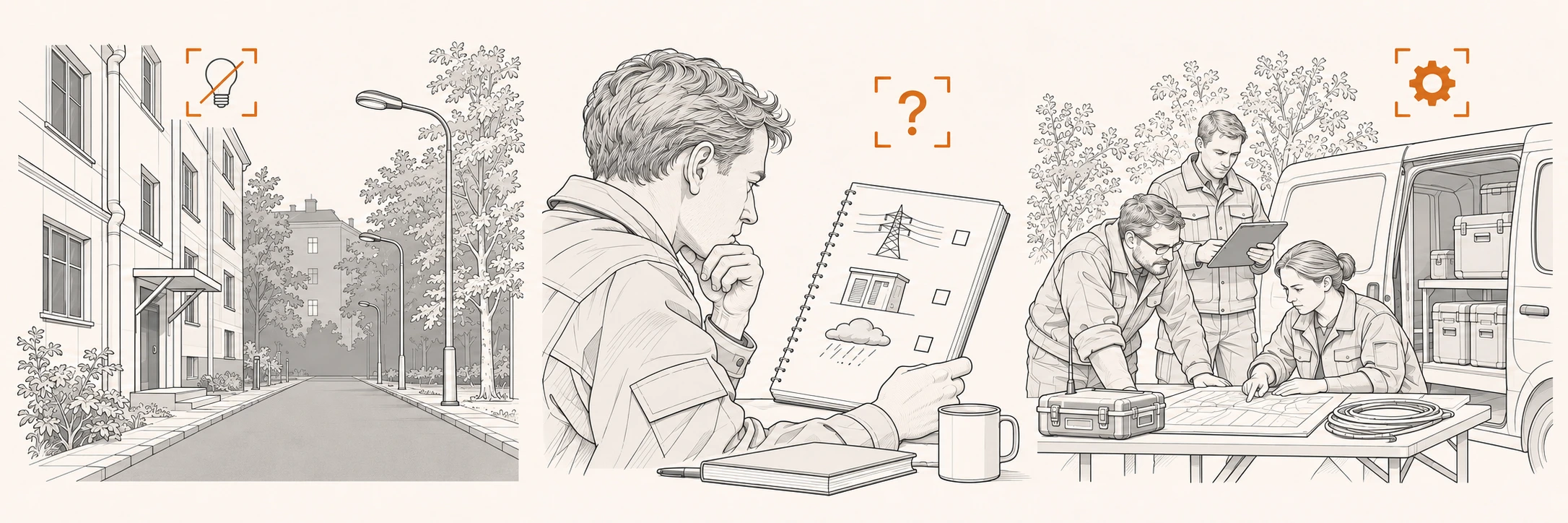
Figure 01. Observe, explain, act
[P] Left - observed lighting outage; in the center - not yet selected explanations; on the right is support for the required function. Each record maintains its own degree of confirmation.
When the three lines merge, the assumption quietly becomes a command. The manager hears “the facility is shutting down the network” and makes a decision against the facility, even though the original message was only about shutting down. The reverse fallacy occurs when doubt about the explanation prevents recognition of harm that has already been observed. Saving three lines allows you to argue about the cause and continue to help at the same time.
For a short passport of an event - form F01 - it is enough to write down the place, time or order of events, the source of the message, the observed effect and the harm already caused. Then they add available background records, possible explanations, independent confirmations, measures taken, open questions, and the person who will reconsider the decision. Not all fields can be filled in at once. An empty field with a clear question is more useful than invented precision.
Two messages are only as independent as the way they are received. The retelling of one video in two channels remains one initial observation. The two devices can share power, clock or processing program. If the general cause of the error is not verified, this limitation is retained in the output. Unreliable clocks record the sequence of events and the uncertainty of time without retroactively assigning exact minutes.
Severity of the event and certainty of the cause
Specifically ask, “What harm is already occurring or could occur?” And separately: “How reliably do we understand the cause?” The answers do not have to be the same. An unknown cause may be accompanied by an obvious need for rescue. A convincing recording of an unusual object may not contain signs of danger.
What has been established | Immediate task |
Harm is observed, the channel of influence is clear | Help and protect against the established effect; check the result |
Harm observed, cause unclear | Reduce observed impacts and maintain options for future action |
Unusual observation confirmed, no harm detected | Verify surveillance and readiness without declaring hostility |
There is only an unconfirmed message | Determine the origin of the message and look for verifiable signs |
This is a scheme of reasoning [P], not a scale of mandatory measures. It does not set a universal distance, waiting time or level of acceptable risk. Such values depend on the specific hazard and available data. In particular, strangeness, heaviness and confidence cannot be combined into one score: a high score hides what exactly the basis of the action is.
Do What Is Actually Possible
The plan often contains people and funds that are not available. A substitute is listed but not available. The stock exists, but is stored in a locked room. One car is promised to two points at once. Before action, you need to check joint availability: can the right person get the right product in the right place now?
One person without special equipment is able to stop unnecessary approach, call for help, describe the observation and perform mastered protective actions. The family can distribute support, communication and care for loved ones. A trained specialist checks a known system within the limits of his qualifications. The acting service coordinates special work and resources. The transition between these levels requires a real person responsible; the unusual nature of an event does not replace its preparation.
If a task cannot be accomplished now, this should be stated explicitly and the consequence described. Then choose a smaller achievable goal. For example, the lack of transportation for the entire group does not negate the opportunity to contact the host party and find out who needs help first. But you cannot imagine an inaccessible transportation being completed or entrust an unprepared person with a dangerous special job. For an isolated group, further procedures are described in C15; in case of loss of control - to G06.
P00 First decision for unknown event
Who uses it. A person, family, facility official, or small group who notices a possible threat. At the station and special facility, the card is used in conjunction with the established emergency procedures.
Where to start? Name the observed hazard and select the immediate action that will reduce its impact. In case of injuries and immediate threat to life, call available emergency assistance without waiting to determine the nature of the phenomenon.
When to delegate a task. An arriving authorized service or a trained person responsible of a specialized task. Tell us what is being observed, what has already been done, who else needs help, and what is still unknown.
A card is needed when an unusual observation is associated with possible harm, loss of safe operation of a facility, or an alert worthy of verification. The message itself, without any signs of harm, triggers the scan. It does not automatically require the application of all emergency measures.
1. Find out what's happening nearby. Smoke, room damage, loss of consciousness, unusual object, and communications failure require different first actions. Stop unnecessary approaching, touching, carrying materials, and connecting unfamiliar devices. Recording an event from an already safe position is acceptable as long as it does not delay assistance.
2. Rate your current location. If the danger is inside, use the available emergency exit procedure. If the risk is external and the premises are suitable, consider temporary shelter. A wall, basement, car or distance does not guarantee protection from an unknown mechanism.
3. Check people. Who's nearby? Who has difficulty getting around, connecting with others, or maintaining a necessary device? Do not send untrained people to search in a dangerous area. Provide services with the missing person's last known location and the time it occurred.
4. Keep your message short and to the point. Place, effect, people in need, actions taken, and feedback are more useful than the word “invasion.” Verify the received order through a known channel when this does not delay rescue. Exiting a burning room does not require first resolving all discrepancies in messages.
5. Select the nearest target and the condition for its change. This could be assisting the casualty, providing suitable placement, maintaining a necessary function, or checking a signal. Name the person responsible and available resource. Damage to the shelter, new symptoms, failure of life support, or indications of an unsuitable route require reconsideration.
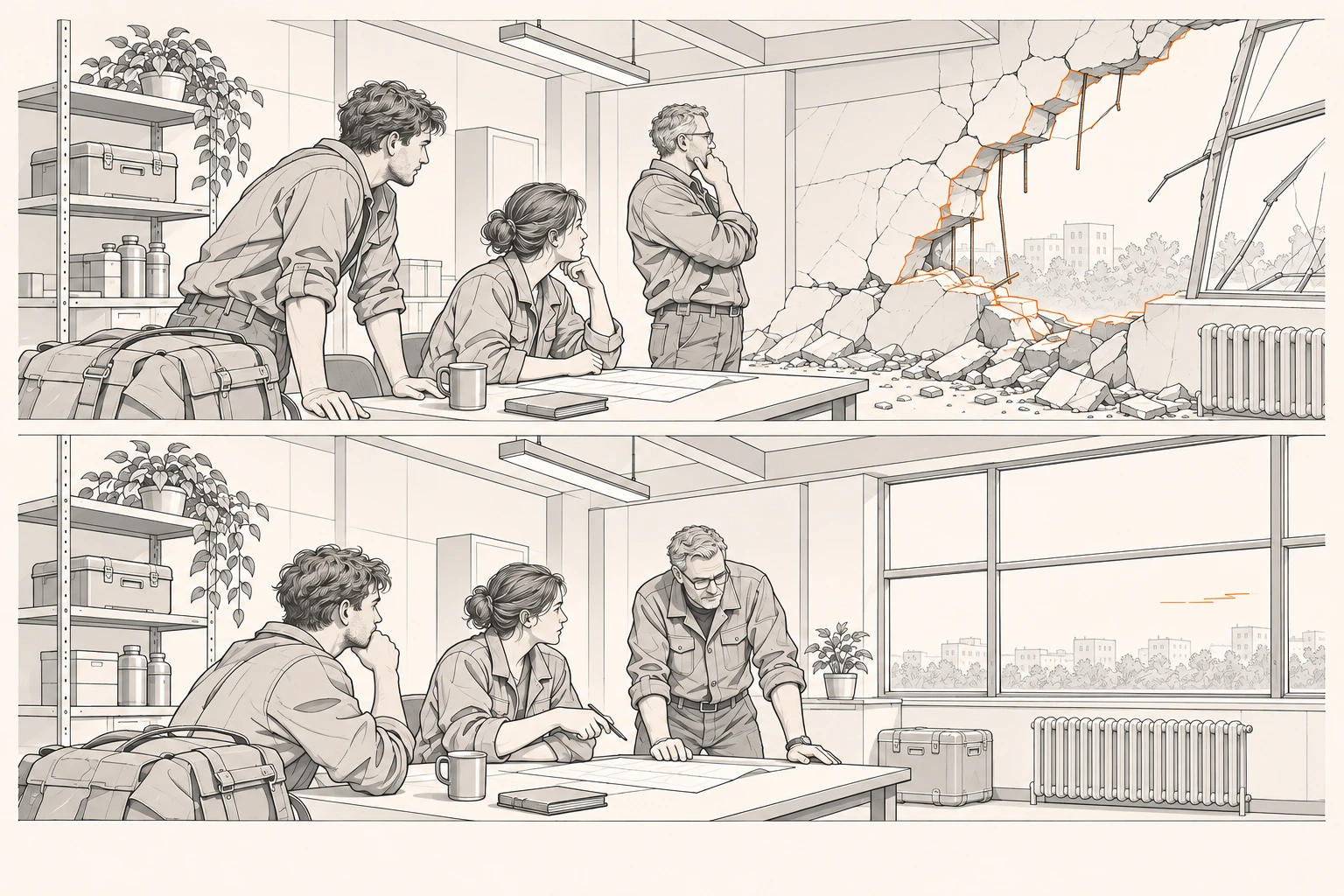
Figure 02. Closest target for unknown event
[P] Two conditional states of one room show why the immediate achievable goal depends on the conditions inside, information about the external situation and available help.
If there is a possible transfer of contamination, the planned movement is coordinated with the services and the recipients are warned. If the current location directly threatens life, use the available emergency exit without waiting for approval; Possible exposures will be reported as soon as possible. The correct exit from a dangerous place does not confirm the suitability of the next one.
Without communication, the group relies on known local order, available means of notification, and an agreed upon point of next contact. If there was no agreement before, a simple feasible agreement is created now, within the available conditions. Sending a person through an unknown dangerous zone just for the sake of communication is not a ready reserve.
An action is stopped or changed if it creates a new immediate danger, interferes with rescue, or has lost its original basis. The next check is related to the speed of change in the situation and the available forces. There is no universal safe wait in minutes. When combining tasks, go to P01; when changing the person in charge - to P02. Returning to normal operations requires your own review of the site and vital systems.
How different levels are connected
The family needs clear information about the affected area, immediate action, help and next message. To the settlement - data on routes, water, accommodation, care and limits of their own work. The city coordinates the flow of people and infrastructure. The state provides interregional support, international interaction and certainty of authority. Observations and needs are conveyed from below; at the top are decisions that can be acted upon.
The published description of the US National Incident Management System (NIMS) distinguishes between field work, operations support, senior management decisions and public awareness. Material produced by the US Federal Emergency Management Agency (FEMA). Here this approach serves as an organizational support: different functions must be coordinated while maintaining clear performers. The structure of government bodies depends on the country. [O; R1]
Each local scheme pre-determines the replacement of an unavailable manager and the range of decisions without communication. This circle does not automatically expand due to the unusual origin of the threat. We also need in advance conditions for lifting restrictions, checking their consequences and a way to correct an erroneous decision. Undoability is part of management from the very beginning.
P01 When right actions interfere with each other
Who uses it. The person coordinating his team, the agency leader, or the acting response leader. The card coordinates tasks within the existing authority.
Where to start? Name the conflict specifically: who should do what, why the two actions are incompatible, and what will happen if there is a delay. The emergency rescue continues while the contradiction is resolved.
When to delegate a task. If the decision is beyond your authority, it requires a professional assessment or agreement between territories. Convey both goals, available options, actions already started, and a deadline or event after which it cannot be expected.
Let's say the damaged premises need to be left, but the receiving point has not yet been warned about possible contamination [S]. The phrase “the protocols contradict each other” does not solve anything. A more precise description shows two different tasks: to remove people from immediate danger and to organize further reception taking into account the possible impact. They may require different performers and different times.
First, separate the immediate danger from the perceived danger. Then check whether the actions themselves are truly incompatible. A ban on unnecessary approach to the source does not mean a ban on leaving the damaged building. Restrictions on planned transportation should not quietly turn into a requirement to wait for permission where collapse is already threatening.
Compare the available options on four questions: what harm they reduce, why delay is dangerous, what neighboring functions are affected, and whether course can be changed. If there are no reliable probabilities, consider several plausible conditions. Write down at which point each option will stop working. Divide tasks between people only when the performers are actually available; One person cannot be assigned to be in two places at the same time.
After choosing, convey one valid statement for the specified location: purpose, executor, restrictions and reason to reconsider the decision. If possible, ask the recipient to repeat the meaning. Separately note who could remain with the old order. Then check the result. Leaving the premises and obtaining suitable accommodation are different achievements; the first does not cover the second.
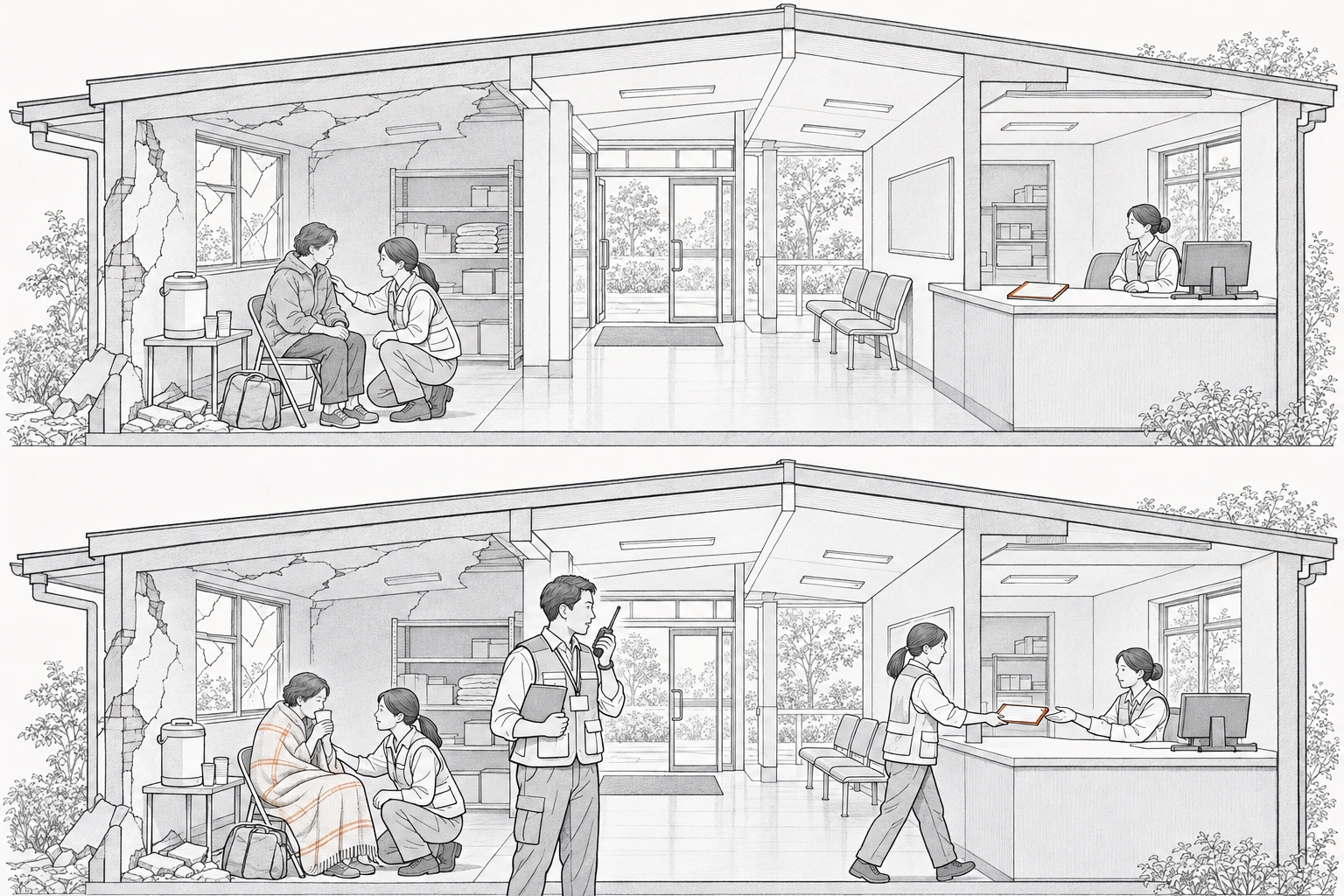
Figure 03. Two problems get one consistent decision
[P] Assistance continues simultaneously with the transfer of information to the receiving party. The person in charge agrees on specific tasks and confirms their completion.
Without a connection, don't count on unconfirmed reception. Keep the local option available and be clear about which external party commitments are not confirmed. Disputes between specialists are transmitted via G09, conflicts of territories – via G07. The immediate necessary assistance is provided to the extent available, without waiting for the entire dispute to be completed.
A review is needed if a path has become unusable, a protective measure has deprived people of needed help, a significant new fact has emerged, or the person responsible is unable to complete the task. They change a specific dangerous action, keeping the rest of the help where it remains justified. The result P01 is an agreed decision for a specific task; the remaining question remains open.
The crisis continues after the first shift
The first witness chooses the nearest action. The next shift already needs to understand why restrictions remain, what they managed to check and what is ending. The history of the incident helps to reconstruct this, but does not replace the description of the current situation.
To work, just a few related records are enough: event passport F01, current decisions F02, transfer of tasks F03, status of important functions and replacement contacts. The family can combine them on one sheet. In the city, records are kept by different people, so the coincidence of names, versions and boundaries of responsibility is especially important. Medical and other unnecessary personal information is not placed on the public record.
Separately, unfinished promises are saved: to meet a vehicle, to help a person, to clarify a dangerous assumption, to publish a correction. They are the ones who easily disappear when people change. Opposite the significant unknown question, they indicate what decision will change after the answer and who is looking for this answer. A curious question can wait; the question of the suitability of the shelter receives a different priority.
Information ages differently. The road, checked before the new destruction, is re-evaluated regardless of how old the record is. The deputy's contact is rechecked when the work organization changes. If clocks or coordinates are unreliable, preserve available landmarks and order of events, explicitly indicating the constraint. Renaming an object should reach people who use the old name.
P02 Transfer shift and save help
Who uses it. Transferring and accepting responsibility - in a family, placement site, institution, research group or headquarters. The transfer of central powers is additionally considered by G06.
Where to start? Name the people and tasks for which the immediate delay is especially dangerous: who is waiting for help, what function is close to failure, what transport is already on the way. Then clarify who actually accepts responsibility and to what extent.
When to delegate a task. The transfer is complete when the recipient understands the obligations, has confirmed the availability of performance, and the participants know who now decides. The submitted document or the absence of objections is not enough for this.
The shift begins with verification of the identity and credentials of the receiver. His arrival at the facility does not itself transfer responsibility. If he accepts only part of the work, the remaining tasks are named separately. The time and order of transition are chosen so that the necessary assistance is not left without a person responsible.
Transmit the current position with the date of the last confirmation. The words “currently observed,” “previously reported,” and “suspected” cannot be compressed into one confident statement. Identify remaining teams, recent cancellations, and groups that may not have received the fix. Check the location designations and the map version.
Next, look at open obligations: who to help, who is waiting for confirmation of admission, what is missing, and on whom the next step depends. The promised delivery remains promised until the necessary stages have been completed. The recipient must, in his own words, name the immediate goal, the most dangerous uncertainty, the reason to change the decision and the available reserve. The discrepancy in answers shows what still needs to be clarified.
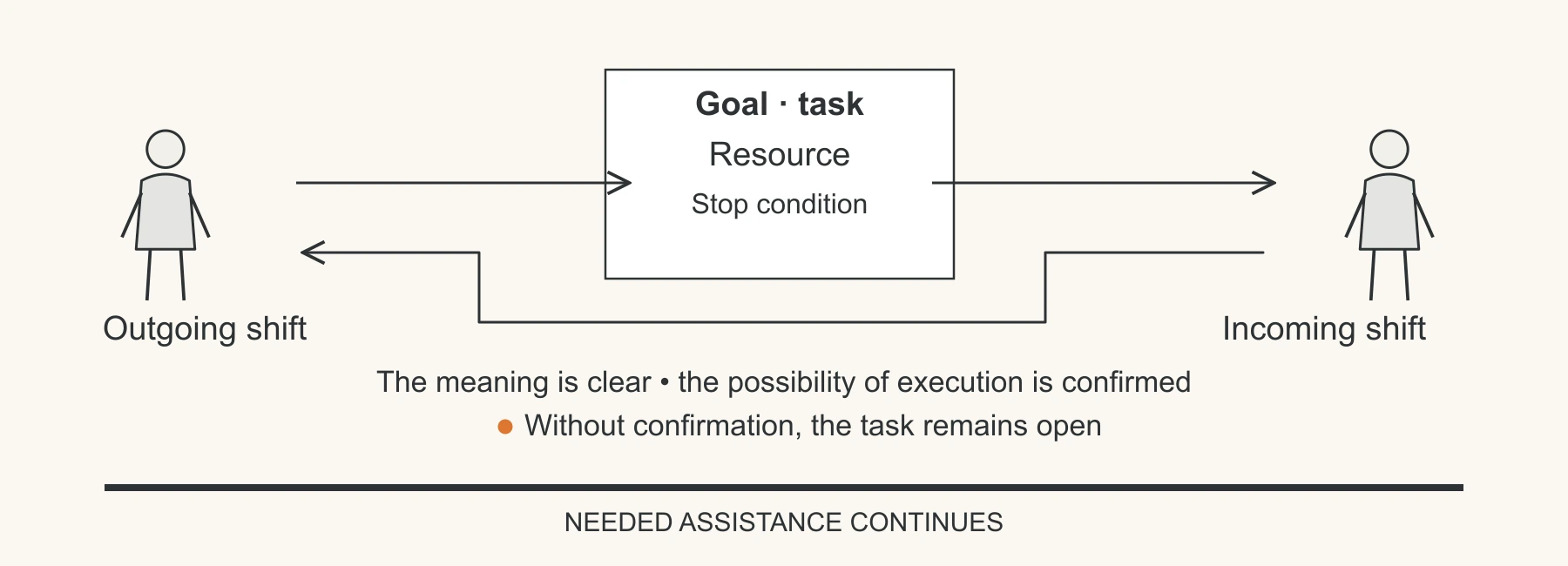
Figure 04. Shift handover: commitment accepted
[P] The transfer is completed when the receiving party has confirmed the meaning of the obligation and the ability to fulfill it. The necessary assistance continues through the changeover.
After confirmation, indicate the moment and volume of the transition. Inform the performers of the new name and method of contact. The first message from a new shift helps identify a lost task. At the same time, the previous shift must be given a rest: work does not become stable if the person who has completed duty remains a secret permanent reserve.
If there is no host, use a designated replacement or explicitly determine which tasks can still be temporarily supported. You cannot make an absent person responsible retroactively. If the transmitter is suddenly unavailable, the new picture is marked as incomplete and critical obligations are checked first. Without communication, they leave an accessible paper record and a copy of it in the designated place; a transfer that did not occur is called that.
Immediate rescue may interrupt the transmission. The same is done if the recipient is falsely identified or a dangerously outdated picture is discovered. After stabilization, the transition is completed by recording the break and the actions performed during this time. The criterion for success is continued assistance and clear responsibility; the signature preserves this fact, but does not create it.
Check That Help Reaches the Person
A system can have good individual cards and still fail people in the transition between them. The family received an address, transport was sent, but the point no longer accepted. The researcher clarified the conclusion, but the population continued to receive the previous version. The object retained its resource, denying access to a neighboring service. Such errors are visible when the entire task path is checked.
To move, follow the message, the ability to leave, transport, reception, assistance required and confirmation of arrival. For a scientific conclusion - the original record, processing, verification, limitation of the conclusion, the manager who received it, and the cancellation of the decision after changing the grounds.
At each transition, three different failures are possible. The contractor did not receive the task. The contractor received it, but has no funds. The action was completed, but the result the person needed did not appear. The fixes will be different: a repeated message does not create a transport, and a new person in charge does not make the building usable. Later we will return to this test in specific situations - from an unusual signal to the life of a city several years after the event.
Part II. Scientific Work and a Map of Unknown Threats
When the usual picture stops helping
In training scenario [S], the attendants receive a message: the familiar passage no longer connects the rooms it used to connect. People recognize the rooms, normal equipment works inside, some communications are preserved. However, the general layout of the building no longer allows us to promise that a person will end up where he is directed. Within the exercise, a change did occur. Participants must decide what assistance can continue in place, what movements can be stopped, and what needs to be confirmed before the next action.
If you start with a debate about extra dimensions, the work stops at the first question, which no one knows how to answer. If you continue to use the old map, the scientific debate will turn into someone else's lost road. It is more useful to first separate the lost knowledge from what is still preserved: the position of specific people, the state of occupied rooms, accepted obligations, available methods of communication. This is how work with an unknown threat begins.
An unknown is a threat for which there is insufficient knowledge about the cause, mechanism, or limits of impact. This is not the name of the creature or evidence of an attack. People can be removed from a collapsing building until the cause of the destruction is determined. But the intentional action of the enemy does not follow from the destruction itself. Observable harm, unusual recording, the existence of a source, and its intent require different reasons.
The NASA materials used in the book report the absence of reliable evidence of extraterrestrial life and confirmation of the extraterrestrial technological origin of unidentified anomalous phenomena (UAP). Therefore, extraterrestrial intelligence, extra dimensions, and unknown forms of influence are treated in the book as scenario conditions rather than as established settings. This limitation leaves room for research and determines what is acceptable to pass off as its result. [O; S1]
In this part, [O] denotes reliance on published research or professional approaches to the extent of their applicability. [P] is the author’s design procedure, which still needs training and expert assessment. All S-protocols belong to this level. [S] is a fictitious condition or training data that has not been proven to actually exist. A link to a study does not turn our card into an official regulation. In a scenario, by contrast, an unusual property can be explicitly specified as true: the decision under that condition is then tested, rather than the physical existence of the property itself.
The part begins with a problem map and constrained models. They are followed by actions for specific manifestations, then ways to verify observations and organize research. The final chapters deal with consequences that continue or change after the first episode. It is not necessary to read all chapters before emergency treatment. The card is chosen according to the problem that needs to be solved now.
What needs to be addressed | Basic protocol | What to check additionally |
Physical harm of an unknown nature occurred | Independence of information - S05; dispute about the mechanism - S07 | |
Previous route does not agree with observation | Availability of occupied sites - S08 | |
The effect appeared inside the protected object | Limited space models - S13 | |
There are many manifestations, the composition or connections change | History of consequences - S12; applicability of protection - S14 | |
A major event affects several territories | Shared resources and secondary failures - S12 | |
Unknown material detected on device | Mission Specific Procedures | |
The expedition risks losing the possibility of returning | Receiving machine status - S03 | |
There is no right answer or suitable method yet | Data origin - S05 | |
The visible event has ended, the environment remains changed | Delayed and compound consequences - S12 | |
The previous protection no longer gives the same results | Checking the new explanation - S11 |
Protocols vary in purpose. Some describe the effect, others describe the working conditions, and others describe the testing method. They can be used together. This avoids squeezing a complex incident into a single label: a giant object may be accompanied by a local communication failure, and a general summary error may coexist with actual damage to the building.
What constitutes a threat description?
The first information is almost always incomplete. The eyewitness knows that it has become hot; the operator sees the loss of telemetry; the doctor receives a complaint; A bright spot appears in the video. Their messages must be kept separate before being combined with a common cause. If you immediately write down the “energy attack”, subsequent participants will read the assumption as a finished result.
The Work Passport links observations to decisions. It indicates the effect, possible route of exposure, coverage, changes over time, latency of manifestation, possible signs of control and reliability of the information. Each significant amendment receives a new version. The old one is kept so that later it can be seen on what knowledge the decision was made.
Passport field | What needs to be distinguished in it | Why is this necessary? |
Consequence | Condition of people, environment and equipment | Select first aid and protected function |
Possible channel | Air, water, contact, matter, radiation, mechanical action, data | Check connections between sections |
Scale | The size of the observed object and separately the area of consequences | Determine who needs help and coordination |
Dynamics | Stability, expansion, repetition, movement, lack of data | Assign grounds for review |
Delay | Confirmed sequence and unknown intervals | Do not close the consequences along with the visible episode |
Signs of control | No signs, possible response, repeatable conditioned response | Set a separate contact task |
Credibility | Source, independence, limitations of the method | Balance confidence and severity of decision |
Size and danger are not the same. A small source can affect the overall system and cause a large cascade of failures. A giant, distant object may not cause observable harm yet. The map therefore shows separately affected locations, suspected pathways and areas for which nothing is known. A strong local effect does not prove the ability to cover the planet.
Biology, matter, energy, technology and information
The biological version includes various issues: possible infection, toxic products, changes in habitat. Illness after an unusual event may have an earthly cause, be related to a chemical, a water outage, or a coincidence. The assumption of extraterrestrial biology does not establish compatibility with human cells and does not provide grounds for considering the material safe. The first work is built around the cases observed, the help needed and possible routes of impact. Handling unknown material remains a separate professional challenge.
“Energy threat” is too broad a term for choosing a defense. Heating, optical flash, ionizing radiation, electromagnetic interference and mechanical wave require different observations. The glow image does not measure all of these phenomena. One wall, suit or material does not receive a universal purpose due to the similarity of names. When the mechanism is unknown, a narrower conclusion is possible: a particular measure retained a certain function under the described conditions. Checking this output is discussed in S07.
The technological version distinguishes between the medium, possible control and consequences for people. An autonomous vehicle can observe, perform someone else's task, be in an accident, or be part of a distributed system. His appearance does not establish the role. Damage to the apparatus, loss of signal, and cessation of harm are three different results; one does not replace checking the others.
The information case starts with the usual problems: misinterpretation, forged message, insecure data processing. The untrusted file is saved as testing material without automatically turning it into an executable command. Unusual content, which supposedly affects perception in a special way, refers to a separate scenario assumption. People's complaints require help and assessment of their condition; the public label “infected with information” does not provide either a diagnosis or a decision.
If there is a spatial discrepancy, time, coordinate reference, optical effects, platform position and processing are checked. With a temporary one, they preserve the local “earlier - later”, without correcting the records for the sake of a beautiful general scale. With the expected impact on perception, the person’s words, his condition and equipment readings are separated. An unusual experience does not prove an external agent, and the absence of suitable instrumentation does not eliminate the need for assistance.
In each family, it is useful to look not for a spectacular name, but for an observation that can change the choice. If two explanations require the same immediate assistance, the dispute between them should not delay it. If they lead to incompatible actions, the discriminating issue takes precedence. The inability to quickly select an explanation remains an unfinished study.
S13 Seven limited unusual event models
Who uses it. The leader of the exercise or plan review; at an incident - a group helping the current leader deal with an unusual condition.
Where to start? Name the lost assumption and list what else can be reliably taken into account: people, areas, functions, messages or sequences of actions.
When to delegate a task. When the next decision requires a measurement assessment, a special check, or a change in existing access restrictions.
The models below have a status of [S], and the order of their application is [P]. They are needed when the plan rested on an assumption that is no longer supported: an external boundary does not explain an internal event, a familiar path is inaccessible, the overall timeline is inconsistent. The similarity of the real message to the model does not confirm its physical nature. In a real investigation, the usual explanations and verification of data on S05 are retained.
The presenter fixes the properties of the scenario in advance and appoints a deputy who knows the same initial conditions. Participants receive a map of required features, available information, and a list of conditions that do not change. These conserved conditions are further called invariants: they are the ones that allow you to check the result. You can't add a new ability to a threat every time the group finds a workable decision. If the source arbitrarily changes any record and any physical process by condition, a verifiable universal plan for victory cannot be derived. A meaningful exercise requires at least one conserved feature or available observation.
Model 1. The effect occurs inside the perimeter
In the scenario, the damaging effect appears inside the object without observable crossing of the external boundary. It affects several areas, does not appear everywhere instantly, and leaves some of the necessary functions working. These properties are set by the host; the word “multidimensional” does not in itself define them.
The group can still account for people, recognize specific spaces, and maintain some of the communication. However, a functioning fence now only answers the question about the fence. It cannot be used to judge every room. The general “object is protected” mark is replaced with a map of local suitability: where help is available, what functions are confirmed, from where and where you can actually move.
This changes the security device. They try not to associate the required service exclusively with one internal point; the possibility of the intended replacement is verified using real people and equipment. The presence of a door between rooms does not prove the suitability of both. No one is sent to an unknown area to fill out a map. If harm has already occurred near people, the immediate action is determined by the local danger and the available emergency route.
In reality, this set of messages may be due to an internal source, incorrect schema, or registration error. It does not prove penetration from another dimension, nor the uselessness of all physical barriers. The training model remains meaningful as long as at least some of the local states can be independently verified. If this opportunity is completely lost, the assessment of protection against a given effect is stopped; Available recordkeeping and assistance are assessed separately.
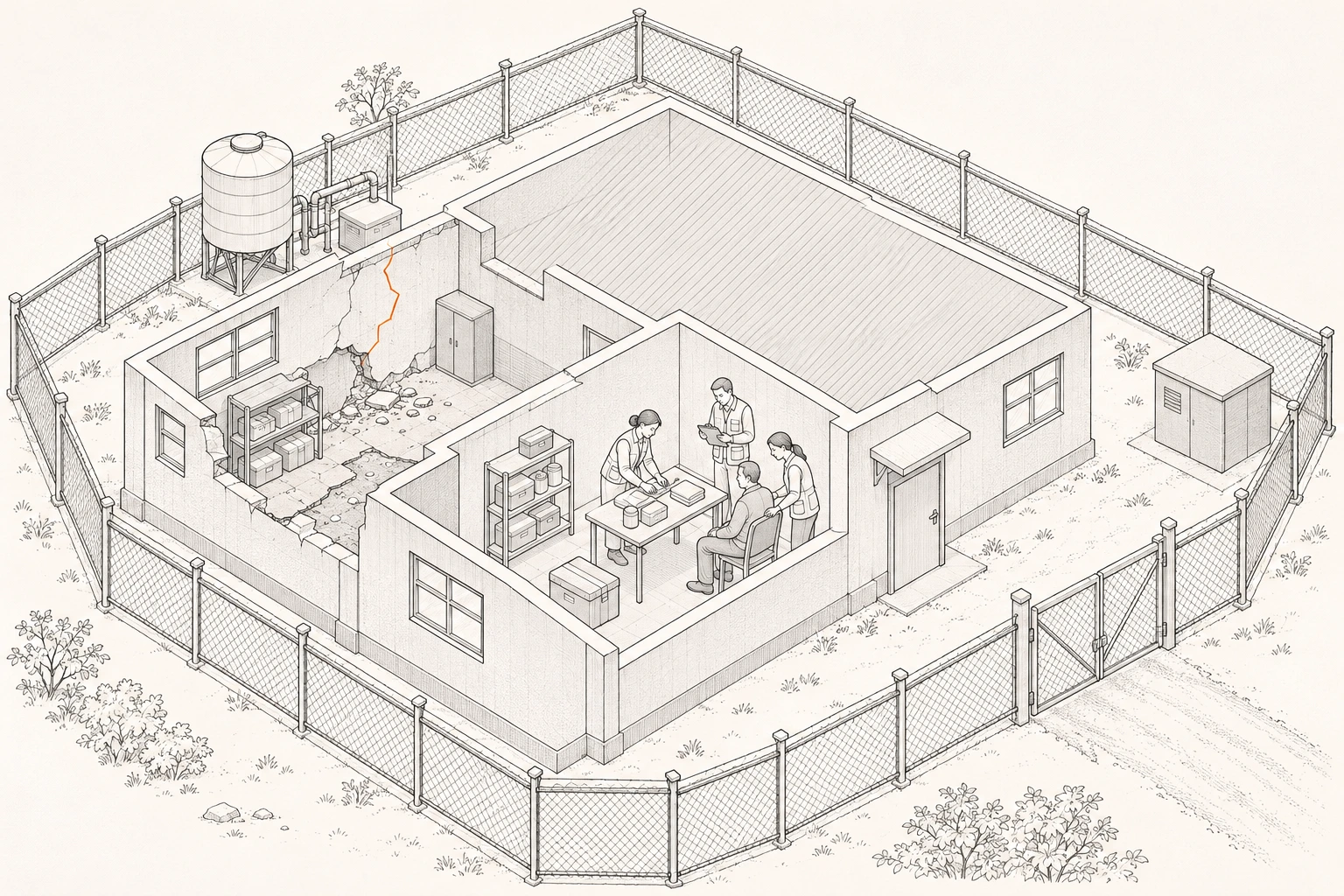
Figure 05. Model 1. Internal fitness beyond the entire perimeter
[S] The entire external fence is combined with the different condition of the internal areas. The determination of suitability applies only to the tested function and location.
Model 2. Connections between familiar places change
In this exercise, the previous passage actually no longer leads to the expected location or becomes unusable. Confirmed rooms retain recognizable local features. Changing one connection does not reveal anything specific about all the others.
People can confirm their presence in the room, the state of the receiving party, and the fact that the transmission has already completed. It does not follow from this that the same path is available now or suitable in the opposite direction. Therefore, the plan is based on a map of confirmed connections with the conditions for their relevance. For the next task, the receiving party confirms readiness again. The memory of a recent passage remains history, not the resolution of a new movement.
Let's go back to the opening scene. In tabletop problem [S], there are three areas: Hall A, Warehouse B, and Help Room C. There are people in each; local suitability and communication between duty officers confirmed. One repair kit from the warehouse is needed for two tasks: to restore additional lighting in the hall and a backup communications facility in the help room. The main connection is still working. The original plan gave the kit to the hall and called for the attendant to return to the warehouse. There is no other kit or free accompanying person. The presenter reports a change in the A-B connection; participants receive existing entries rather than sending a person to check the passage. Room B remains suitable for its own local mission, but its connection to the warehouse is not yet known.
The manager cancels the promised delivery to the hall and leaves the accompanying person at his current work. Some work in the hall is stopped due to deferred repairs. The following introductory note confirms the existing possibility of transferring a set from B to C without the transfer of an accompanying person; the people's return route is still unknown. The manager now directs the kit to the help room: its communications reserve receives priority over additional lighting. The receiving party acknowledges receipt. The previous repair A remains unfulfilled, and some of the work there has not been resumed. The changed condition allowed a different task to be completed, but did not restore the lost path or eliminate the cost of the original failure.
In a real event, a navigation error, an obstacle, and a change in numbering do not yet mean a new geometry. If neither local sites nor transfers can be confirmed, the result is a list of local activities and unknown connections. Immediate rescue continues according to available emergency procedures; exploration does not keep a person in a dangerous place or allow exploration of an unknown passage.

Figure 06. Model 2. The passage has changed, local landmarks have been preserved
[S] Local features persist between two episodes, but the availability of connectivity between sites requires new confirmation.
Model 3. The overall time scale does not add up
Several groups maintain their own sequences, but the available data does not reduce to a single reliable time. For some records, the local “earlier - later” remains known. The reason is not given: a common technical error is acceptable even within this script.
The group can determine what order it received, what it followed, and what confirmation it sent. Therefore, messages are provided with identifiers and an indication of the version being replaced. The reception request, the response about readiness and the message about actual arrival remain different events. A large number on the clock does not make a late-delivered order valid if its conditions have already changed.
The presenter gives participants different hours and delayed messages. Their task is to reconcile the commitment while preserving both original stories. Until the reconciliation is completed, everyone reports what they actually committed to do. If you rewrite the archive under one convenient scale, the very information that explains the discrepancy in actions will disappear.
The model does not establish violations of causality or time travel. Mismatched memories do not allow a person to be declared to have come from another timeline. If participants can no longer distinguish between their own actions and specific messages, the overall history is considered unestablished and limited to locally verifiable tasks. Help does not wait for the restoration of the common calendar.
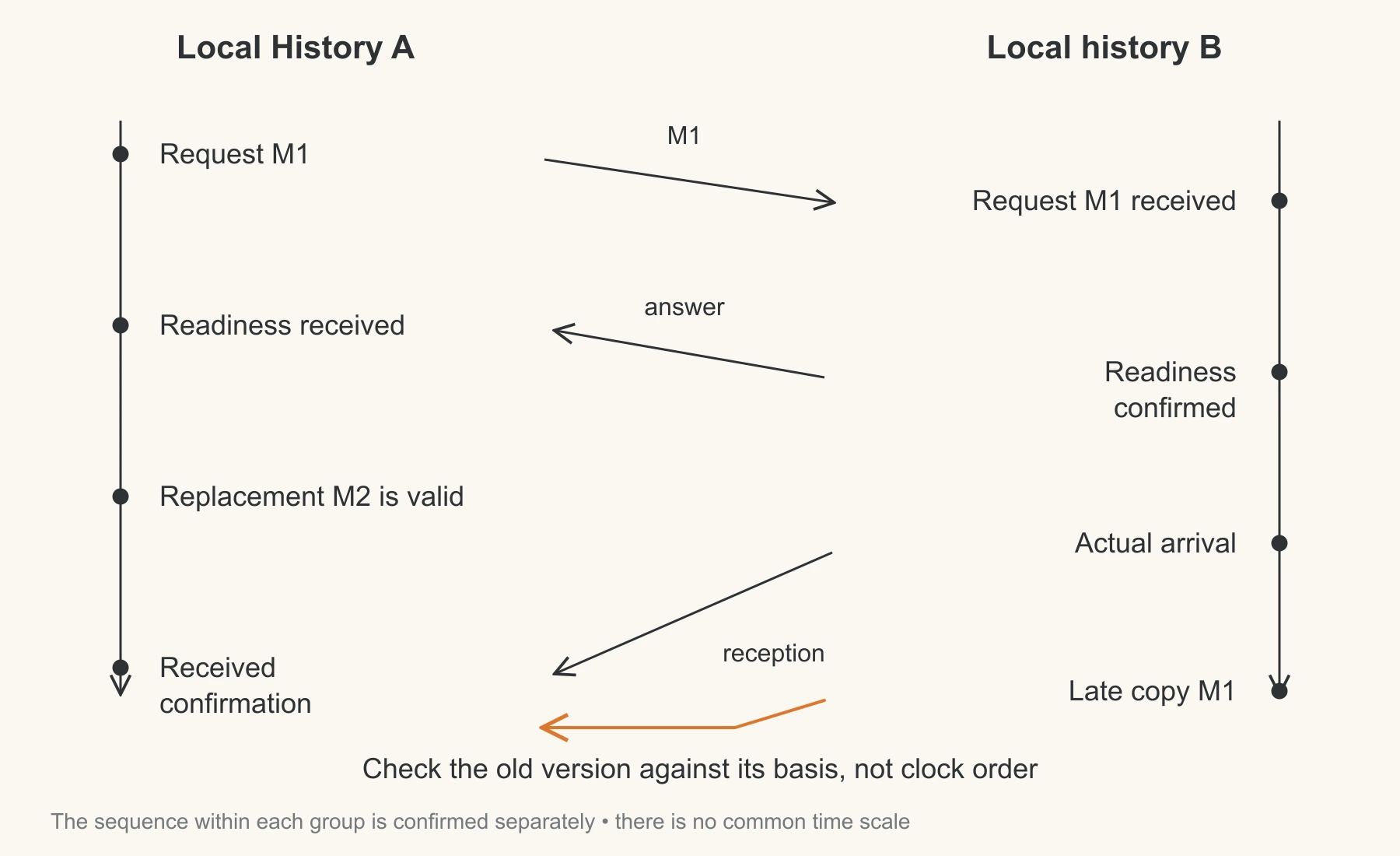
Figure 07. Model 3. Two local stories and message versions
[S] Request, readiness and actual arrival remain separate records. When the overall timeline diverges, the current version is determined by origin, replacement, and confirmed local events.
Model 4. There are consequences, the only source has not been found
The consequence is repeated in several areas, but available methods do not allow localizing a single physical source. The impact is limited to the observable area and does not destroy all verification methods. The facilitator maintains these conditions throughout the exercise.
People, functions and availability of assistance remain subject to observation. The map of confirmed consequences is maintained separately from the assumptions about the origin. This allows you to begin service restoration, for which precise localization is not needed. The movement of people is not directed to the drawn “center” just because the diagram looks more convenient with it.
The search for the source receives a specific question: what decision will change if the location is established? The researchers compare distributed cause, multiple local causes, and global registration error. Additional observation should distinguish between these versions. If the chosen method does not do this, the useful result is to set a limit to the method and stop the fruitless consumption of the resource.
Lack of localization does not prove a source outside space, the conscious field, or the planetary scale. Similar consequences can have different causes. The termination of the effect is confirmed in the area and for the function where suitable observation is available. The unknown position of the source does not provide a basis for influencing an arbitrarily selected object.
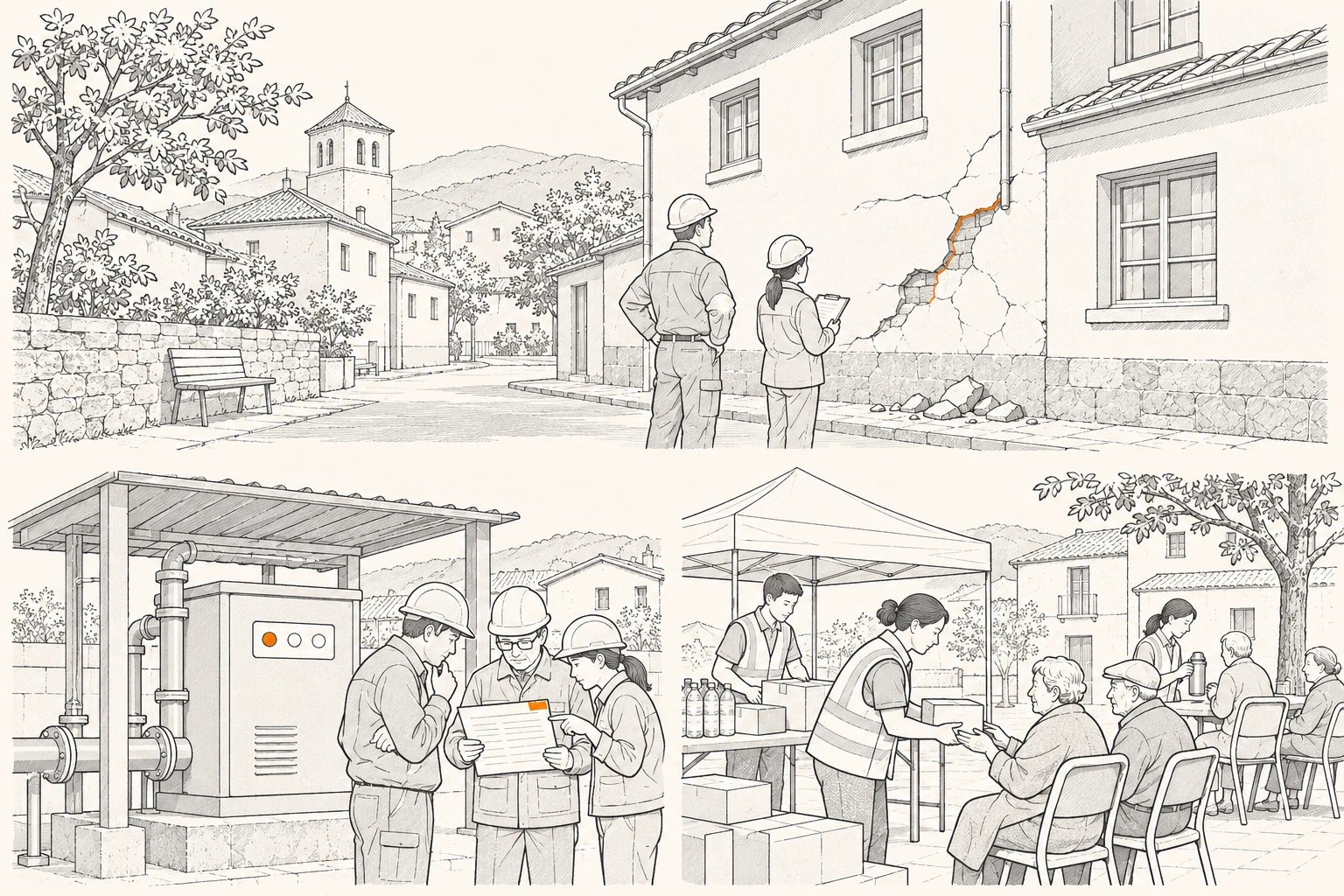
Figure 08. Model 4. The consequences are visible, the center is not found
[S] Local impacts and assistance needs are confirmed, although the source of impact is not localized. The plots shown represent individual observations.
Model 5. Protecting one function degrades another
Several consequences are discernible in an episode, and a measure useful for one task disrupts another necessary function. The reasons may be common or independent. Comparison options are available, but everything is not guaranteed to remain the same.
For each function, you can describe the condition and sign of deterioration. Your own actions are also included in the log. If a measure improved one indicator, that observation remains true after the collateral harm is detected, but the overall assessment of the decision changes. Success cannot be reduced to the most convenient schedule.
First, the leader formulates the conflict: which action helps what and hinders the necessary service for whom. Then, according to P01, he compares existing combinations of measures, temporary replacement and assistance to those whose needs still remain unmet. Scientific groups transmit recommendations to one person responsible for the overall decision. Incompatible advice should not be sent to performers as parallel commands.
In the teaching, the following introduction reveals the lost function. Participants are required to review the measure and check the consequences of the proposed replacement. Two effects do not establish a single mechanism, and the word “energetic” does not make the remedy universal. The special mode of the equipment is authorized by its operator according to the applicable procedure. The benchtop task does not require actual shutdown of vital systems or human testing of protection. In the absence of the necessary capabilities, they retain available organizational assistance and directly convey the unresolved conflict.
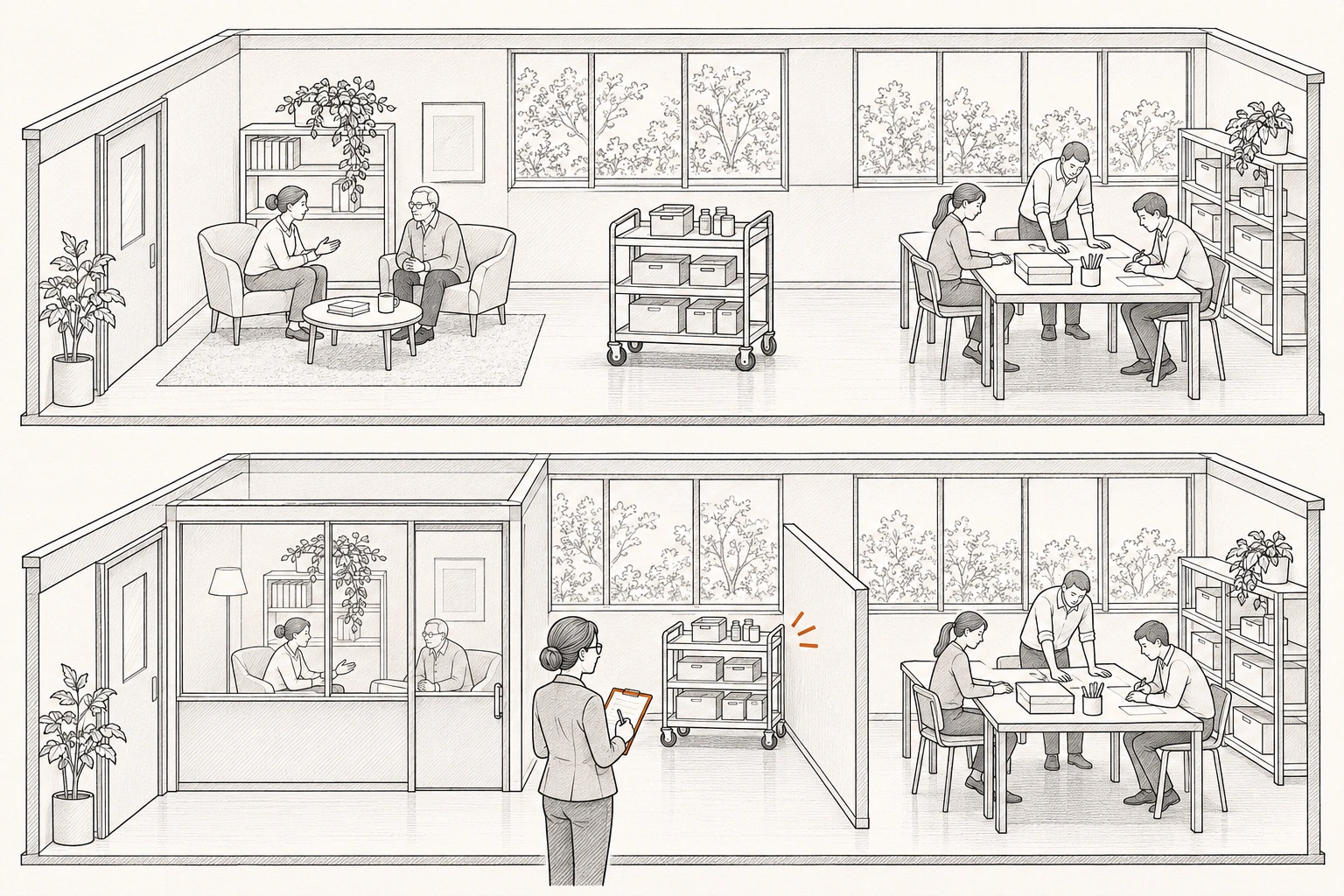
Figure 09. Model 5. Measure benefit and lost function
[S] The benefit of a measure for one task coexists with a new limitation of another function. Both sides of the outcome require joint revision.
Model 6. The composition of the system changes, its action continues
Observable elements appear and disappear, and some functions can be traced through changes in composition. It is not specified whether the elements are organisms, apparatuses, temporary manifestations, or the result of errors of discrimination. There are known episodes, places and some recurring relationships between them.
recordkeeping therefore has two layers: the assumed identity of the element and the continuity of the function. A continuing effect does not prove that the observer saw one object the entire time. The disappearance of a familiar element does not close the general episode, but the appearance of a new one requires checking the transfer of previous conclusions.
In the tabletop task, some elements change after a break, but the previously confirmed limited exchange with one participant continues. The group retains this useful result. At the same time, it does not extend the agreement to the entire new composition without reason. The map shows confirmed relationships, disputed identities, and areas of uncertainty. Contact is carried out within a separate mandate.
The growth of registrations does not establish reproduction, self-regeneration, or general intelligence. A negotiated change may have an external cause; the absence of a center in the data does not prove a lack of control. When tools do not distinguish individual elements, output is limited to episodes and functions. Names do not add resolution to the method. Further work is related to S06 and S11; the assumed structure does not make each part responsible for all the observed harm.
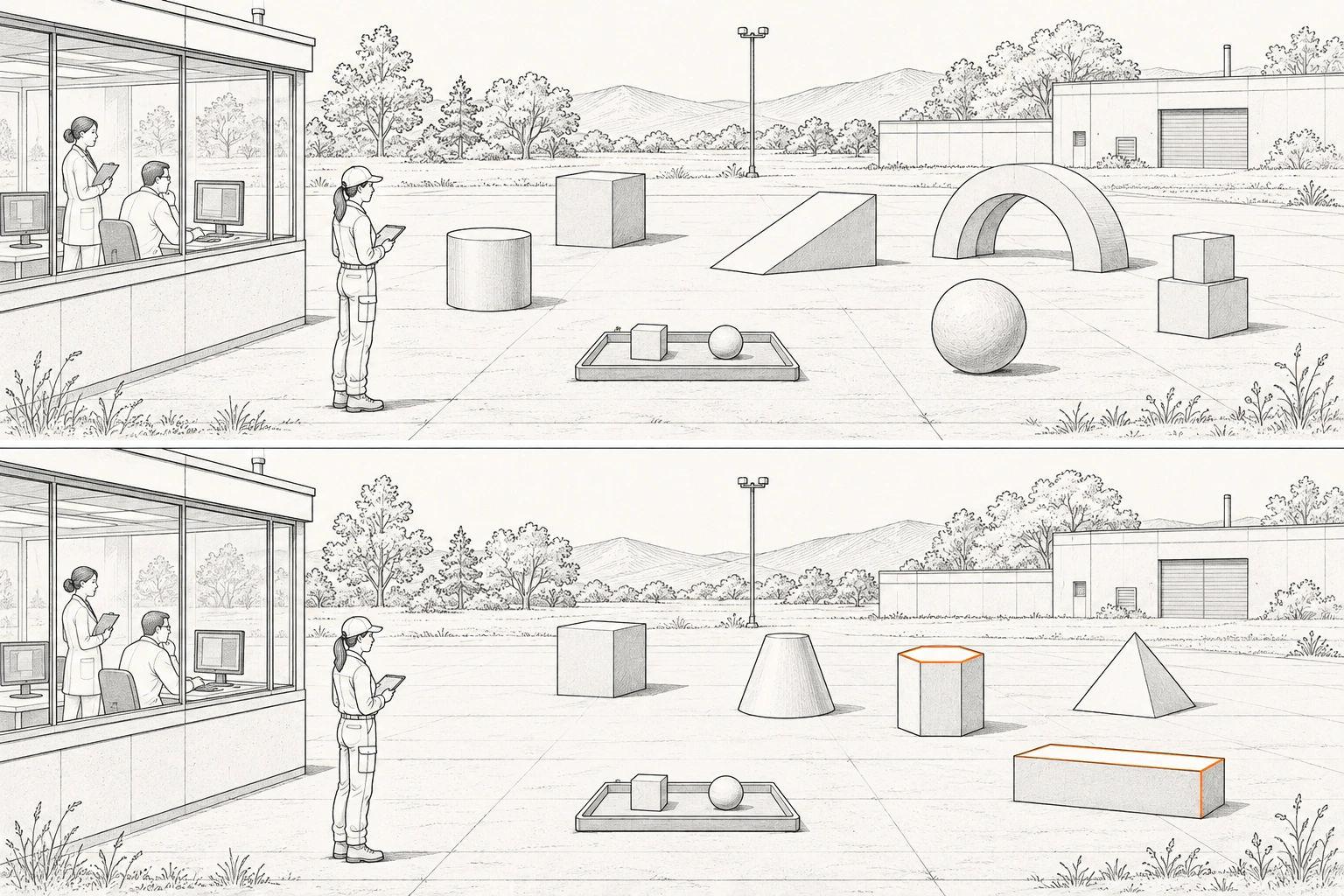
Figure 10. Model 6. The composition changes, the function continues
[S] Between episodes the set of observed elements changes, while one limited local function is preserved. The identity of the elements is checked separately.
Model 7. People and devices report different aspects of the event
People describe a similar unusual experience, but the technical records do not support it or reflect a different aspect. The condition of people and the safety of records can be assessed separately; the mechanism of divergence remains open.
Store each person's words, circumstances of contact, and observed needs. For the device, it is indicated what exactly it is capable of registering. Help and data verification go in parallel. A person does not need to accept the headquarters' explanation to receive support; in case of disorientation, the need for accompaniment is determined by his condition and situation.
Researchers check the origin of similar stories: their own observations, a common source, retellings, identical questions. Experts consider the usual causes and suitability of technical supervision. A late introduction may change the explanation, but should not change how people are treated with respect.
The victim should not be declared to be an entity carrier, an accomplice, or an unreliable person in general. The coincidence of stories does not prove a new channel of influence; the silence of an inappropriate instrument does not prove the absence of an event. The model does not define a diagnosis and does not propose to reproduce the experience. If it is not yet possible to distinguish between versions, the help, original messages, and output limit are retained. An unusual hypothesis does not permit forced experimentation or disclosure of personal information.

Figure 11. Model 7. Helping a person and checking a record
[S] Human support and technical record checking are carried out in parallel. The original message is retained along with the limits of possible output.
How to finish the model
The selected condition must be brought to a change in plan. First, the group names the affected function and what is still being tested. Then it saves the usual alternatives, notes the decision that changes specifically because of the scenario property, and checks the resource, authority, and failure flag of this decision. The new input tests its limits without arbitrarily changing the original rules.
When communication is lost, local confirmations, general designations, and a log of accepted commitments work. After the exchange is restored, the events and versions are first checked, then the explanations. The test is stopped if it requires influencing people, substituting conditions, or does not allow a discernible result. Convey the specific plan amendment, retained assumptions, and applicability limits. It is not necessary to choose a single unusual model where the information equally allows for several.
The First Action and the Local Situation
The atlas expands the range of questions, but the incident begins from a specific place. Someone remains in a damaged room, someone needs a clear path to help, the operator has to choose the operating mode of the system. The following protocols link these decisions to observed consequences. The explanation may change; assistance must maintain an independent basis.
S01 Unknown physical impact
Who uses it. Incident Manager and Technical Team; the witness performs the accessible part and contacts the usual emergency service.
Where to start? Stop unnecessary exposure to observed harm, consider people and report what is happening now.
When to delegate a task. In the event of casualties, damage to the environment, or the need to change access and mode of infrastructure, medical and technical services with the appropriate powers.
S01 is used when acute complaints, damage or unusual changes in the environment are already observed along with equipment failures, and the origin is unknown. One unclear entry is enough to verify the message. Separate grounds are required to declare an attack. The card does not specify a universal screen, distance or acceptable dose.
The incident commander connects the defense tasks. The medical director is responsible for assistance, the technical director is responsible for the condition of the devices and environment, and the communications officer is responsible for transmitting the information being verified. Each person is assigned a deputy in advance. Before such a group appears, an eyewitness reports the location, manifestation, number of known victims, and whether the exposure is ongoing. He is not required to name the mechanism.
The first steps have a simple order:
1. Reduce unnecessary exposure by using an accessible route that does not lead through obvious fire, destruction, or other known hazard.
2. Determine who was in the affected area, where they are now, and who needs help. Don't hold it up for the sake of a complete list.
3. Communicate observed facts; separately indicate the assumption about the cause.
4. Compare information about people, environment and equipment. Experts check whether these channels are truly independent.
5. Define temporary access restrictions and indicate who will review them and when they change.
The choice between exiting and temporarily staying inside depends on the position of the danger. If the source of harm is in an occupied space, the previous decision to remain there is reconsidered. If the danger is outside, exiting may make the situation worse. If the safe route is unknown, people are not directed to the source to clarify the situation; rescue is planned by services based on available means and current conditions. The discovery of a known hazard moves the work to the appropriate professional order.
Preparation for S01 consists of knowledge of standard surveillance tools, their limitations and the procedure for transmitting source codes. A person's well-being is not used as a device for testing protection. In the event of a communication failure, the provided local notification method applies, which does not require approaching the dangerous area. When the sensors fail, the manager records the loss of control. Lack of readings does not give permission to return; unnecessary presence in an undefined area is reduced.
New casualties, expansion of effect, deterioration of cover, or loss of surveillance require immediate reassessment. Research work that creates additional impact is stopped, while assistance remains in place. Access is restored after an assessment of the specific hazard and suitability of the environment by authorized services. The disappearance of a light, sound or object does not automatically eliminate the remaining effects.
The next group is given three distinct notes: the observed effect, the instrument reading, and the explanation. The general error is checked using S05, the controversial mechanism is checked using S07. The limited protection finding is recorded in F05 along with the conditions under which it will no longer apply.
S02 Spatial observations are inconsistent
Who uses it. Access Manager, Engineering and Research Team when route or position information conflicts.
Where to start? Stop unnecessary passages through a suspect location and preserve the last confirmed positions of people and objects.
When to delegate a task. If there is a known engineering hazard - to the specialized service; in case of unresolved contradiction - to the data verification group, without transferring to it the right to independently open the route.
The protocol is activated when, after the first check, there remains incompatible information about an obstacle, object or path accessibility and there is reason to fear harm. If there is no threat to people, an investigation is carried out without an automatic emergency regime. “Spatial anomaly” here refers to an observational or environmental problem. The existence of a portal is not assumed, and no method of passage through it is suggested.
The incident commander decides the issue of access. Engineers evaluate common spatial hazards; researchers compare explanations; an independent reviewer is looking for a general error. Prepared diagrams and information about their origin help in comparison. It is especially important to know how the position was determined: from a digital map, a local landmark, a human report or calculation.
After stopping nonessential movements, the team marks the last reliably established locations and how each was confirmed. The original records are compared before they are combined on a common map: is time defined consistently, do the coordinate reference systems agree, and was the same processing applied? Several explanations are then formulated, together with an observation that would contradict each one. Only then is an authorized program of remote checks prepared. The safety and permissibility of this work are assessed separately.
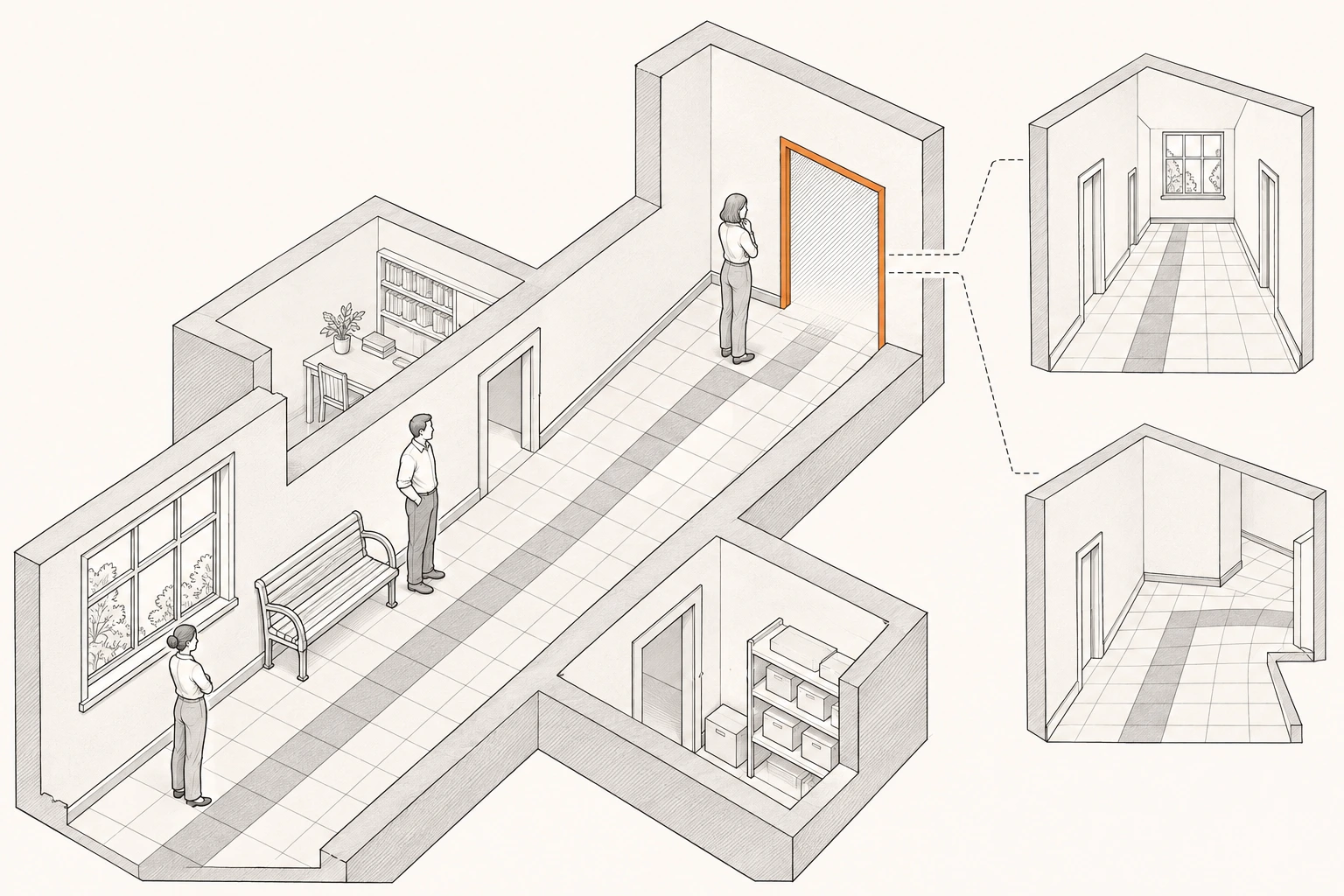
Figure 12. When the map and local observation diverge
[S] In a conventional episode, local landmarks are recognizable, but ideas about the passage diverge. The verified area and the unknown connection are recorded separately.
An identified navigation or image error still requires an independent verification of the fix before opening the path. Destruction, gas hazard or other known cause transfers the work to the appropriate services. If there is no explanation, the restriction relates to a specific questionable area. Uncertainty does not define an arbitrary zone around it.
In case of unreliable coordinates, use local landmarks whose connection with the site is confirmed. Returning to previous numbers does not guarantee exit. The loss of a remote control device is recorded as a loss with an unknown cause: it is not compensated for by the immediate dispatch of a person. In the absence of communication, local groups retain the designations and original observations, act within the limits of the known picture and do not present their incomplete scheme as a general one.
New casualties, changes in availability, divergence of independent means, or established common cause trigger a review. The exploration is stopped if it requires a dangerous passage or interferes with rescue. Completion of S02 means a transition to a known regulation or the preservation of controlled access with clear reasons. This does not require solving a fundamental physical problem.
During transmission, the verified part of the map, contradictions, observation limits and unverified connections are shown. The organization of traffic inside the object continues according to S08; The appropriate training model is selected in S13. The observation history is maintained separately from the simplified operational scheme.
S08 Internal Effects and an Unreliable Map
Who uses it. The site security manager, duty engineer and their trained deputies.
Where to start? Check the actual condition of occupied areas and the position of people, without drawing conclusions about the interior from the entire outer boundary.
When to delegate a task. When relocation requires rescue equipment, changes in engineering procedures, or verification of measurements beyond local capabilities.
S08 is needed if an internal event is not explained by the external perimeter condition, systems show incompatible locations, or the control map no longer corresponds to people and hazards. It complements S02 with practical access management. The reason may be ordinary; the additional dimension remains a hypothesis.
The duty engineer provides information about the premises and general systems. The researcher explains the limits of spatial inference. The decision to make a rescue move remains within the established chain of command of the facility. Before the event, it is useful to have local room names, up-to-date diagrams, alternative communications and procedures for autonomous decisions when external guidance is delayed.
The first difference is between the damage and the position of the suspected source. A damaged door can be located directly, while the coordinates of an unusual object are obtained through a controversial calculation. Dangerous passage is limited by the condition of the door. To do this, you do not need to first recognize a certain method of penetration.
Next, people are counted according to their last confirmed places. Missing information about a person and reporting his distress require different records. Others are not sent into an untested area just to fill out a chart. At the same time, they check the language of the map: one shift could use the room number, another could use the coordinates, and a third could use the old numbering. The matching table includes confirmed elements; controversial connections remain visible.
The operational map contains suitable areas, known hazardous areas and areas without sufficient data. To proceed, indicate the source of verification and the event after which the information needs to be updated. An unknown area does not become passable by default. If there is immediate danger inside, the available emergency route is used without waiting for a full map. If this path is also unsuitable, the goal of rescue requires a change in the decision according to the local plan. When safe exit is not confirmed, apply C15.
Before dividing areas or closing access, the engineer checks common dependencies: who will not be able to get help, which resource crosses the border, which functions will lose control. Modifications to equipment should only be made by authorized personnel. The previous diagram may be incorrect, but this does not change the requirements of a particular installation.
The reasons for the discrepancy are investigated by map versions, observer positions, time and infrastructure changes, using permitted documentary and remote means. The identified bug receives a fix. An unidentified cause does not receive additional properties. Recipients of the new diagram confirm the meaning of the signage and closed crossings, and mark the old digital and paper copies as replaced.
Without communication, agreed local symbols and methods of conveying the situation apply. The silence of a room does not mean that it is empty. Every new internal event, movement of people, change of path, or communication failure requires re-evaluation. The study is stopped if it blocks the lifeline, worsens the condition of people, or requires an untrained observer.
The result is a scheme suitable for current protection or a fairly limited local operating mode. When a manager changes, the people accounted for, current restrictions, unverified connections, the latest confirmed version and the reasons for its use are transferred. Open questions of geometry are not hidden, but do not replace this transmission.
S07 Harm established, mechanism remains controversial
Who uses it. Technical director of the study and specialist capable of accepting its journal; the medical team provides care independently.
Where to start? Separate the consequences and name the decisions that actually depend on the choice of mechanism.
When to delegate a task. When verification requires a special method, infrastructure changes, or conflict resolution between required functions.
This protocol continues S01. Its cause is heating, light effect, damage, deterioration of people's condition or equipment failure, for which various protective measures have been proposed. A special reason is an attempt to adopt a new defense only after the anxiety disappears. The words "energy" and "field" do not establish a mechanism; normal causes and multiple simultaneous events remain under consideration.
The team collects in advance available information about the state of the systems before the episode, logs, descriptions of surveillance equipment and the provided protective modes. Its operator together with the incident manager has the right to change the operation of the infrastructure. The research hypothesis itself does not provide authority for switching.
First, give each consequence a separate record. A report of heat, a measured temperature, and an image of a glow mean different things. One channel describes a sensation, another a measured quantity, and a third the result of recording and processing. Then check whether the channel remained intact after the event: were data lost, did its operating mode change, and is there a shared dependency? Missing data must not be replaced with zero exposure.
For each explanation, researchers note supporting evidence, contradictions, and the missing distinguishing feature. You cannot choose a mechanism just because there is a familiar protective agent for it. The suitability of a measure itself involves three different questions: whether the measure exists, whether it works, and whether it is fit for purpose. The first two answers do not replace the third.
The protected functions are compared: suitability of the premises, availability of assistance, operation of the required system. If the methods of defense are incompatible, the manager receives a common conflict and its consequences. The measure should not quietly destroy the only channel for checking its own result. When it is not possible to maintain such an observation, uncertainty is taken into account before making a decision; surveillance at the cost of unnecessary exposure to humans is not supported.
After the change, the state of people, systems and assistance is compared with the previous one, taking into account other changes that have occurred. Success on one metric does not automatically compensate for the loss of a more important function. F05 records proven benefit, its conditions, possible explanations for apparent success, and signs of withdrawal. The medical and technical teams receive one valid version, with significant differences remaining.
Disappearing anxiety
Learning conditions [S]. A light effect and loss of some telemetry were noticed at the object. Unpleasant heat is reported from the adjacent room. The common cause has not been confirmed. The operator has a design-defined method for dividing the site; there is an already operational aid station outside the site. The adjacent premises retain a separate local connection to this point. There is no additional control equipment in the conditions. Once the switch is allowed, the alarm on the central screen disappears and the duty officer is ready to announce success.
Before the switchover, it was necessary to maintain a suitable environment and limit the spread of control failure. Upon acceptance, both tasks were quietly replaced by the absence of an alarm icon. The inspector asks for the log: what did the signal mean, is its source working, what has changed in the transmission? The recording shows that the division has stopped receiving previous telemetry. Now the lack of alarm is due to a lack of data. It proves neither the success nor the failure of physical separation.
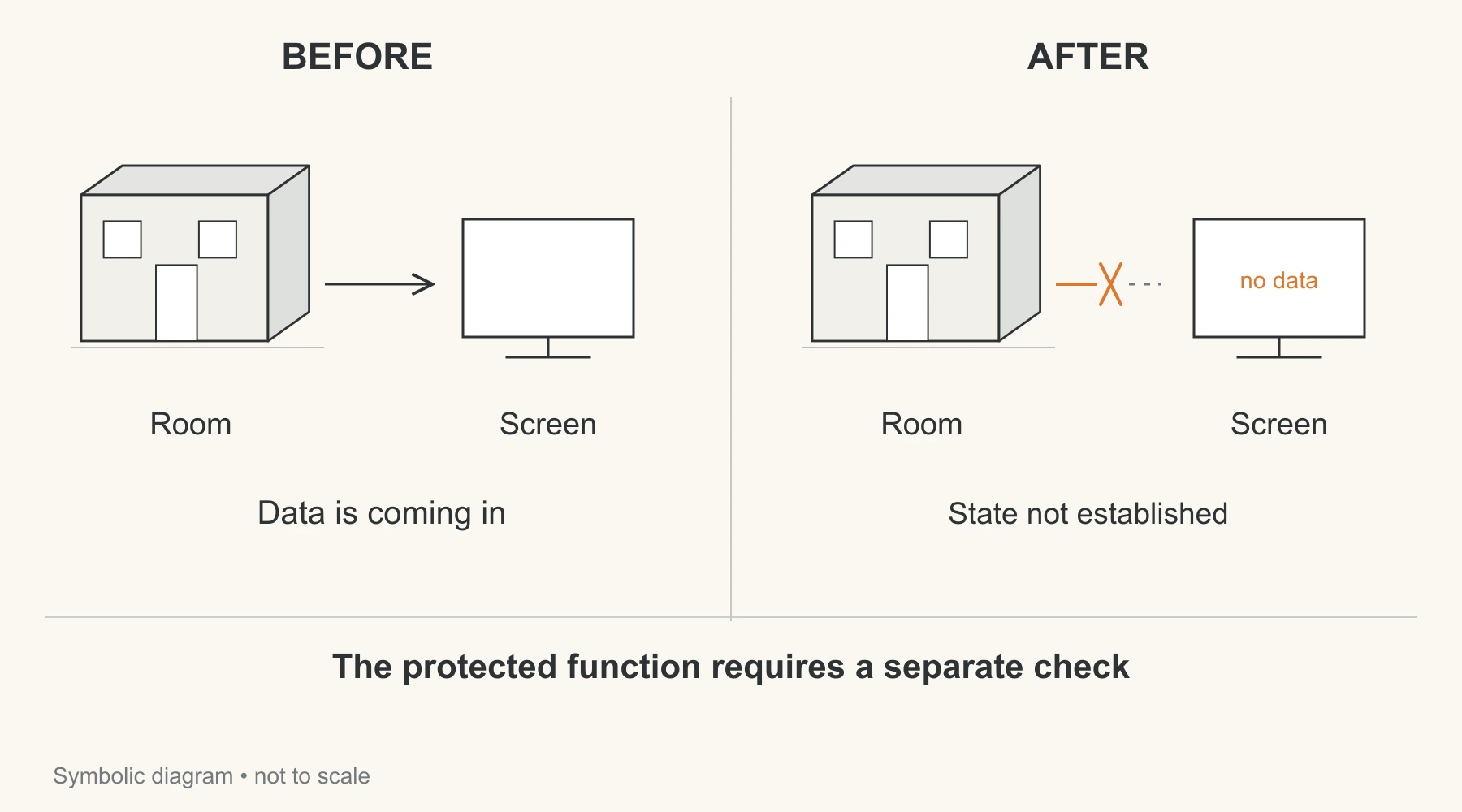
Figure 13. Disappeared alarm: channel no longer transmits data
[S] The disappearance of the alarm when telemetry is lost does not establish the state of the room. Acceptance of a measure requires confirmation of the protected function.
At least three explanations remain for the apparent improvement: the measure reduced impact; the effect stopped on its own; the screen stopped showing the ongoing effect. Existing records do not yet distinguish between them. The manager maintains the independently justified part of the restriction and does not return people to check the premises for their well-being. Help is provided at an already accessible point. The price is the suspended operation of the site, the load on this point and the lack of response about the suitability of the original premises. These losses are included in the decision.
The next introductory message informs that the division has stopped confirming applications for the provision of neighboring premises in the common system. The manager transfers these requests to an already existing local connection with the help point: the recipient repeats the meaning and separately reports what he can do. An accepted application is not considered a completed supply; until confirmation of fulfillment, the requirement remains open. The operator preserves the technical measure only within the limits of its remaining bases and checks the side effects with its order. Planned work on the original site is not being resumed. No new equipment or personnel appeared; The existing point also has to spend time on separate recordkeeping. If confirmations disappear again, this replacement method will also need to be revised.
The exercise can be continued with another introduction: available independent control has confirmed a certain function. Then they accept the limited result precisely according to it. Another option is that the source completed the action on its own, and it is impossible to separate this from the action of the measure. In this case, causal efficacy remains undetermined. For all options, the distinction between service state, control channel, and event explanation remains.
In the final record, three statements are allowed simultaneously: the failure did not affect the listed systems; legacy telemetry is not available after separation; The cause of the heat report has not been determined. This picture gives the next leader more than an overall green or red status. In the analysis, they check whether a loss of observation was detected, whether collateral damage was taken into account, and whether the performers received correction.
If the danger is known, S07 switches to professional regulations; for several reasons, tasks are distributed among the appropriate services. Without communication, the operator maintains the allowed mode, resource control and local log. The absence of an analyst does not allow new equipment modes. Urgent rescue is carried out according to the current emergency procedure.
The test is stopped if there is a new threat to people, loss of control, or an unintended impact on a vital function. The conclusion is the chosen known order, confirmed limited benefit or established unsuitability of the measure. They convey effects, alternatives, protected functions, accepted passport, open questions and conditions for a new assessment. The study of the next method is organized by S11, the loss of previous applicability is considered by S14.
Scale, Multiplicity, and Distance
An unknown event may be larger than a site managed by one person on duty. Sometimes it looks like many elements, sometimes it looks like one giant object. Sometimes the problem is so far away that the response from the external manager will come later than the necessary decision. In all three cases, it is dangerous to replace real connections with a general image: “swarm”, “planetary threat”, “expedition under control”. You need to know what exactly is involved, what is available to local participants and what obligations remain feasible.
S06 Distributed manifestations and suspected swarm
Who uses it. Distributed surveillance coordinator, area teams and a deputy from another active team.
Where to start? Map separately registrations, confirmed harm and general services; check what exactly is considered a separate element.
When to delegate a task. When local consequences require a general distribution of aid or inferences about relationships need to be verified by an independent group.
S06 applies to multiple elements or consequences for which the single source hypothesis may be incorrect. Registrations appear in different places, the number of elements varies, they are difficult to track, and the end of one episode does not end the rest. An increase in messages after news does not in itself establish spread. "Swarm" and "collective" here refer to a testable organizational hypothesis rather than known biology or general intelligence.
Local leaders are responsible for their areas. The analyst links the registrations, but does not have the authority to declare each element to be part of a single adversary. The group needs consistent descriptions, identifiers, a surveillance coverage map, and a way to communicate local landmarks and time with its limitations.
The work begins with the unit of account. One object can appear in several records, and one record can contain several indistinguishable elements. An undefined number cannot be rounded to a convenient precision. Each confirmed consequence for people and infrastructure receives a separate record: location, available sequence, assistance and service status. This map is not automatically redrawn with each new guess about the number of features.
The analyst then checks for changes in the observation itself. Connected cameras, a new message channel, or new classification rules can increase the number of registrations without increasing the number of sources. The periods are compared indicating these differences. Careful connections are left between episodes: probably one element, perhaps different, there is not enough data. If an alternative group changes its decision on protection, it is retained along with the main one.
The assumption of common coordination is compared with common external cause and common error. The simultaneous change may be due to the environment, the observer, or the processing instruction. The version needs a differentiating check. A center not found does not prove that there is no control; similarity of actions does not establish a single mind.
The practical decision determines what can be done locally and where exchange is needed. If the effect moves, confirmed effects and available resources are transferred to neighbors. The disappearance of registrations in the sector does not close the entire system. Flows of people and vehicles are compared to the state of the receiving area to ensure that protective movement does not lead to an unassessed area. Emergency rescue in cases of immediate danger continues according to available conditions; further reception is coordinated in parallel.
If the set turns out to be a repeated count, the number is corrected, preserving the real consequences. If the events are independent, resource coordination may still be necessary. If a connection between events is confirmed, exchanges are strengthened and general measures are checked. The lost area is marked as an area of insufficient information: it is neither automatically cleared nor captured.
Without communications, local teams perform the assigned security mission and maintain logs of IDs, times, and restrictions. After the exchange is restored, the records are first verified and only then combined. Coinciding names do not establish the identity of the object. Exploratory movements are stopped if they require dangerous proximity, leave the area unassisted, or create the risk of people being mistaken for elements of the proposed system.
S06 ends with a general picture sufficient to distribute protection, or a fixed mode of independent local response. Communicate the map of consequences, contested identities, shared dependencies and tasks to groups. The summary shows which decisions will change if the disputed elements are separated or combined. Composite consequences continue according to S12, composition changes - taking into account model S13.
S09 Giant object and consequences for several territories
Who uses it. Head of Scientific Scope Assessment, State Coordinator and Territorial Services; a deputy has been appointed to the scientific supervisor.
Where to start? Separate the location and properties of the object, observed harm, calculated forecast and secondary service dependencies.
When to delegate a task. When the consequences exceed the capabilities of the region or a verified assessment requires interterritorial and international decisions.
In actual planetary defense, NASA's strategy integrates detection, tracking, property assessment, impact modeling, response preparation, and international coordination. Its subject is natural near-Earth objects. For this book it is an organizational pillar; transfer to a controlled unknown system remains a design assumption. [O; S3]
The DART mission demonstrated the ability to change the motion of a specific asteroid by impacting the vehicle. This is limited evidence of the method under certain conditions. It does not follow from it that it is possible to stop any gigantic object, especially one that is maneuvering or has an unknown structure. [O; S4]
NASA's Center for Near-Earth Object Studies (CNEOS) Sentry system considers a set of feasible orbits consistent with available observations. New data refines the set; An updated estimate does not necessarily mean that the previous estimate was in error. But this approach is associated with natural asteroids and the accepted model of motion. For another object, the applicability of the model must be justified separately. [O; NS4]
S09 is turned on based on a confirmed event that requires an inter-territorial assessment, or on consequences that one region cannot cope with. The impressive image and its many publications do not replace this foundation. The scope of a decision determines the possible consequences for people and systems. This card does not specify the method of physical destruction of an object.
The astronomy group is responsible for the applicability of the propulsion model, the engineers are responsible for the implications for systems, and the medical service is responsible for the needs of people. The State Coordinator combines the findings into protective decisions. Neither group replaces the authority of another. Before the event, channels of competent exchange, a register of critical services, a map of cross-regional dependencies, and information about existing deployment and assistance are needed.
The scientific team first ensures that the messages refer to one event and one version of the data. The observed position, estimated dimensions, calculated motion, and estimated behavior are recorded separately. An unknown parameter remains unknown. Disagreement with past trajectory is considered in conjunction with data quality; deliberate maneuvering gets its own check.
The manager is offered several scenarios with explicit conditions: what is already happening, what follows from the applicable model, and what is additionally specified for the exercise. An invented set does not become a probabilistic forecast without a basis for the probabilities. For each option, the territories, necessary functions and decisions requiring approval are shown.
Figure 14. Giant object and regular service dependencies
[S] Conditional panorama without scale. The size of the unknown object and the state of communications, transport, water and assistance are estimated from individual observations; causal relationships require verification.
In the secondary dependency map, each node is associated with a service to people. Loss of communication, traffic stops, water outages and disruption of assistance remain separate challenges even with a common unknown source. The operator indicates the existing reserve and to whom it is already assigned. Multiple plans cannot consider the same vehicle, staff, or receiving facility available at the same time.
The movements are compared with actual reception, support and continuation of treatment. The planetary image of the event does not create the possibility of a general evacuation. Local rescue is not waiting for the inter-regional scheme to be completed. If physical counteraction is unattainable, the strategy retains the subject matter: loss reduction, knowledge, recovery resources and representation of people in possible contact. Relocation to another planet or an autonomous underground city can only enter into the current plan if a proven possibility exists; otherwise it is a long-term research task.
Each update of the forecast is translated into a specific change in actions: who needs to review what and why, where the previous reasons are preserved. Patterns and disagreements are conveyed to management; for the population - addressees, actions, assistance and reason for the amendment. The object's potential power is not described as a proven intent to destroy.
If part of the observations is lost, the actual local consequences retain their basis for response. The old trajectory does not operate indefinitely. Without communication, territories perform agreed upon tasks and record the use of shared resources; After the exchange is restored, help conflicts are resolved first. The plan is revised if the applicability of the model is lost, there is a danger on the route, a refusal to accept or a disproportionate harm to the measure. The result is sustainable interdepartmental management of consequences or reasonable observation without emergency measures. They transmit versions of scenarios, secondary failures, decisions of territories and assumptions that can change them.
Unknown environment far from Earth
At a station and on a field expedition, the protective equipment itself can deprive a person of the atmosphere, the resource of return, or access to reception. Therefore, the general scenario here is always subordinate to the capabilities of a specific mission. The book helps you ask questions and keep the information conveyed. On-board commands, equipment modes and medical decisions are taken from the approved procedures of the device.
S03 Unknown material on station or return vehicle
Who uses it. Commander, life support engineer, medical specialist and designated planetary protection officer along with ground control.
Where to start? Notify the crew, stop non-essential material handling, and check the condition of people and vital systems.
When to delegate a task. In case of violation of containment, deterioration of habitability, or the need to change the reception and further operations - the responsible services of the mission according to its emergency procedures.
Reasons include suspected violation of intended material containment, unusual post-contact effects, or detection of cargo outside the planned handling chain. Returning from another celestial body itself does not prove infection. An unknown material does not become safe just because its properties have not yet been established.
Committee on Space Research (COSPAR) Policy 2026 calls for strict control of samples during limited return to Earth and warns that universal biosafety testing and disposal procedures may not be reliable without an assessment of the specific extraterrestrial life form. NASA requirements for robotic missions provide evidence for the safety of sample return and containment. Mechanical transfer of these documents to any manned vehicle is unacceptable. [O; S5; S6]
The commander makes decisions within the limits of on-board authority. The engineer assesses the suitability of the environment, the medical specialist assesses the condition of the crew, the person responsible for planetary protection assesses restrictions on handling, and the ground team assesses further operations. Their functions and replacement must be determined by the mission in advance. When there is a delay in communication, the established autonomous sequence operates, rather than an independent experiment with an unknown sample.
First, the unnecessary movement of material between compartments is stopped and the crew is accounted for. Then, immediate threats and vital systems are checked using standard means. The history of possible contact is reconstructed based on operations: where the material was located, what barriers were expected, who could have been nearby. The container is not opened for amateur inspection. The status of people, equipment and containment is communicated to the ground team; decisions about ventilation, sealing, and movement are made according to machine procedures.
In a published review of the ISS experience, the main emergency categories are related to fire, toxic pollution and rapid depressurization. The general lesson for this card is that protecting against one risk should not deprive the crew of a suitable atmosphere or intended shelter. Commands for the ISS are not universal commands for another ship. [O; S7]
In the event of an established fire, depressurization or toxic exposure, on-board emergency procedures are carried out first. If habitability is stable and containment is in doubt, non-essential operations and cargo transfers are suspended. Emergency care begins its on-board order. The commander and medical director evaluate the further movement of people along with the possible transfer of material; the receiving party is warned in advance. Incomplete identification does not in itself justify delaying life-saving care.

Figure 15. Crew, material and habitat
[S] The condition of the crew, the history of possible contact with the material and the performance of the habitable environment are considered simultaneously.
Without external communication, the commander maintains life support and follows the restrictions agreed upon before the flight. The shared ledger does not create a new return plan. Proven options for crew assistance and handling of potentially dangerous cargo must exist in the mission design. If they are not there, the confident promise of airtightness during an accident does not close the gap.
Deterioration of people, loss of barrier, reduction of resource and change in fit or reception require immediate review. Work with the material is stopped if acceptable conditions are lost. The absence of immediate symptoms or a negative result on one earthly test does not prove its safety. Resumption of operations is subject to the applicable mission procedure. The next group is relayed the status of the crew and required functions, contact history, observation limitations and decisions made; obtaining a complete scientific description does not delay the assistance needed.
S04 Expedition to the surface of a planet or comet
Who uses it. Field Team Leader, Trained Deputy, Engineering, Navigation and Medical Specialists.
Where to start? Stop the non-essential study, check each participant and the actual possibility of returning to the designated facility or base.
When to delegate a task. If there is a threat to a resource, route, human condition or reception - into the mission emergency chain; You can wait for the Earth only as long as the wait is compatible with its conditions.
S04 is used when there is an unknown impact, human deterioration, the environment does not correspond to the calculation, the loss of a reliable path or the consumption of a resource that puts the completion of the exit in doubt. There is no need to prove an extraterrestrial biological threat or hostility to stop the research. Return here means reaching the intended habitable environment. The subsequent flight to Earth is a separate decision.
The commander acts within the limits of pre-established autonomy. The engineer monitors transport and life support, the navigation specialist monitors the route, and the medical officer monitors people. Trained deputies assume functions as planned. If one person combines roles, the limited ability to perform them simultaneously is taken into account explicitly. The research director communicates the cost of abandoning the program, but does not reverse the safety decision.
A proven exit plan must contain autonomous credentials, realistic communications, resources, and reception options. None of these points is restored by the general confidence that the apparatus is “designed for such a period.” The actual state and the current task are in effect.
1. Check people using regular means and begin the necessary assistance. Maintain the established emergency category according to its procedure.
2. Compare the remaining resources, protection and transport with the route, assistance to the victim, delay in reception and already detected failures. The engineer reports the calculation assumptions and signs of its unsuitability.
3. Confirm the primary path and the intended backup path by available safe means. Consider terrain, lighting, navigation and transportation. A previously traveled path is not automatically considered suitable.
4. Convey to the receiving apparatus the condition of the people, the required assistance and the possibility of external contamination. Check available reception according to the procedure of a specific gateway.
5. Inform ground control of the situation and communication delay. If vital functions are threatened, perform a pre-authorized autonomous sequence.
6. Choose an existing option: return, a suitable shelter provided, or other realistically available assistance. Additional observations are allowed only if compatible with this choice.
Possible contamination does not justify leaving a person outside with depleted life support: urgent rescue and protection of the habitable environment are considered together under the emergency plan. An unknown object also does not become mandatory return cargo. Earth's late response is checked against current conditions before being executed as a standing order.

Figure 16. The expedition retains the possibility of return
[S] People, resource, accessibility of the route and confirmed reception form interconnected conditions for the continuation of the expedition. The image is conditional, not to scale.
During the movement, they continue to check people, flow, path and reception. Failure of transport, loss of landmarks, deterioration of the participant or exceeding the calculated consumption change the decision. If the direct path is not suitable, the existing reserve is chosen. Lack of resource does not make it safe to make an impromptu shortcut through an unknown area.
Without communication, the established autonomous order operates; decisions and actual situations are preserved in an accessible way. A relief team is not sent without assessing its own return and ability to help. Scientific work ceases until the resource of return or the ability to support participants is lost. There is no universal waiting time here.
Completion of S04 requires the entire crew to be accounted for, placed in a suitable environment, and medical and technical implications communicated to those responsible. Report the position of equipment, the condition of people, route restrictions, unresolved issues and decisions made without communication, along with their reasons. Reaching the vehicle does not yet allow a new exit or interplanetary return.
How to get an actionable answer
Previous chapters have repeatedly left the explanation open. This is a necessary first honesty, but it cannot be limited to it. The research team must turn “we don’t know” into an accessible sequence of questions. Its result may be modest: a corrected summary, an established device limit, a confirmed function. This result changes the decision and allows the next group to continue the work.
From recording to output
The phrase "anomaly confirmed" hides several different statements: the recording exists, the measurement is unusual, the source is physically present, the source caused harm. Each requires its own verification path. The work chain includes source material, measured characteristic, data transformation, explanation and decision. The missing link is not supplemented with a plausible guess.
A light spot moves in the frame. The speed of a physical object will require distance, geometry, and a suitable time reference. Meanwhile, falling debris can provide an independent reason to remove people from the affected area. Help and speed setting are associated with one episode, but require different completeness of knowledge.
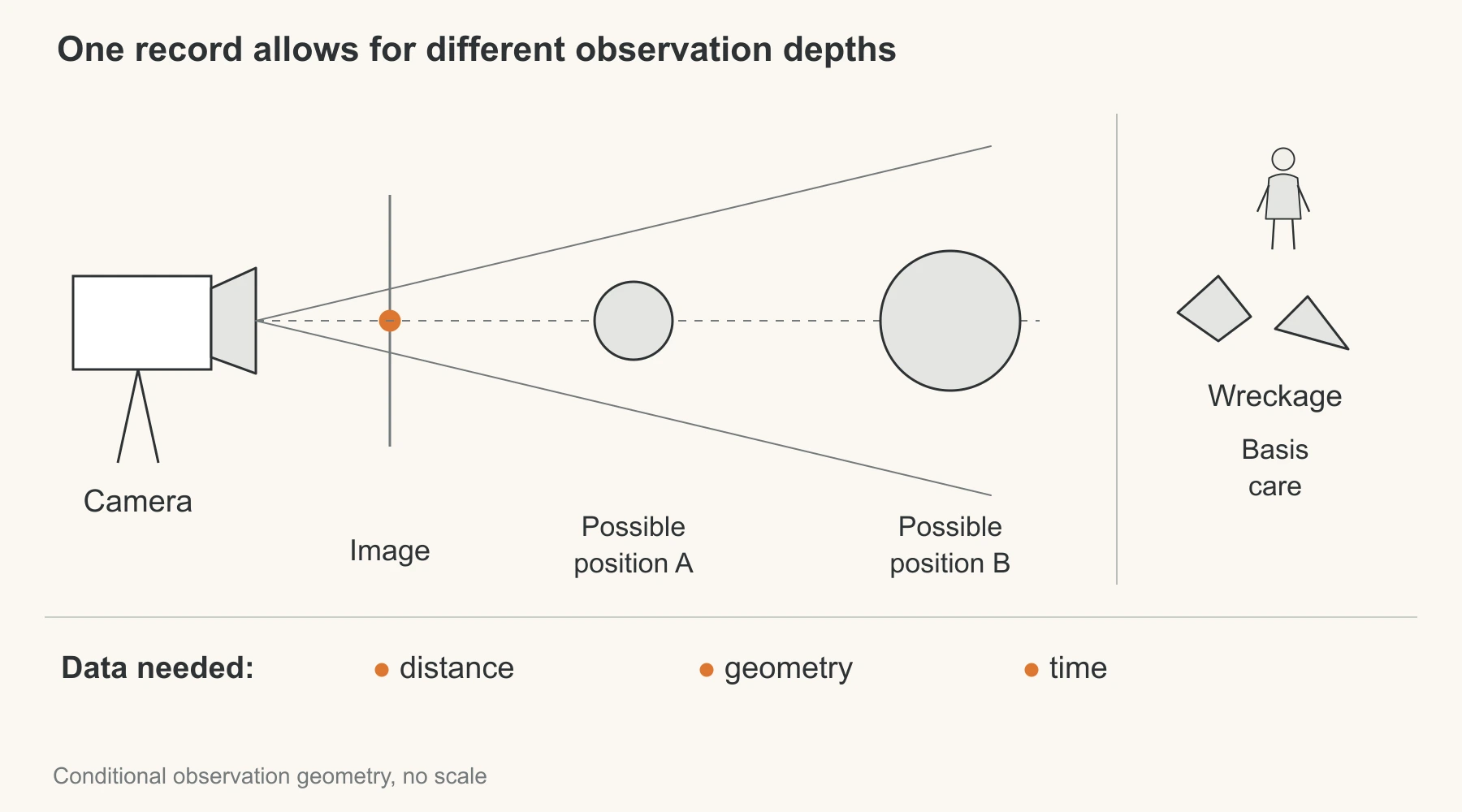
Figure 17. Light Spot and Missing Geometry
[S] Without distance, observation geometry, and a suitable timing reference, the recording does not determine the movement of the physical object. Confirmed consequences have an independent basis for assistance.
The report from NASA's independent UAP panel emphasizes measurement quality, calibration, metadata, and systematic collection. The methodological implication here is that without observational characteristics, many unusual reports cannot be reliably assessed. The report does not serve as evidence of the extraterrestrial origin of the phenomena. [O; S2]
The source is stored separately from explanations and working copies. They indicate the creator of the record, the method of determining time, the place and its error, the device, mode, environment, and the available history of changes. The screenshot and retelling are saved, but are not treated as equivalent to the original recording. Missing information is noted directly. A common source of time or processing can link seemingly different messages; independence is checked by S05.
The inspector keeps separate confirmations, objections and information that cannot yet be assessed. The organization allows the report to be corrected in advance while preserving the history. A person who discovers his own mistake should be able to communicate it without defending an earlier version for the sake of personal standing. Otherwise, administrative confidence will grow precisely when the grounds require revision.
Technical Note TN 1297 from the US National Institute of Standards and Technology (NIST) links the measurement result to a description of the uncertainty and the basis for its estimation. Probabilistic interpretation also requires a basis. This principle of presenting the result is important for the book; document 1994 and its archived page do not establish safety criteria for unknown exposure. [O; NS1]
It is practically convenient to distinguish between four gaps. We may not know the accuracy of the measurement; do not have surveillance of the desired area; not knowing whether the model connecting the data is correct; not knowing whether the chosen action will change the consequences. One overall percentage of confidence masks the difference. It is better to indicate the specific gap and dependent decision in the report.
Received information | What can already be said | What it doesn't establish itself |
A few posts about the episode | Messages exist | Independence of observations |
The results of the instruments coincided | Available results are consistent | No general error |
After the measure the anxiety disappeared | The order of events is fixed | Eliminating the source |
The system continued to work | The function was preserved under the observed conditions | Suitability of all systems and future states |
There are more registrations | More registrations counted | Reproduction, general intelligence, intentional environment |
No new complaints | No new complaints registered | No harm beyond the reach of observation |
After the appeal the trajectory changed | The movement has changed | Understanding the message and agreeing |
Separately, a distinction is made between the absence of a characteristic in a suitable observation, insufficient distinguishability and lack of data. The non-working device did not give a negative result. A working device that does not cover the desired location or feature also does not answer the question about it. These differences are kept in the summary, even if the screen is better off with a single green icon.
For a controversial conclusion, two short notes are useful: what is already reliable enough to act and what has not yet been established. For example, damage to the ceiling justifies the restriction of passage regardless of the glow hypothesis. Fixing the latter does not open the damaged corridor. Each measure is given its own basis so that the overall version of the event does not hold the entire plan hostage.
A change in the algorithm, survey area, reporting rules, or composition of the observed group is noted in the history. By combining the data before and after it, the analyst explains the basis for the comparison. The exotic version requires a distinctive observation: an outcome that it expects and which the main alternatives do not explain without an additional assumption. If such a result cannot yet be formulated, the version remains a research question and does not justify special intervention.
Model and protection have application limits
NASA-STD-7009B, approved 5 March 2024, relates to the development and use of models and simulations, assessment of the validity of results, and acceptance criteria for a specific project. For the book, the suitability of the model for a specific decision is essential. This standard does not confirm the properties of a hypothetical extraterrestrial system or convert a simulation into an observation. [O; NS2]
Before calculation, choose a question. “How is the threat structured?” does not determine the end of work. “Will assistance continue after this site is closed?” specifies the task to be checked. First, the desired result is named, then the input information and method. A program with greater computing power does not choose the question for the leader.
Input data is divided into measured, accepted by analogy and specified by a script. Repeated calculation at a fictitious speed tests the consequences of an assumption rather than predicts reality. Model verification also consists of different parts: internal consistency of units, coordinates, people and resources; consistency with available similar observations; stability of the decision with an acceptable change in the initial conditions. Their results are reported separately. A successful software test does not prove a physical hypothesis.
Available safe ways of working - archive, staff logs, permitted remote observation, organizational layout, tabletop exercise. A path closure or sensor failure can be set as an input, keeping the actual system running. For a technical stand, the organization separately establishes safety and acceptable modes. Unknown effects are not reproduced in humans and animals for the sake of a convincing result.
Each protective measure answers four questions: what harm is it intended to reduce; what observations support the expectation; what assumptions are needed; what happens if they are incorrect. Restricting access can reduce contact while also closing the path to help. Therefore, the measure passport contains a stored function, a sign of operation, a way to detect its own failure, collateral damage and an available reserve.
There are four possible failures: the barrier does not affect the intended channel; the main and backup options fail at the same time due to a common dependency; defense creates other harm; the person misunderstands the rule and applies it inappropriately. The latter is revealed even when reading the card. If the contractor does not understand who has the right to open the premises, the problem already exists.
When comparing measures, they take into account the cost of error, reversibility and urgency. A temporary decision is also unacceptable if the delay deprives the person of needed assistance. Research into the mechanism is sometimes justifiably delayed: additional knowledge is not worth the impact that will make the situation worse. The postponement receives the terms of returning to the issue. The episode summary shows preserved functionality, reduced risk, unnecessary measures and remaining questions. Lost applicability is sorted out according to S14; termination of a specific impact is formalized according to G12 and F09.
S05 Independence of evidence and general error
Who uses it. Data verification supervisor, deputy who knows the registration chain, and source systems operators.
Where to start? Name the statement being verified and trace each message back to an accessible source.
When to delegate a task. When a detected dependency changes the security decision or the check goes beyond secure access to production systems.
The reason may be a divergence of channels, too exact a match, a new general dependence, or a difficult decision based on the agreement of the devices. The operator provides the data, but does not solely certify the independence of his own conclusion. The incident director maintains the independent defense while the reviewer reports which findings have weakened.
For preparation, you need a list of sources and their owners, processing versions, dependent decisions and storage location for copies. Receiving material should not require shutting down a vital system. The statement being verified is formulated narrowly: physical movement, simultaneity, damage to the environment. These questions cannot be combined with the “all confirmed” status.
The test goes from origin to consequences:
1. Note sources, derivatives, paraphrases, and unknown origins. The latter is not independence.
2. Find common dependencies: power, time synchronization, coordinate base, transmission, processing and operator instructions. Check also the general summary: an error may occur after registration.
3. Group the chains by possible common cause of the error, indicating unknown connections. Groups do not automatically receive equal evidentiary weight.
4. Compare raw results with summary: order, units, coordinate transformations, versions. Correct copies while preserving history.
5. If available, obtain a suitable independent review with a neutral question. Information about risks should not be hidden.
6. Submit retained, weakened, and refuted findings along with specific actions for revision. Recipients confirm the meaning of the amendment.
For a general error, the affected system and dependent decisions are corrected. Real damage preserves the grounds for assistance. With partial confirmation, the measure is correlated with the confirmed part and the cost of uncertainty. If there is a contradiction, protection based on the consequences and search for data continue. Voting by members of one chain does not replace another chain.
Without communication, the local group retains the sources and versions. It communicates the identified local danger to available participants, but does not propagate the unacknowledged amendment as a general command. The review is changed or terminated if access disrupts required services, history is lost, or the review team depends on the same unverified result. The result is a dependency map and a conclusion limit, including the inability to install it. Conveys approvals, source groups, constraints, and change holders.
Twelve messages
Training data [S]. The duty officer receives twelve messages about the movement of an object through an industrial area. The automatic summary calls these twelve independent confirmations. Two sites simultaneously report equipment shutdown. The manager needs to support the assistance and understand whether the indicated direction of movement can be used as the basis for a further plan.
Received material | Number of messages | Available Origin |
Forwarded video | 7 | One original video |
Operator messages | 3 | One shared screen |
Own recording of the first source | 1 | Separate registration chain |
Second source's own recording | 1 | Another registration chain |
Four chains of representation are identified; full independence has not yet been established. The next check reveals a common time reference system between the video and one of its own recordings. The images exist, but the previous rationale for the sequence has weakened. Equipment shutdowns are confirmed separately by local logs; the connection to the image is not yet known.
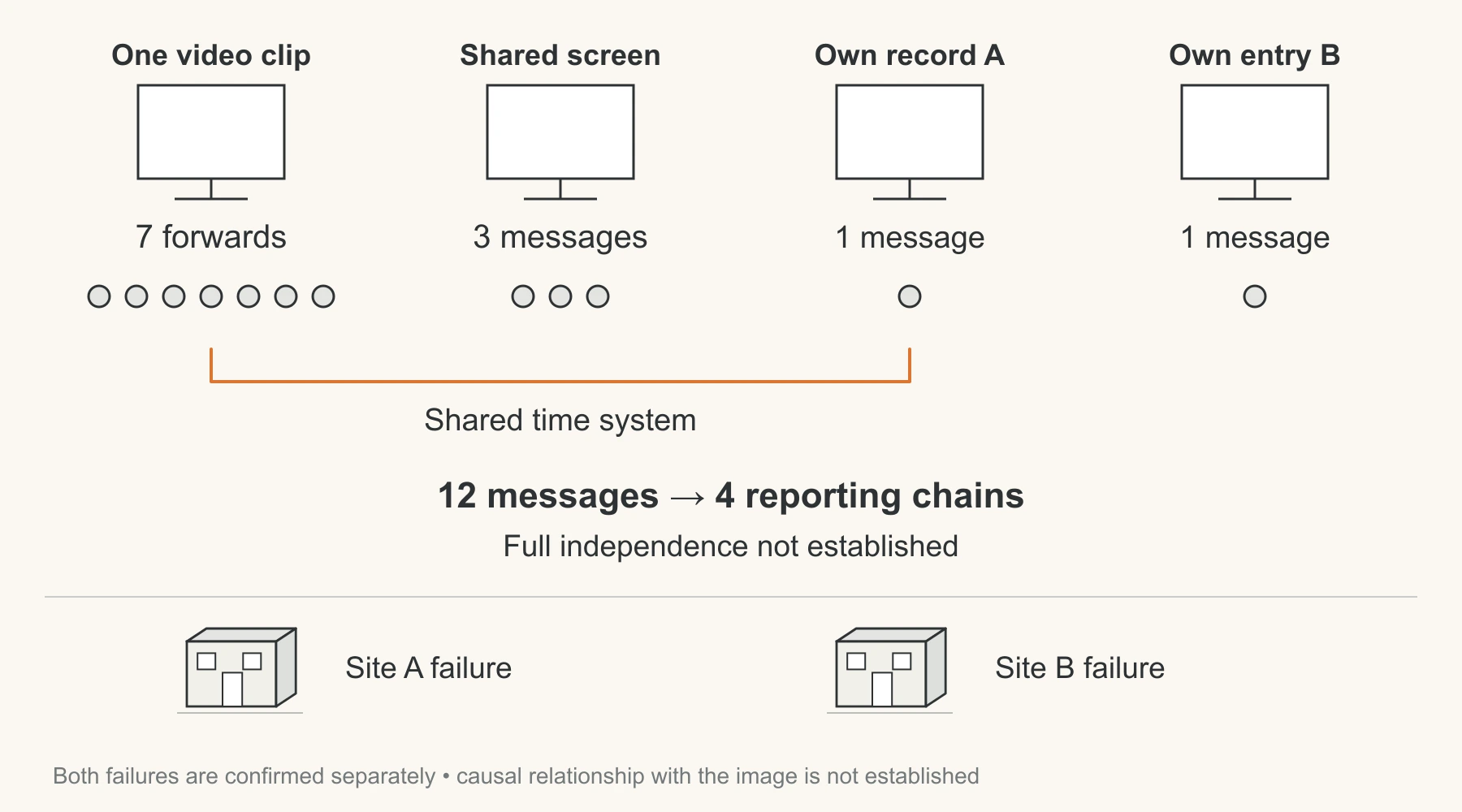
Figure 18. Twelve Messages: Origin of Evidence
[S] In the training set, twelve messages form four presentation chains; their complete independence has not been established. Confirmed failures of the two sites are investigated separately.
The manager excludes the unconfirmed direction from the basis of new movements and continues assistance at two sites. The price is the loss of previously promised certainty: part of the planning now has to be carried out without a reliable trajectory. Detection of repetitions does not allow declaring all consequences fictitious. Preserving the previous report for the sake of the number of eyewitnesses is also unacceptable.
Operators provide accessible copies without shutting down the shared server. The independent reviewer receives a question about the sequence, origin and risks, but not the expected direction. If there is not enough data, this is what becomes the result. The corrected summary reports twelve messages, four available chains, unspecified total independence, unconfirmed direction, and separate verification of two failures.
In a later introduction, it turns out that one recipient continues to use a printout of the previous summary. The scientific correction has already been made, the action has not yet been corrected. The team delivers a replacement to that worker and reviews the affected task. The exercise evaluates the latency between dependency detection and decision revision, legacy recipients, and inference traceability. The object name is not required for successful completion.
S11 A study that has yet to be answered
Who uses it. The head of the research program, his deputy, an independent inspector and responsible for work safety.
Where to start? Formulate one question, the answer to which will change the immediate decision, and determine the assistance that continues during the test.
When to delegate a task. When a special method, additional data collection, adaptation of a tool, or authority to change a practice is needed.
S11 is used if a significant choice depends on an unresolved issue, explanations require different actions, the usual method does not correspond to the effect, or the possibility of a negative result is unclear. G03 helps verify the suspected threat limitation; S11 builds a program when there is no suitable answer or method yet.
A man without instruments reports what is observed, the location, the sequence and his limitations. A small group verifies provenance and keeps a log. Local specialists resolve issues using standard means. The relevant organization determines the suitability of the methods and the limits of use. The absence of the last level does not deprive the first levels of available work.
The response leader defines the practical task and consequences of the expectation. The researcher organizes the program, an independent inspector evaluates the grounds, and the person responsible for safety has the right to stop a specific work. The combination of roles is recorded: the small group does not become independent from the renaming of the participants. Prepare a source archive, current decisions, operator contacts and real monitoring capabilities. Originals and copies are separated; for transmission use F01, F02 and F05. Lack of a form does not delay assistance.
Question, data and acceptable result
Instead of “find out the nature of the object,” a choice is formulated: is it possible to maintain this service if control of the premises is lost; whether independent records confirm the connection between the two failures; will the decision change after correcting the time? For each meaningful answer, an action is recorded in advance. If the answer makes no difference, the issue may be scientifically important, but operational priority does not automatically arise.
The cost of error, delay and verification is compared, as well as the opportunity to obtain a discriminating result. Questions are divided into those that can be solved using available material, those that require new data, and those that do not yet have a verifiable method. The last category remains visible without the promise of a quick response. An irreversible action requires a stronger test than a temporary reversible decision; the expectation itself is included in the assessment of consequences.
Observation | Practical question | Required information and reviewing party |
The state of people has changed | What help do you need now? | Condition and history of stay; medical assessment |
The surface becomes hot or damaged | Is the desired functionality retained? | Size, mode, staff logs; engineering assessment |
Lost connection or control | Where does the confirmed failure end? | Nodes, power, versions, errors; system operator |
The routes diverge | What transitions are available? | Landmarks, diagrams, references; navigation and operation |
The environment has changed | What uses are justified? | Previous condition, comparable observations; environmental assessment |
The source behaves differently | What has changed and what is the reason? | Episodes, registration conditions, our actions; specialized group |
This table sets the task without obliging the citizen to find all the specialists before taking his own safe action. The coincidence of complaints does not identify the agent; the glow does not evaluate the design; a failure does not establish intent; an unusual map does not prove an extra dimension; one good environmental indicator does not permit any use; the reaction after the message does not confirm understanding.
The program sequentially goes through the following decisions:
1. Designate a person who has the right to use the answer. Record the retained function and help for the duration of the test.
2. Separate explanations, their support, contradictions, and discriminating observations. The version compatible with any outcome should be left as a separate question.
3. Determine the path to the answer: a suitable existing method, testing an adaptation, developing a new one, or an established inability to distinguish between versions now.
4. Describe the observation: sign, area, operator, tool, dependencies, source and what this channel is not capable of establishing.
5. Set the suitability criterion to the desired result. Test the method on safe, available material; Separately store development and independent evaluation data.
6. Perform permitted work with stopping conditions, then parse the result along with the observation state.
7. Convey limited conclusion, objections, and affected actions. Close questions that have lost their significance and assign the next step to the remaining ones.
A negative result preserves the question, method, setting, and available description of sensitivity. Without them, it is not transferred to another area or mechanism. The new method goes through understandable stages: the question is formulated; the method is described; check completed; limited use permitted. These are job statuses, not universal certifications. The absence of independent support narrows the purpose of the result and is not eliminated by voting.
Training kit: what happened to the readings in the north hall
All places, values, and records in the following analysis are fictitious [S]. This is an archived tabletop exercise; its numbers are not safety thresholds. The supply center has a north hall and an operating south service point with one backup distribution window. The north hall is temporarily closed following an unusual flash, a high temperature reading on the central screen, and a confirmed loss of ventilation. The operator has already stopped normal work under the facility’s procedure. One repair team is assigned to the center; its planned tasks had to be postponed. The scenario provides no additional room, second repair team, or new instruments. Assistance and distribution through the south service point continue, while some scheduled requests are postponed.
The researcher's first question is narrow: Does the available data explain the high number on the screen due to physical heating at the local sensor point? The answer is needed by the operator to check the readings and by the manager to report closures. It does not replace separate environmental inspection and ventilation repair.
Participants receive the following material. The indices n1–n3 refer to the order of the stored samples; The clocks of different systems have not yet been compared.
Record | Content Provided | Limitation |
Local channel N log | n1: 22.1 °C; n2: 22.3 °C; n3: 22.2 °C | Describes one point, not the entire room |
Exporting the center screen | n1: 72.1 °C; n2: 72.3 °C; n3: 72.2 °C | Completed software conversion |
Automatic alarm message | Repeats central export numbers | Does not constitute a new measurement |
South Point Journal | No temperature change was recorded at its point | Doesn't confirm the state of the north |
Operation log | The ventilation of the northern hall has stopped working | The reason and validity of the resumption are checked by the operator |
Two employee appeals | Feeling warm after a flash | Status messages, no temperature measurement |
Video recording | Light stripe in the frame | Distance, cause and temperature are not obtained from it |
The local log source and description of the installed channel are available; center screen lookup table requested. An independent verifier obtains copies and provenance. The presenter holds one more entry to check the selected explanation; participants are aware of the presence of the control material, but do not see its meanings.
Version | What it explains | What should distinguish it from others |
Heating at point N, local channel shows incorrectly | High number and possible connection to complaints | Checking the suitability of the channel and searching for other evidence of heating in the provided archive |
Error converting local data on screen | Constant divergence of pairs of numbers | History of setup and playback of the conversion on the archive |
The N symbol shows data from another channel. | Discrepancy with correct measurements | Matching identifiers, data route and signatures |
These versions do not exhaust the reasons for the flash and stoppage of ventilation. They answer one question about numbers. You cannot explain the entire episode by simply selecting one row of a table. A confirmed service failure retains its own limitation basis.
The group notices a difference of 50 degrees for all three pairs. This is a reason to check the transformation, but not yet proof of an error. It asks for an authorized copy of the settings and the history of identifiers, without disabling the working southern point. The second version becomes testable without new exposure to people. Analysis of a copy is separated from the correction of the working system, which the operator has the right to perform.
The following input reveals the configuration: in the previous update, an additional offset of 50 degrees was mistakenly applied to channel N. The identifiers show that the channel has not been changed. On the original recordings, the group reproduces exactly the numbers that hit the screen. The verifier then opens the held entry: local value 23.0 °C, central value 73.0 °C. The shift explains it too without changing the rule after viewing. This is a conversion check; it is not an independent physical measurement of the entire room.
Now we can say: the high value in this central export was obtained by an erroneous transformation; automatic alarm repeats the same source; the physical heating finding for this export has been withdrawn. The suitability of the local channel and its area are confirmed only within the limits of the documents provided. The cause of the flash and the cause of the sensations have not been established. Ventilation remains a separate technical challenge.
The manager corrects the report of proven ‘abnormal heating of the entire hall.’ The operator receives the rationale for correcting the configuration and checking its systems. The north hall remains closed: ventilation performance and environmental suitability have not yet been accepted under the facility’s procedure. The south backup window continues to serve people. The cost of the limited decision remains—a queue, postponed distributions, and a reserve in use. The sole repair team completes the emergency task; its earlier planned work remains unfinished.
After authorized repairs and separate acceptance, the operator resumes the intended operation of the northern hall. This is a new basis for reopening, different from the explanation for the erroneous figures. The facilitator then supplies a later record: the setting has now been corrected, local channel N actually shows an increase from 22.4 to 30.8 °C, and the independent operational log records a new cooling failure. The number itself does not serve as a universal command; the decision is determined by the procedure of the given object and the confirmed loss of function.
The group isn't chalking up the new episode to an old programming bug. The operator again limits the normal operation of the northern hall according to the procedure for the current failure, the manager maintains the available backup reception, and the researcher opens a new task for S14. The previous conclusion about the shift remains true for the old version of the data. It no longer answers the current question. The outcome includes a corrected chain of origin, audit trail results, two different grounds of restriction, delayed commitments, and an open question about the original flash.
The analysis is completed without a complete theory of the event. Provides a reproducible explanation for one result, prevents error transfer to action, and preserves the ability to detect a new real failure. To repeat, the presenter only needs the indicated tables, a hidden control record and a late introductory note; The safe operating system is not affected.
Transfer of the result and further program
When transferring the result to another site, conditions, observation requirements and signs of unsuitability are transmitted. Other equipment, load or dependent function may require new testing. Local assistance continues even when the application of a specialist conclusion elsewhere is postponed.
Without communication, they retain the originals and journal, close available local issues, and highlight pending external review. An unconfirmed conclusion does not become a general order. After the exchange is restored, the identifiers, versions and meaning of the question are checked. Work is stopped if there is an unintended impact, loss of control, damage to the source code, substitution of the task, or the inability to separate the result from a method error. Help with your own foundation is preserved.
S11 ends with a suitable answer, proven by the limit of the method or justified by the next step. Transfer the question, alternatives, data, method status, test result, scope and specific tasks to the performers. The failed approach is described so that another group does not repeat it as a new hope. The wording “research continues” without the next verifiable step does not close the work.
The event continues in its aftermath
The first episode may end before its consequences. People stop seeing the object, but continue to wait for water; the connection has been restored, but the order remains on the old paper; the protective measure still exists, but the previous load has already changed. The next shifts need a story that distinguishes between the event itself, the state of observation, and people's own actions. Without it, every new problem looks like a new attack, and every calm looks like the end of danger.
S12 Deferred, cumulative and compound consequences
Who uses it. Event history coordinator and designated successor along with medical, engineering and environmental specialists.
Where to start? Save the order of observations, changes in registration methods, and your own actions between episodes.
When to delegate a task. When a detected connection requires a decision by the service operator, medical evaluation or a long-term monitoring program.
The protocol is included if the consequences appeared after a visible end, increased with repetition, moved to another system, or resumed after a pause. The reason may be the assumption of a common chain of two previously independent tasks. The coordinator combines information, but does not make a diagnosis and does not change the technical regime according to his own scheme.
To work, you need an event log, previous function states, accessible archives, and transfer between shifts. A gap in the original picture remains a gap; memory does not replace an accurate record. A person without instruments maintains a known sequence and seeks help based on his current condition. The local team reviews available service dependencies, and the dedicated service determines the program and specific usage criteria.
Temporal pattern | The main question | A Mistake to Avoid |
One short episode | What continues after it? | Close all tasks along with the source |
Ongoing action | What is happening now? | Take a transmission pause as an interruption |
Recurring episodes | Are the conditions comparable? | Infer periodicity from convenient matches |
Late manifestation | Which sequence is confirmed? | Declare a later event a proven consequence |
Possible accumulation | What changes between episodes? | Reset the status history each time |
Composite chain | How does failure of one function affect another? | Fix the end of the chain, leaving the effective cause |
These are ways of asking a question. They do not specify an incubation period, acceptable dose, decay time, or universal observation time. When a hazard is known, the applicable procedure is used. When the timing is unknown, organizational review means evaluating the plan and data rather than promising that the threat to it will go away.
Each episode is assigned an identifier, preserving the original words, location, source, and time accuracy. One consequence can be seen several times, several consequences can be included in one message. At each site, a known “earlier - later” and an unknown order are noted. Someone else's clock is not adjusted retroactively without reason.
Adding to this story is the inclusion and loss of channels, the relocation of residents, changes in the rules of appeals and processing. A late flow of messages may mean new harm, late discovery of a previous one, or a restored opportunity to ask for help. Then the schemes are compared: independent events; common source; the first event changed the system and created the second. Relationships are marked as confirmed, suspected, or not yet discernible.
Own movements, restrictions, repairs and communications are also included in the scheme. Otherwise, the consequences of human decisions will be attributed to the source. For dependent services, energy, communications, people, supplies, premises and permitted substitutions are checked. If two institutions call one reserve, this fact can be established without a special device; It is impossible to change the regime of the reserve itself without authority.
They act on the confirmed part of the chain. An unknown first cause does not prevent recovery of an identified fault. Repairing one service does not cover the rest. To repeat, specify a specific revision attribute, message recipient, and available step. Loss of surveillance changes confidence, not automatically the state of the area.
Two aid points and one lost commitment
Case Study [S]. After observing an unusual object in the city, a failure of part of the communication was confirmed. After the next shift, aid station A reports that it cannot confirm the delivery, and aid station B reports that the prepared premises does not accept arrivals. There is a designated delivery group, cargo prepared for it, and a single employee assigned to receive it at B. There is no additional transport or free receiving space in the task.
Two versions appear in the summary: a new physical impact on the points and secondary violations after a communication failure. The first could require relocating work, but such a measure is not yet based on the confirmed danger of the premises and requires an absent reserve. The supervisor continues to provide available assistance and instructs the history to be reviewed prior to an optional move.
Record | What was confirmed during analysis |
Operator log | Part of the connection actually failed |
Point A screen | The old delivery status continued to be displayed as current |
List of item B | The printout still named the assigned employee |
Shift log | This employee has already been temporarily assigned to A |
Return messages | Reception at B has not been confirmed, the actual delivery has not been established |
Two violations involve loss of transfer of current obligations. This does not return the lost assistance to people, but it changes the action. The unconfirmed statement about a new physical lesion is removed from the report. The assigned delivery team confirms the cargo and the availability of the intended route, completes the delivery and receives an actual acceptance response. The manager returns the intended reception function to B, while simultaneously reducing the additional work in A that depended on the same employee. The next dispatch of people is associated with real confirmation B. The cost of the decision is the postponed part of work A and the already arisen expectation of arrivals; no additional personnel appear.
Later the operator reports that communication has been restored. This is the basis for resuming the exchange, but some performers continue to use paper lists. The coordinator finds out who received the correction, what obligations have been fulfilled, and who is still waiting for help. Technical restoration of the channel does not close the transfer of decisions.
Another intro brings a similar message from another room. This time the test identifies a true failure of the required local function. It cannot be explained by an old printout just because the previous scheme was successful. The room receives its own decision from the operator; the confirmed history of the first two points remains.
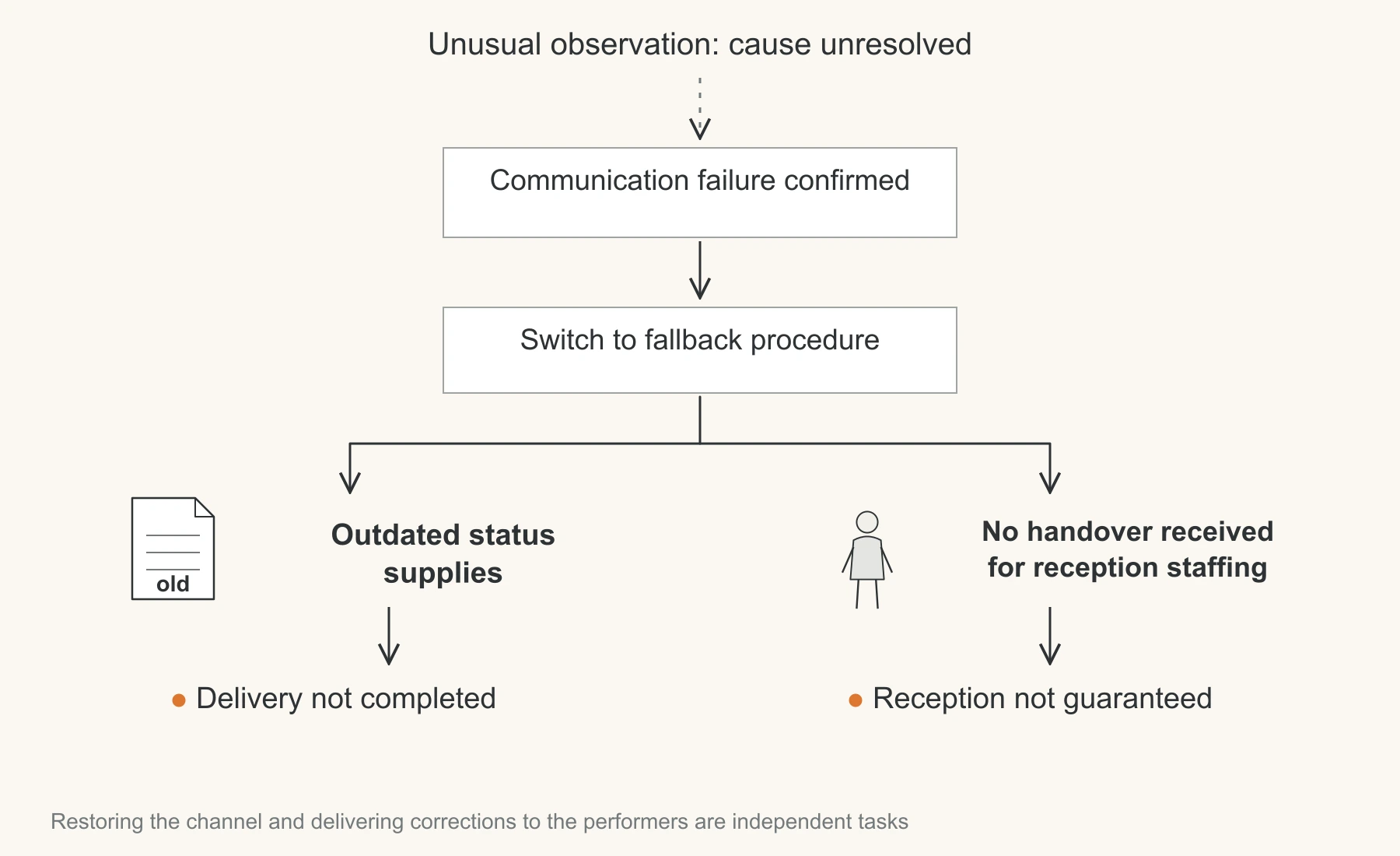
Figure 19. Two delayed failures from one loss of commitments
[S] In the study case, the two late violations involved lost commitments after a communications failure. Channel recovery is completed by delivering patches and verifying the actual services.
Totals include confirmed receipt, actual delivery, superseded listings, unfulfilled residual obligations, and local failure handed over separately. The origin of the unusual object remains open. The next shift must understand what was repeated: harm, message, measurement or assumption.
Without communication, local groups maintain consistency, latest acknowledgments, and common designations. When transmitted orally, the recipient repeats the meaning. An incomplete big picture cannot be corrected by commanding everyone to act the same way; after the exchange is restored, the events that change the assistance now are first analyzed. The check is stopped if there is dangerous reproduction, deterioration of assistance, or loss of connection with the question.
S12 is completed when confirmed connections have received actions and responsibilities, controversial ones remain visible, and repeated manifestation has a revision order. They convey time history with its accuracy, alternative schemes, own measures, actual results and open questions. The long-term state of the environment is carried out according to S10, the new method - according to S11, changing the previous protection - according to S14. The silence of inaccessible observation does not complete the card.
S14 The previous protection no longer gives the same result
Who uses it. The measure evaluation manager, his successor, the system operator, and the independent explanation review team.
Where to start? Record the new deterioration, check the current function and indicate which previous conclusion is no longer confirmed.
When to delegate a task. When you need to change help, fix a technical configuration, or develop a test for new source behavior.
The reason for S14 is a different result under comparable or supposedly comparable conditions, an effect in a new place, a change in reaction after a human action, or an outdated protection passport. This is enough for a revision, but not enough to conclude that the enemy has learned. Purposeful adaptation remains a scenario assumption until it has received its own reasons.
The prepared history should reveal the record “the measure worked”: what function, in what area, under what load and configuration it maintained, how this was confirmed and what remained unknown. The new version does not erase the old one. Then the change in applicability will not mistakenly appear to be a refutation of a valid past result.
Four things are checked: the measure itself, the conditions for its use, the method of observation and the task. Additional people or a new required function can make the previous result insufficient without changing the source. If there is no access to verification, serviceability is not assumed by default.
The group first records the harm or failure without the label “protection has been broken.” Then compares location, people, configuration, load, environment, and registration. Disparate episodes do not prove a change in source, but their present consequences require action. The operator checks the accepted version of the measure and its dependencies, the analyst checks sensors, recordkeeping and message channels. The loss of a single channel confirms neither the success nor the failure of the physical measure.
Explanations include environmental change, other cause, state of the protected system, normal feedback, predetermined behavior, learning, and coincidence. Each version requires discriminating observation. The expressiveness of the intelligent adaptation hypothesis does not give it any advantage.
After verification, the remaining benefit and the lost basis are separated. Restricting optional access may still be useful, although the specific physical effect has not been established. A healthy service may require a different assignment under new load. You can neither cancel the whole complex because of one wrong reason, nor save the whole complex because of one useful part.
The correction is communicated to those who used the previous passport: reception of people, authorization of workers, supplies, communication to the population. Everyone needs to know the changed action. A general request to “be careful” does not solve this problem. For the next version, the result, suitable observation and stopping conditions are preset; a special program is organized according to S11 without repeated exposure to people.
A new version of the passport is issued with the area of confirmed benefit and the event of the next revision. Old copies are marked as replaced, saving them in history. The change in conditions itself is transmitted to the next shift, and not just the last positive or negative assessment.
Four episodes of one measure
Learning conditions [S]. On the site, an unknown effect is accompanied by periodic loss of service. In the first episode, a permitted job change allows people to be routed through another existing site. The required function is retained. Acceptance confirms the continuity of the service under these conditions; physical impact on the source has not been established. The reserve site and its personnel are listed in the original plan, there is no additional reserve.
In the second episode the service is interrupted again. The version about training the source looks tempting. The log, however, shows that additional duties were transferred to the reserve that were not available at the initial acceptance check. First check the changed load. The manager returns priority to the original necessary task and transfers some of the additional work for which there is no confirmed provider. Help becomes available to the extent specified, but work deferred remains a loss. The passport clarifies the boundaries of previous success.
In the third episode, the load was returned to the previous one, but the duration of the violation according to the summary was different. The check reveals a change in the recording channel: the old and new intervals are not directly comparable. The failure itself was confirmed in a different way. Therefore, assistance continues, and the history of time is corrected separately. The absence of a correct comparison does not negate the established impairment.
The fourth input confirms the status of the measure, the load and the suitability of the observation. The nature of the episodes has changed though. Now the previous load alone cannot explain the result. The program includes source change along with environment change and several reasons. The group compares the available archive and independent information, without declaring training just for the sake of a dramatic conclusion.
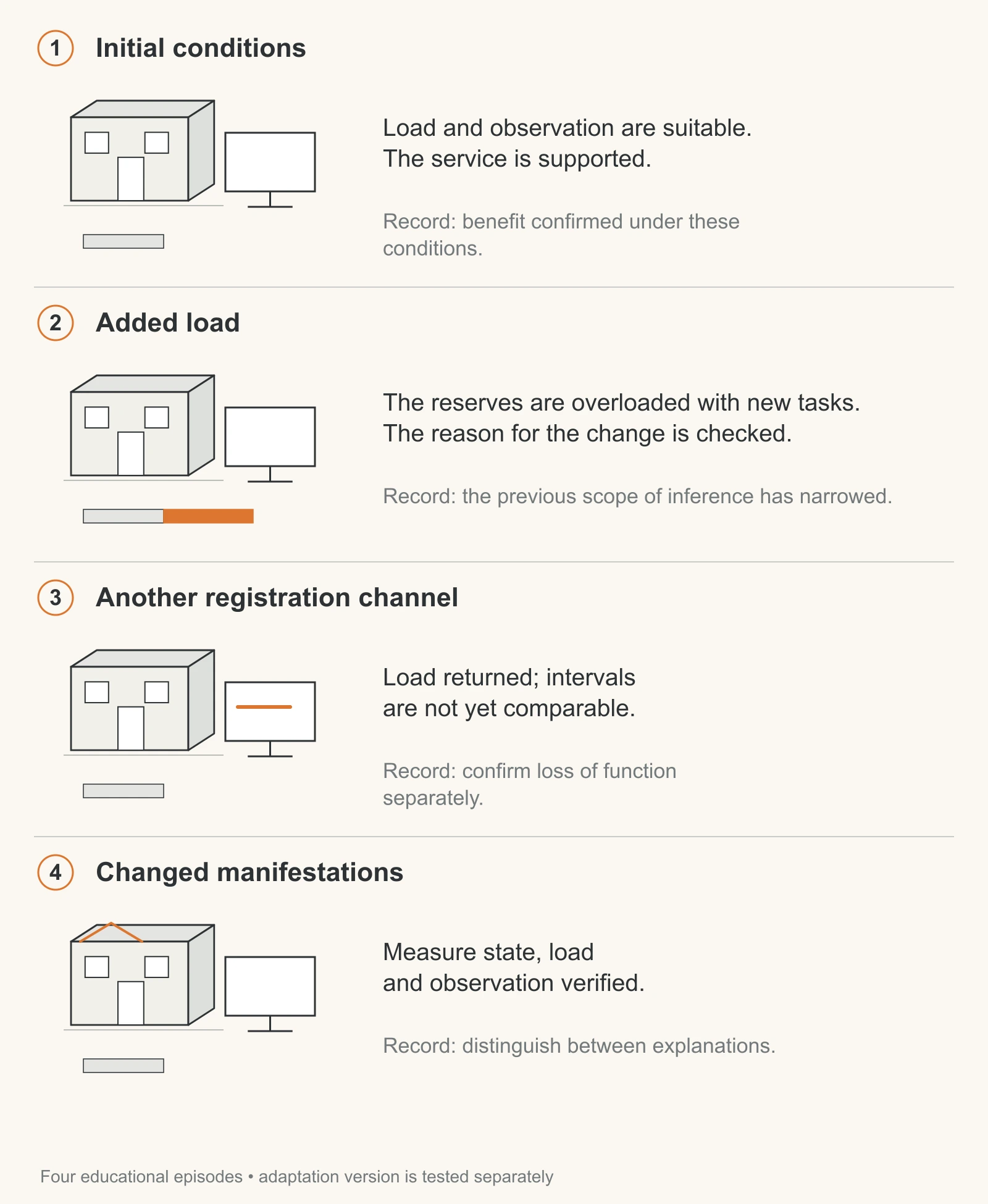
Figure 20. S14. Four episodes and the boundaries of previous success
[S] Four episodes change the applicability of the previous result for different reasons: load, observation and nature of manifestations. Each output receives its own conditions and version of the passport.
The outcome of each episode has its own basis. The original organizational benefits have not disappeared from history; the scope has been narrowed and updated. The headquarters is no longer promising the same overall efficiency. Available assistance is maintained, residual loss of service and deferred tasks are transferred to the next shift. New research questions episode differences. Its answer, which has not yet been obtained, is also transmitted - without replacing it with a confident name of the mechanism.
If a failure is identified, the measures correct the technical or organizational cause in their own way and re-evaluate the result. For a new task, the necessary functions are redefined. If there is an error, the observations narrow the conclusion and restore the check. Sustained behavior change requires an updated program; these branches can be executed simultaneously.
Without communication, the local leader communicates to the available participants the specific impairment and the limit of the current confidence, while maintaining the original grounds. After the exchange is restored, they check where the old passport continues to be valid. The study is stopped if there is dangerous reproduction, loss of control, unintended harm, or an attempt to prove a pre-selected version. A new fact may require the action to be stopped before the dispute over the cause is resolved.
S14 ends with a valid limited passport or a directly stated inability to confirm suitability in the new conditions. Report episode comparisons, configuration changes and observations, remaining explanations, corrected actions, and the next question to be tested. Historical success remains historical; It does not become a lifetime guarantee.
S10 environment after end of visible event
Who uses it. Head of environmental assessment and deputy, resource operators, medical service and authorized body making decisions on the use of the territory.
Where to start? Name the specific feature being protected and the people who need support while its use is limited.
When to delegate a task. When matters require a professional supervision program or must move from a temporary headquarters to a permanent organization with resources.
S10 is required when there are ongoing changes to water, area, habitat, recurrent impacts, or uncertainty that prevents reasonable restoration of use. The origin of the changes may remain unknown. Diagnosis of people and emergency care follow a separate medical procedure; the absence of an identified pathogen does not cover other environmental issues.
EPA's guidance on environmental risk assessment links the problem statement to the selection of natural features and properties to be protected, and the resulting characterization to a management decision. The task involves evaluators, managers and stakeholders. This is a methodological pillar; document 1998 does not set thresholds for the safety of the extraterrestrial environment and is not a new mandatory regulation for all countries. [O; NS3]
After the apparent end, the research question changes. Now we need to find out which functions are restored, what is broken, and on what basis restrictions can be reduced. A program does not continue just because it started once. Each observation must have a result that can change the decision.
The protected need is formulated specifically: water for an established use, a certain habitat, territory for a permitted activity. “Keeping track of everything” doesn’t do the work. With a limited resource, the consequences for people and nature determine the queue; a spectacular rare signal does not automatically benefit from an ongoing service failure.
The manager collects past information, actual impacts, professional practices, users of the area and a plan to support during restrictions. Appoints a representative to communicate with residents, available after the closure of the temporary headquarters. For each relationship between an inferred source, environment, and function, notes whether it is observed, inferred, or unknown. Spatial proximity is not depicted as a proven route of spread.
Check for supply damage, operation change, ground contamination, surveillance break and other suitable reasons. Gaps in the archives are preserved. A comparable area helps only to the extent of a reasonable comparison; the nearest convenient area does not become an ideal control. People, animals and ecosystems are not left unprotected for the sake of a control group. If there is no reliable initial picture, the problem is narrowed down to a question that the data can answer.
The observation program is entrusted to a professional organization: with objectives, suitability of data and communication of the result. The card does not describe self-collection, cultivation, transfer or processing of unknown material. Such work requires separate applicable permits and procedures.
Each limitation is associated with a specific use and reason. At the same time, they provide for people who have lost their usual water, food, care, work or housing. The ban itself has consequences that are included in the overall assessment. A decrease in requests when residents leave does not prove an improvement in the environment, and temporary external supply does not mean the restoration of a local resource.
An area over which an object is no longer visible
Learning conditions [S]. Following the sighting of a large object, three communities continue to report water outages and changes to the coastal environment. The property is no longer registered; some of the residents have left. The services have limited temporary supplies in place and one designated repair team. The environment is monitored by an existing specialized organization. There are no new sources of water or additional groups in the condition.
Plot | What was communicated by the primary response team | What's still missing |
First point | Previous water supply logs and confirmed supply failure | Cause of failure and assessment of further use |
Second point | Reports of changes in the coastal environment | Complete original picture before the event |
Third point | Fewer new requests | Comparability of recordkeeping after the departure of residents |
The versions “the danger left with the object” and “the territory is forever contaminated” go beyond the data. There are also discernible working explanations: a simple supply failure, a discrete change in the environment, the loss of part of the observed population. They may end up working together.
The manager retains temporary support and assigns the established technical task to the repair group. The medical service receives complaints, the environmental service receives specific questions about the state of the coastal environment. Residents are not involved in collecting unknown material to fill the research gap. The cost of the decision is already visible: the repair of one service takes up the existing group, temporary supplies require distribution, limited access disrupts the lives of families.
Late operator recording establishes damage to the water supply after a general power failure. The repair restores technical flow. The suitability of water for a specific application is confirmed by a separately authorized service. Only after this the corresponding service is accepted in the specified volume. The environmental issue of the second point remains open; it does not reset the confirmed repair and does not solve the repair itself.
The following introductory explanation explains part of the decline in requests in the third point: residents moved away and stopped using the previous channel. The group corrects the trend assessment and notes areas and people not represented. The public is informed of incomplete surveillance rather than a proven increase in unknown exposure. Temporary support is not reduced only according to the general falling line of claims.
For one type of activity, reasons have been collected to lift the restriction under certain conditions; for the other, the question of specialist assessment remains. The decision lists what is allowed, the conditions to be saved, the next step, and who is responsible. Families with limited access receive information about support and review procedures; its cost is included in the response. Lost income, long-term displacement and uncertainty do not disappear from the assessment after a carefully crafted ban.
Figure 21. After the object leaves, various unfinished tasks remain
[S] Completion of a visible episode, restoration of a specific service, and assessment of the state of the environment have different reasons and timing. Open tasks retain the owner and the revision condition.
Closing has several independent results: the operation of a specific service, the terms of use, the transfer of residual issues, the availability of data for acceptable independent verification. Visible episode, supply failure and environmental assessment end on different grounds. The origin of the object may remain unknown.
For the gradual restoration of each activity, the reasons, conditions, way to notice the deterioration and action to take when it occurs are indicated. Brief professional work in the territory does not equal permanent residence permit. Return is organized according to C14, termination of a specific impact is formalized according to G12 and F09. The need for one limitation does not justify maintaining all the others indefinitely.
The deadline for organizational review is determined by task. This is not a fictitious time of danger decay. If the information does not change, check the ability of the method to distinguish the desired states; in case of contradictions - comparability of places and methods. Extension of the program requires justification of the benefits and costs to affected people.
Without communications, local services continue to provide available coverage and store observations with time accuracy. The absence of a central summary does not permit unverified use; immediate rescue does not wait for a general assessment of the environment. Risky or fruitless research work is suspended while essential services are maintained.
S10 ends with informed decisions or transfer to an ongoing long-term program. Along with the question, resources, powers, procedures for complaints, publication of amendments and closure of unnecessary observations are transferred. The recipient accepts the function map, grounds and gaps, permitted uses, measures and conditions of revision. The formal name of the person in charge without the ability to work does not complete the transfer.
How to test the scientific procedure itself
Good wording can hide something that doesn't work. Before implementing project cards, the group needs a safe analysis of the entire path: the message has arrived, the version has changed, the provider received an amendment, the person received the necessary service. The exercise tests the procedure, not the ability to guess the presenter's explanation. The actual verification of these cards is not confirmed by the mere presence of such a description.
Indicators that do not replace the result
Metrics refer to the quality of performance rather than assigning an exact probability to an unknown threat. For each, a person is assigned to collect the data, store the numerator and denominator, and explain the comparison conditions. A convenient improvement in the report does not compensate for the deterioration in assistance.
Indicator | What is counted | What conclusion remains unavailable? |
Traceability | Significant conclusions with available base chain / all significant conclusions of the version | The complete chain may still contain an incorrect method |
General dependencies | Chains with considered dependencies / all used chains | What is considered is not necessarily fully known |
Correction decision | Interval from disconfirming information to confirmed revision | This is not the time for danger to end |
Delivery of amendments | Addressees who have confirmed the current version / all mandatory addressees | Delivery does not prove understanding |
Task coverage | Tasks with suitable data / predefined observation tasks | The area and number of devices do not replace the number of issues being resolved |
Verifiability of measures | Measures with result criterion, failure sign and responsible person / all valid measures | Passport does not prove physical efficiency |
Submitting questions | Open questions with person responsible, resource and next step / all open questions | Assignment does not demonstrate actual ability to complete the task |
The significance of a conclusion is determined by its influence on the decision before calculating the result. Otherwise, “increase in traceability” can be achieved by excluding controversial lines. When the set of problems changes, the sets themselves are compared; they cannot be depicted as one unchanging object.
The correction delay is analyzed for detection, recognition of the need for revision, decision making and receipt of the version by the person responsible. With inconsistent clocks, consistency and a limit of accuracy are maintained. Backdating a convenient confirmation does not make the job any faster.
Coverage relates to a specific issue. Several devices in one place do not confirm the neighboring site, and the ability to detect one sign does not provide general control of all mechanisms. The report lists the tasks and open questions that received data.
For protection, the stored function, detection of own failures, side effects and decision transfer are separately checked. Adding this into a single score can only be done with an explanation of the weights and limitations. It is especially unacceptable to hide the loss of a necessary service behind a large number of completed documents.
Acceptance exercise
The facilitator prepares a safe set with several acceptable explanations; another group stores late input. To get started, you can use the S11 kit. Participants must act according to the information from their stage. Knowing the outcome is not considered an advantage.
The first stage verifies the origin. The original recording, derivative, retelling and material without an accessible original source are transmitted. The group maintains the differences and writes acceptable conclusions. Incompleteness does not mean automatic rejection of a message: it may justify urgent assistance or verification without establishing the exact reason.
The second stage reveals a shared dependency. Participants must identify the affected conclusions, correct the map, and notify the people responsible. If they withdraw all protective measures, check whether they have recognized the independent grounds for retaining some of them. If they leave everything unchanged, they must explain why the new information changes nothing.
The third stage makes the previous path unavailable and assigns one resource to another task. The scientific model must now connect to the provision. You cannot continue to use a busy reserve, or invent transport or a receiving point. The group writes down the cost of the changed plan: what is saved, what is delayed, who else needs help.
The fourth stage gives grounds to close one question, leaving another open. Proper completion differentiates decisions. The restriction that has lost its basis is canceled, the remaining issue is transferred to the executor and the next step. Continuing the entire mode indefinitely and removing all protection for one improvement are different mistakes.
Acceptance ends with a correction card: which card field, communication tool, authority or resource needs to be changed. Repeat the affected chain. If, after correction, reasonable action is still not possible without dangerous delay, the procedure requires further work, no matter how well the report is written.
The scientific part ends where the result becomes understandable through the action of another person. He needs a basis, a limit, available help and an event for revision. There may not be a definitive explanation yet. It is enough for the uncertainty to remain visible, and for the knowledge already gained to actually change what happens to people.
Part III. People, Shelters, and Life After the First Decision
Help must reach the person
The bus can get to the desired building, and its passengers can be left without help at a closed door. A shelter may have electricity but not power compatible with a personal medical device. The family may fulfill an agreement to meet and end up in danger on the way to each other. Therefore, civil protection continues after the first correct order. Its result is visible in the life of a particular person: he can breathe, receive the necessary help, contact loved ones, use water and leave the room when the situation changes.
The origin of the event may still remain unknown. This does not prevent you from noticing a fire, loss of consciousness, damage to a building, or a loss of water supply. But different dangers require different actions. For outdoor contamination, temporary sheltering sometimes reduces exposure; when there is a fire inside, the same decision keeps people in danger. First you need to understand what is happening here, and then choose a defense.
All protocols in this part have status [P]: this is the author’s procedure for applying the principles of civil protection to an unknown event. They are not orders of any country. Published recommendations are designated [O] and are accompanied by source codes. Study cases and the unusual properties assigned to them are marked [S]. A property accepted in an exercise does not become an established fact about the real world.
[O] WHO Guidance on the Rapid Risk Assessment Tool for Member States (MS-RRA), published September 8 2026, addresses hazard, impact and context, including response capabilities; it specifically notes gaps in information and confidence in conclusions. The same year's Quick and Immediate Risk Assessment (QIRA) algorithm is designed to initially assess acute events and select initial interventions. These documents do not describe an extraterrestrial invasion. Their approach to decisions with incomplete information is used here. [C1, C2]
What is observed | Where does protection begin? | What else needs to be found out |
Fire, destruction or hazardous substance inside | Stop exposure and exit via an accessible, safe route | Is the chosen exit more dangerous? where will they help next? |
Confirmed hazardous release from outside | Follow local orders to shelter in place or evacuate. | How does the impact spread? is the building suitable? |
Radiation contamination of the territory | Go to a suitable capital building and receive instructions | What does official control show? what route is acceptable next? |
Unusual symptoms in several people | Arrange medical assistance, report general circumstances | Is there a common source, infection, ventilation failure, or other cause? |
Only an unusual entry or message | Check the origin of information without getting close to the object | Is there independent confirmation and real harm? |
This table helps pose the question, but does not prescribe a universal route. In CDC radiation guidelines, shelter may be the middle of a building or the basement; In a chemical accident, the choice depends on the specific contamination and official guidelines. You cannot automatically transfer any of these options to an unknown energetic influence. [C3, C4]
How to get through this part
If you find yourself near an event, start with C01. The family needs C02; in case of injury or sudden deterioration of condition - C21. If there is no connection, a ready-made plan and an available service, immediately open C15: you do not need to first study the city government to get started. The C17 and C16 protocols help you search for loved ones, support people, and notice when your assistant can no longer cope.
The next set of tasks is related to the location: choosing a shelter, its daily operation, transporting and receiving people. Here the reader becomes the building manager, dispatcher or accommodation organizer. Then the settlement, city and hospital are considered. The last section is dedicated to water, supplies, replenishment and return. The levels are linked by the transfer of specific tasks: the family communicates a need, the settlement collects a feasible request, the city coordinates services and routes.
The time in the examples specifies the sequence of work. It does not mean a safe period of exposure or a promise of help. The first hours require finding out the position of people; next shift - maintain care and supplies; days and weeks - to establish a repeating life. When water or medical care fails quickly, long-term accommodation challenges arise immediately. If new information confirms that there is no significant threat, unnecessary restrictions are lifted earlier. You cannot endlessly extend the first night regimen.
Person and family: immediate action
C01 Man next to an unknown event
Who uses it. Witnessing an unusual object, flash, falling debris, equipment failure, or sudden deterioration in health. If it is difficult to act independently, an accessible, trained person can help.
Where to start? Stop unnecessary approaching. Notice the nearest hazard, select an available protective action, and report casualties. Don't hesitate to explain what you saw.
When to delegate a task. In case of injury, dangerous condition, destruction or contamination, appropriate service is required. Tell her your situation, the observed consequences and the help needed; check who received the message.
Attention is easily captured by the most unusual: a luminous outline, the movement of a large object, a strange sound. Meanwhile, cars may move nearby, glass may fall, or wiring may burn. It is these observed dangers that determine immediate action. It is not necessary to confirm the origin of the phenomenon in order to move away from a collapsing structure or to call for help for an unconscious person.
1. Stop filming from dangerous positions and attempts to interact. Do not touch unknown material, pick up debris, or go back for a better angle.
2. Choose a route suited to your current location. Leave a dangerous building by a known, accessible route unless it leads to an obviously greater danger. For an external threat, take account of service warnings and available shelter. Do not cross the area of the phenomenon to reach a shelter that seems safer on the other side.
3. Give the emergency service the location, observed effects, number of people in need, and how to respond. A report of three people passed out near the entrance helps organize the action; guessing about the type of enemy does not replace it.
4. Assist within the limits of preparation and safe access. In case of serious condition, difficulty breathing or loss of consciousness, ensure a medical call; recognizable consequences are analyzed by C21. You can support a nearby child or person with limited mobility, but you cannot turn this into an independent search inside a smoky, destroyed or polluted space.
5. From a safe position, maintain time, place and sequence. Separate what you personally see from what you hear. The original record already obtained is useful; moving closer for the sake of recording is not a necessary part of the assistance.
The short message is made up of four parts: where are you; what you directly observe; who needs help; how to contact you. If the location is difficult to name, use clear, accessible landmarks. Don't fill in the blanks with guesswork. Please provide information about possible contact with the material separately so that the receiving service can organize assistance.
The disappearance of noise or light does not prove the end of the danger. If the route is closed, stop the previous plan and report a new position from an accessible safer location. A shelter-in-place order does not require you to remain in a burning building. For a known chemical incident, the CDC recommends moving away from the source and getting help; the further procedure depends on the situation and instructions from the services. [C5]
If you lose contact, use a known local aid station only if the route to it is safe. Do not look for a signal by approaching the object. If there is no known location and assistance is not available, C15 will help organize immediate action on the spot. Reconsider the decision after a move, symptoms or a new warning. A completed call does not allow a return: you need to understand where you stay next and what help is actually accepted.
It is helpful to keep your local call number and support contacts on paper before the event. Information about the necessary care products should be available to the person helping, taking into account your privacy.
C02 Family in different places and without stable communication
Who uses it. Family or household, including children, elderly people, animals and those who need constant assistance. One available participant is collecting information, another is ready to replace him.
Where to start? Establish the position and immediate need of each. Send a short message about yourself. Do not begin a general trip to the meeting point until the conditions at the various locations are clear.
When to delegate a task. Submit an unconfirmed location to the search using C17; medical dependence - to the appropriate specialist. For organized transportation and placement, C10 and C11 are needed.
A prepared family plan saves effort. If it is not there, take a sheet and write down those you need to know about: name, last confirmed location, method of contact, assistance needed. Next to it, indicate who verifies the information. If you have a pre-made card, use it, clarifying outdated addresses and contacts. The two possible connection points remain options rather than mandatory travel destinations.
The message to the family should be short: who is writing, where they are, whether they need help and what they are doing now. One person outside the affected area can collect responses if they are available and willing. Short messaging is supported by Ready.gov family plans. [C6] Agree on the next communication attempt and a backup method; Continuous demands to report waste energy and attention without necessarily improving the information.
Start with those who find it more difficult to act independently. Check with the school about the school's procedures for handing over your child to an authorized adult. A message in the general chat does not cancel the established procedure. Find out from the relative who needs care the availability of prescribed medications, food, storage conditions and medical equipment. Treatment and changes in the operation of the device will be agreed upon with the appropriate specialist. Assign practical assignments to specific people: who contacts the institution, who checks the medications, who stays nearby.
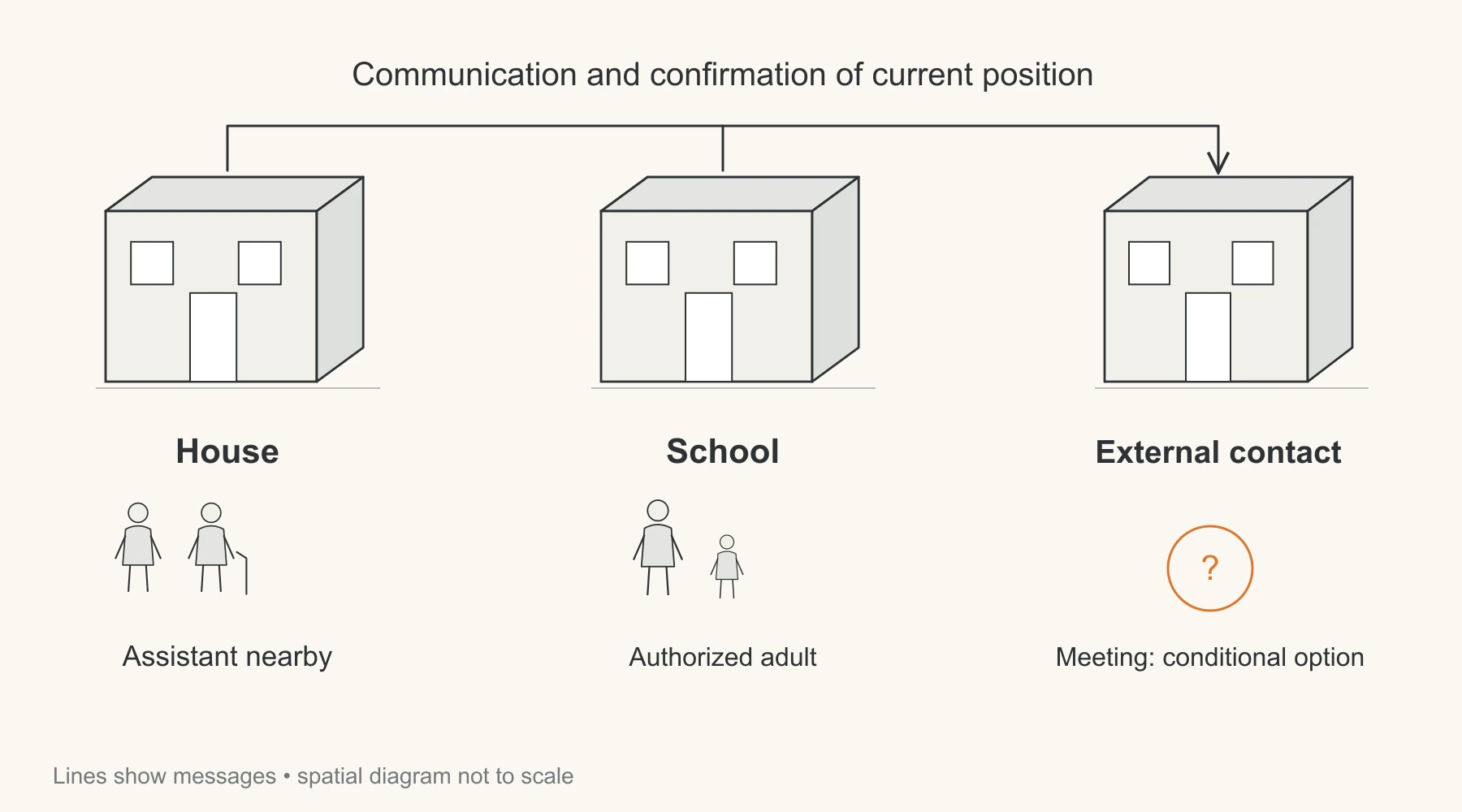
Figure 22. Family in different places: connections and individual decisions
[P] Family coordination preserves the connection between different places and takes into account the assistance of each participant. The meeting place remains a tentative option until the current situation is checked.
Each location may require a different decision. A person in a suitable building can remain there while another needs to exit a damaged one. Reunion is important, but traveling to your loved ones should not create additional danger for the entire family. If there may not be enough electricity for the required device, request medical evacuation in advance and convey factual information about the available operation of the device, without inventing a deadline.
When moving, take available documents, medications and care products without dangerous delay. Animals need a carrier or familiar means of restraint and finding out if the placement is accepting of them. [C7] Support, accessible transportation, and reserves for assistive devices are part of the Ready.gov guidelines for people with disabilities. [C8] The entire path of a person is checked, and not just the presence of a car.
If there is no answer, separate it from the conclusion about fate. The connection could be lost, the institution could change its address. Check known out-of-area contact, facility, and available tracing channel; do not send a relative to a dangerous area to search on their own. There are enough states in the family record: position is known, verification required, transferred to service. Enter the time of the last confirmation.
If communication is completely lost, the paper plan is saved. Its meeting locations yield to obvious immediate danger: no one should walk through a fire just because the agreed meeting place is beyond it. The family completes the first round of actions when everyone's situation is known and further placement and necessary assistance have been agreed upon. The unanswered question remains with the named person, who will continue the review.
Case Study: A Meeting That Had to Be Postponed
[S] Olga is with her child at school; The school confirms that children remain with staff and are released in accordance with current procedures. Dmitry left the damaged office. The grandmother is at home with a neighbor and has the necessary care. The family has two meeting addresses, but Dmitry's path to the school is closed. Communication by short messages sometimes works; The car is not available to the family.
Participants compare two reasonable desires: to get together sooner or to maintain the already available help in three places. They choose the second. Dmitry informs the school that he cannot come, Olga remains with the child, the neighbor confirms her opportunity to be with her grandmother. The cost of the decision is that the family is divided, and the time frame for reunification is unknown. What is included in the record is not the promise of an early meeting, but the following contact and the condition for changing the plan: loss of help in one of the places.
Then the neighbor says she can't stay any longer. This new circumstance changes the priority. The family makes a request for help through a known contact. There is no confirmed replacement for the neighbor yet; Dmitry is not sent through a closed area. The purpose of the meeting remains, but the immediate focus is continuity of care. During the analysis, they check who noticed this change and who received the incomplete request.
C21 First aid for recognizable consequences
Who uses it. Eyewitness and trained assistant. The doctor and rescue service follow their own procedures. The card deals with a person's recognizable condition and does not prescribe treatment for an unknown infection.
Where to start? Make sure you can help without getting into actual danger. Call for help and start an emergency call. If there is no response, assess breathing; stop severe external bleeding using an accessible, studied method. [O: A01, A02]
When to delegate a task. Tell the arriving medical professional the condition, the actions performed and their timing, changes and known exposure hazards. If access requires a special rescue, convey this request to the service without sending a random person into a dangerous environment.
An unusual cause does not replace the usual care for bleeding, burns, or lack of normal breathing. Smoke, damaged electrical equipment, collapse and unknown atmosphere may, however, make approach dangerous. Medical gloves by themselves do not change this environment. The controller needs observable signs of the location and access to the person. If assistance is already provided in a suitable place, it is not stopped just because the origin of a distant event has not yet been clarified.
This card should be studied in conjunction with a nationally recognized first aid program and practical training. The first aid kit comes with up-to-date local algorithms, an emergency number, and information about an available automated external defibrillator (AED). Pediatric resuscitation, assistance with choking, drowning and other special situations require separate training. The adult algorithm given below is not universal.
[O] IFRC Guidance 2025 links first aid to evidence, training and local context. [A07] In a family or institution, therefore, a person is needed who updates educational cards, checks expiration dates and completeness of the first aid kit. The test should show that the content is accessible, including at night, and is suitable for users and mastered by them.
The adult is unresponsive and not breathing normally
[O] Call emergency services and, if possible, turn on speakerphone. Assess breathing while the call connects. Occasional gasps are not normal breathing. If the adult is unresponsive and is not breathing normally, assume circulatory arrest and begin cardiopulmonary resuscitation; the dispatcher can help recognize the condition. If the adult is unresponsive and you are unsure whether breathing is normal, begin resuscitation. Do not wait for the call to connect before starting chest compressions. [A01]
Press the heel of your palm onto the lower half of the sternum, place the second palm on top; arms straight, shoulders above the chest. For an adult: 100–120 presses per minute, depth 5–6 cm, full expansion of the chest after pressing and a minimum of pauses. An assistant trained in artificial respiration alternates 30 presses and 2 inhalations; the untrained performs continuous pressing. [A01]
When the AED appears, turn it on, attach the electrodes to the person’s bare chest according to the drawings and follow the prompts. During analysis and discharge, no one touches the person. After the device commands, resume pressing. Continue until professional help is provided, a clear reaction (speech, purposeful movement) or normal breathing appears; also stop if it is impossible to continue due to exhaustion or a dangerous situation. If a reaction or normal breathing occurs, immediately re-evaluate the condition. Occasional gasps in themselves are not a reason to stop resuscitation. [A01, A02]
The man is unconscious but breathing normally
[O] If there are no signs of injury, use a stable position on the side: move the near arm at a right angle, support the other hand at the cheek, bend the far leg and carefully turn the person towards you, maintaining support for the head. Keep the airway open and observe breathing. If it changes, re-evaluate the need for resuscitation. [A03]
If injury is suspected, avoid unnecessary movement; priority remains for airway patency. If it is otherwise impossible to keep them open, a careful turn is performed with the most consistent position of the head and body, if possible with an assistant and instructions from the dispatcher. A person who is breathing abnormally should not remain on their side instead of initiating resuscitation. [A02, A03]
Severe external bleeding
[O] Call for help, call emergency services, and apply pressure to the source of bleeding through an available clean bandage or cloth. Maintain direct pressure. In case of life-threatening bleeding from a limb that is not stopped by pressure, use a hemostatic tourniquet according to the mastered technique and product instructions; a trained assistant can use the provided means to stop bleeding. Note the time of application of the tourniquet. Do not loosen it yourself: this is the task of a medical specialist. Observe the condition and transmit information to the arriving help. [A02]
[P] The dispatcher is informed that bleeding continues, and is not limited to the phrase “the wound has been treated.” Information about an unknown object is transmitted separately. Recording time and searching for documents is assigned to another person so as not to interrupt assistance. The card does not teach surgery, removing objects from deep wounds, or tampering with unknown damaged devices.
Thermal burn from a recognizable heat source
[O] After cessation of exposure, cool the burned area with clean, cool running water; published Red Cross material indicates a range of 5–20 minutes. Remove jewelry and loose clothing near the burn, without tearing off anything stuck to it. Do not use ice or fatty substances for initial cooling; do not burst bubbles. In large areas, make sure that the person does not become hypothermic. For waiting and transport, cover the area with a clean, non-adhesive dressing without applying pressure. [A04]
Deep or extensive burns, damage to the face and respiratory tract, electrical or chemical burns require urgent medical evaluation; The severity of pain does not prove the severity of the injury. [A04] [P] If there is unknown material on the skin, do not automatically transfer the thermal burn algorithm to remove it. Request specific guidance on the nature of the exposure, alert the receiving service and use C04. Do not select a chemical “neutralizer” yourself.
Hypothermia
[O] Cold skin, shivering, confusion, slurred speech, and slowed breathing after exposure to cold require urgent help. Move the person to an accessible shelter, carefully replace wet clothing with dry clothing, cover them, including the head, and stay nearby. Do not rub the limbs, use a hot bath or direct intense heat, or give alcohol. Warm, nonalcoholic drinks are permissible only if the person is fully awake and can swallow safely. [A05]
[P] For shelter, this is also a signal to check the conditions of other people and C20. One sick person does not prove a single mechanism of the event, but the lack of suitable clothing and heating is already an independent need. If safe relocation is not available, C15 reduces ongoing heat loss by available means and maintains the request for assistance.
Overheating with abnormal condition
[O] Confusion, convulsions, loss of consciousness, or other sudden changes due to overheating require immediate medical attention. Sweat may be present: dry skin is not a prerequisite for heat stroke. Move the person to a cooler or shaded place, remove excess outer clothing and immediately begin available cooling: wet the skin with cool water, blow it, use cold damp cloths. Stay close and observe the breath. [A06]
[P] Complex cooling methods that require special organization and control cannot be improvised alone. If an unconscious person is not breathing normally, resuscitation is necessary, not just cooling. The unsuitability of the premises for rest and care is reviewed immediately, without waiting for the nature of the external source to be clarified.
Help is still on the way
For a person who constantly needs treatment or a device, check the usual plan: own medications and prescriptions, supplies, food, storage, available medical contact. Use verifiable documents and the words of the person himself. Loss of paper requires recovery of information, but does not justify delaying emergency assistance. The layperson does not change the dose, device parameters, or method of use because of a suspicion of extraterrestrial influence.
If you are alone, begin the help you can provide and call for assistance. If there is no network, call out to people nearby; a lengthy record must not take time away from helping now. In a group, divide the work: one person helps, another contacts the service, and a third maintains access known to be safe. A trained helper uses the procedures and equipment they have learned to use. Diagnosis and treatment belong to the medical service. C15 helps organize care if that service cannot arrive, but it does not supply missing medical skills.
Send a short sequence: who was found; what they saw; how accurately the time is known; what they did; what has changed; what dangers and medical dependencies are known. The name and health information is received by the person who needs it for help. A public list is not required here. For P02 and C10, check the actual reception, especially if the person is transported between institutions. When the state changes, re-evaluate the immediate task; If there is a danger for the assistant, reconsider the situation and request special rescue.
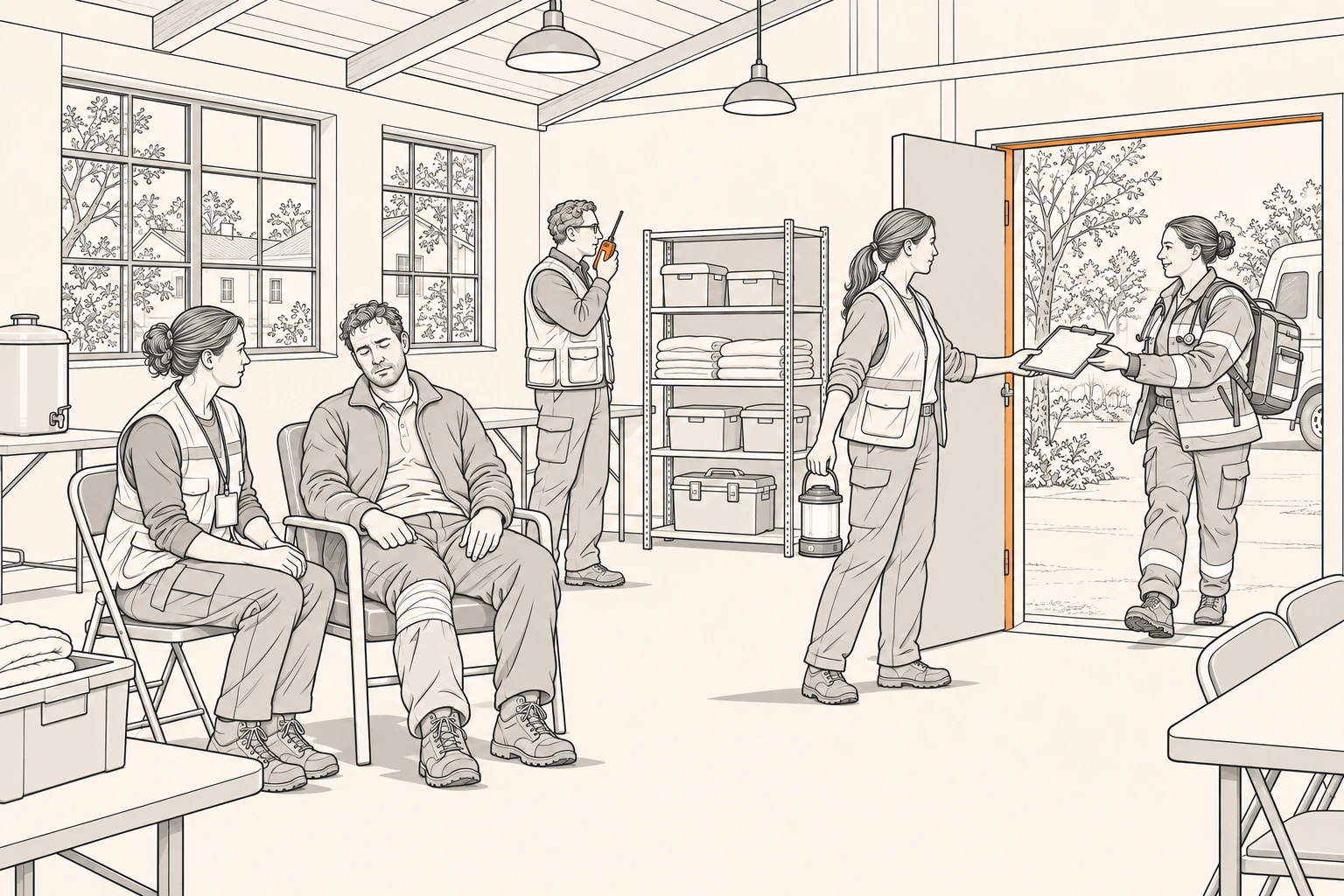
Figure 23. Help, call and free access
[P] Direct support, calls for help and free access to services are provided by different participants. The transmission reports the observed condition of the person and the known hazards of the location.
Case Study: Lights Off Assistance
[S] After an unknown outdoor event, the lights in the room go out. A man injures his hand with broken glass. One participant was trained in first aid but was tired; the other two know how to use the connection and know the way out. They have a flashlight available and a clean cloth, but the first aid kit was left behind the aisle with the damaged structure. The medical dispatcher has not responded yet. These objects and restrictions are given by the exercise; There are no additional funds.
The first option is to postpone help and get to your usual first aid kit. The second is to provide assistance they have been trained to give, using available means while continuing the call for help. The group chooses the second one. A trained assistant deals with the bleeding, another participant reports the condition and inaccessibility of the previous passage, a third illuminates the place and maintains free access. Time and documents are recorded by someone who is not involved in direct assistance. The origin of the shutdown remains a separate question.
The cost of the decision is that some of the usual equipment is not available, assistance is limited by the available skill, and the fatigue of the trained participant continues. When the connection appears, it conveys the state and the action performed; The further procedure will be clarified with the dispatcher. A new access message for an arriving service allows a third party to meet it along a known path. No one is sent through a damaged passage to complete the set. Practical skills for this case are practiced on the simulator; dangerous effects on people are not reproduced.
C04 Suspected biological or toxic effects
Who uses it. Witness, family, and care provider for unusual symptoms, multiple illnesses, or possible exposure. The medical service is responsible for assistance, the sanitary service is responsible for assessing the spread.
Where to start? Report people's conditions and circumstances. Stop contact with the suspected source in a safe and accessible way. In case of emergency, call for help immediately without waiting to find out the cause.
When to delegate a task. Refer diagnostics, special studies, restrictions and handling of the material to authorized specialists. Please advise the host facility in advance of possible exposure if conditions permit prior to arrival.
The same complaints may have different causes: infection, a common source of poisoning, poor ventilation, or several unrelated diseases. Until this is clarified, observation is more useful than a ready-made name. Record location, time, symptoms, and known exposure to material or persons. Do not declare everyone present contagious and do not prescribe a regimen based on one unusual event.
Do not take the find home, to your regular office or public transport. It is not opened, smelled or examined independently. Information about the location is transferred to a specialized service. If people are already nearby, help is organized based on their condition and known access hazards, rather than on their willingness to fill out a questionnaire.
Before arriving, notify the facility of possible exposure and follow the designated admission route. In case of serious condition, help remains a priority. Advance information and measures regarding the suspected route of transmission are provided by CDC infection control for respiratory diseases; using this procedure for an unknown incident is a design adaptation here. [C12] Transportation is agreed upon with C10 without delaying immediate rescue.
Under medical orders, limit unnecessary contact while ensuring food, medications, child care, and home safety. Otherwise, a person has to choose between the prescribed limitation and the necessary life. The family coordinator finds out who is assigned such support and how to report if it does not take place.
Do not select a medicine, filter, or purification method based on the assumption that the substance is extraterrestrial. Household cleaning and an unknown disinfectant do not confirm the elimination of the risk. Antibiotics and prophylactics are not prescribed according to the same hypothesis. Potassium iodide may protect the thyroid gland from radioactive iodine; it is taken only on the instructions of a competent service or doctor. It does not protect other organs and does not act against other radioactive substances. [C13]
The preliminary explanation is revised based on clinical and epidemiological data. A specialist understands a negative test result within the limits of what the test is capable of detecting. There is no universal isolation period for an unknown agent. In case of external contamination, the assigned local protection regime is used; when the source is inside, it is necessary to stop the internal influence.
If communication is lost, seek available emergency assistance and report the circumstances upon first contact. Do not create a forced quarantine of neighbors with your own decision. New cases, changes in condition, and study results require reconsideration. An individual or public restriction must be lifted by the appropriate responsible person based on reasonable criteria; assistance to a person continues depending on his condition. Symptoms, possible contact and actions performed are passed on to the next person responsible without unauthorized diagnosis.
C17 Missing, dead and contact with relatives
Who uses it. The family, the person taking reports of missing persons, and the designated search officer. The case must have a responsible and accessible deputy; special procedures are performed by an authorized service.
Where to start? Save your family's last confirmed location and secure contact. Separate the lack of communication, non-arrival and the message of possible death. If the condition of a living person is unclear, available medical care is the first choice.
When to delegate a task. Search, determination of death, identification and official notification may require different executors. Specify the recipient of each stage and convey to him the available information with its origin, maintaining contact with the family.
When a loved one does not respond, it is difficult for a person to withstand uncertainty. The organizer helps by naming what is known and the next step. A lack of response, a still image, or the story of an unknown witness does not establish death. Promising a successful outcome without information also does not provide support for the family.
[O] Guidance from the ICRC, WHO, PAHO and IFRC links the dignified treatment of the dead to documentation, subsequent identification and the needs of relatives. [V04] Here these principles are applied to working with information. The Known Disaster Document does not support the safety of contact with remains following an unknown exposure.
What to write down and what to check
When creating a case, find out who is reporting the absence, how to safely contact them, who they are looking for, and where the person was reliably seen. Separately record the time of the event and the time the message was received. Personal information is collected for a specific verification; in the open journal, the case number and work status are sufficient. Medical, family and identification information is held by authorized recipients.
It is useful to distinguish six states: no connection established; the person did not arrive at the recipient; location confirmed; an unverified death message was received; death confirmed by a competent person, identity not yet established; identity and death were confirmed in accordance with the established procedure. These are working designations of the log and not a replacement for official documents. When changing a record, keep the same state, reason, and author of the change.
Check the route from departure to reception, including changes in transport or institution. The response must come from a person who sees the recording of the reception or can confirm presence. Multiple copies of the same list remain a single source. The coincidence of surnames is not enough to merge cases: this can mistakenly stop the search for another person.
The witness preserves existing reports and observations, including location and time. They are not sent back for a photograph or a personal belonging. A discovery of remains is reported to the competent service, together with the known hazards of the location. Residents must not open or dissect remains, take samples, or attempt identification through contact with potentially hazardous material. A resemblance in appearance or a found belonging requires verification.
How to stay connected with your family
The family receives one clear contact: the name or role of the person responsible, the last confirmed circumstance, the unresolved issue and the next request. Agree on your next communication on real opportunities. It can take place without new information; It is better to explain this in advance than to force people to start the search for someone responsible all over again. The new shift also makes promises to the family.
Before disclosing a child's address, diagnosis or contact, check the basis for the transfer. Kinship, traveling together and knowing a name do not automatically give you the right to this information. The consent of the found adult, his condition and protection responsibilities are taken into account. If there is a risk of violence, C18 is applied. Sometimes it is enough to convey to the person found a request to contact the applicant through a secure channel, without revealing the location to the applicant. The reason for this restriction is not explained to the public with details of family life.
The difficult news is communicated by the service provided for this purpose or by a trained person in charge - privately, in understandable words, without the promise of completed identification before its end. The person is offered support and next contact; do not require all further decisions to be made immediately. Confirmation of death, identity, paperwork and notification are noted separately so that the unfinished stage does not disappear from the file.
Verify paid promises of information, release, or urgent identity verification through an independently known contact of the organization. The number or link of the person requesting it cannot be the only confirmation. Save suspicious handling for competent transfer. Help is not contingent on the family's consent to publish a photograph, story of the loss, or medical details.
If professional service is not available, the team supports survivors and families, maintains existing knowledge, and prevents accidental approach to dangerous locations within the limits of capabilities. The request remains open. The absence of a person responsible does not make dangerous work suitable for a volunteer. Trained local services, already in place with powers and procedures, continue to operate within their boundaries.
A discrepancy in data, a new move, a threat to family, a disclosure error, or an unreliable source requires reconsideration. The controversial list is no longer disseminated as reliable; the correction is sent to the previous recipients. Once a person is located, the issues of transport, care and accommodation are dealt with separately. After a confirmed death, there may be a child or dependent adult who needs help. These tasks receive their own performers. Participants do not establish their own rules of inheritance, recognition of death and disposal of property.
Case Study: Incorrect Death Report
[S] Sergey L. did not arrive for the meeting. There is a record of departure, but no confirmation of receipt. A photo appears online with a message about the deceased with the same initials; source unknown. The employee managed to send it to the family. The official missing-person search system is not available, but Anna, assigned to liaise with the family, can contact two known accommodation centers.
The search can be stopped on the strength of the photograph, or the reported movement can be checked further while acknowledging the harm caused by the mistake. Anna chooses the second course: she tells the family that the earlier information has not been confirmed, keeps the image separate, and asks the reception points whether the person actually arrived. The cost is severe uncertainty for the family, and the correction does not restore the trust already lost. Until a reply arrives, she cannot promise that Sergei is alive.
The second point confirms the presence of a living Sergei. After the required verification of relationship and agreement on secure communication, the contact is transferred. The search for Sergei changes the state, but the origin of the photograph and the fate of the person depicted remain a separate question. If there were other names on the forwarded list, confirming one person does not make the others alive or dead. The next shift receives these open cases and information about families who still need correction.
C16 Practical support and team performance
Who uses it. An available trained assistant, shift supervisor, and deputy shift supervisor when anxiety, confusion, overload, or fatigue interferes with getting help or performing the job.
Where to start? Check immediate safety, ask about immediate need, and suggest one clear action. Remove unnecessary requirements; Find out which important task the person can no longer reliably continue.
When to delegate a task. An emergency, an immediate threat to oneself or others, a sharp deterioration and the inability to maintain care require urgent attention to the appropriate specialists. The work task is handed over before a dangerous error occurs.
The assistant should not attribute unusual evidence to a mental state. Impaired consciousness, sudden changes in condition and complaints after the event are transferred to a medical specialist along with the circumstances. The card does not make a diagnosis or require a person to discuss their experiences in order to access food, accommodation or support.
[O] WHO guidelines on psychological first aid describe humane, practical support after a severe crisis that respects a person's dignity, culture and capabilities. It does not mandate a psychological interview for every victim. [V01] NIOSH links fatigue to risks to attention, responsiveness, memory, and decisions; Archival material for emergency response suggests incorporating fatigue reporting, breaks, substitutions, and load reduction. These principles do not lead to a single shift schedule for every threat. [V02; V03]
Conversation that helps you take action
Introduce yourself and name the help available. Ask what is needed now: fluids, personal care, bonding with your child, access to prescribed treatment. Let us choose a convenient method of communication and invite a trusted person if it is safe. A complex story is not a necessary price for a simple assignment.
The next action must have a location and an available helper. If the person does not understand, change the words, provide a clear reference point, or find a suitable companion. Test understanding without an exam or public comment. Attendance at the general meeting does not mean that the order has become clear.
Find out who you can inform about the person's situation. If there is danger from a loved one, use C18; The address is not disclosed automatically. Refusal to talk does not mean refusal of other services. Don't promise it's over when you don't know it. If it worsens, stop the unnecessary argument, maintain a safe presence and arrange the transfer; anti-anxiety drugs and homemade human authentication checks are not included.
The shift must have the opportunity to rest
The manager finds out who actually makes decisions, responds to families, keeps records, and performs work that requires constant attention. If these responsibilities are concentrated in one person, reduce unnecessary work and redistribute tasks. Recording fatigue should change something in the load.
The participant may report that they are no longer coping prior to the incident. Passing requires a current action, pending promises, and a stop condition. If there is no equivalent replacement, reduce the volume to what is feasible and request support. The position of deputy in itself does not create skill. If possible, a significant decision is checked by another participant who has information and can object; a second signature of the same overloaded person under a different role does not provide this.
The person on a rest break must have a recipient for regular messages. He is not called for every clarification that the shift may decide; for an urgent call, the basis is determined in advance. Life outside of work is also taken into account: an employee can take care of his family instead of relaxing. An available support contact is maintained and new responsibilities are not assigned silently via a personal phone number.
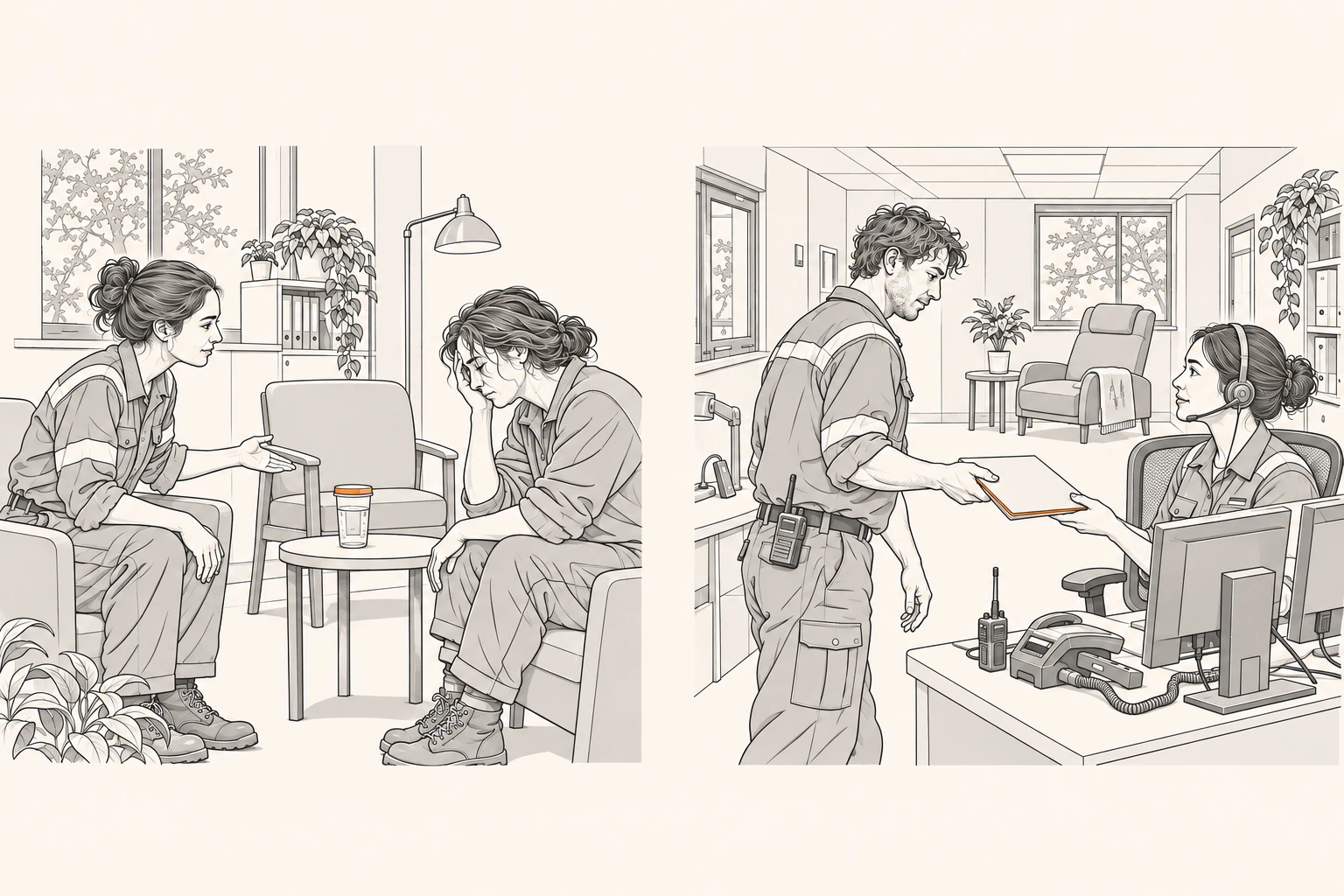
Figure 24. Practical support and protected rest
[P] Practical support begins with the nearest understandable task. Rest becomes possible after handing over the work and routine messages to the assigned reliever.
Review is needed when the condition worsens, unsafe behavior occurs, repeated errors occur, loss of a helper occurs, or a change in task occurs. A person does not lose services because of a temporary inability to work. Completion here is visible in a specific result: help is received or accepted by the named provider, the work task is transferred, rest is actually available. If there is no connection with specialists, the group maintains a clear routine and available support; a confident tone or an odd story is no substitute for clinical judgment.
Case Study: A Leader Who Needs to Stop
[S] The duty officer has twice sent a request to an address that is no longer in use and says he is mixing up the procedure. He also reports an unusual observation. A deputy on site knows the current requests but cannot both respond to families and take over all coordination. There is no information about the cause of the duty officer's condition.
It is convenient to keep him at work: he knows more than others. It is difficult to transfer control: some tasks will remain without a person responsible. The team selects the transfer, cancels the optional summary report, separately assigns an available contact to his family and arranges assistance and protected rest. Price - information for a general overview will appear later, and applications that depended on an erroneous address have yet to be verified. The person on duty himself is not forced to correct them instead of resting.
An independent recording later confirms the unusual observation he described. It is transmitted via S05 and continues to be investigated. This does not cancel the detected operational errors and the need for rest. The scenario teaches you to separate the reliability of a particular piece of evidence and the ability to now bear the entire load. The cause of the condition is not assigned based on the results of the exercise.
C15 When there is no ready-made plan and no external help
Who uses it. One person, family, random group, remote settlement or shift, if usual help is not available or the plan requires absent people and funds.
Where to start? Determine who is nearby and who needs help. Write down what works in an accessible place. Select the nearest feasible task, distribute care, supervision and communication, and stop unnecessary workload.
When to delegate a task. Transfer special rescue, medical or engineering work when contact and service capabilities are confirmed. Until then, keep help available and explicitly note what the group cannot provide.
A broken phone does not mean that help is not available everywhere. A closed route does not confirm the suitability of the others. Start with the observable: last contact made, people present, accessible parts of the building, status of known exits. Fire, injury, and other recognizable immediate dangers retain their own emergency procedures. The full picture is not a precondition for rescue.
The institution has a designated replacement system. In a random group, participants agree on who will connect the nearest tasks and who will replace him. Such an agreement does not give the right to force others. The person names his ability, consent to help and available means. One declared profession does not confirm the ability to perform any job.
1. Conduct a short roll call of needs. Who is nearby; who separately; whose position is not confirmed? Who needs an accompaniment, communication, assigned care or assistance with mobility? Do not require a diagnosis to be publicly reported and do not send an untrained person to look for missing persons in a dangerous place.
2. Draw a simple map of the available space. List suitable space, known water, food, sanitation, light, communications, personal devices, and recreational opportunities. For each entry, put: works, works with restrictions, not verified, unavailable. Items are counted along with the assignment; Two batteries without confirmed compatibility do not become a reserve for the device.
3. Select the closest target. It must be observable: maintain current care, transfer one complete request, ensure the delivery of a verified resource, or move to an already available usable part. Note which tasks will lose meaning with the next delay and which ones can be completed at the same time.
4. Separate three areas of work: people and assistance; changes in location; messages and requests. If the composition is small, they are combined, reducing the promised volume. One person chooses a sequence and notes what they do not observe at that time. Observation from an accessible position does not mean reconnaissance of an unknown passage or substance.
5. Free up time for what you need. You can postpone a detailed chronicle, re-sending the same information and an unnecessary trip. Don’t turn off someone else’s life support under the guise of saving money. Dangerous equipment is replaced only according to a known procedure within the scope of competence. The freed assistant receives the necessary task or rest.
6. Write down the condition for changing the plan. Deterioration of condition, loss of function, change of premises, confirmed assistance or new credible risk require immediate review. The next reconciliation is selected based on the current dynamics; her time is not declared a safe waiting period.
With several imperfect options, compare the benefit, the immediate possible harm, the necessary condition and the sign of failure. The suitability of the current location may justify the expectation; the loss of a desired function requires a new decision and a request for rescue. But the absence of a proven path does not turn into a command to go into the unknown. If no option meets an important need, name the gap directly.
Maintain accessible ways to be found for the location. The situation message is left where it does not reveal vulnerable people to outsiders. Communication attempts are correlated with the actual power supply of the devices and changes in the environment. A person is not sent through an unknown area with just a note. When a channel appears, convey the location, the number of people, the help needed, the limit of your capabilities and the available method of reception.
An ordinary participant helps in a familiar, mastered way. A local specialist evaluates his system; the absence of colleagues does not make him an expert in everything. You cannot turn an untested manipulation into a reliable reserve by simply calling the situation hopeless. At the same time, lack of authority does not require stopping the usual available assistance. Stop a specific activity if it creates a new immediate danger, lacks a necessary condition, or leaves a person unaccompanied.
The short entry for the next participant contains four answers: what we are doing, who is doing it, what we have, and what change would require stopping. There are still open questions: a specialist is needed; the path is not confirmed; the necessary help is unavailable. Signal restoration alone does not complete the card. We need actual transfer of aid or sustainable local support for C13 and C19.
Case study IG-04: the passage no longer leads to the previous recipient
[S] There are six people in the accessible room; It's hard to move alone. The required current functions are stored here. The usual exit is closed, the other passage has not been checked, the reception of the request by the service has not yet been confirmed. Maria helps a person when moving, Pavel knows how to work with the existing means of communication, Oleg knows the accessible part of the room. There is no transport, new equipment or immediate access to a specialist in the exercise conditions.
The scenario uses the second model S13: the connection between two recognizable places has actually changed. The previous passage no longer leads to the expected reception point. It does not follow from this that all the rooms and roads have changed. At first, participants only know that the exit is closed and that there is no response; they should not guess the unusual property.
One participant suggests checking an unfamiliar passage, the other suggests stopping actions completely until ordered. The group chooses to maintain care and seek communication from an accessible location. Maria stays with the person in need, Pavel conveys the request, Oleg notes the changes; Optional processing of video recordings has been discontinued. Rest is distributed along with work. Cost - there is no way to a confirmed recipient yet, and help with possible deterioration remains unresolved.
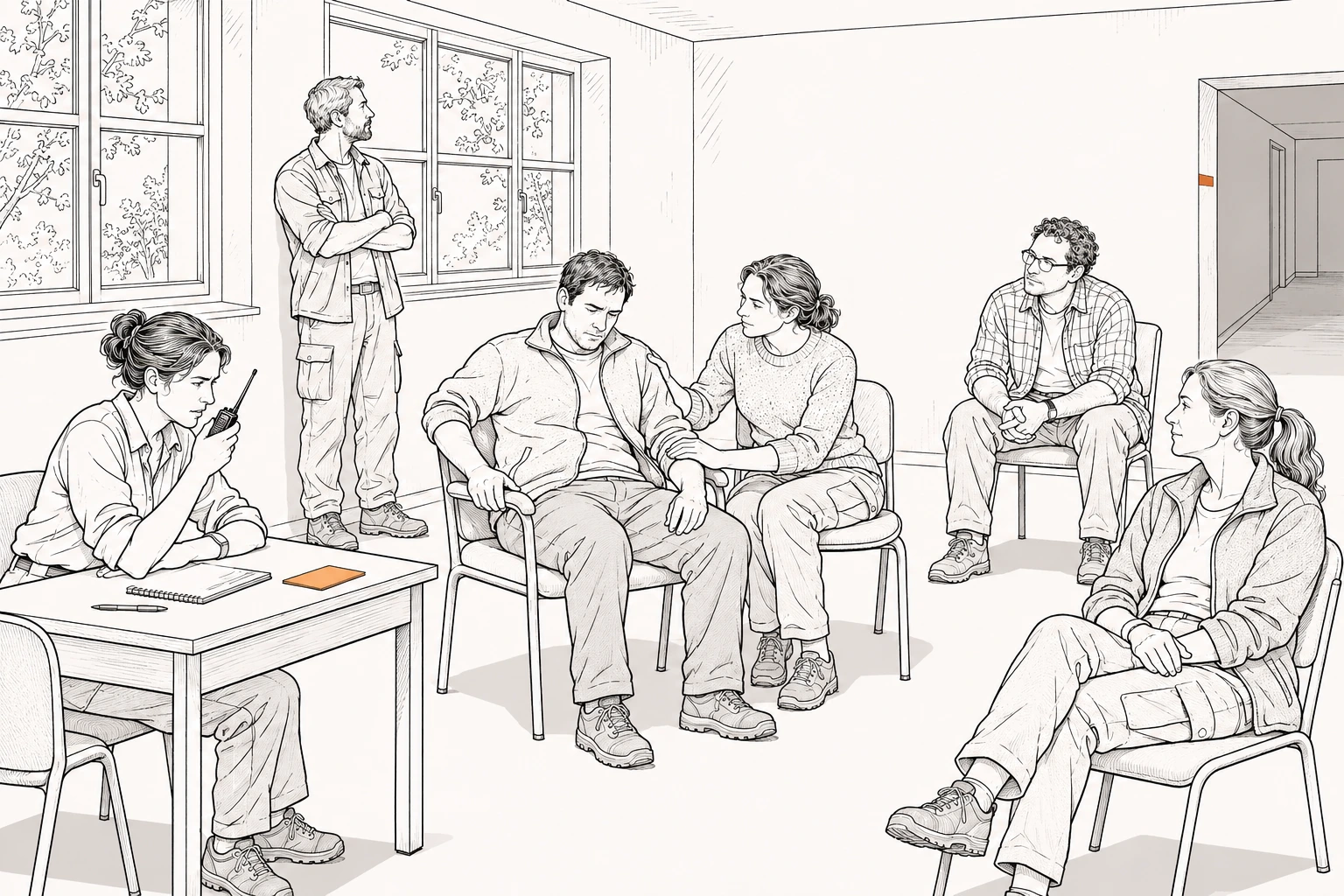
Figure 25. Isolated group: three areas of accessible work
[S] In the example IG-04, six people distribute support, communication attempts and surveillance of the accessible part of the room. An unconfirmed passage remains outside the group's actions, and rest preserves the possibility of further assistance.
Later, a message appears from another shift: the group that passed this transition earlier ended up in another known room; its presence there was confirmed, but the expected receiving point had not received it. The facilitator confirms that this is a specified property of the exercise and not a naming error. Now the previous address cannot be used as a transfer target. Pavel corrects the request: we need a path to a specific confirmed recipient, and not permission to go in the same direction. No one is sent to repeat the transition for the sake of verification.
The room remains usable under known current conditions, so the immediate action is saved. The basis for further movement changes: the old transfer card is no longer valid. If the person's condition worsens or the room loses its desired function, a new review will be required; the script does not promise that the wait will always end in rescue. During the analysis, feasible assistance and an honestly saved gap are counted, and not fictitious transport or unknown qualifications.
A place to stay and a route to the next place
A shelter is a room in which people manage to maintain the necessary conditions in a given environment. The sign is not responsible for air, maintenance, sanitary access and accessible exit. During a long-term deployment, these conditions change: people arrive, consumables run out, and the shift gets tired. Therefore, the choice of location and its day-to-day operation are considered separately.
Not every movement is a planned transport. It may be necessary to leave the immediately dangerous area immediately while the organizers are simultaneously looking for further reception. A prepared trip, on the other hand, requires a known recipient and an understanding of transportation options. The book distinguishes between these cases so that recordkeeping does not delay the rescue and so that the dispatched machine does not leave people without the next step.
C03 Home and Shelter: Suitability Test
Who uses it. Occupants and designated manager of a home, shelter, or temporary facility. His deputy needs means of communication and information about the limitations of the location.
Where to start? Check people, known hazards, accessible exits, air, water, temperature, sanitation, and necessary facilities. Name the nearest significant failure and a realistic fallback option.
When to delegate a task. Technical suitability and changes to systems are assessed by competent personnel. If the assistance you need here is no longer available, please arrange a transfer at C10; if there is no help and a confirmed location, use C15.
Before you stay or receive people, find out what normal exposures the premises are suitable for. Check the condition of structures and fire exits within safe access, internal sources of contamination, and the ability to use the site with limited mobility. Independent inspection of the damaged part of the building is not included in this inspection.
Ask who needs electricity, assistance, communication, water for care, or special meals. Medical information is not posted on a common wall. The number of people is important, but the same group in size may require completely different assistance. The available resource is taken into account with the actual balance and purpose; The calculation of operating time is accompanied by assumptions about flow rates and consumers.
The building mode is selected for the identified hazard. General house ventilation and medical systems are changed by responsible specialists. Unauthorized closure of all air channels for an indefinite period is not universal protection. If contaminated clothing or belongings of arrivals are possible, the reception procedure is determined by the services; Residents are not instructed to clean up an unfamiliar substance or navigate an unknown area on their own.
People need to know the reason for staying, restrictions, how to report feeling unwell and the next review. Every critical resource needs an observer who actually has access to the information. Duties are distributed so that those in charge can sleep. Detailed daily work is described by C20, supplies - C12 and C13.
Some conventional remedies have strict limits. An anti-aerosol respirator does not protect against gases and vapors; The filter medium does not create oxygen and does not make oxygen-deficient environments suitable. The choice of protection depends on the known exposure. [C9, C10] Do not run a generator or internal combustion engine inside a home or garage: an open door will not eliminate the carbon monoxide hazard. [C11]
Fire, hazardous damage, entry of contamination, and loss of life-saving care require immediate review. This is not necessarily a general exit to the street: an accessible usable part of the building or another action of the emergency plan is possible. If there is immediate danger internally, the appropriate movement shall not be delayed until external permission is given. Let people know what condition has changed and what action is available now.
Without communication, the manager continues internal surveillance and uses agreed upon backup channels. Random people are not sent on reconnaissance missions. After changing the number of residents, resource, building or service instructions, the reconciliation is repeated. The stay ends with an organized transfer or reasonable permission to end the shelter; the state of people, systems and assistance not yet provided is transferred to the next person in charge. One check mark to close the premises does not complete these tasks.
C20 Daily shelter operation
Who uses it. Accommodation manager, duty shift, those responsible for routine services and residents reporting changes. Technical and medical decisions remain with the relevant specialists.
Where to start? Accept information about people and open requests. Walk through available service locations, check for known signs of work, and find out who is not actually receiving help.
When to delegate a task. A failure that the duty officer cannot resolve with an authorized action is transferred to the system owner or service. Imminent danger triggers emergency action immediately, without waiting for the log to be filled.
The change takes on the real situation. People may have arrived since the last report; someone is not able to reach the announcement, issue or bathroom. For each required service, indicate the person responsible for it, the observable signs of the performance, the local procedure, the authorized action of a normal assistant, and the basis for the technical call. The short record should also show the reserve, the stopping condition and the next test.
Use figures from the applicable site requirements, equipment specifications, and people's needs. If that information is unavailable, the condition remains unconfirmed; the duty officer asks the specialist responsible for the system. A normal reading applies only to the measured quantity and the conditions of the check. By itself, it neither explains every symptom nor certifies protection against an unknown effect.
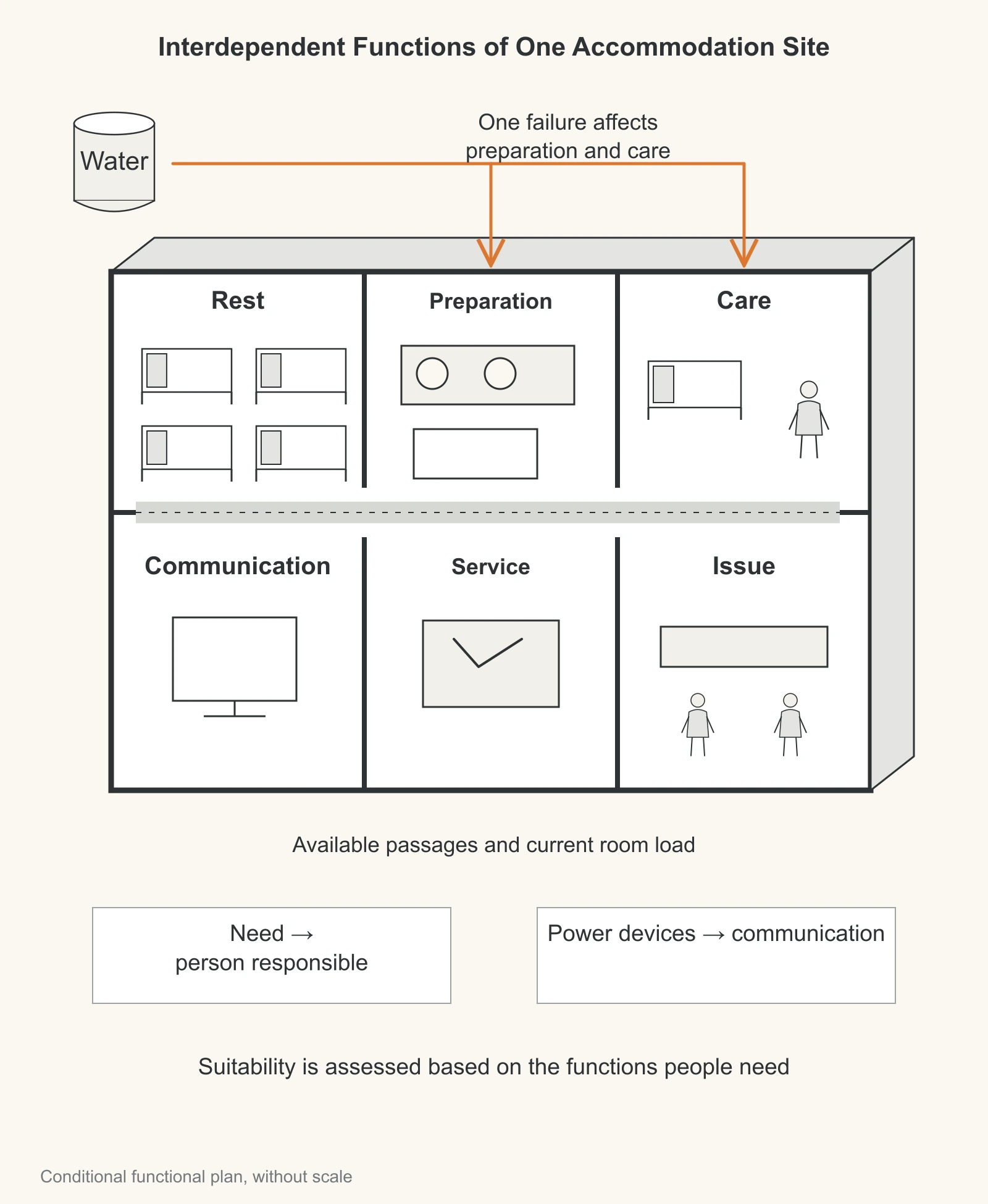
Figure 26. Shelter as a system of interdependent functions
[P] The suitability of a shelter depends on its functions working together. A local water failure affects specific needs, and the required actions and responsibilities are specified separately.
Air, heat and equipment operation
Observe known systems status, intended alarms, and operator messages. The device is used by a person who knows how to work with it and understand the limits of the result. The unusual reading is stored with location and conditions; the usual does not apply to substances and effects that the device does not detect. Residents report changes in health, odor, noise and disruption. Individually, these signs do not establish a cause, but require attention.
An ordinary participant does not clutter the elements of the system and reports a failure. Changing ventilation, connecting loads and repairs are carried out according to the current procedure by a competent contractor. When in doubt, both an assessment of the people’s condition and an inspection of the building are needed. The backup option is described in detail: what suitable premises are available, who is hosting there, what known route can be used to get there and who needs escort.
For heat and cold, the operation of the provided equipment, clothing and individual needs are taken into account. The same temperature in the room does not mean the same condition for everyone. Users apply the products intended for the site within the instructions. When available heating or cooling is insufficient, targeted assistance is assigned and a suitable location is sought; The presence of a device on the list does not close the failure. The temporary decision is checked for consequences on fire safety and other necessary equipment.
[O] Carbon monoxide is colorless and odorless. The CDC prohibits using a portable generator inside a home or garage, even with windows and doors open, or heating a home with a gas oven. [C11] An unknown external threat does not remove this known danger.
Sanitation, waste and daily care
Check that sanitary facilities are operational and can be used by current residents. Routine hygiene products, privacy, assistance to those in need, and efficient waste collection are required. Cleaning must have a person responsible, suitable means and storage space. The duty officer clarifies what residents do themselves and where an assistant is needed.
Household waste and material with unknown hazards require different handling. The suspicious substance is not included in the general cleaning and is not assigned to a random volunteer. The products are used for their intended purpose, without impromptu mixing. The failed sanitary site is designated as unavailable, an alternative is announced, and its suitability for specific people is checked. If there is no alternative, it is the immediate problem of accommodation, not the fault of the residents.
Needs for menstrual, incontinence, child care and personal hygiene products are accepted without public diagnosis or explanation before the queue. Whenever possible, the person’s choice, privacy, and familiar safe routine are preserved. An ordinary assistant acts with the consent of the recipient within the limits of skill; Treatments and special procedures are not included here. If the usual assistant is absent, an available replacement with clear boundaries is appointed or the unmet need is transferred. The silence of a person who has difficulty communicating is not a substitute for reaching out to him.
Food and distribution
The person in charge knows the suitable batches, storage conditions, quantities issued and those who need a different method of receipt. C12 helps to distinguish between the purpose of water and the state of food supplies. The prepared food must reach a person who is unable to stand in line. Assigned care assistance is agreed upon separately from the general nutrition list.
Check the container, intended preparation area, suitable water and waste collection. The unidentified batch is kept separately in recordkeeping; the queue does not make it suitable. Reserve - an available suitable resource or another order of distribution already in operation. The expected delivery will become stock upon receipt. In the event of a breakdown, people are informed that it is known how temporary assistance is organized and when the next contact will be.
Capacity, exits and accessibility
Capacity is determined by applicable requirements and the combination of exits, sanitation, rest, care, and mobility assistance. Dividing the area by an invented norm does not replace this. The new group changes the load; sometimes it is changed by the needs of the previous inhabitants, even if the total number remains the same.
When receiving people, find out which services can handle the extra work. If you need to limit further placement, inform the coordinator what has been exhausted and seek a confirmed receiving arrangement. People who are already nearby cannot be left without available immediate help due to the lack of a line in the plan. Don't hide the overflow by moving it to an untested room.
In a safely accessible area, check passages, clear signage, known means of warning, and assistance with exit. The new arrangement of things should not block the agreed path. The technical condition of structures is assessed by the relevant contractor; the duty officer does not examine the dangerous part. A person who can't hear an announcement, can't see a sign, or can't walk on his own needs a working method of communication and an assistant.
Any decision on one service is compared with the others. Moving increases the load of the adjacent room; water restriction changes care; the shutdown affects a personal device. The person in charge names the remaining need and its recipient. If the location no longer provides what is needed, a transfer will be arranged via C10 and available support via C15 prior to the transfer.
If external communication is lost, the shift maintains a local record and maintains the available call order. The new duty officer accepts the number of people, essential needs without unnecessary personal data, technical limitations and open requests. Review is required when there is a change, new arrivals, complaints, a failure or information about a threat. It is the unsuitable service or dangerous action that is stopped; The further treatment of the place is decided based on the actual consequences.
Case study U-08: normal indicator and new needs
[S] A new group has arrived at the shelter. Passages are still available, but two people need food to be brought to them on site; The previous order is designed only for the queue. One sanitary station failed. A shift consists of four workers; two are able to help with ordinary household tasks; neither of them has the right to repair the system. Another sanitary station is operational, but its availability for arrivals has not yet been verified.
You can continue admitting people as usual, relying on available places, or limit further workload and redistribute work. The shift chooses the latter: two assistants deliver food on site, an optional report is postponed, and the existing sanitation station is checked for accessibility. The technical request has been accepted by the owner of the facility, no restoration time has been given. Cost - fewer people can be admitted subsequently, some of the usual reporting will be delayed.
Several residents then report feeling unwell, although the panel shows normal conditions. Now household redistribution is not enough. One of the remaining workers calls for medical assistance and relays the location and sequence of complaints; the other contacts the person responsible for the technical system. The record of normal operation of the equipment is supplemented by the requirement for inspection based on complaints. The suitability of further placement now remains an open question. Neither a normal indicator nor an unknown external cause provides a ready explanation. The next shift receives a technical request and the names of those whose assistance depends on the temporary organization.
Case Study: You Need to Come Out of Hiding
[S] There are 74 people in the sports building. Among them are a family with a child, a person in a wheelchair and two whose assigned assistance depends on the equipment. There is an on-call shift, a trained mobility assistant, and a medical professional. There is another center in the city, but its capabilities for individual assistance have not yet been tested. Relevant services have restricted access to part of the outdoor area after an unknown event; a new report of danger near the building itself has not yet been confirmed. The numbers indicate exercise conditions, not capacity limits.
On the second shift, smoke was noticed in the technical area. Two options have a cost: waiting for general permission leaves people close to observable internal danger; exit requires immediate organization of escort and further accommodation in the event of incomplete information from the outside. The manager carries out the emergency actions provided for the building and calls for help. People are helped to exit via an accessible, safe route based on the actual situation; the external message is urgently clarified in parallel. The available list is taken without delay of rescue.
After evacuation, 72 people are accounted for. The two could have stayed inside or left earlier: neither version can be accepted for convenience. Rescuers are immediately given the number of unaccounted for and the latest known information. Untrained workers do not return to a dangerous building. The check reveals a previous transfer of the two to medical services, missed during a shift. Acknowledgment changes the search task; The need and procedure for searching inside are determined by professional rescuers.
Next, the new center confirms the reception of 71 out of 72 who came out with their needs. For one person, the help they need is not available there. This is a new decision boundary: the main group can be transferred, but a separate medical task remains for it with a named responsible person. The outcome is not declared completely successful until this assistance is confirmed. During the analysis, the temporary departure mark is corrected, the shift is transferred and the individual conditions of admission are checked.
C10 Moving with confirmed reception
Who uses it. The transport organizer, dispatcher, driver and receiving shift after the initial release of people from immediate danger. Medical conditions are determined by the appropriate specialist.
Where to start? State the reason for the trip, the people and the required accompaniment. Check the route, transportation options, and the location's readiness to accommodate this group now.
When to delegate a task. The receiving employee confirms the actual arrival and assistance. If an address or route is lost, the dispatcher retains responsibility for those already sent and arranges for another available decision.
Prepared transportation begins with the question of what can no longer be provided locally. The reason may be a protective decision of the service, loss of water or necessary care. If the building is already immediately dangerous, emergency rescue movement is carried out according to the situation; coordination of long-range reception proceeds in parallel. The card does not create an obligation to wait for a bus in a burning building.
Help for people without personal transport, available cars, spare seats and their limitations will be agreed upon in advance. Teamwork between sending and receiving areas, individual needs, and resource coordination are part of FEMA's approach to evacuation and sheltering. Here, on this basis, transmission is proposed that persists across changes in route and exposure. [NC1]
1. Form a group based on help, not just on address. Consider children, chaperones, mobility, modes of communication, devices and animals. Don't separate the right pair of person and helper for the convenience of the list.
2. Obtain confirmation that the receiving party will accept the group. We need a valid entrance, shift contact, available services, restrictions and the number of people we are ready to accept now. Indicate the confirmation time: the previous agreement may have become outdated. Refusal opens the search for another decision, rather than closing the need.
3. Check transport for specific passengers. Boarding, disembarking, device space, and travel assistance may limit the use of a free seat. The power supply for medical equipment and transportation conditions are assessed by trained specialists.
4. Check the path through the responsible services. Record the direction, known constraints, how to obtain the change, and available fallback order. The passenger or occasional driver is not tasked with investigating unknown contamination. Information about the possible impact is transmitted to the recipients before arrival to the required extent.
5. Check the actual boarding and escort. Tell passengers their destination, what to do if they change their route, and how to ask for help. Mark the reported person who did not go and the one who is now responsible for him. Urgent assistance will not be held until all fields are filled out.
6. Complete the handover with the recipient's response. He checks arrivals, notes urgent needs and informs the sender that they have been received. Inconsistencies in the lists and help that is not yet available are given to a specific person responsible.
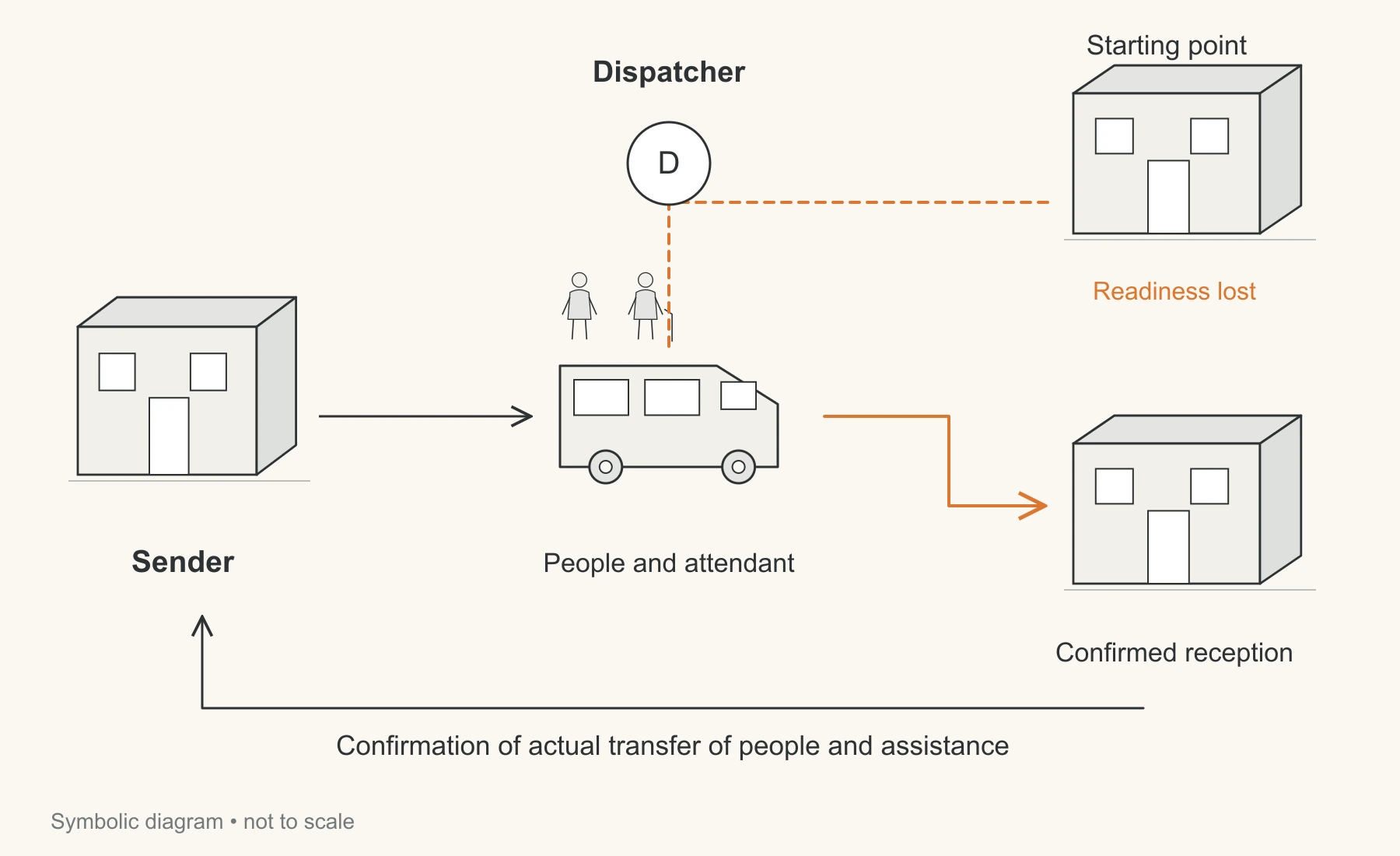
Figure 27. The movement ends with a confirmed reception
[P] A change in receiving capacity requires a new negotiation between the route and the recipient. The transfer ends with confirmation of the actual reception of people and the necessary assistance.
When a point is closed, the dispatcher stops new directions there and analyzes the position of those already on the way separately. The driver does not drop people off in a dangerous place because the address has disappeared. In case of immediate danger, transport emergency procedures are in place. When there is no communication, a pre-agreed backup order is used if the situation allows. The loss of the channel does not allow driving through a clearly dangerous area; the sender keeps the task open, the receiver keeps paper records until the message is restored.
Suspicion of contamination requires appropriate organization of reception, but does not justify refusal of urgent assistance. Self-cleaning of vehicles with an unknown means does not certify its suitability. If a person refuses a planned trip, identify the specific obstacle and available support; the right to coerce does not arise from this card.
Compare those who departed, those who arrived, those who refused, and those with whom contact was lost. Information is passed on to relatives taking into account the consent and protection of people, without a public list of diagnoses. The plan is revised if the route, transport, receiving location is lost, medical needs change, or recordkeeping discrepancies occur. The transport part may be completed before other tasks, but the person must be accepted with the necessary support or remain with the named person responsible for a new rescue task.
Case Study: Two Buses and a Closed Point
[S] Two buses each transport 40 residents. Before departure, the point confirmed reception, but after departure, damage to communications was discovered in the building and it was closed. The old screenshot continues to direct people there. There is a connection with the first driver, but temporarily no connection with the second. In the original plan, both know the backup order of stopping at an accessible location if the address is lost; This place is not intended for long-term accommodation. There is a connection with one more center, its reception capacity remains to be clarified. There is no additional transport in the exercise.
You can send both cars to a closed building for a single meeting place, or you can stop new departures and decide the fate of each group separately. The dispatcher chooses the second option. The person responsible for the notification cancels the previous address in the channels used. The alternative center confirms assistance to only forty people, and the first bus receives a feasible direction. This technique does not automatically extend to the second one.
The cost of the decision is that the group is divided, some people do not yet have a place to stay for the night, and incomplete information about the second bus is retained. He is not recorded as having arrived and the driver is not relieved of responsibility for the passengers. The last confirmed position, list of people and medical requests remain with the dispatcher. A closed point, if possible, informs those who still come according to the old version about the change in order.
Later, the second driver gets in touch: he completed a backup stop, all forty are with him, but further waiting requires help, which is not available on site. Now the problem is known more precisely. The dispatcher communicates specific needs and requests another receiving arrangement; does not direct the vehicle to the first center beyond the confirmed capacity. The exercise ends with the first group accepted and the second task open. During the analysis, both results are assessed, and not just the number of people evacuated.
C11 Accommodation center and different needs of people
Who uses it. Center Manager, host shift, care staff and residents checking the availability of the proposed site. The deputy needs information about people and contacts of services.
Where to start? Find out which services actually work, how the person will use them, and who to report the problem to. Walk with him or an accompanying person from arrival to the necessary places.
When to delegate a task. Medical needs that the center does not provide are transferred to the appropriate service; transfer is organized by C10. Threat or abuse requires separate secure treatment under C18.
Placement consists of many daily activities. Is there an accessible entrance? Can a person get to water, a place to sleep, food, a bathroom and an exit? Will he receive the message in a convenient way? ADA.gov materials consider shelter accessibility to be broader than the availability of entry, including services and communication. This is the American legal framework; The practical principle applies here and local requirements are specified separately. [NC3]
Before opening, the manager announces the operating services, restrictions and those responsible for the missing ones. The number of places is associated with these conditions. If the planned center is not yet ready, people need an accessible, assisted temporary decision; empty floor space is no substitute for such assistance.
At the reception, ask what is needed today, how it is convenient to communicate and who usually helps. Do not demand that the diagnosis be publicly disclosed. Urgent protection and referral to a medical professional do not depend on a complete set of documents. The employee checks the actual path of using the service together with the person. When moving furniture, he must take into account the others so that the removed obstacle does not appear in the neighbor's house.
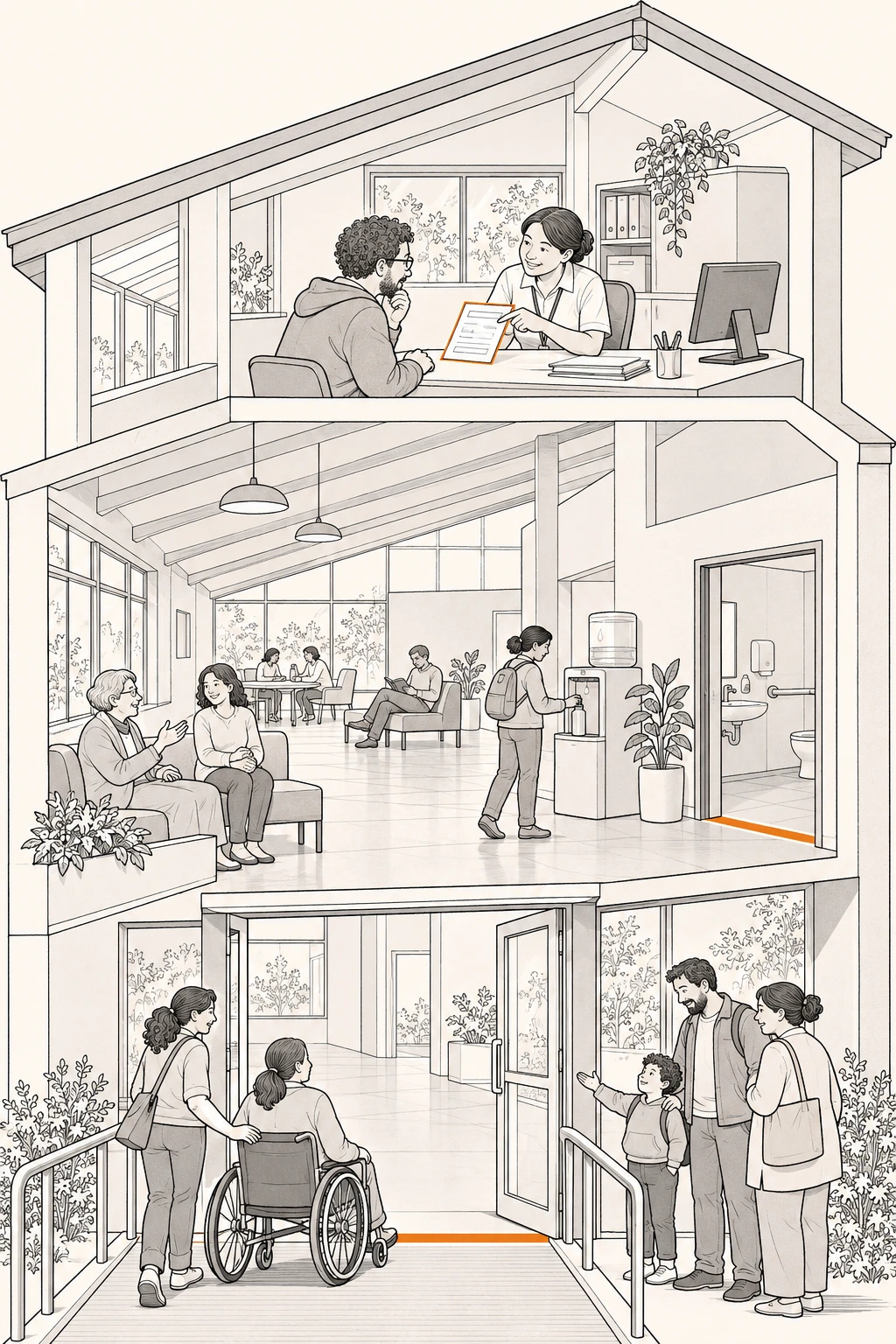
Figure 28. Accessibility from transport to a specific service
[P] Three conventional scenes of one center: arrival with support, access to necessary services and receipt of understandable information. Availability is confirmed for a specific person throughout the journey; the drawing is not a construction plan.
Maintain the right accompaniment. There is a prescribed procedure for transferring a child to a legal representative or authorized employee, with verification of authority and recording. Until the recipient is identified, the child remains under organized supervision; Lack of documents does not delay urgent assistance. The arrival of adults together does not prove the safety of their cohabitation. There should be an opportunity to report unsafe behavior or request a different accommodation.
The assigned health care professional determines on-site care and the need for another level of support. Drug storage, procedures and equipment are inspected in detail; the volunteer does not change the treatment and does not select a device based on external similarity. For animals, a specific procedure and owner contact will be agreed upon.
Explain the routine: when and how to get food, including outside the general queue for a justified need; where to rest, receive care and learn about changes. A quiet place for communication or recovery should not turn into forced isolation. A person can say a food doesn't suit them, a medicine is running out, or a service is unavailable, without a public argument. The request appears with a number, provider and the next response.
The new shift takes into account the actual number of residents, assistance changes, expected supplies, building limitations and pending requests. Information known to one volunteer should not go away with him. If communication is lost, the local log, the intended call and the agreed supply reserve are retained; The individual sheet is kept by those responsible. Announcements are repeated wherever people are, including those who cannot come to the stand.
Changes in resident numbers, new medical needs, impaired accessibility, loss of a critical service, or loss of the building's fitness for use require a review. Overcrowding changes reception and supply arrangements; space in passageways and sanitary facilities must not be quietly reduced. If a need to relocate is already known, work begins before resources run out. Immediate danger inside the premises requires urgent protective action without waiting for administrative agreement. The center closes when everyone has a subsequent place to live or receive help; a closed door cannot be the answer for those left behind.
C18 Protection against abuse within help
Who uses it. The person being threatened, his available assistant and the organization receiving the appeal. The recipient of the complaint must have an alternative in the event of a complaint about him or his supervisor.
Where to start? Find out whether the danger is ongoing, what protection is needed now and how to contact safely. Arrange to get the help you need without being forced into contact with the person being complained about.
When to delegate a task. Investigations, special protection measures and legal decisions are transferred to the authorized recipient. Until then, they maintain access to services and feasible temporary protection; a full investigation is not a precondition for it.
The report may involve violence, threats, sexual coercion, extortion, stalking, unsafe treatment of a child, or use of assistance for personal gain. The first job of the receiver is to hear what is needed, and not to force the person to prove every detail in front of the line. The recording separates the applicant's words from his own observations.
[O] CHS 2024 provides safe, accessible ways to report concerns, proper handling or referral of complaints, and a victim-sensitive approach. It does not establish local powers of investigation or punishment. [V06] The further procedure is the author’s organization of protection within the limits of available capabilities.
Channel you can use
Residents are told who to contact, how to find another recipient, and what will happen after the message. This should be possible without a telephone, with hearing, vision or speech limitations, for a child and a person for whom it is dangerous to speak with an accompanying person. A locked box or number without a person answering is not considered a working channel. It is checked by the usual test treatment, without fictitious accusations.
The person is given information about what happened, the current danger, the help needed and safe contact. They are not forced to retell the story multiple times or meet with the hypothesized offender. An anonymous signal is also recorded, explaining the actions available with such a volume of information. Before going into detail, as far as possible, inform who will receive the information and what reporting obligations apply according to local rules. Absolute secrecy is not promised if it cannot be ensured.
Temporary protection and continuity of services
Within the limits of authority, it is possible to organize another waiting place, another employee, agreed escort or a different issuance procedure. Relocating the applicant should not be the only automatic answer: the applicant's wishes, path and continued care must be taken into account. If there is no safe new location, it is an open task for the person in charge, and available support at the current location continues. In the event of immediate danger, call the appropriate emergency service and act according to the available protection rules.
Food, medical care, sanitation and other available basic services do not become a price for silence, personal meeting or unnecessary information. Complaining does not change the queue as a punishment. The registration dispute is resolved through the provided alternative procedure; lack of resource - for general, understandable reasons. When changing service locations, actual acceptance by the new provider must be confirmed.
For an institution, the independent recipient may be a designated higher or separate person in charge or a specialized service. The interim team searches for an available competent organization and agrees on the transfer. If there is no connection yet, save the request and schedule repeated contact, taking available measures. An ordinary volunteer is not declared an investigator. The complained-about supervisor does not have exclusive control over recording, contact, and temporary protection.
The minimum required volume is transmitted and the recipient is identified. The public record should not allow neighbors to identify the applicant by detail. Personal devices and shared chats do not become an unlimited archive of stories. For a child and a dependent person, the safety of the escort is checked separately: an adult who calls himself a relative undergoes the check provided for by C11. If there is danger from the accompanying person, he is not automatically informed of the contents of the appeal and the new address. Regular participants provide presence and basic assistance, without repeated questioning of the child or promises of an official outcome.
Unusual behavior in and of itself does not warrant deprivation of services, isolation, or punishment. Instead of labeling a substituted person, they find out the action: threat, coercion, persecution, damage, refusal to perform a specific duty. Evidence of an unusual event is retained for the scientific record; medical need is considered separately. Language, appearance and origin do not become criteria for danger.
Temporarily changing an employee or contact reduces risk and is not evidence of guilt. The applicant's defense is compatible with respect for other participants and an accurate recording of uncertainty. Self-surveillance, forced phone checks, retention and punishment do not arise as new powers from this card.
Contact the applicant in an agreed upon way: is he receiving help, has the forced contact stopped, have any threats appeared after the application? If the message itself increases the danger, the procedure is changed and the competent recipient is notified. The absence of a response is recorded as an unknown result. When overwhelmed, the immediate danger and urgent needs are first identified, then a recipient is assigned to the rest of the cases and deadlines are communicated honestly. If a single employee combines incompatible roles, external contact is required; the name of the commission does not create independence.
Case Study Z-03: Help depends on the person being complained about
[S] A resident reports that an employee is demanding a personal payment to be included in the issue. She fears losing power and doesn't want a public discussion. The message has not yet been verified. The same worker is the only available shelter technician. At the same time, another employee can conduct regular issuance, and the individual recipient of the organization’s requests is available via communication. There is no technical replacement yet.
You can leave everything as is for the sake of the equipment or remove a person from all work, transferring dangerous maintenance to an untrained person. Both decisions create new risks. The manager uses the existing division: he transfers the usual issue to another employee, coordinates the place and time with the woman, and sends the appeal to a separate recipient. The accused is not instructed to sort things out with the applicant. Technical work remains in the established professional order; the new order is not declared to be either an excuse or proof of guilt.
The cost of the decision is that dependence on a single specialist is not eliminated; additional service organization and an external request for a competent replacement are required. Later it turns out that the second employee will not be able to handle the next issue. The temporary measure cannot simply be extended on paper: the manager re-designates the acceptable method of receipt and communicates it to the applicant through the selected intermediary. If the person responsible has not been found, this is an urgent open task. Forwarding a complaint does not in itself end it.
Settlement and city: connect separate assistance
A large number of people change the task. It is no longer enough to know who needs water: it is necessary to combine supply, unloading, storage, distribution and delivery to those who cannot get it themselves. In this case, two points may depend on one road, and several services may depend on one communication channel. Management starts with these real connections. The overall team should help individual locations operate without blurring the differences between them.
C05 Settlement with a small number of specialists
Who uses it. A designated local leader, deputy leader, and residents who volunteer to perform clear communication, care, and support tasks.
Where to start? Get a factual picture of the people, the services being provided and the help that is missing. Establish an accessible coordination point outside the identified danger zone and distribute nearby work.
When to delegate a task. Regional services are given specific deficits, limits of independence, and conditions for receiving help. Medical decisions remain with medical professionals; they are not assigned to untrained volunteers.
In a village, town or isolated community, one person often combines several responsibilities. This is acceptable as long as he is able to carry them out. If you can’t do it in time, you need to reduce the promised work or request a replacement. The list of positions should not hide the lack of people. Before the event, it is useful to check local specialists, replacements, contacts and the possibility of receiving external assistance; Available offline copies save unfinished tasks.
On the map, mark missing electricity, closed roads, people with necessary routine procedures, and messages that are still being verified. Hearing does not become the boundary of infection. Assign responsibility for communications, water, accommodation and assistance to dependent residents. To safely voluntarily check on known vulnerable people, the assistant is given a narrow task: convey a message and determine the need. He is not sent to examine the substance or forcibly remove the person.
The application to the district service must disclose the resource or service, quantity and purpose, number of people affected, access restrictions, available method of offloading, and contact of the recipient. Also tell us what has already been provided. Once received, update the request to ensure multiple services are not duplicating one supply while another need remains unanswered. The promised shipment is counted separately from the received one.
If contamination is suspected, specialists determine the organization of transport reception and accommodation. A healthy driver and the normal appearance of the car do not confirm cleanliness. Residents are issued a short message with time: known facts, immediate action, available help and next review. The error is corrected in the same channels; C09 helps bring the fix to people without a network.
If needs exceed local capabilities, relocation is considered. People who need complex care can be transferred earlier than others. A prepared trip requires a proven route and reception. If it is immediately dangerous to remain, urgent movement to an accessible safer place shall not be delayed until full agreement has been made; further assistance and recordkeeping will be organized in parallel. A lack of gasoline does not make the shortcut through the danger area viable.
Without communication, agreed local notification methods and a paper log are used. A person is not sent through an unknown area with just a message. Management does not gain new rights to detain, seize property or punish for rumors. Review requests in case of service failure, route changes, needs and stock changes. Completion is a sustained supply or orderly transfer of people to the receiving party, not a sent report. If there is no external way out, use C15; if the crisis continues, use C13 and C19.
C06 City with multiple simultaneous failures
Who uses it. Authorized response leader and city services. The deputy receives the same up-to-date decision log, and each district receives an understandable task.
Where to start? Summarize observed impacts, medical encounters, infrastructure performance, and communications status. Divide the city according to actual conditions; check which failures have a common dependency.
When to delegate a task. Specific obligations, places without confirmed reception and missing resources are transferred between services. Territorial disputes are considered according to G07, competition for resources - according to G08.
The glowing object, power outage, and symptoms may be related or may have different causes. The overall picture preserves these variations. A site requires a source of information, an action taken, a person responsible, and a change condition. The same order for the entire city is justified only by conditions that apply equally in all areas; convenience of notification is not such a condition.
Check dependencies to the point of assistance. Water requires energy, a hospital requires water and transportation, shelter requires sanitation and accessibility. A reserve powered by the same failed link does not automatically solve the problem. Together with specialists, determine the order of restoration and name the consequences for those who wait.
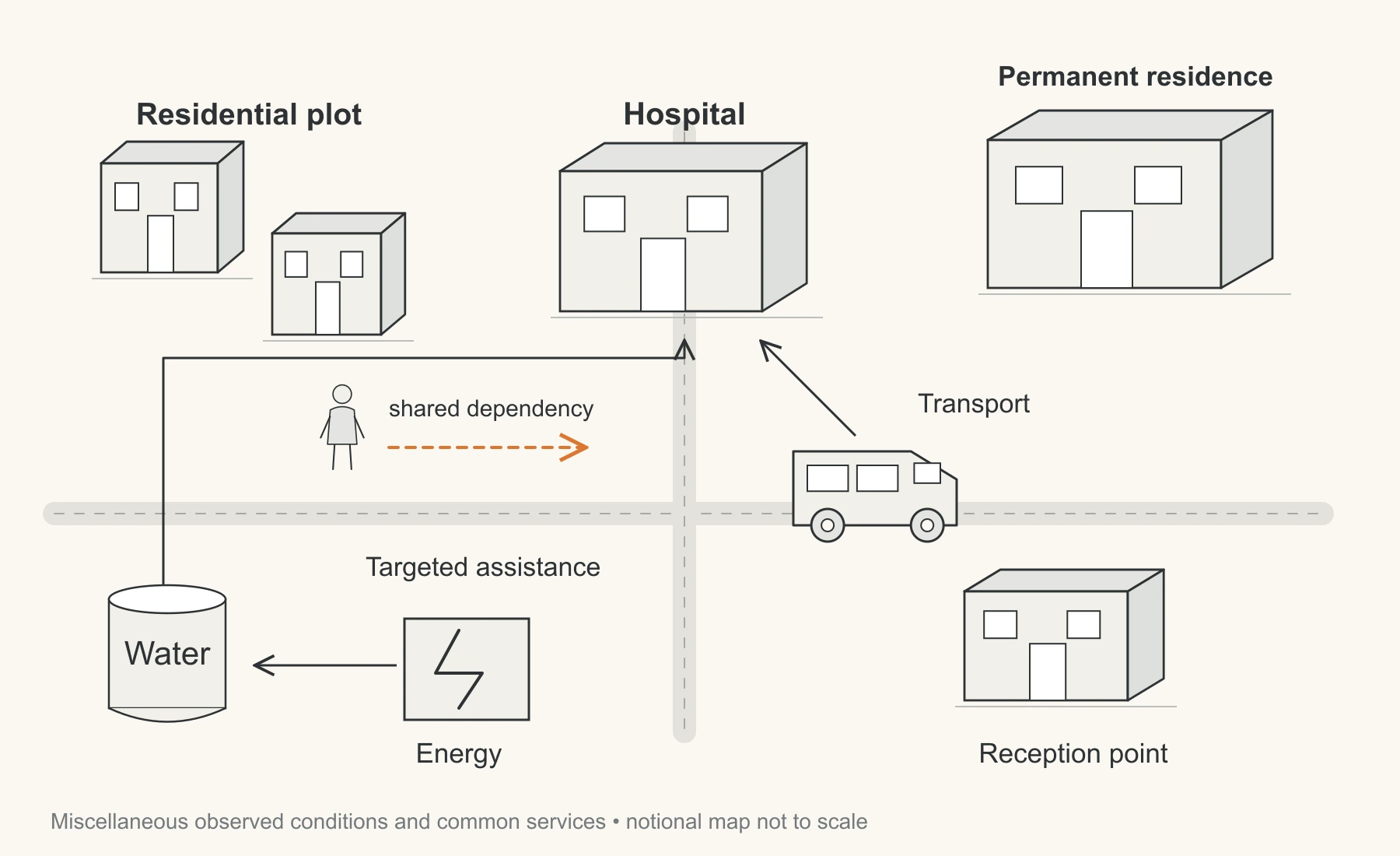
Figure 29. City: different areas and common dependencies
[P] Urban areas vary in conditions, but are connected by common resources and services. Availability of assistance is assessed for specific people, including those who cannot use personal transport.
Shelter and movement are coordinated with roads, transport and reception capabilities. Separately, people without cars, permanent residence institutions and those who do not receive regular messages are taken into account. Data verification, decision and publication are distributed among the appropriate executors. One unverified snapshot or output from an automated system is not sufficient grounds for a mass trip. In the case of immediate danger, protective action may precede a full explanation, but is based on specific observable harm.
Messages are issued in accessible ways and in the required languages. They name the recipients, the hazard, the action, the exceptions, and the next update. WHO recommends early, clear communication and open acknowledgment of uncertainty; Revisionability helps explain instructional changes. [C14]
Be aware of the consequences of your own measures: delays in routine medical care, overcrowding, separation, lack of access to sanitation, and misguided restrictions. When a route is closed, stop new directions there and separately help those already traveling. If the reception location fails, look for an available alternative or temporary decision without abandoning people at the lost address. Behind every measure there must be someone who has the right to cancel it; the absence of a further order does not make the restriction unlimited.
Without central communication, units carry out pre-delegated tasks and the latest confirmed version, noticing new local threats. The exit from the burning room does not wait for the center. The journal stores the facts, the alternatives considered, the decision, the person responsible, and the conditions of review and cancellation. Operations return to normal when essential services are secure, remaining risks have been transferred, and temporary powers and restrictions are terminated or reasonably modified.
Case Study: One Team for Different Regions
[S] An unusual glow is observed above the industrial outskirts. Electricity was lost in two areas and complaints of headaches were received. The video is called an energy attack, but its origin and connection to the symptoms have not been established. The primary summary does not yet show the conditions of each building. The headquarters decides to make a quick general announcement: everyone should go down to the basements and wait. An alternative is to clarify areas and issue different guidance; it requires time and available local communications.
The cost of a common team is revealed in new facts. In one house, the basement is inaccessible to a person in a wheelchair. In another, after shutting down, the gasoline generator inside is turned on. Some residents travel through the city to pick up relatives. The headquarters recognizes the mistake in the same channel and replaces it with decisions on sections. The fire department is referred to internal dangers, doctors assess the condition of people without a predetermined diagnosis, and the utility service deals with power loss.
For a person in a wheelchair, a separate task of accessible accommodation is opened, for those dependent on equipment - the task of continuing the prescribed assistance. Only items that have confirmed the possibilities remain in the message. Families are explained where separation is acceptable. The unknown glow is kept for testing, but all consequences are not automatically explained to them.
Later it turns out that some residents without the Internet continue to follow the old command. Now the published fix is not enough: existing local points and broadcasts repeat the new order, and unreached groups remain on the communication list. The damage of the first decision does not disappear - time, energy and trust are lost. The breakdown should show what data may have previously divided the districts and who is responsible for actually getting the fix.
C08 Unknown object after falling or landing
Who uses it. First eyewitness and on-site services; after the establishment of management - a scientific group. Possible extraterrestrial origins, intentions and controllability of the object remain scenario assumptions pending verification.
Where to start? Stop approaching and manipulating, assess common hazards observed, report location and victims. Do not collect fragments or connect found devices.
When to delegate a task. The rescue response leader takes over the protection of people and access to the site, and the scientific team takes over verification of origin within agreed limits. A possible request for assistance is considered separately under G17.
The first witness notices fire, downed wires, traffic, structural damage and a release of material. He moves away from the direct impact in an accessible way, warns those nearby and reports the time, place, victims and changes. Filming and leaving things behind should not delay exit. He helps within the limits of preparation and safe access to C21, without entering a fire, damaged structure or unknown environment.
The dispatcher specifies rescue and medical needs. The first service appoints a manager on site, an available coordination point and calls in the missing specialists. Before scientific attribution, injuries, fire, destruction, communications and possible contamination are checked. Supporting information and gaps are retained for each version. An urgent exit is not delayed in order to obtain permission to evacuate; The reception of the rescued is being clarified in parallel.
Temporary limits of access are set and changed based on observed exposure, available measurements and expert assessment. Universal safe meters are not assigned to an unknown object. Preserve escape routes, medical access and egress for people; Congestions are reduced by clear communication and traffic management. An eyewitness does not have the right to detain others.
The object and fragments remain until a specialized decision. They explain to the population: do not touch, do not carry, do not open or take away; report the location of the new fragment. If a find interferes with direct rescue, the conflict is resolved by the manager with the relevant specialists. Life takes precedence, but that doesn't make moving an unknown object yourself the usual way to help.
The science team begins with available records, service information, and permitted safe positions. It distinguishes observation, explanation, and confidence. An additional viewpoint does not justify moving closer, nor does a desire to test a hypothesis justify physical interaction. The response leader and researchers will agree on the task and the conditions for its termination.
The public message identifies the affected location, the observed hazard, the available action, assistance, and the next update. The mere fact of landing does not equal an attack. Movement of an object, new impact, change in terrain, new fragment or discrepancy in data require revision. The disappearance of an object does not eliminate damage and secondary hazards. The response to the signal undergoes a separate contact procedure: the witness does not represent humanity and does not have to experience the reaction.
When communication is lost, bystanders move away from direct impact and turn to available help. Services use backup channels and paper records, rather than sending people through the danger zone with just a message. The study is stopped if conditions deteriorate, access control is lost, or there is a new threat to people. After rescue, the remaining risks are transferred to the responsible services, the current regime and the reasons for the new authorization are explained to the population. The lack of press and visible movement does not serve as such a reason. On a large scale, use S09; the original records and needs are transferred along with the indicated uncertainty.
C07 Hospital with unknown mass impact
Who uses it. Medical response leader for the facility plan, designated deputy and hospital units. The card organizes the work and does not specify a diagnosis, drug or treatment regimen.
Where to start? Activate a valid emergency plan, assess personnel, facilities, water, electricity, oxygen, communications and critical supplies. Organize a pre-emptive reception without waiting for the name of the event.
When to delegate a task. Clinical decisions are led by medical specialists; transfers are coordinated with the actual availability of transport and the receiving institution. The next shift receives patients, restrictions, and pending assignments.
WHO views hospital preparedness as a system of response to various hazards and resource disruptions. The forks proposed here are the author’s development of this foundation. [C15] Unusual patient flow, potential contamination, and infrastructure failure may occur simultaneously. Therefore, the established number of beds cannot automatically be considered as current capacity after systems failure.
Clarify the circumstances of admission and conduct an initial assessment of approved medical procedures. The likelihood of contamination or transmission of infection is taken into account by responsible specialists assigning the route. Urgent care is provided with the protection of other patients and workers: the final explanation of the event should not delay life-saving actions, and the unusual nature of the event does not negate protection.
The clinical team compares cases separately from assumptions about the source's intentions. It also looks for ordinary causes: disrupted supplies, shelter conditions, or interruption of necessary treatment. The hospital still has patients whose needs are unrelated to the incident, and critical services for them must continue.
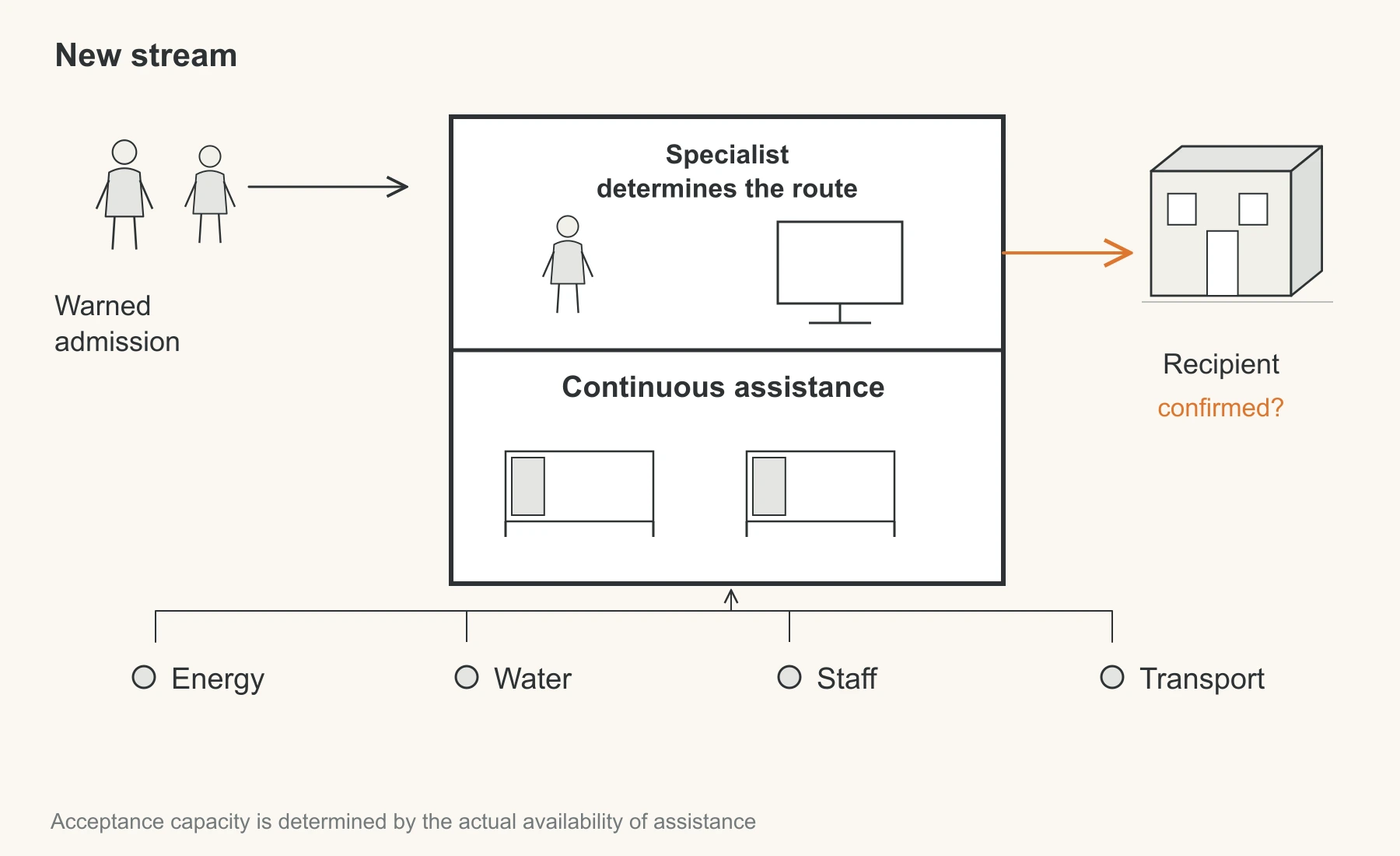
Figure 30. Hospital: new flow and continuous care
[P] New admissions and continuous care for people already in the hospital are organized simultaneously. The possibility of transfer is confirmed by the specific receiving party.
A planned transfer requires transport, accompaniment and readiness to receive. If the building itself has become immediately dangerous, a hospital emergency plan rescue move is performed; further reception and support are provided simultaneously. The risks of travel are assessed based on the condition of the patients and the available route. Declining resources must trigger a request before they are completely exhausted. An unconfirmed miracle cure is not a substitute for established help.
Organize shifts, rest and support for workers, and reliable transfer of clinical information. A volunteer is not entitled to unfamiliar medical or technical work. The response authorities are given the actual receiving capacity and its limitations. Information about patients is provided to the required extent through the provided channels; The public announcement does not reveal the identities of those affected.
Without communication, they use paper treatment orders and recordkeeping, established interaction with other institutions. An unusual order is checked based on the identity and authority of the sender. The plan is modified as patient conditions, capacity, infrastructure, and transfer availability change. The emergency regime ends with the transfer of remaining risks and the restoration of deferred services. External calm does not close the medical incident; the receiving physician or institution receives the necessary information and commitment to continue care.
C09 Clear alerts and corrections without a network
Who uses it. Designated Alert Leader, Reporter, Review Officer, and Local Help Desk. The deputy is given the current text, contacts and publication authority.
Where to start? Check the origin of the information and formulate one available action for the named territory. Indicate the sender, the danger, help for those who cannot follow the directions, and the next update.
When to delegate a task. The responsible service confirms the protective effect and the place of reception; help points inform whom the text has not reached. If an accessible channel is suspected of being compromised, G14 is applied.
Before the event, well-known methods of communication are determined without installing a new program: local broadcasting, announced telephone numbers, stands of existing points and provided notification. Find out who needs text, audio, translation or personal assistance. FEMA includes the source, event, area, protective action, and expected update in the alert. Here, this set is complemented by performance verification and patch delivery. [NC2]
The initial message is associated with the observing service, time and territory. Confidence, contradictions and unknown parameters are noted separately; forwarded copies do not create independent confirmation. If there is an immediate threat, you can warn about the observed harm until it is fully explained. The author receives a specific answer from the service about where to stay or where to move, how they will help those who cannot, and what exception applies in case of immediate danger inside.
One original version is reviewed by another authorized person. He tells who should do what and where to go. This reveals ambiguous addresses, confused areas, and incompatibility with neighboring regimes. Rapid release in case of urgent danger is established in advance so that the inspection does not delay the rescue. There should not be an unconfirmed receiving address in the message.
The short ad, the full text, the audio and the written version all lead to the same action and have a time and number. The translation is checked for meaning, especially negatives and streets. The image does not replace the text for a person who cannot see it. Local stations report which groups have not received instructions and which questions are repeated; unnecessary personal data is not collected to prove coverage.
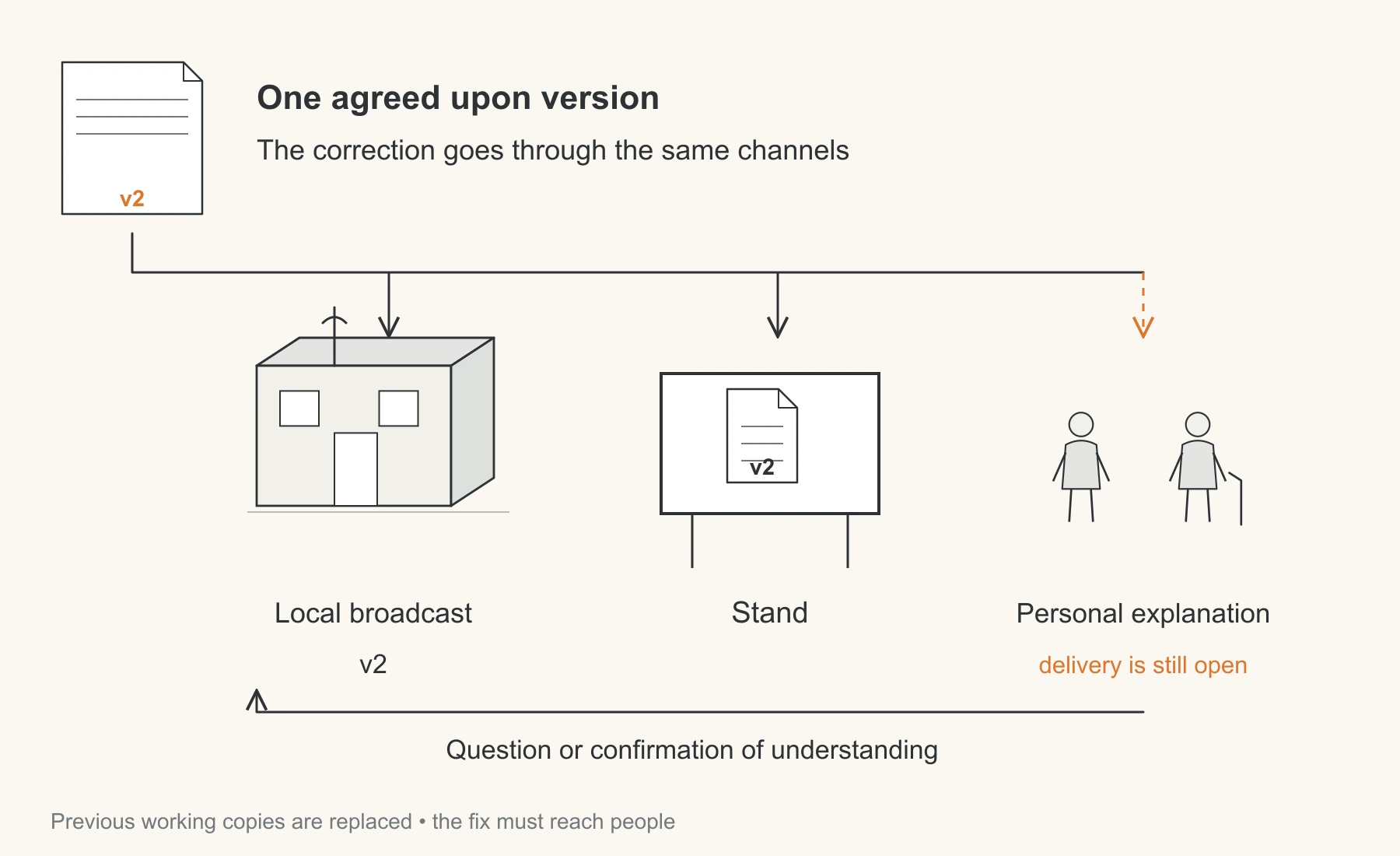
Figure 31. Offline alerts and delivery of corrections
[P] The message saves one version in all available channels. The fix involves replacing old copies and returning information about people who have not yet been reached.
If the instructions of the two services are incompatible, the territory and the subject of the discrepancy are designated, the immediate action is agreed upon and the next clarification is communicated. Residents are not forced to independently choose the leadership of departments. The fix names the instruction being canceled, the new version, and the useful reason. Outdated sheets are removed from the current issue, saving for history; the apology is accompanied by a new order of assistance.
Without a network, the employee reads the original text rather than retelling it from memory. Offline broadcasting and points only work if they are accessible and safe. A paper copy needs a date, time, territory and number. The courier is not sent through a danger zone to coordinate announcements. A message about a mass evacuation from an unexpected source is verified through known channels, but this verification does not keep the person in immediate danger. If it is impossible to follow the instructions, the nearest available protective decision is used with an obstacle message.
What the fix looks like
[S] Continuing the case with buses, the record M-014, version 3, has the time 10:20. The receiving shift, through a verified official contact, reported the closure of the Severny center due to damage to the building. In the exercise, there is a contact point at school No. 4; it does not promise new accommodation. A short announcement might look like this:
“Message from the city service for residents sent to the Severny center.” The previous reception address has been cancelled: the building is no longer accepting people. New trips there have been stopped. Already dispatched transport receives instructions from its dispatcher. For assistance, please contact the duty officer of the communication point at school No. 4. The next message will be issued after another reception has been confirmed. If there is immediate danger on site, take available emergency action.” The time in the example refers to the message, not the security period.
The choice is to immediately name an unverified alternate address or admit the absence of a ready-made destination. The second option is selected; its price - some people are still waiting for a decision. Later, one service point reports that the old paper version remains with residents. A new task of delivering the correction appears; the publication mark does not close it. The address of a specific vulnerable person or details of treatment cannot be disclosed in order to explain an exception.
A change in route, territory, reception, impact or erroneous understanding requires a revision of the text. The next shift accepts versions and unreached groups. Cancellation of the protective mode is issued in a separate message with the reason; The disappearance of an old entry from the network does not replace it.
Sustaining Life and Returning
After the first day, the question changes: will it be possible to repeat the help tomorrow? Food needs to be prepared and delivered again, waste removed, shifts replaced, equipment serviced. After weeks, training, work, income and due payments, economic relations, communication with loved ones and the opportunity to appeal the mistake are added to this. The temporary order, which is maintained without revision, gradually takes away ordinary life from people.
First, a distinction is made between stock, current consumption and future supply. Then they check where the next supply will come from, who will do the work, and what needs to be learned before the only specialist leaves. The return is considered separately: stopping the incident does not restore the house, water and the help the person needs.
C12 Water, food and everyday life with unknown contamination
Who uses it. Head of Local Supply, Sanitation and Network Operator; the family communicates its needs and respects the restrictions on its resources.
Where to start? Specify the affected source, lot or site, the basis for the restriction, and the permitted uses. Separate suitable stock from uncertain stock, organize available alternative supply.
When to delegate a task. Suitability, restrictions and handling methods are determined by appropriate specialists. If there is a shortage of the necessary resource, a request for urgent assistance and possible relocation is opened; if people's condition worsens, a medical call is made.
Water can have different permitted purposes: drinking, cooking, hygiene, technical use. Their list for the event is determined by specialists. The return of pressure in the pipe confirms the operation of the network, but not the quality of the content. The CDC points out that boiling or household disinfection does not make water containing fuel, toxic chemicals or radioactive contamination safe. The universal advice to boil does not cover the unknown composition. [NC4]
Record the location and time of the restriction and supporting data. Do not spread the output of one batch to a neighboring one or one plot to the entire region. Labeling and recordkeeping should prevent accidental release: unidentified stock is not mixed with verified stock or added to the available balance. Taste, smell and appearance are not a substitute for determining suitability.
Needs include preparation of permitted food, care, work of institutions and animals. Medical restrictions are clarified with the appropriate specialist; Logistics does not assign a physiological norm to a person. For alternative delivery, the origin, packaging, delivery and actual receipt are confirmed. Those who cannot come are assigned a targeted delivery. The restriction is published along with an indication of what is provided in return and when the update will occur; establishments that prepare food also receive this message.
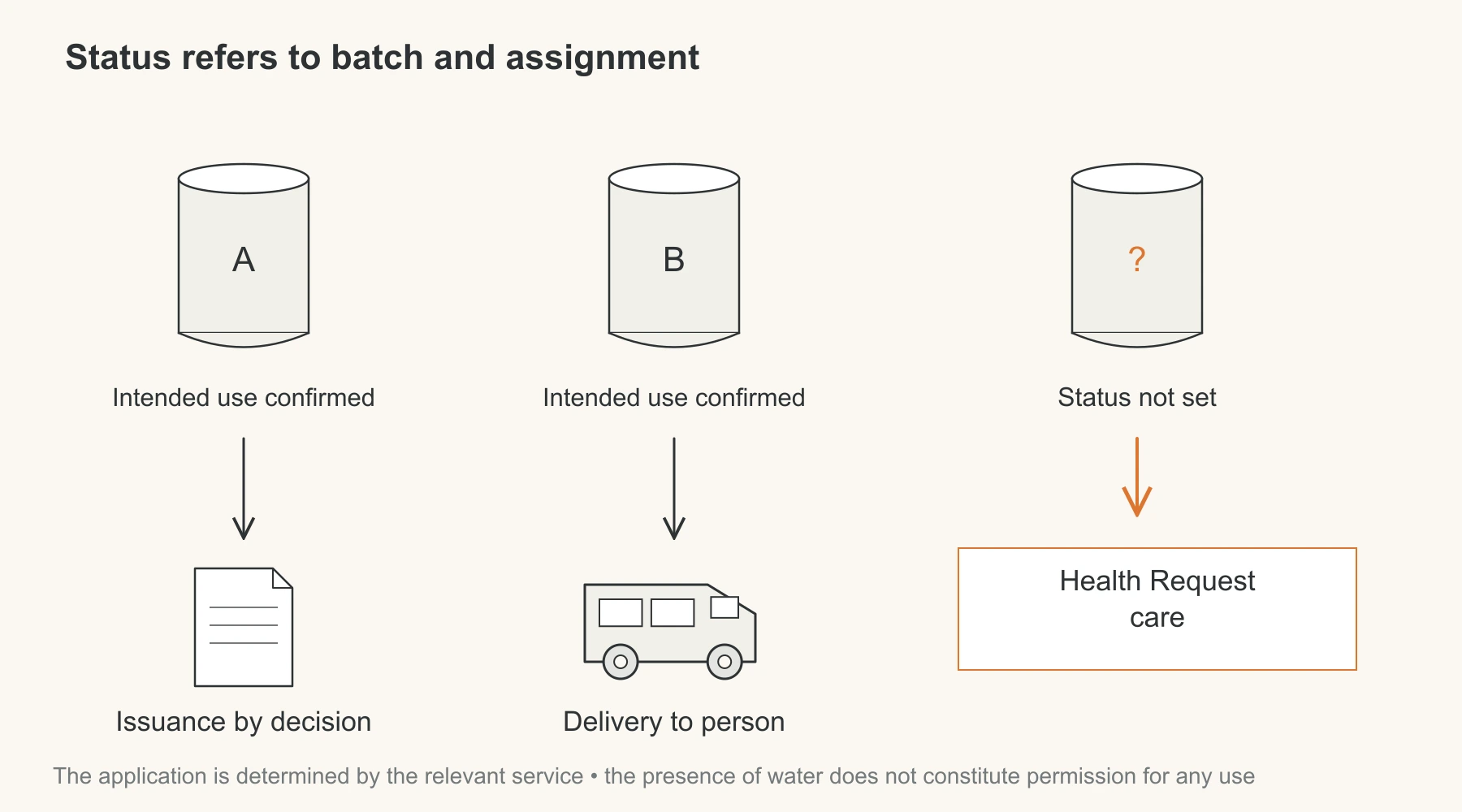
Figure 32. Water batch, permitted use and recipient
[P] The permit is for a specific batch of water and a specified use. Issuance, targeted delivery and requests for other household needs are counted separately.
Refrigerator shutdowns and available temperature data are stored in product history. The FDA warns that sight and smell do not confirm food safety after refrigeration failure; specific decisions are made based on current sanitary recommendations. They are not proof of the absence of unknown contamination. [NC5] Lots with an uncertain history are not declared suitable after power returns.
Assign sanitation facilities, cleaning, waste removal, and access to care products. Use the order established for the place. In the case of an unknown substance, the specialized service determines the treatment; Residents are not instructed to mix products or test cleaning on the material. Match actual results with people's needs and messages. When complaining about a condition, organize assistance and convey information about a possible common batch without assigning a reason; The product cannot be reused for testing purposes.
If there is no suitable source and the stay loses the necessary conditions, the manager will organize urgent assistance and suitable relocation. For several versions of pollution, restrictions and enforcement are agreed upon by experts on a specific impact, rather than automatically choosing the most stringent indefinite ban.
Without communication, they keep records and measures justified by the available data. The absence of a channel does not automatically renew expired powers; the expiration of the order, in turn, does not confirm the quality of the water. The undetermined stock remains separate, alternative provision continues, the service's decision is requested in an accessible way. The deficit is transmitted via a backup channel; waiting for a response does not replace the rescue task.
New data, delivery failures, changes in consumption, complaints and labeling errors require revision. Removing the restriction names verified sources, applications, and remaining conditions. The work is completed with restored sources and household services with transferred control and assistance; one newly working system does not close the others.
Case study: the network is working, but there is no water permit yet
[S] After the network is damaged, its use in one area is limited. An unknown substance was found in several places; connection to the network is not established. Two points received water: the first has a suitable drinking batch with a confirmed origin, the second has an unclear delivery history. The first one can continue the established output, but its supply is not enough for all new applications. People who find it difficult to come need delivery. The center also contains food with an unknown refrigeration history.
You can close both items until complete clarification or continue the controlled release of a known batch, separating the remaining tasks. The second option is chosen. Uncertain water does not mix with suitable water; the second paragraph reports a replacement request. For address orders, delivery is requested separately; unconfirmed trips and uncovered volume remain open. The price is waiting for some recipients, additional work and the lack of a ready-made general answer.
The operator then restores the pressure. This changes the technical condition, but the sanitary service has not yet determined the acceptable uses of water. The alternative output is retained. For a person who needs water for personal care, the restrictions relating to this use are separately clarified; his question is not covered by the presence of a drinking party. The later service decision is combined with the technical message, maintaining the distinction between the two. Food with an unknown history passes its test, regardless of water recovery.
C13 Inventory and distribution during the ongoing crisis
Who uses it. Family coordinator, head of provision of the settlement or center and deputy with access to balances and unfinished needs.
Where to start? Reconcile suitable available stock with actual consumption. Separately write down the promised deliveries. Name the decision that will be needed before the help you need is lost.
When to delegate a task. Medical priorities are determined by specialists, while household and logistics priorities are determined by the corresponding responsible persons. Life-threatening deficiencies are referred to emergency services; C15 addresses situations with no route to external support.
Start with the functions without which stay is impossible: water, food, necessary treatment and care, a protected place, sanitation, communication with help and rest for workers. For each resource, set the location, owner, purpose and source of replenishment. Check the dependence on energy, transportation, specialist and compatible consumables. These are verification issues, not permission to modify the equipment yourself.
Actual reconciliation distinguishes between received, already issued, reserved for a task, and temporarily unavailable. Expenditure over a known period is compared with the current number of people and conditions. For the family, simply recording the direction of change is sufficient; It does not need laboratory precision. The preparation time for delivery or transfer is allowed for before the resource is exhausted. The universal promise to hold out for another day is not used without reason.
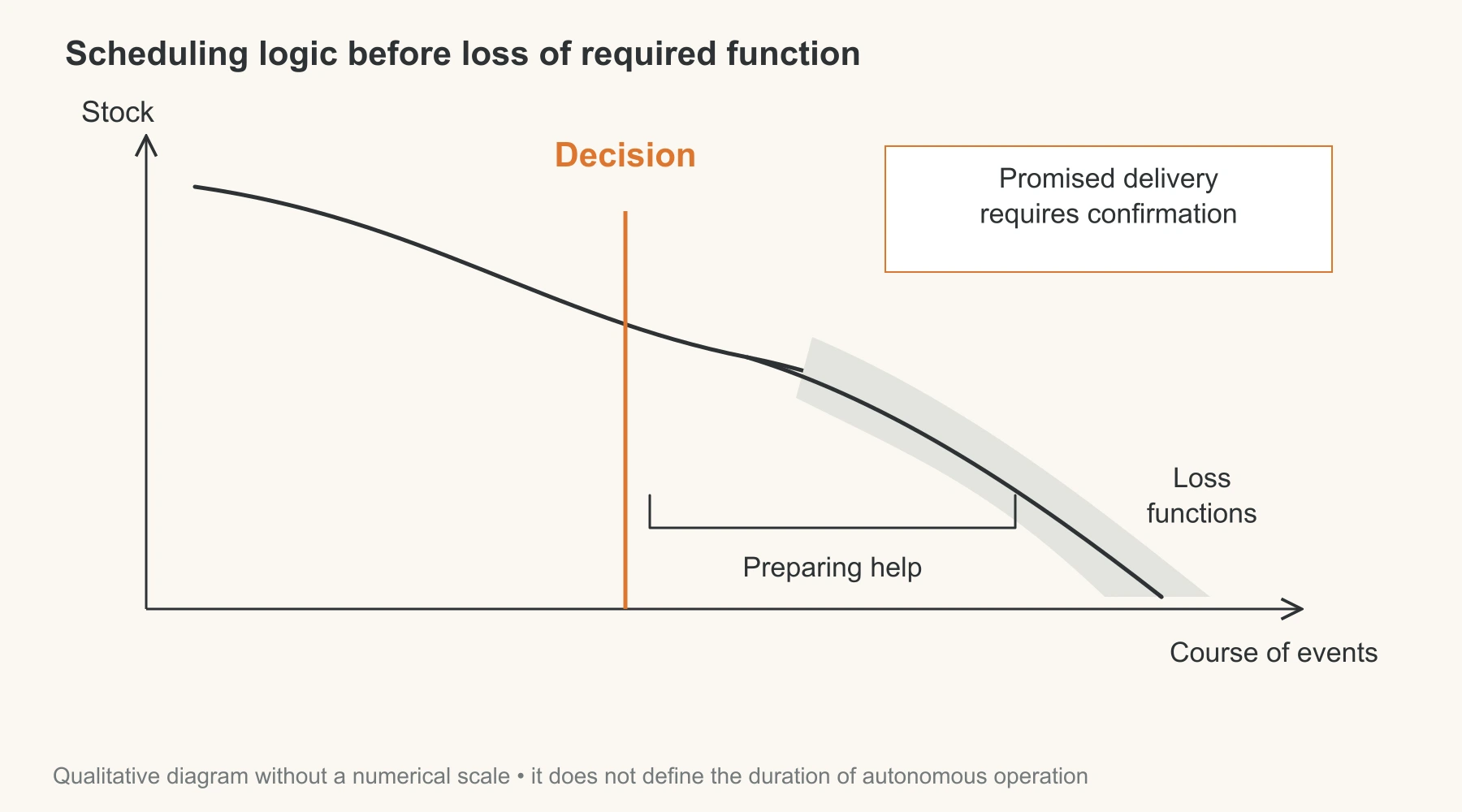
Figure 33. Decision before the required resource is exhausted
[P] If assistance or transfer requires preparation, the decision is made before the predicted loss of function. The promised replenishment and the range of uncertainty do not translate into a guaranteed date.
Communicate a clear dispensing procedure: what is available, how the volume is determined, who to report a special need to, and who will correct the error. Don't force a person to publish a diagnosis to justify priority. Help is not distributed based on fame, volume of demand, or acceptance of dangerous work. Those who cannot stand in line and apply are counted separately. The absence of a mark should not deprive you of urgent assistance.
Compare the real ways to preserve the function: supply, assistance to the neighboring territory, change of location, termination of unnecessary expenditure. Changing a drug, equipment or regimen requires an appropriate specialist; a general call to save does not replace the necessary care. If there is a supply, but there is no suitable container, transportation or skill, it is not yet available for this task.
The replenishment request contains the quantity, purpose, time of the required decision, acceptance conditions and contact. Confirmation of order does not constitute confirmation of delivery. If the deadline is unknown, maintain that uncertainty and prepare an affordable alternative. The next shift must have the key, records, instructions and communication with the supplier; the warehouse is useless if all this is left with the absent employee.
Without communication, the agreed local order and paper reconciliation work. The reserve is spent according to predetermined authorities, without delaying the provided urgent assistance for the sake of a remote signature. The actual output is recorded for later comparison. In the event of a conflict of distribution, the reasons and channel for revision are explained; assistants do not receive the right to use violence or unauthorized removal.
New arrivals, lost shipments, equipment failures, transport delays, recordkeeping discrepancies and changes in quality require recalculation and communication to those whose plans change. If transfer is already necessary, it is started before the function fails. Stability is confirmed by several completed supply cycles and a proven reserve; the disappearance of the queue may mean that people have stopped getting to the point. For months and years you need C19, for local balance - F04.
Two records that cannot be mixed
[S] Educational record P-021: 240 liters of suitable drinking water received, 90 issued, physical balance - 150. Expected 300 liters have not been added: delivery acceptance time has not been confirmed. Calculation of needs is carried out separately for people and institutions; These numbers do not set the consumption rate. The next shift should clarify deliveries, check address requests and revise the plan before the actual balance is exhausted. The unconfirmed batch remains separate.
[S] Entry P-032 needs help with a personal medical device. The power compatibility check has been assigned to a specialist, but there is no result yet. A request for a suitable reception location has been prepared; the person remains with the person responsible for medical care. A note about the issued battery does not change the status to secured. The assignment is stored in the medical documentation, and in the general journal - the required task, person responsible, limitation and contact of the next shift.
C19 Months and Years: Replenishment of Resources and Transfer of Skills
Who uses it. Family, long-term care manager, local households, professionals and representatives of people who depend on their work.
Where to start? For each service needed, ask how it can be repeated after inventory is used up or the current provider leaves. Note what is replenished locally, what depends on external connections, and what deadline cannot be missed.
When to delegate a task. Complex production, research, permitting and restoration of external networks are transferred to the appropriate organizations. A settlement does not declare itself independent from the country where it cannot reproduce the necessary competence.
A protocol is needed when the end of restrictions is unknown, supplies are repeatedly interrupted, or life depends on a deteriorating device and a rare specialist. It works together with C13. A short joint recording is enough for the family; the settlement needs a connected plan of farms and services. Acknowledging dependence on someone else’s equipment, land, energy or skill is more useful than promising complete autonomy.
From existing stock to next cycle
List the water needed, food, care, housing, sanitation, energy needed, communications, and transportation. Then add training, income and economic relations: without them, the temporary plan puts more and more strain on the same people. Every service requires recipients, performers, consumables, constraints, and dependent processes.
Trace the path of the following replenishment: source, delivery, receiving, destination verification, acceptable processing, storage, distribution and waste. Designate a link without a person responsible as a gap. Local production is possible where real conditions and skills exist. A routine business transaction does not become an investigation into unknown contamination, and an urgent need does not confirm the suitability of a product.
Repairs, training and seasonal work require resources today. Show what is put aside for them and who will feel the consequences. Necessary care cannot be silently undone for the sake of the shared promise of a future harvest. If there is little strength, they choose a feasible volume and look for real cooperation, keeping a record of the remaining work. An investment in the future must have a clear result, an executor and a condition for revision.
Two households may depend on one pump, mechanic, road, warehouse or payment channel. Their reserves are then only partially independent. Check the common links and the neighbor's ability to actually accept the extra work. Promises from different suppliers do not add up to a guaranteed delivery if everyone needs one unavailable shipment. The general calendar should detect competing applications before the breakdown of care and seasonal deadlines.
Equipment and a person who knows how to work with it
For an essential device, a passport is kept: purpose, responsible, known mode, maintenance, compatible consumables, parts and contact of a competent person responsible. A distinction is made between work, work with permitted restrictions and withdrawal from use; users need to know the current state. A similar name or matching part size does not confirm compatibility. The device on which safety depends is not used for educational improvisation.
Next to it you need instructions specifically for the installed model and a history of changes, work performed and open restrictions. If the digital system is not accessible, prepared local copies and a paper journal can help; after the network returns, the versions are verified. Removing a part for another device changes two services and requires appropriate technical assessment. An outwardly intact, but hiddenly disassembled reserve is not a ready supply.
The transfer of skills begins before the loss of the only specialist. Identify a mentor, an available student, safe learning objectives, and verifiable conditions for authorization to work independently. Documentation, journaling, recognizing boundaries of authority, and working in a suitable training facility can be a start. Being close to a specialist is not the same as mastering a profession. If vocational training is not available, the dependency persists and they seek an external replacement, without granting themselves access through their own decision.

Figure 34. Repair and skill transfer at a training facility
[P] The skill is taught in a separate training unit with a limited task and verification of the result. Documentation, maintenance log and technical solution of the specialist retain their independent role.
Long-term routines require training for children, continued training for adults, rest and care. Children are not turned into a reserve for the dangerous work and responsibilities of trained adults. Local classes rely on available teachers and proven materials; when communicating with the current system, they save documents and the possibility of return. The mentor should also have a manageable amount of work.
Land, crops and animals
[O] In guidance on the management of animal health emergencies (GEMP 2021), the Food and Agriculture Organization of the United Nations (FAO) considers livestock emergencies broader than infectious outbreaks, including natural disasters and non-infectious causes, involving multiple responsible parties. [V05] This is the basis for including the farm in the general plan. The following order is not intended for veterinary or agronomic purposes.
Create a seasonal calendar with competent local people: preparation and sowing, care, water, cleaning, storage, machinery and animals. Dates and requirements are taken from the conditions of a particular farm. Every job requires people, transportation, tools, energy, communications and post-processing. A harvest that has no one to collect or nowhere to store cannot be considered future guaranteed food.
Seeds and materials retain their culture, purpose, origin, storage conditions and batch restrictions. The suitability of the seed and the use of care products are checked according to current requirements with an agronomist. Do not replace deficiencies with unknown plants or substances from the affected area. Green vegetation in itself does not confirm the suitability of soil, water and products. The undefined area is marked separately, considering the available permitted areas and supplies.
Animals need continuous water, suitable food, people to care for them, functioning facilities and equipment, and access to veterinary care. When limiting the territory, they decide separately who continues the permitted care and what to do if it is disrupted. Removing people does not complete this task. Drugs, animal movements and product decisions remain with the relevant specialists and services.
Feed, human food and unknown material are accounted for separately, maintaining the source, exposure history, storage and purpose. The status is not transferred to the neighboring party. The doubtful is not mixed with the confirmed in order to reduce the visible deficit. Diseases and unusual death of animals, plant and environmental changes are reported to the appropriate veterinary, agronomic and environmental channels with place and time. Animals do not serve as living test subjects for unknown effects.
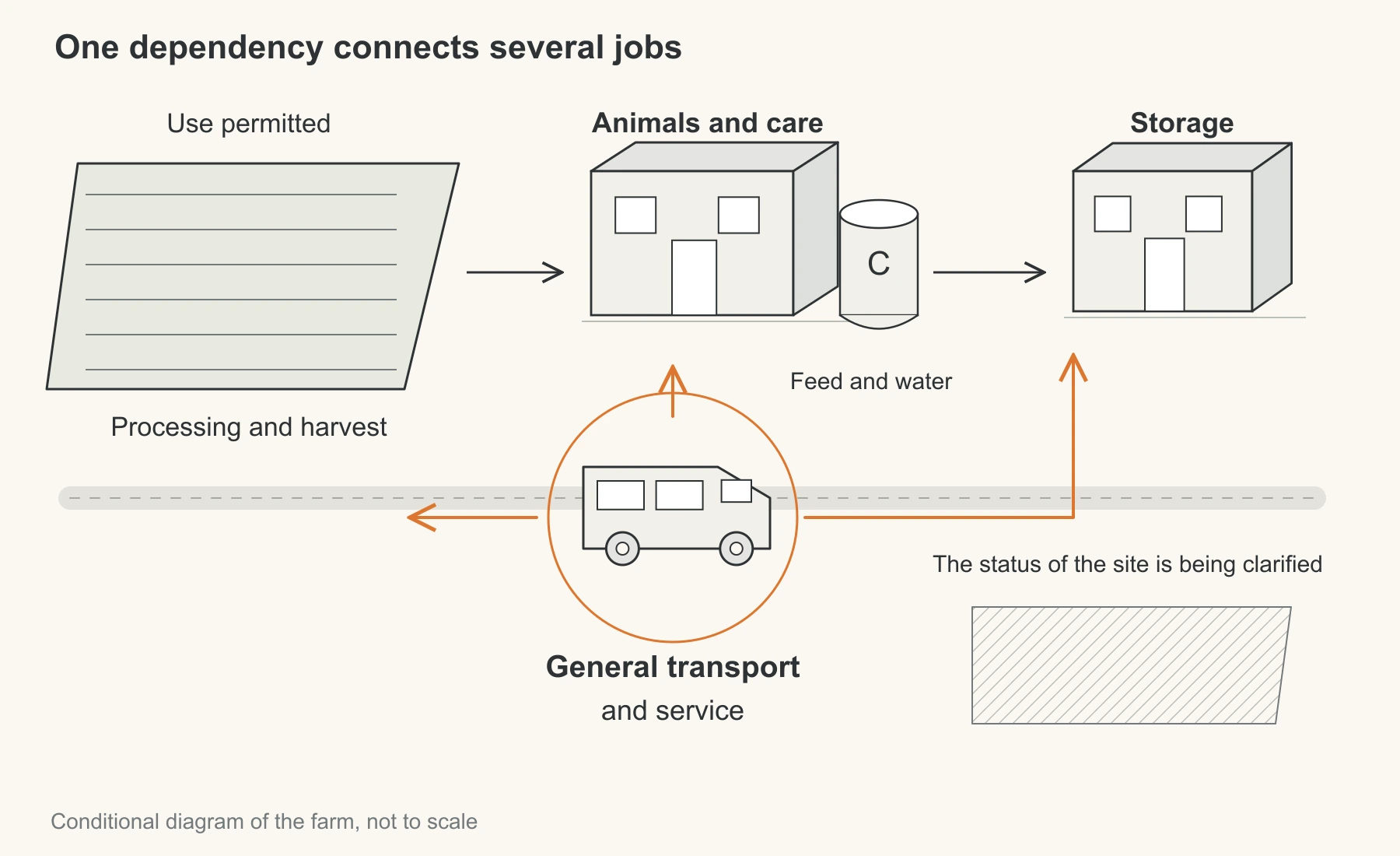
Figure 35. Farming as a connected system of water, labor and storage
[P] Production, animal care, storage and delivery depend on water, labor and general technical links. Allowing traffic on a road does not determine the suitability of nearby land for food production.
S10 links the return to use of land, water, pasture and produce with data specific to that use. Allowing you to walk along the road does not automatically allow you to grow food nearby. An unresolved issue remains responsible for the review; new information changes restrictions on specific actions.
The agreement with the neighbor, the supplier and the buyer fixes what he can actually transfer, the condition, the agreed terms and confirmation of receipt. A distinction is made between assistance, purchase, temporary use and promise of future exchange. This book does not give the right to seize property, assign forced labor and cancel other people's obligations. Payment, documents and access are handled by the current competent authorities; accessible transactions maintain transparent recordkeeping.
If the network is lost, use prepared local copies, existing agreements and records of actual work; the lack of external confirmation remains a limitation, not a fictional supply. Delivery failure, specialist departure, new expense, seasonal milestone and information about the environment require revision. Repairs alone do not prove sustainability; repeated cycles are needed. Business tasks can continue after the emergency regime under G11 is lifted. For the local skills replenishment and transfer plan, F10 is used.
Case study D-02: one machine and two important jobs
[S] Two farms use one mechanic and one transport. A mechanic trains one assistant to work with documentation; the assistant is not authorized to carry out repairs. There is approved food for the current delivery, the next delivery has not been confirmed. On the same day, the only suitable vehicle is needed for the coordinated movement of a person from the place where the care available to him ends, and for the removal of the crop. The host and the suitability of the machine for human use have been confirmed. According to the terms of the exercise, it is impossible to complete both trips before the business deadline; the remaining unharvested portion of the crop will be lost. There is no other machine and no ready external reserve.
The first option is to first save the harvest, at the risk of disrupting an already necessary transfer of aid. The second is to fulfill it by accepting the economic loss. Participants clarify the consequences with those responsible for care and housekeeping. Under these given conditions, an agreed trip with the person is chosen, directly recording how much of the work will remain undone. Workers continue available economic work within the limits of their previous capabilities; no new workers or vehicles are added to the decision. Crop loss remains a future request, rather than disappearing behind the word priority.
Later, the mechanic determines from the documentation that the ordered part is incompatible with the required device. This new circumstance changes the next cycle: the previous restoration period can no longer be promised, two farms remain dependent on one link. The student helps maintain the equipment record and clarify documents, but does not receive the right to install the part. The person in charge is looking for confirmed supply and cooperation, recalculating the consequences for feed and seasonal work. The exercise ends with a completed human transfer, a recognized business loss, and two open dependencies. It does not derive a universal rule for choosing between any present and future need.
C14 Returning home and restoring the environment
Who uses it. Designated Recovery Manager, Service Managers, Residents and Individual Assistance Coordinator. The deputy receives a map of permitted actions and remaining risks.
Where to start? Specify what action you are willing to allow: access by specialists, a short visit, a separate service or permanent residence. Check the specific housing and the assistance the person needs.
When to delegate a task. Organizations that typically maintain buildings and networks accept their operation and the elimination of remaining defects. Residents receive contact for further assistance; those who cannot yet return will maintain accommodation or a suitable transitional arrangement.
The basis for the review may be the restoration of part of the services, data on a change in danger, or the independent return of people. Even during the response, you need to know what inspections will be required: buildings, communications, specific impact, transport, assistance and accommodation. The opening procedure should not be invented for the first time at a closed entrance.
Get opinions from the relevant services about what they actually checked and where the conclusion ends. The disappearance of an object does not evaluate remaining damage. Permission for one action does not apply to all others; The area and the person responsible are indicated on the map and in the message. An unchecked state cannot be renamed to a safe state for reporting purposes.
Check water, sanitation, food, communications, medical access and egress for a new event. The light in the windows does not confirm the suitability of living. Different homes and people need different decisions. Coordinate transportation, individual assistance, and communication of restrictions. The closure of a community center does not prove that housing for those remaining is ready.
Residents are explained what is permitted, remaining restrictions, further contact and work requiring specialists. They are not asked to collect unknown fragments, purify suspicious substances, or turn on damaged communications for inspection. The first visits are accompanied by feedback: an inaccessible entrance, actually non-working water or a new effect receives an address and a restoration task.
By handing over the system to normal operation, the owner confirms the accepted functions, the person responsible of the remaining fixes and user support until completion. A one-time inspection does not replace further maintenance. At the same time, documents, planned assistance, care, training and income opportunities are restored. Resident participation should not depend solely on an in-person meeting or a new application; they need ways of addressing them that are accessible to them.
A new confirmed impact, a critical system failure, and an assessment error trigger a review of the affected area. A previous promise should not stand in the way of correction. If a person has already returned contrary to order, he is informed of the danger and available help; he is not excluded from those in need. A closed part of the territory requires clear boundaries and a workaround without transferring the risk to neighbors.
Without communication, announced local points and provided channels are used. A paper notice has a date and scope; The disappearance of an entry from the network does not cancel the restriction. The return is completed according to the objectives: regular services have accepted work, unreasonable restrictions have been lifted, those that remain are justified and reviewed, further assistance is available to people.
Case Study B-006: The streets are open, but not all life
[S] After localizing the event, a residential part with houses 1–8 is opened in the city. Electricity has been restored. House 5 remains limited to its water supply, and house 8 has no accessible entrance. Most people have already returned, so it is proposed to close the general center. For those remaining, continuing its operation requires personnel and supplies; There is no ready-made replacement in the exercise. One person’s apartment is intact, but the necessary route for regular assistance is not yet operational.
It is possible to close the center for general return statistics or keep it open for unresolved cases, taking on additional workload. The second option is chosen. In record B-006, a distinction is made between permitted residence with the listed conditions and individual restrictions. House 5 has been assigned alternative provision pending a service decision; Residents of building 8 who require an accessible entrance will retain their occupancy. A person without a care route is assigned a transitional decision maker. Cost - the center cannot be closed completely, and some restoration tasks will have to be coordinated with ongoing maintenance.
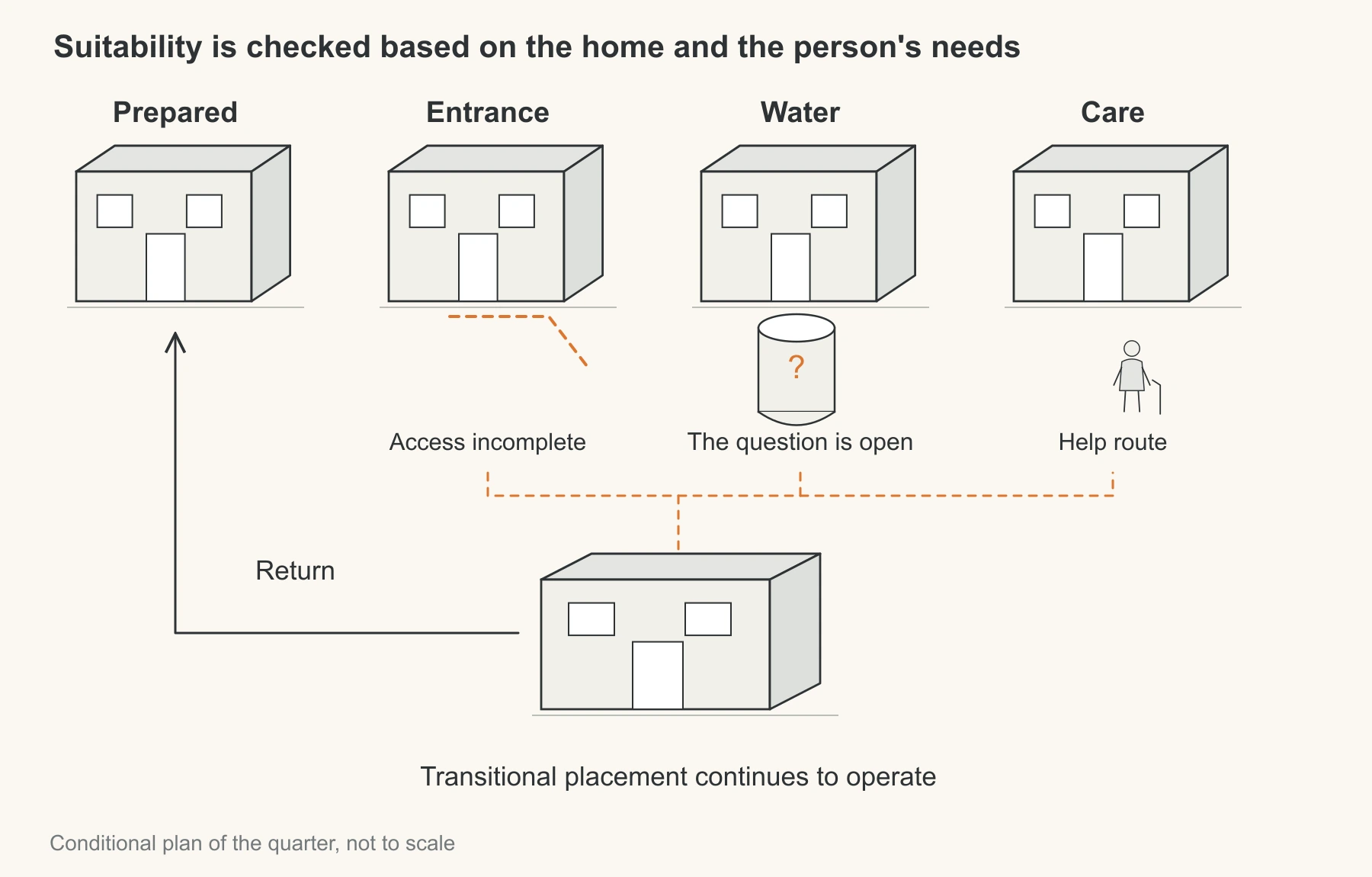
Figure 36. Partial return according to home and needs
[S] Opening the area does not complete the verification of housing and necessary assistance for each person. The transitional placement is maintained until the remaining tasks are resolved.
A day later, residents report a new failure at a previously open site. The service verifies the information, enters a location-specific restriction, and updates the alert to include those who have already returned. Previous permission is not defended for the sake of reputation; the people who followed him are not accused of having to move again. As a result, streets may remain open, but assistance to individuals, home access and water supply may remain unfinished tasks. The decision on the territory and the restoration of the life of a particular person are taken into account separately.
Preserving the Result and Testing the Plan
Family, settlement and city keep different amounts of records, but answer the same questions: who needs what; what is actually available; who accepted the job and what happened. For the family this is placed on a sheet. The settlement needs a log of requests and issues. To the city - compatible information of services with paper work capabilities. Transmitting the necessary information through an acceptable channel should save a person from repeatedly confirming the same thing at each point. Loss of documents and lack of digital recording should not automatically terminate urgent protection.
The need, resource and transfer are linked by the task number. The needs record includes the person, the help needed, the location, and a safe contact. In a resource record - availability, status, purpose, access and owner. The transfer record contains the recipient, the promised result and its confirmation. Medical details remain with those who need help. The names of those responsible are supplemented with the current shift, deputy and the way to accept work without a network.
Work statuses show progress: message received, information verified, executor assigned, assistance started, result confirmed, transfer completed, new plan required. Closing is accompanied by the result or reason for an erroneous or repeated application. History is not deleted for the sake of convenient statistics.
[S] A separate training record T-008 shows the difference between transportation and other assistance. In the car there are actually 18 people and 2 accompanying people; one more declared person remains with the medical service and has a different task. After canceling the previous address, the Vostochny center confirmed the reception of twenty with the specified needs. The car arrived, the employee checked with everyone. For one person, a request for accessible communication remains: the transport part is completed, further assistance is transferred, a separate request is opened. The numbers refer to this entry and not to the case of two buses.
Pre-incident training
The test is conducted as a safe tabletop exercise. Participants receive observations and available tools, actions are explained, and an observer notes missing information and broken promises. The dangerous effects are not reproduced, protective equipment is not tested on people.
Start by breaking the connection, then add a closed route. In the next pass, change the original hypothesis: the supposed external contamination turns out to be an internal accident. Separately, you can use the explicit property S13, which actually changes the transmission between places. In each case, you need to name the nearest action, the person responsible, the cost of choice and the fact after which the decision will change. A guess about an available resource is not counted unless it is included in the input.
The family shows where the contacts and necessary information are, what they do when separated and when they refuse to meet. The shelter manager shows the available exit, the limits of the room and the procedure for changing the mode. The settlement draws up an application that is understandable to the recipient. The city and hospital pass on current decisions and unfinished care to the next shift. If the prepared plan does not have an implementer, the exercise should reveal this.
The assessment concerns the observable outcome: whether the situation of dependent people is known; Is reception confirmed? whether the danger created by the shelter is noticed; did you get the fix without internet? Speed is considered together with consequences. A quickly dispatched car is not considered a success if its passengers are left without accessible reception.
After the exercise, specific things are corrected: number, address, absence of a deputy, unavailable transportation, procedure for transferring the child, condition for lifting the restriction. The new local version gets a date and a person responsible. Re-inspection is required after significant changes to family, health, building, routes and services. A general readiness post does not complete this work.
What is considered completed assistance?
For notification purposes, people who have received a clear action and groups that have not yet received it are important. To move - a technique with support. For supply - a suitable resource available to the recipient. To return - the opportunity to live with the necessary services. Repeated calls, missing confirmations and numerous exceptions show which order needs to be changed.
Save also successful decisions: a working contact, a clear record, a real reserve, the right to cancel an erroneous instruction in a timely manner. They allow the next shift to repeat the assistance without requiring heroism. Local implementation of this part begins where actual actors are assigned, channels and addresses are verified, legal authority is agreed upon, safety training is conducted, and gaps identified are corrected. Suitability is confirmed by available action, including when the original explanation for an event turns out to be wrong.
Part IV. Governance, Strategy, and Contact
Governance That Withstands the Unknown
Three messages arrive at the general headquarters. Water supply stopped in one area. In another, a huge object is observed above the city. The third message promises safety and demands an immediate response on behalf of all humanity. On the screen they stand side by side, but for now these are three different tasks. People need water regardless of the origin of the object. Observation requires verification. The words of the unknown sender do not yet confirm the connection between the first two events.
We will return to the analysis of this conditional situation [S] after we identify the participants in the common work. Its difficulty lies in the need to act before the final explanation. A manager who waits for the full picture wastes time helping. The leader who immediately declares the picture complete links all subsequent decisions to the first impression. Between these errors lies the work of management: to make a fairly definite decision for the immediate task and retain the opportunity to change it.
All protocols in this part have status [P]: they are author's drafts applied in conjunction with existing authorities, local plans and professional procedures. Known subject supports are marked [O], fictitious conditions of analysis are marked [S]. The properties of the unusual source only apply within the specified exercise. Neither the source nor the origin of an incident in and of itself creates new rights to control people or other people's resources.
People, roles and feedback
The headquarters needs answers to four questions: what has been confirmed, who needs help, what actions are available and who has the authority to authorize them. These answers are related but have different owners. The scientific team can explain the discrepancy in measurements, but does not make treatment decisions instead of the doctor. The commander knows the capabilities of his facility, but does not become the leader of the neighboring city. The coordinator connects their decisions and analyzes the consequences for others.
[O] The Incident Command System (ICS) uses a common structure and terminology. The incident commander or unified command sets the objectives, and the lines of operations, planning, logistics and administrative recordkeeping support the work. The results are documented and used in the next planning period. [G1; G2] The joint headquarters proposed here builds on this organizational approach. Its legal basis and dispute resolution procedures must be determined before actual implementation.
Who is responsible | What answer do others need from him? |
Coordinator | What are we doing now, who is doing it, where decisions contradict each other |
Head of assistance to the population | Where is protection available to people and who is not yet receiving it? |
Scientific group and individual reviewer | What was observed, how is it explained, what decision depends on the dispute |
Work safety specialist | At what change will a particular job have to be stopped? |
Head of Supply | What is usable, accessible and truly transferable |
Responsible for Law and Notification | What is allowed and what clear action is communicated to people |
In a small group, roles are combined. This reduces the number of people, but does not create independent verification: the boss repeating his own conclusion does not become second evidence. If there is no individual reviewer, the constraint is stated directly and a task is selected that the group can actually control.
The connection between control levels must be closed by response. The family communicates who needs help; settlement - what cannot be provided on your own; region - what dependencies go beyond its borders. The state returns specific obligations and limits of support. The received application, the accepted application and the delivered assistance are different states. The response to the request requires a recipient, an executor, conditions for transfer, and an action in case of failure. A small settlement should not be left without help because of an imperfect document: the receiving service helps clarify the information.
The ongoing crisis has several horizons. Now we need to eliminate the harm that does not wait for a meeting. Then - provide a shift, service and the next delivery. Next is to restore order that people can maintain for a long time. These horizons do not set the same number of hours for the city and the space crew. They are determined by real dependencies. A plan that survived the first episode at the expense of all its people and reserves may not survive the second.
[O] In the Continuity Guidance Circular 2024, FEMA links the continuation of essential functions to the performance of governments, organizations, and communities when business as usual is disrupted. [NG1] This is the support for setting an organizational goal; the suitability of subsequent decisions against exotic exposure remains subject to separate testing.
G01 State coordination
Who uses it. The legally appointed interregional response coordinator and the heads of participating services.
Where to start? Name confirmed consequences that local services can no longer eliminate on their own or that are transferred between territories.
When to delegate a task. When a specific job has been accepted by the current head of the regular service, and the remaining restrictions and obligations are assigned to the performers.
Government coordination is needed not because the whole country saw an unusual video. The basis arises when several territories actually depend on a common decision: they use the same communication system, receive displaced people, share transport, or can transfer danger to each other. The first meeting should end with a list of such connections and a short work plan.
The coordinator appoints heads of areas and deputies with access to current information. He announces who makes medical, transportation, engineering, and defense decisions, where conflict is referred, and who can stop dangerous work. Pre-delegated reversible actions allow you to help without waiting for every general agreement. Decisions with irreversible consequences go through their own established order.
The overall picture separates confirmed harm, observations without an established cause, available resources, and limits of information. These layers cannot be replaced with a single hazard color. If one area loses power, a neighboring area retains service, and a third is unknown, these are three conditions that require different actions. The map also shows people who were not included in the regular count.
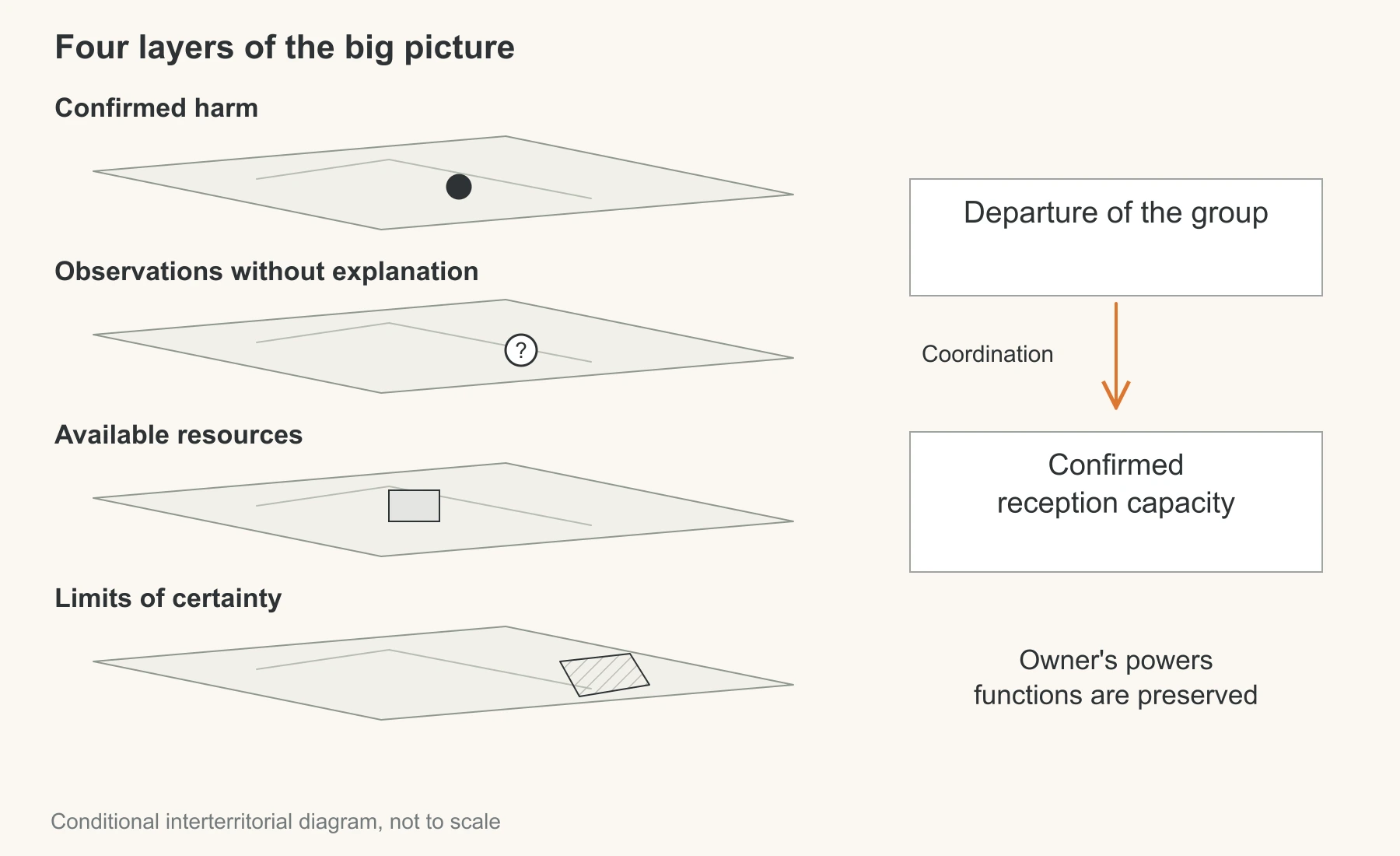
Figure 37. The big picture: four layers and coordinated decisions
[P] The overall picture distinguishes between substantiated harm, observations, resources, and limits of knowledge. Coordination coordinates the consequences of decisions while maintaining the authority of function owners.
Choose several verifiable goals for the current period. Instead of a general promise of safety, preserve care for dependent patients, confirm reception of a specified group, or establish why a particular channel failed. Name the person responsible and an observable sign of completion for each goal. Then check compatibility: will movement overload a neighboring area, will a change in power supply interrupt medical care, or will research delay rescue?
International exchange occurs through competent channels. Transmit observations and information necessary for protection, taking into account personal data and infrastructure security. An unknown reason does not become an indictment on another country. If participants disagree on an explanation, they can still agree to help based on the evidenced consequences.
A public message answers the questions of a specific territory: what happened within the available limits of knowledge, what a person should do, where to get help and when to wait for clarification. If clarification is delayed, this will be reported. Silence should not quietly prolong the old command. Correction is checked by whether people have stopped following the previous instructions.
If the center is lost, the regions fulfill the pre-agreed minimum in their powers; the detailed order gives G06. They maintain a sequence of decisions, including commitments that cannot yet be fulfilled. The returned channel requires a reconciliation of local actions and source data, rather than a mechanical replacement of the local log with a later file.
The coordinator returns the decision for consideration if there is a contradiction in orders, loss of the basis for the restriction, or signs of harm from the measure itself. Independently supported assistance continues. Transfer to normal services is completed when the recipients have confirmed the people, facilities and tasks. The disappearance of attention to the event does not close the work. For continued counteraction, G13 is needed, for sustainable life - G16.
Three messages: decision before general explanation
[S] Three regions are involved in the exercise. In the first, the failure of two pumping stations was confirmed. In the second, two groups observe a large stationary object; Some of the published records have not yet been verified. In the third, the unknown sender promises to stop violating if he is given technical access. There is no available confirmation of the connection between these events. The water supply in the first region allows for one agreed assistance cycle; The next one depends on recovery or delivery.
One option is to assemble all forces to test the proposed invasion, postponing major civilian movements. The argument for this option is clear: with an unknown scale, transport cannot be spent blindly. Another is to immediately declare a general evacuation. It responds to the fear of being late, but no host region has yet confirmed such a volume. Both decisions subordinate different problems to one unproven picture.
The headquarters chooses the third order. Engineers and civil services are given a separate task on water. The scientific group is checking the object. Contact - saving the message and finding out the source without providing access. Of the available transport, only confirmed delivery to the first region is selected; the remaining opportunity is not promised to new recipients until approval. The price of choice is a slower expansion of object surveillance: part of the communications and field support equipment is occupied with assistance. The headquarters directly fixes this price, without pretending to do everything at the same time.
Then it turns out that six videos repeat the same material, and several devices use a common processing module. Two initial observations remain unexplained. The team reduces confidence in the scale of the phenomenon, but does not curtail assistance: water failure is confirmed separately. The proposal to show force is rejected precisely because the object of the action and the expected protective result are not established. The Contact Group proposes to continue the exchange without technical conditions.
Later renovations restore one station. The second one needs an element that is not yet available. The released transport is transferred for targeted delivery to places where restoration has not taken place; Some communications and field support are again available for object observation. In the exercise, the object does exist, but its involvement in the failures remains unknown. This is an open research question and not a reason to declare the work useless.
In other versions of such teaching, the organizer pre-sets an earthly explanation for all observations or a causal connection between the object and the failure with an unknown intention. It does not change the properties of the world after the decisions of the participants. Comparison of versions checks whether the headquarters retains the help and ability to correct the explanation, and not whether it guesses the only prepared outcome.
G07 Coordination of territories and departments
Who uses it. Representatives of neighboring territories and services who have the right to accept obligations for a common task.
Where to start? Indicate the specific discrepancy between plans: who is directing whom, what the other side accepts and what condition has not yet been confirmed.
When to delegate a task. When the recipient has accepted the people, resource, or ongoing work, and the unresolved dispute is referred to the competent authority.
The line of responsibility often runs in the middle of a single human task. The district sent transport; the neighboring district has not yet confirmed the placement. The military facility is willing to provide the facility, but the civilian service does not know the terms of access. The government offers support without checking compatibility with local infrastructure. Coordination must connect these parts before the gap reaches people on the road.
Start with the owners of the services you need. A large meeting without the right to make commitments does not solve the issue. Each party names its task, the actual possibilities available, and the condition under which the promise will become unfulfillable. Estimated capacity differs from today's readiness and may not have staff, accessible space, or support for a person with special needs.
Together, formulate the closest result for a particular group. Then check the entire path: departure, transit, reception, continuation of assistance. Endpoint approval does not confirm the suitability of the road. The route correction must reach the sending and receiving parties. If one part of the plan goes wrong, the person should not find out about it after arriving.
The obligation is recorded with the recipient, executor and method of communicating the change. Submitting a resource does not mean it is available on site; The arrival of transport does not mean the transfer of care. The inspection ends with actual acceptance and confirmation of the necessary conditions. The part remaining without a person responsible is saved in the general list of tasks.
If agreement is not possible, a portion of the assistance that can be performed independently is allocated, and the dispute is referred according to the established procedure, with a description of the consequences of the delay. The coordinator does not hide disagreement for the sake of a single press release. Messages to the public may vary by area, but should not direct the same people to opposite places at the same time.
[O] The UN Office for the Coordination of Humanitarian Affairs (OCHA) archive page describes the UN Disaster Assessment and Coordination (UNDAC) system and the Operations On-Site Coordination Center (OSOCC). They support needs assessment, information exchange and coordination of international actors with national services. The UNDAC handbook summarizes practices within its mandate. [NG2] Therefore, the participation of an international organization does not create a world headquarters with automatic power over states. The parties agree on powers, contact points and actual terms of assistance.
Before the exchange, a language, format and available channel that the participants can understand are agreed upon. Information about the victims is provided to the extent necessary for assistance, and about the infrastructure - sufficient to coordinate the work. Complete concealment of data under the pretext of uncertainty makes independent verification impossible; Publishing the entire array without assessing the consequences also does not solve the problem. The recipient must understand the limits of use of the transmitted information.
If communication is unavailable, fulfill previously agreed upon local obligations. Unverified external support is not included in the guaranteed portion of the plan. The disappearance of a key condition for admission requires a revision of the movement that has not yet begun; direct rescue according to current emergency procedures has its basis.
Change the work if reception capacity is lost, the route becomes dangerous, authority is exceeded, or the plan itself causes new harm. Hand over the work actually completed, partial assistance, outstanding shortfalls, and disputes. States may disagree about a phenomenon's origin and still undertake verifiable commitments concerning water, communications, and medical support. That is already a result of cooperation.
G06 Loss of center and restoration of control
Who uses it. The intended successor to the head of a facility, institution, municipality, region or crew.
Where to start? Distinguish between the inaccessibility of a person, a channel, a room, and the most necessary work.
When to delegate a task. When the current successor has confirmed acceptance of specific functions along with ongoing decisions and outstanding commitments.
A missed call does not prove loss of control. First, the provided means of communication are checked without delaying the rescue. Perhaps the manager is available through another channel; The connection may have been restored, but operators and data are still unavailable. Availability of a position and the ability to organize assistance are checked separately.
The replacement procedure is prepared in advance. It includes the basis for the beginning and end of temporary execution, the limit of decisions, documents available without the network and information that the replacement will need. A name on a list is not a substitute for preparation and access to funds. The Protocol does not establish a constitutional procedure for changing state power.
The temporary leader compares the event with the provided basis, informs the available participants of his function and the immediate task. He lists those who have not yet been notified. The work continues to help people, safely maintain systems, account for resources and essential messages. Incomplete management does not require simultaneously changing all previous plans.
Disputed orders are recorded with the origin, content and state to which they related. If two supposed centers require incompatible actions, do not take a more decisive tone. They check the sender and the consequences of execution here and now. While the dispute is being considered, permissible assistance continues and the possibility of correction is preserved. Submitting later does not make the old card new.
The returning center receives a local sequence of events: what has already been accomplished, what had to be abandoned, who has been promised support, and what information remains controversial. The transfer is carried out by function. The local group does not stop helping until it is confirmed that it has been accepted by a recipient capable of carrying it out. Incompatible decisions are reviewed after the current harm has been eliminated; the log is not rewritten as if the period of autonomous operation did not exist.
Without communication, they use a local log, a pre-agreed notification and a permitted range of decisions. The messenger is sent only according to the existing safe order. A risky trek through an unknown area does not correct a management failure. If the interim manager exceeds the limits of his role or becomes incapacitated, the decision is reviewed and the assigned shift is initiated.
There is a more difficult border: there is no prepared successor or order. Then this protocol does not create the missing right. The doctor, operator, and head of the institution continue available actions within their competence; the local group advises that the legal transfer of wider powers has not been established and refers to available competent authorities. Emergency care and political representation remain distinct issues.
The complete collapse of established institutions requires a separate societal and legal decision that this book cannot replace. Name such a situation explicitly in a training review. Check which duties remain feasible, who recognizes the people actually exercising responsibility, and which decisions will remain temporary and contested. G06 ends with a confirmed handover of work; a retained record of unresolved authority must not be presented as a restored state.
Divided Region
[S] Three settlements — Severnoye, Rechnoye, and Stantsionnoye — lose regional communications. Severnoye receives an old instruction to send residents to Rechnoye. Local rescue workers confirm a fire near the designated reception point. Stantsionnoye needs medicines and support for people who depend on electricity. Severnoye and Stantsionnoye have verified premises for residents who remain; their shared transport is limited to two trips prepared in advance. The cause of the communications failure is unknown.
The first option is to execute the last confirmed general order. It retains the usual chain of control, but relies on an receiving arrangements that have already changed. The second is to cancel all movements until the center responds. It reduces the risk of sending people into a fire, but deprives Stantsionnoye of the necessary delivery. Local leaders choose to divide the tasks: people near the fire are rescued on an emergency basis, mass departures from Severnoye are suspended, one confirmed trip is used for medicine and support for Stantsionnoye. The second is retained until the actual need is clarified.
The price of the decision is that Severnoye supports the deployment on its own for one more shift; Some workers remain on site instead of the planned transfer. This load is taken into account and the shift is organized, and is not called free autonomy. Then a second order comes, supposedly regional: to send all transport in the opposite direction. Its origin is unconfirmed. Local participants retain the necessary assistance already started, and the new team is checked.
Later, Rechnoye confirms that its other service point is ready to accept only a small group, and not the entire stream. The second trip is used for the coordinated movement of those who really need it; the rest remain in the inspected premises. Finally the center reestablishes contact and demands the original plan. Having received information about the fire, the actual location and the delivery completed, it takes over transport coordination according to the updated picture. Local services continue to provide care.
The case does not end with the call being restored. One distant post is still carrying out the old order. The region schedules delivery of the fix and receives confirmation that it has been cancelled. Only after this the contradiction is closed. The temporary decisions preserved aid but did not establish local leaders as the new regional government.
G02 Military base and isolated facility
Who uses it. The base commander, the head of an isolated facility or the crew commander together with regular specialists.
Where to start? Test people and real life functions against the facility's emergency procedures without waiting for the source name.
When to delegate a task. When the next shift or responsible function has accepted the verified condition, work restrictions and obligations to external participants.
An isolated object does not become its own world just because it has a fence. It depends on people, energy, air, supplies, maintenance and external support. A military base can simultaneously maintain its own security and support civilian services. The station can receive commands from the Earth when the Earth itself does not yet know its current state. Therefore, the commander's first task is to establish that the object is indeed capable of continuing.
Based on the observed signs, the appropriate standard emergency mode is selected. They count people, find out the situation of the victims, and transmit actual signs of exposure to doctors. Engineers check air, pressure, power, fire safety and availability of assistance with the means provided for a given facility. On the apparatus, the preservation of the habitable environment has immediate priority over the study of the phenomenon. The general text of the book does not replace on-board procedures.
Technical notes, observer explanations and automated recommendations are considered separately. A common fault may have a common source of power, timing, processing, or communication. Available independent paths are used for verification. If they are not present, the commander knows which part of the state cannot be confirmed and does not expand the inference by the confidence of the interface; digital recovery is discussed in G14.
Non-essential work that could increase the impact or look like an attack is suspended within the limits of authority. But this is not a general command to turn off equipment. Isolating the room, changing the power supply, or stopping the process can damage life support. Acceptable changes are determined by facility procedures experts, and an unidentified signal does not by itself trigger an irreversible action. The reasons for the forceful decision are discussed separately in G04.
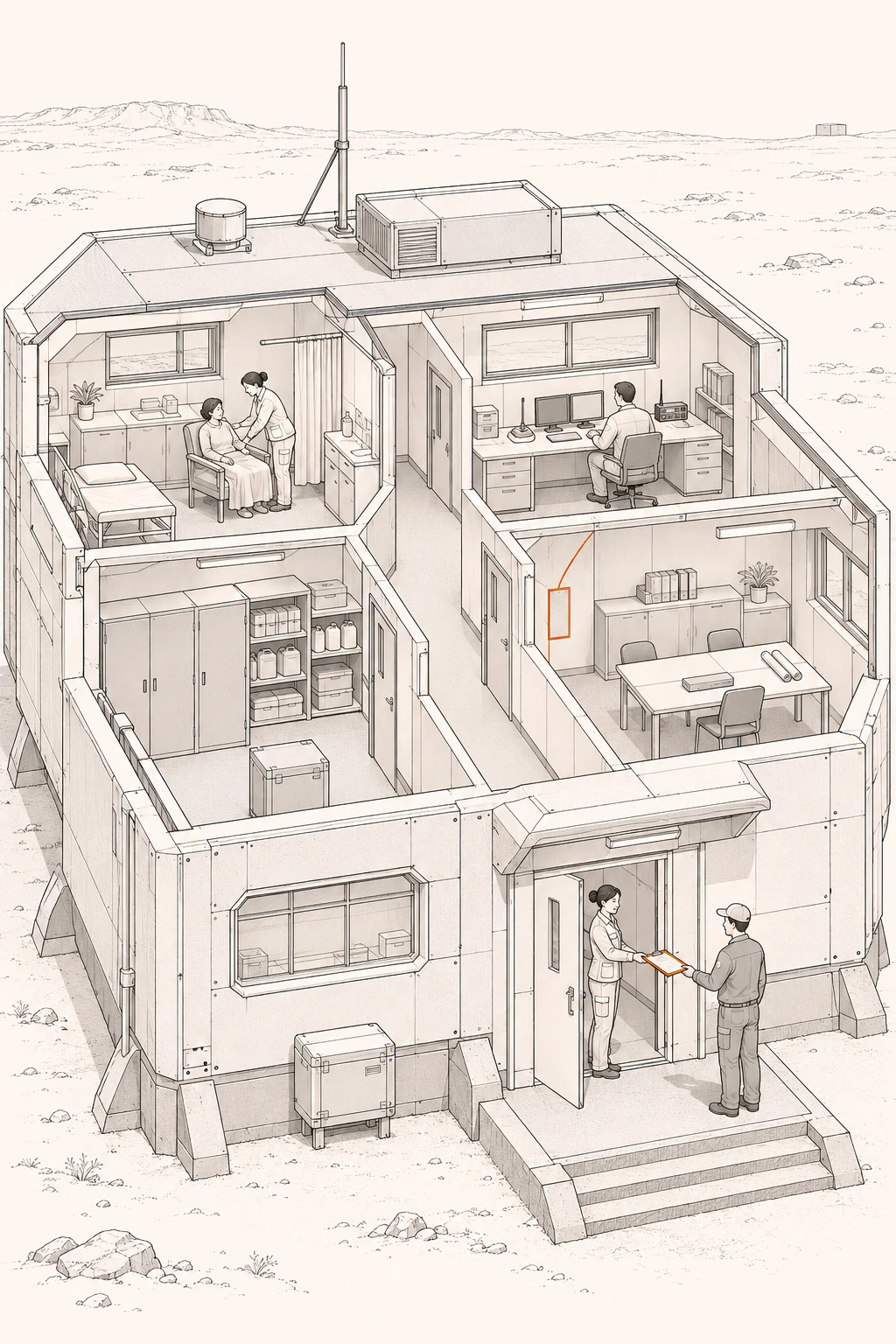
Figure 38. Isolated object: people and vital functions first
[S] A cross-section without scale shows assistance to people, staff management, engineering support and external commitment. Continuing essential functions and suspending non-essential work require separate decisions.
If the premises are dangerous due to fire or loss of suitable environment, approved emergency relocation procedures are in place. If protective conditions remain inside, but a greater risk is confirmed outside, unjustified exit will only increase harm. If there is a lack of information, compare specific available options; the rule about the constant superiority of one of them does not apply here.
A shared service with the city creates a shared obligation. The commander informs civilian services of available capabilities, limitations, and the operating liaison officer. The proposal to retain the entire resource inside the base is evaluated along with the implications for water, medical care, and rescue outside. This requires approval by G07, but does not transfer control of the city to the commander. For civilians arriving for help, a contact service, acceptable support and communication with confirmed accommodation points are determined in advance. A closed facility cannot be declared a guaranteed shelter without confirmation of its capabilities by responsible persons. Separately, families of workers and people who do not have access to regular transport are taken into account.
If the center is lost, the crew or base uses the intended autonomy. The on-call shift must be aware of what staff continue to do manually, what is being stopped, and what is not possible without outside support. Failure to respond does not expand the permitted use of force. The late team checks the current situation within the established distribution of authority; the message from the center does not yet confirm the possibility of providing physical assistance.
Stop or reconsider an action if it threatens life support, loses a confirmed object, or creates unintended consequences. Not only are observations communicated to the replacement, but also people's condition, flow rates, technical safety restrictions, pending civilian requests, and the limit of available support. When transferring via P02, they separately check whether the new composition is capable of performing the work. The resulting log does not in itself make the object stable.
G14 Restoring digital and physical controls
Who uses it. The incident manager, the owner of the service people need, its trained operator and digital response specialists.
Where to start? Compare the system readings with the actual service and find out how this comparison is confirmed.
When to delegate a task. When the designated operator manages the restored service, he can verify the result and knows the signs of a repeat violation.
Digital disruption becomes a physical problem when the wrong command, entry or mark changes the way people are helped. An accessible panel does not prove the controllability of the equipment. The saved copy does not prove the suitability of the restoration. At the same time, the coincidence of an unusual observation with a program failure does not establish an extraterrestrial cause: assistance is first required for the actual loss of service.
[O] NIST SP 800-61 Rev. 3 links response to preparation, detection, recovery and improved risk management; recovery considers the integrity of reserves and assets, the return of services and their surveillance. These provisions relate to the cybersecurity of organizations. [R01] NIST SP 800-82 Rev. 3 examines operational technologies that interact with the physical environment, taking into account performance, reliability and security. [R02]
The manager first names what exactly has lost reliability: the state of the equipment, the sender, the content of the command, the history of changes, or the service itself. The operator compares the digital picture with the provided independent observation without additional risk. If there is no such path, the loss of acknowledgment is recorded directly. Three applications from the same base remain one dependent statement.
The closest mode is chosen together with the service owner. A digital security specialist can recommend containment of the violation, but physical switching is assessed by the operator of a particular process. A general command to shut down everything on one system will stop the failure from spreading, but on another it will create immediate danger. In the absence of trained personnel, the local team reports the observed failure and uses only known acceptable modes; Urgent household assistance has its basis.
Information about the initial condition is preserved in an accessible, professional manner without delaying rescue. Separately note logs that may have changed and records from observers outside the affected system. Then they check the general dependencies of the channels: data source, account, operator, time service. Revocation of trust in a particular verification method must have a clear scope and be delivered in a verified manner. It does not nullify all previous work without reason.
The next step is to reconsider the decisions already made on the affected information. First priority goes to those whose continuation could cause harm. A questionable supply record does not negate an identified human need. Correcting the instructions and supporting the needy go at the same time.
To restore, the origin, completeness, compatibility and integrity of copies are checked. The old one may not contain the necessary change, the new one may already be a violation. The selected configuration must support the current physical task. Before returning control, the observed result, the right to stop, and the failure assistance are determined. Each stage is decided by the service owner; phasing is useful only when it allows you to detect a dangerous deviation before it causes harm. Employees receive a list of current and revoked verification methods to ensure that old rules do not continue to apply in parallel.
[O] NIST AI 600-1 addresses content provenance, information security, human interaction with the generative system, and component risks, including exposure through processed input materials. [R03] Therefore, after a violation, inputs, version, external materials and model rights are checked. A plausible explanation does not restore the lost origin of the data. Another model on the same distorted material also does not provide independence. Validation work cases include invalid input and instruction conflicts without executing actual dangerous commands.
If the analytical output is associated with a physical action, check who is able to reject the recommendation and how work will continue if this person is unavailable. An overall assessment of the model does not replace acceptance of a given configuration for a given service. Confirmation on the screen must be accompanied by a real possibility of intervention by an authorized person.
Without communication, they keep a local record and check it after the return of the exchange. Work is suspended if there is a new physical effect, an unreliable recovery basis, or a loss of check. Exit requires an available service, a known provider, understandable restrictions, and a feasible return to review. Closing a digital incident does not stop helping victims, restoring the environment, and analyzing the consequences.
Three panels and one queue
[S] In the facility, three panels and an analytical model show the usual intake. The queue on site is growing: the system does not issue assigned requests to responsible employees. There is a prepared paper order for one department; for the rest its power is not enough. All panels use the same thread, but the manager does not know this yet. His first choice is to trust the general display or limit digital reception at the cost of delaying part of the work.
He opens the paper procedure in an accessible branch, assigns a separate employee to check already accepted requests and temporarily does not promise the same speed to new visitors. Price - the queue moves more slowly, some people receive a later confirmed appointment. They are not excluded from the register for the sake of a beautiful indicator. The check finds that the shared data stream has stopped updating; The timestamp reflects the screen update, not the service status.
Once the flow is restored, it is tempting to immediately return automatic recommendations. Instead, employees confirm that requests actually reach the performers and check previously stalled decisions. A new observation shows the second defect: some of the old treatment orders were received again. The launch has resolved the inaccessibility, but has not yet restored a reliable list. Paper records allow you to verify repetitions. The automatic part is returned only for the verified branch, and the current confirmed order is retained for others.
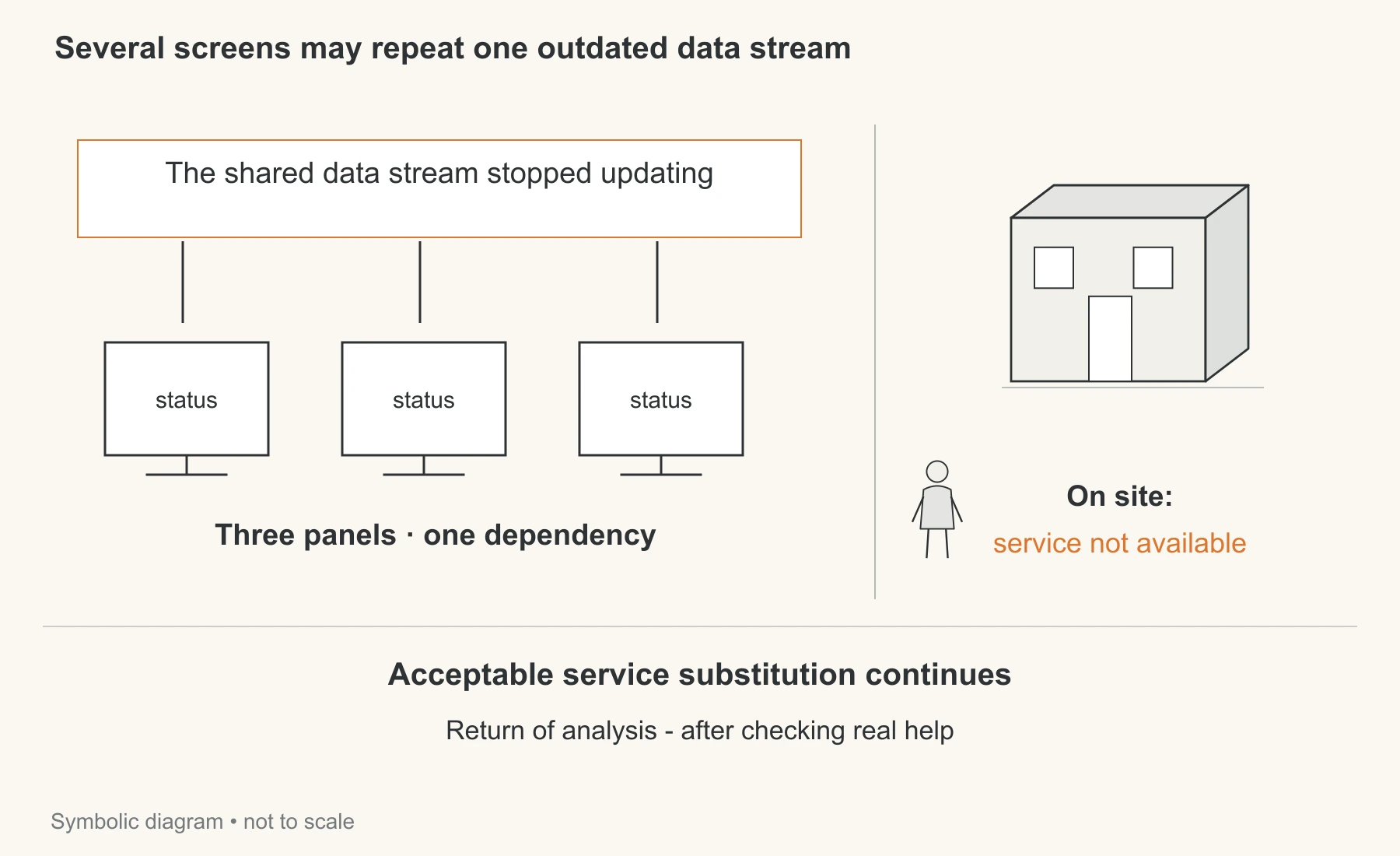
Figure 39. Three panels and one unavailable service
[S] Three panels agreeing does not create three independent confirmations if they receive the same thread. Acceptance of restoration is based on the service actually available.
The incident ends not with a green screen, but with tasks delivered to the performers and corrections for those who were given the wrong time. The cause of the initial disruption remains a research question. Having analyzed this mechanism once, we will then check not the number of identical confirmations, but their origin and real connection with the result.
G08 Necessary services when there is a lack of resources
Who uses it. The head of supply along with those responsible for the affected services.
Where to start? Check the usable available balance and state what harm would result from the loss of each function.
When to delegate a task. When the performers have confirmed the received resource and its use, and the remaining deficit is transferred with a specific request.
Scarcity cannot be resolved merely by ranking buildings by importance. A hospital depends on water; the water supply depends on power and an operator; transport depends on a road, a driver, and a suitable vehicle. Preserving an institution’s sign is easier than preserving the help people need. Planning therefore begins with outcomes: who needs a service, which parts of it are needed now, and what may change only after professional assessment.
They check the warehouse and available balance, access to it, obligations already assumed and actual delivery. The promised delivery remains a separate scenario. The number of devices does not indicate the possibility of operation without compatible consumables, trained personnel or suitable conditions. The same dependence of the fixed asset and the reserve must be visible before failure.
Service owners name the available options: maintain the mode, professionally acceptable to reduce the load, replace part of the work, move it to a confirmed recipient, or restore the damaged element. For each option, the expectation limit and its uncertainty are indicated. The coordinator does not assign a generator mode or select treatment based on the overall administrative score. Clinical triage remains a separate, competent job.
Priorities relate to the harm being prevented, urgency, alternatives and implications for other services. The fame of the institution and the influence of the petitioner do not determine the value of people. If any available option leaves heavy losses, the decision must name them and the remaining assistance. The general provision formula has no right to hide those who did not have enough of it.
After the selection, the distribution, provider and the nearest revision event are fixed. A delivered but unusable resource does not close the request. A change in recipient, setting, or data is immediately returned to the general plan. The return of funds to the reserve is agreed upon with the dependent service: it becomes free after the termination of the obligation, and not after correcting the recordkeeping line.
If connection is lost, the agreed upon local minimum and available registry operates. Unconfirmed delivery is not included in the guaranteed calculation. Distribution is stopped or changed when there is a new immediate danger, technical inapplicability or loss of basis; available assistance continues. Remains, working services, unmet needs and exact shortages are passed on to the next level. They separately name what can be provided to neighbors without losing their own necessary minimum. For recordkeeping, F04 is used, for long-term replenishment - C19 and F10.
[O] FEMA's Introduction to Community Lifelines course examines the stabilization of needed public services through consequences, priorities, and re-evaluation; in the version used, eight directions are listed. [NG3] The general principle is borrowed here. The composition of dependencies and the order of distribution remain the author's project. The reserve buys time, but does not create replenishment: the headquarters must know what the next step will be taken during this time.
Fuel: a decision that has a price
[S] All numbers in the following analysis are fictitious. “Unit of fuel” is a conventional recordkeeping unit, not a liter or an equipment standard. One period is also given only by the exercise. Profile services have already checked compatibility and presented the modes allowed for their objects, including the intermediate volumes that are used below. These limits cannot be changed at the request of the coordinator.
The city has 135 suitable and affordable units. Also 20 were promised from outside, but not delivered. There are two hospitals, a water supply, an accommodation center and a transport group. Transport may, within the limits of its assignment, combine the necessary delivery with the pre-agreed movement of eight residents to a confirmed neighboring location; its personnel and reception are already provided for by the conditions. The same composition prepared another necessary trip for the next period with the presence of ten units. There are no additional transport or unknown warehouse in the problem. Even the expected supply does not cover the next full cycle: its shortage has already been transferred to a separate decision.
Recipient | Requested for period | Proven minimum | Minimum price |
Northern Hospital | 60 | 45 | The specialized service reschedules part of the planned work while maintaining the necessary assistance |
Southern Hospital | 35 | 25 | Available scheduled appointments are being reduced; people receive confirmed new appointments |
Water supply | 35 | 30 | There is no additional production reserve; smaller mode not confirmed |
Accommodation point | 20 | 10 | New admission is limited; eight matched residents are moved to the specified recipient |
Transport | 10 | 10 | Only the agreed required trip is operated |
Total | 160 | 120 | Full declared work is not provided |
Equal shares of 27 units do not provide water supply and the Northern Hospital with even the permitted minimum. Transferring everything to the main hospital leaves it without proven water and deprives others of help. But two reasonable options remain: distribute 120 across the minimums and hold onto 15 for the next step, or use part of this difference now, reducing aid delays.
The headquarters initially chooses the second: Northern hospital - 50, Southern - 30, water - 30, point - 15, transport - 10. Total 135. The additional five units of each of the three services have a named task, and are not issued for complete satisfaction of the request. Physicians confirm what work can be retained beyond the minimum; The point is preparing a less stressful transfer of residents. The price is the absence of your own balance after the period. The promised 20 are designated as the risk of the next stage. The decision is subject to review before the second issue if delivery is not confirmed.
To this point, 85 units have been issued to: 30 Northern Hospital, 20 Southern, 20 Water, 10 Point and 5 Transport. Already issued volumes are not redistributed in the new decision. New confirmed information arrives: external 20 will not arrive in the horizon under consideration. 50 physically remain in the warehouse, so you can still change the unfulfilled part of the plan.
Service owner verification confirms ability to move to specified minimums for the remainder of the period. The new issue is 15 Northern Hospital, 5 Southern, 10 water, zero point and 5 transport - a total of 35. The resulting distribution is 120. The remaining 15 are stored separately: 10 is associated with the next necessary trip that has already been prepared, the assignment of the remaining five is clarified according to the confirmed task. Five units is not declared sufficient to run any service whose minimum is higher.
Now the cost is visible to people: some planned care has been postponed, new intake is limited, eight residents are using the agreed transfer. The service point does not automatically promise vacant seats to the next group. Leaders communicate the changes to those affected and verify the actual intake of displaced residents.
Fifteen units do not provide the next full period, which even at the minimums needs 120. The city passes on this unresolved deficit to the top and prepares available, confirmed replacement options for each service. The analysis does not end with the appearance of an unknown reserve. It shows where choices were saved, who got the price of the cuts, and what promises can no longer be made. If the coordinator continues to spend on the original statement, he will violate his own pre-named revision condition.
From Observation to Countermeasures
The vulnerability is needed for a specific task. A restriction that allows the premises to be preserved may say nothing about the ability to stop the source. An observation that is useful for negotiations may not provide a basis for influencing the target. So the search starts with asking what harm needs to stop and what needs to change for people.
The ability to cause harm, intention, and resistance to change are different properties. Automation is capable of continuing dangerous work without a hostile target. The rational party may misunderstand human actions. A distributed process may not have the central node that is most convenient to draw on a map. To find the limit, you must first stop attributing all threats to one organization.
Scenario model | What Really Changes a Decision | What cannot be assumed yet |
Controlled vehicle | Relationship between an observed action and a specific harm | That a noticeable detail is the main unit |
Autonomous participant | Maintained task and response to natural changes | That silence confirms deliberate aggression |
Collective or swarm | Common dependencies and differences between participants | That stopping one element will stop the rest |
Environmental or physical process | Route of exposure and conditions of distribution | That danger has an interlocutor |
Source of disparate scale | Achievable protective result and cost of action | That a show of force will definitely improve the situation |
Source size alone explains little. An unnoticed disturbance can deprive a closed apparatus of a suitable environment; a huge, distant object may not yet cause immediate harm. The area of impact, distribution, duration, dependence of people on the affected environment and the possibility of recovery are important to the plan. These questions organize the investigation, but do not ask the probability of unfamiliar physics.
G03 Search for a verifiable threat constraint
Who uses it. Scientific supervisor, competent researchers and a separate specialist checking the protective conclusion.
Where to start? Write down one question, the answer to which will change a specific decision about protection.
When to delegate a task. When the headquarters received a conclusion with conditions for application and cancellation, or a clear explanation why the available data does not provide such a conclusion.
Exploration of limitations is required when explanations for the same effect lead to different interventions. The manager, together with the decision maker, selects an issue of the required scale. Checking the suitability of a given route is one task. Explaining all the disappearances of passages is another matter. The answer to the first question may come sooner; it is not presented as a general theory. The subject branches of the study are considered in S05–S10.
The initial record is compiled without explanation: what was observed, by what means, under what conditions and with what known uncertainty. Images and recordings are stored separately before processing. Retelling, improved picture and model result do not replace the original source. Competing versions are then recorded, including normal technical cause and general measurement failure. Each requires observation that can weaken it. A version that explains any possible outcome does not yet help in choosing an action.
The team verifies data provenance and common dependencies. Two devices with the same power, program or source flow can repeat the same error. Independence is required not as a sign of the quality of the entire organization, but in relation to a specific possible failure. If a second route of observation is not available, this limits the power of the inference, but does not invalidate all extant evidence.
First, differences are sought in archives, passive observations, and securely accessible data. New methods pass S11; direct influence on people to confirm the hypothesis is not allowed. The model allows you to test the consequences of an assumption, but its result remains dependent on this assumption. Changing the boundaries of a fictitious source after each failure means changing the problem, not exploring it.
For the constraint found, the location, condition, scale, and observed result are recorded. If the effect ceases after a change in the operation of the system, check whether the observation itself is preserved and whether another change has occurred. The negative result is also important: the measure did not help in the specified conditions, and it cannot be repeated as a proven protection. Unspecified vulnerability does not mean invulnerability; local success does not promise general victory.
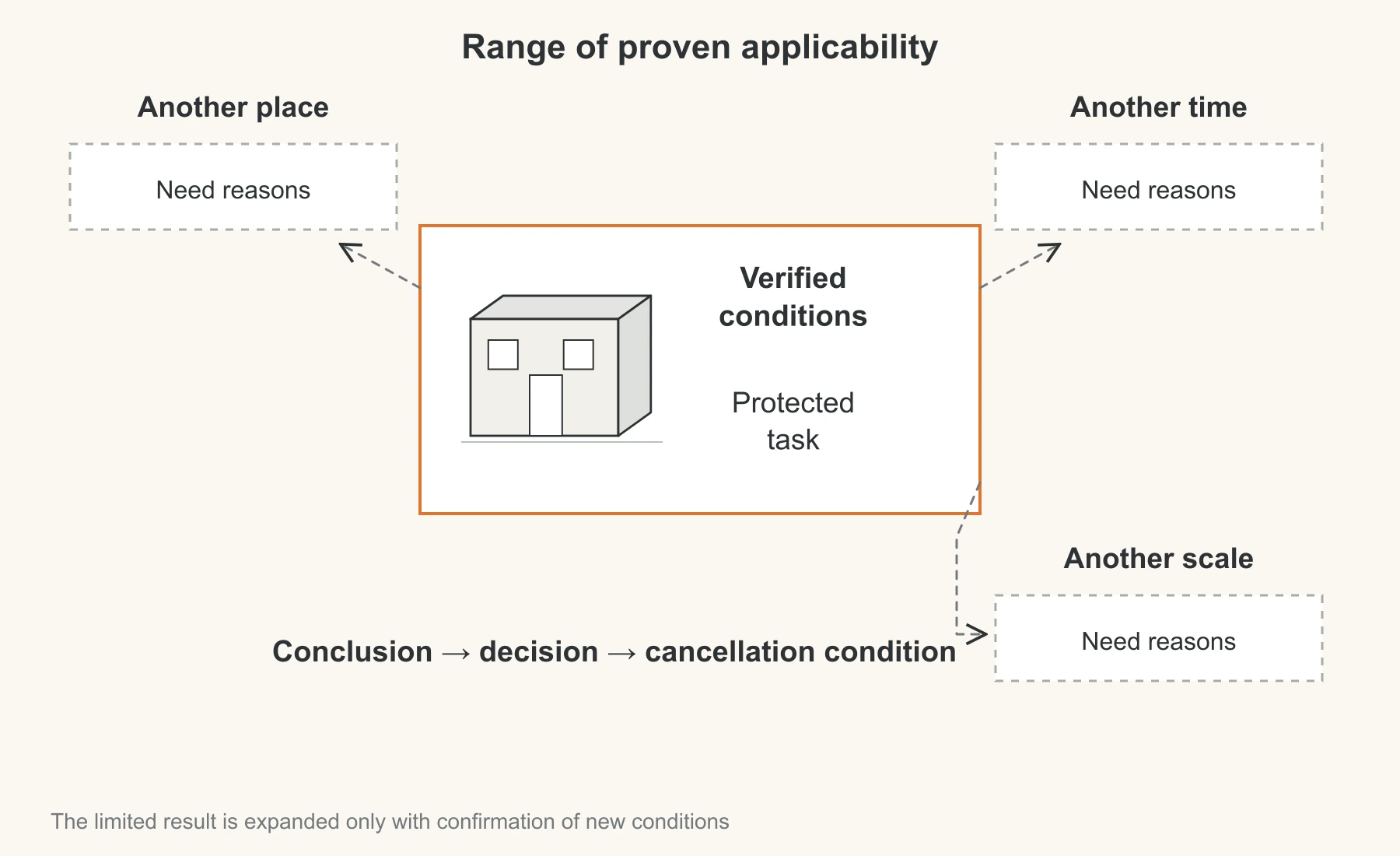
Figure 40. The found limitation has a range of applicability
[P] The observed limitation relates to the conditions, scale and task tested. Transfer to another place, time or scale requires its own reasons.
The independent reviewer receives the original records and alternatives, not just the final report. The reviewer evaluates whether a particular protective recommendation can withstand known limitations. The result is drawn up according to F05: what is confirmed, what decision can be justified, what remains unknown and what observation will require revision. The contradiction between the groups is resolved according to G09. The inability to obtain the output by available means is also conveyed as a result.
If communication is lost, the team retains materials and continues only authorized safe checks. The local conclusion does not become a general recommendation due to the unavailability of an external expert. The study is terminated or returned to observation if the intervention unintendedly changes the phenomenon, interferes with protection, or false independence of evidence is found. The safety officer must be able to stop the work; The competence of the researcher does not negate this right.
If the behavior of the source changes, the previous constraint is considered again according to S14. His story remains in the journal: the conditions of the first success, the new failure and possible reasons. This protects against both blind repetition and the hasty conclusion that the source is devoid of any boundaries.
G09 Disagreement between specialists that changes the decision
Who uses it. The principal decision maker and reviewer who was not responsible for the original determination.
Where to start? Name the action on which positions diverge and the consequences of error or delay for people.
When to delegate a task. When the executor has received a decision, a significant objection, remaining uncertainty and observation for reconsideration.
A scientific dispute becomes managerial when different explanations require incompatible actions. It is not enough for a manager to know who is more confident. It is necessary to understand whether the path remains suitable, whether work should continue, whether a specific restriction can be removed. Separately, decisions are called that are independent of the dispute: the provision of already necessary assistance is not required to wait for agreement on the origin.
Both sides present the observations they share and the point of disagreement. The reviewer receives the raw data, versions of the analysis, and access to the participants. They check whether both conclusions rely on one faulty data stream, the same model, or an assumption nobody has tested. The name of a second department does not create independence. A researcher's public standing likewise does not replace the grounds for a particular conclusion.
Each party is asked to indicate what would change the recommendation. If there is no possible rebuttal, the position cannot serve as a verifiable basis for an exceptional decision. At the same time, part of the dispute may be value-based: one group is more worried about the loss of current assistance, the other - the dependence of the next stage. The experiment will not cancel this choice; it must be openly conveyed to those who have the right to make a decision.
The verification time is determined by the consequences of waiting. Delayed irreversible action requires a more complete consideration. In the event of an immediate threat, available assistance continues while investigators verify the material. Safe ways to distinguish between versions include re-analysis of stored records, available independent observation, and verification of a common technical cause. Additional influence on people does not become permissible because it would end the dispute.
The options are then compared for each remaining explanation. If one reversible measure is useful in all conditions under consideration, it can be carried out in parallel with the study. If the options produce opposite consequences, the manager directly accepts the residual uncertainty within the authority. Even if the consequences cannot yet be discerned, the decision is narrowed down to a feasible temporary task with a minimum set of unconfirmed conditions.
The entry includes an election, a substantive objection, and a reconsideration event. The examiner must be able to communicate a new contradiction to a person who can change the action. The expert's signature does not transfer the full responsibility of the manager to him. After new data, dependent commands and messages are corrected; the old hypothesis is retained with a reason for rejection, so that it does not return as if new evidence.
Without external communication, the local group formalizes the dispute and carries out the authorized protective part. An old report on a different situation does not replace the missing examination. If the key basis is lost, the dependent action is revised; if the test itself is dangerous, it is changed or stopped. A conclusion is possible even without general agreement: it is enough to clearly state which limited conclusion is suitable for the task and which is not yet suitable. Voting does not resolve physical conflict.
G04 Decision on forceful counteraction
Who uses it. Body or official with valid authority to make the relevant decision and a successor provided for by law.
Where to start? Identify the specific hazardous action, its intended source, and the protective outcome to be achieved.
When to delegate a task. After stopping or completing the action, transfer the result check to G12, and assistance and residual consequences to the relevant services.
Defense begins with maintaining the people and capabilities needed. This may include limiting exposure, replacing damaged service, dispersing dependencies, and stopping dangerous interactions. An attack requires a separate justification: how the chosen action will stop a certain harm and why its consequences are acceptable. The formula for the complete destruction of an unknown enemy says nothing about the boundaries of the task and its completion.
The basis for consideration is the established impact and a sufficiently substantiated causal relationship with the source in question. Intentional action, accident, and erroneous attribution of harm to that source require distinction. Silence in response to a request is not independent evidence of aggression. The urgent protection of people in this case may have a sufficient basis in the observed harm itself.
[O] In international armed conflict, international humanitarian law requires a distinction between civilians and combatants, and between civilian and military objects. It prohibits attacks in which the expected collateral harm to civilians would be excessive in relation to the specific and immediate military advantage anticipated, and requires all practicable precautions to reduce such harm. The legality of resorting to force and the legal qualification of the situation remain separate issues; the applicability of norms depends on the participants and the facts. [G3] The book does not declare a hypothetical extraterrestrial party to be a party to an existing treaty. Protection of civilians, verification of the object, necessity and limitations of consequences are accepted here as conditions of its own project and do not supersede the existing law in relation to people.
The review proceeds through a sequence of questions.
1. What help can already be provided, regardless of the final explanation? What happens if the action in question is delayed?
2. What options are available: maintaining protection, moving, reducing interaction, negotiation, or forceful counteraction? What are the results and irreversible consequences of each?
3. What links the suspected source to the harm? What alternatives remain and who will be affected by a mistake in this regard?
4. What will change our actions in the environment, transportation, assistance and surveillance? Failure to evaluate is not considered to be the absence of collateral damage.
5. What limited result can be seen, who will check it independently of the person responsible, and who will stop the continuation if conditions change?
After these questions, the authorized manager makes a decision recording assumptions and significant objections. Automatic recommendation helps the analysis, but does not give responsibility and authority. Performers must know the purpose, scope, termination conditions and the limit of further actions. The execution of the operation and the achievement of a protective result are checked separately.
If the source is disproportionately superior, rescue, contact reduction, service retention, and a verifiable pause may remain achievable goals. Refusal of a specific force action must name the defense performed instead. The opposite extreme - waiting for full knowledge before any help - also leaves people without a decision.
In the event of a loss of communication, only pre-legally authorized measures to the established extent are permissible. The inability to check the condition is fixed without expanding the action. Loss of identification, cessation of immediate threat, new civil consequences, or loss of control require termination or reconsideration. Failure does not automatically give permission for a more destructive option. After the action, civilian objects are checked and assistance is organized. F02 conveys the limited purpose, basis, actual performance, cancellation conditions and residual risk.
Adaptive Source: Success That Stops Repeating
[S] In this exercise, an unusual feature does exist: one of the three crossings between the district network of aid stations and the general center periodically becomes inaccessible, although local facilities and people remain in the usual state. We are talking about a given spatial violation, and not about a map malfunction. The source can change the affected transition after the next cycle of human decisions, but only breaks one of the three at a time. The origin and mode of action are not explained; These limits are set by the organizer and are not expanded retroactively.
Each of the three district points has a local supply for one work cycle, a trained shift and the established authority to make immediate decisions about assistance. The internal district network maintains each point's access to three transitions; two unaffected paths in each episode are tested in an accessible way. The shared center maintains aggregated data but is not the sole point of care. These are the conditions of a learning task, and not a statement about the safe autonomy of a real object.
In the first episode, the northern route is unavailable. The headquarters transfers the general exchange to the Western one and receives a confirmed result. In the second, the source disrupts the western path after transfer. Two versions arise: the found limitation is erroneous or the source has adapted to the new order. Old records confirm that the northern route was indeed restored; The initial success was not contrived, but its postponement in time was not justified.
The first reasonable option is to continue to rapidly change the single main route. It retains a convenient central coordination, but each new transfer makes all points again dependent on one connection. The second is to collect the work in the very center. But the center’s proven capacity allows it to accommodate only one regional point; the rest will lose help. Force on a conspicuous object is discussed in G04, but available data do not link its defeat to tract restoration, and adverse effects on remaining access are unknown.
The headquarters chooses limited counteraction to the dependency itself. Local locations continue confirmed work to the permitted extent; the center receives reports through available connections and does not require the same response time. The reserve is intended specifically to survive one violation, and the reception of the next transmission is confirmed separately. The goal of the stage is to maintain help at all three points when one path is lost, and not to declare the source defeated.
The cost is slower overall reconciliation and the inability to immediately distribute every available resource throughout the district. One specialist remains with the local shift instead of working in the center. This reduces research productivity but maintains assistance. Success is measured by the continuation of local tasks and the actual reception of subsequent transmissions.
In the next cycle, the source transfers the disruption to the next supply path. The provided local reserves only last up to a known limit. The headquarters does not accuse the local service point of misapplication of the previous protection: the change is expected within the model. It rotates the transmission queue along the two confirmed paths and keeps a separate entry for the unavailable one. When it is discovered that the next cycle will require more service than available shifts can support, the new goal becomes training replacement people rather than another reshuffling of routes.
A limited result was obtained: the adaptation of the source continues, but one episode no longer stops helping everyone at once. The conclusion about the simultaneous violation of only one connection remains valid only under the conditions of the exercise. In a real observation, it would have to be rechecked every time there was a discrepancy. The strategic discovery here lies in the impact limit and the reduction of human dependence on it, and not in the discovery of a part to defeat.
Distributed source: stop a part and not declare war on the whole
[S] In another exercise, six observed elements look the same and move in concert. However, the given world contains three independent pairs; they do not have a common leader. Staff members do not receive this answer immediately. They have independent records of two local harmful processes associated only with the first pair. The second transmits a message about readiness to pause its own movement in the designated area. The third is not associated with confirmed harm, although its presence frightens the population.
For strategic choice, two technically considered options with limitations are given, and the methods for executing them are not included in the exercise. The local cessation of activity of the first pair stops two established processes, but temporarily deprives one area of the main human communication channel. An already verified reserve is capable of transmitting the necessary messages, but has less bandwidth. The attempted general suppression also affects the water supply of the two areas; recovery and influence on other elements have not been confirmed. Decisions are considered by authorized participants according to G04.
There is an argument to common action: identical elements can be parts of the same dangerous system, and delay can give it time. Local has a narrower causal relationship and preserves other services. Negotiators offer another way: wait for the answer of the second couple and hope that it applies to everyone. But two confirmed processes are ongoing and the sender's authority is unknown. The expectation of shared peace also has a price.
The headquarters chooses a limited termination of the two established processes. Before execution, the person in charge of the reserve confirms acceptance of the required exchange; optional messages receive a later queue. Contact with the second pair continues separately. The third is observed without being declared an accomplice only by external resemblance. The task of the operation ends with the cessation of a specific harm, and not with the disappearance of all six marks.
An independent audit confirms the result at two sites. The main channel is indeed unavailable; The reserve works, but citizens wait longer for some non-urgent responses. This consequence of your own decision is stored in the report. The second pair pauses movement in the specified area, the third does not change behavior. This picture weakens the version of unified control, but does not yet prove the structure of the entire system.
A new event changes the plan: one element of the second pair begins another harmful process in the neighboring area. General suppression again seems to be the simple answer. However, the records show that the message received was related to the previous area and specific action. The headquarters saves the local result that has taken place, opens a separate task of protecting the neighboring area and specifies the subject of the exchange. The previous interlocutor does not automatically receive the authority to be responsible for the new behavior.
Success here is partial. Two processes have been terminated, one new one requires resolution, the general nature of the participants has not been established. But widespread action with unconfirmed results was not paid for by the loss of water. A significant limitation of the human plan has been found: the same appearance does not allow the transfer of attribution and agreement between all elements. Within the exercise, this corresponds to the real independence of the pairs. The strategy changed because the difference was noticed and maintained, not because the headquarters found the universal center of the swarm.
Disparate Scale: Preserving Society Without the Promise of Victory
[S] There is a huge object above several regions. Under given conditions, its movements are causally related to disturbances in the centralized energy supply; this is a real property of the exercise, not observer error. There is no available means of stopping the source itself. At the same time, local premises are preserved, some services operate from the provided independent means, and the consequences vary from place to place. The Source does not have the ability to arbitrarily overrule any human decision.
Two cities confirm violations. The third is not observing them yet and can accommodate a quarter of the people in need of relocation from the first two - there are no more verified places. Transport and receiving assistance are designed specifically for this volume. The host city has a pre-arranged reserve to maintain the agreed upon commitments for one given period of disruption. The remaining areas have support for the current period; further work will require maintenance and shifts. The boundary beyond which the object supposedly does not operate has not been established.
Three strategies are proposed. The first is to focus available resources on demonstrating power. Its proponents hope to change the behavior of the source, but cannot justify a causal path to reducing harm; the expense will deprive some people of confirmed movement. The second is to send everyone to the third city. It comes from an understandable desire to leave the affected area, but turns a limited reception into a fictional one. The third links the confirmed displacement of some people with the preservation of local services and research into the nature of the impact.
Choose the third option. Relevant services determine who needs what kind of movement; the receiving party confirms each group. Those who remain are given available help, explaining its limits. Researchers are faced with a potentially transformative next step: Which relationships actually overlap with impairment, and do independent means hold true under the same observed conditions? The search for the origin of the object continues, but does not delay this decision.
The cost is heavy: immediate relocation is not available to everyone; Some usual services have been discontinued, and families are receiving different support options. These losses are not hidden under the word stabilization. The host city also bears the load and maintains its confirmed reserves provided before the groups arrive. Its temporary well-being does not count as proven invulnerability.
Later, a short disturbance occurs there too. The observation refutes the assumption of some participants that the source is not capable of affecting a third city. The prepared reserve supports already accepted obligations for the period specified in the task. The new departure is suspended until the reception is reconfirmed; those who have already arrived are not automatically returned to their original risk. The next goal shifts from finding a supposedly safe city to maintaining verifiable services across multiple locations and reducing duplicate dependencies.
The debriefing maintains a distinction between two questions: what the source has not yet done and what it cannot do. The observed lack of effect may have been temporary. Refusal of an unjustified demonstration of force gave a concrete result - the transfer took place and the resource of assistance was preserved. It did not establish the origin of the threat and did not eliminate it. The strategy continues on the basis of available human capabilities, rather than a promise to necessarily match the scale of the source.
G12 Checking threat termination
Who uses it. Response leader, profile executor, independent verifier and those responsible for renewable services.
Where to start? Name the process that supposedly stopped and check whether it is possible to observe its continuation.
When to delegate a task. When recipients have accepted assistance, repairs, supervision and other residual duties within the scope of the confirmed result.
After an intervention, it is easy to mix up five events: people are protected, distribution is limited, the process is stopped, the service is restored, the active phase is completed. One does not automatically contain the others. This protocol associates the result with a single base and continues after G03 or G04. The technical method of intervention is chosen by competent specialists; G12 checks its total.
Before the action, the initial state, area of influence, measurement conditions and gaps are preserved. Record the expected change, its expected relationship to the measure, and alternatives. If the source appeared periodically, the usual period of rest is not considered a stop. The duration of the check is selected according to the task and data; There is no general period of guaranteed security here. You cannot later replace the expected result with any convenient change.
The reviewer must have access to the original records and a way to detect failure: ongoing harm, transfer to an adjacent site, or damage to the observation itself. Combining verification and execution is noted as a limitation. If there is no separate control, it is possible to record the action performed and the uncertainty of its result, while maintaining the necessary protection. The person responsible's confidence does not restore missing observation.
The measure is consistent with the support of people before the start. Are deliveries, care, or exit options interrupted? Who accepts new needs? Immediate rescue is not delayed until all documentation is complete; the missing entries are then reconstructed with the gaps marked. The contractor reports what has been done, what steps have not been completed, and what else has changed at the same time. The passage of time does not turn unfinished work into completed work.
After the action, the expected effect and explanations that could create the same picture are checked. In the disassembled digital failure, the normal appearance of the panel did not confirm the availability of the service. Also, the disappearance of anxiety after intervention may mean a break in the transmission of measurements; this does not prove either the cessation of external influence or its continuation. Comparison with another site is only permissible if the differences are taken into account. People are not put back under the influence to test causality.
Confirmed status | What else remains to be seen |
People are protected by this measure | Who is not covered by it and is the source preserved? |
Distribution limited | Is observation enough and another way has not arisen? |
The process stopped under tested conditions | Is this related to the action and is it possible to resume |
The service is available again | How to maintain it and detect deterioration |
Active task completed | Who continues to help and other obligations |
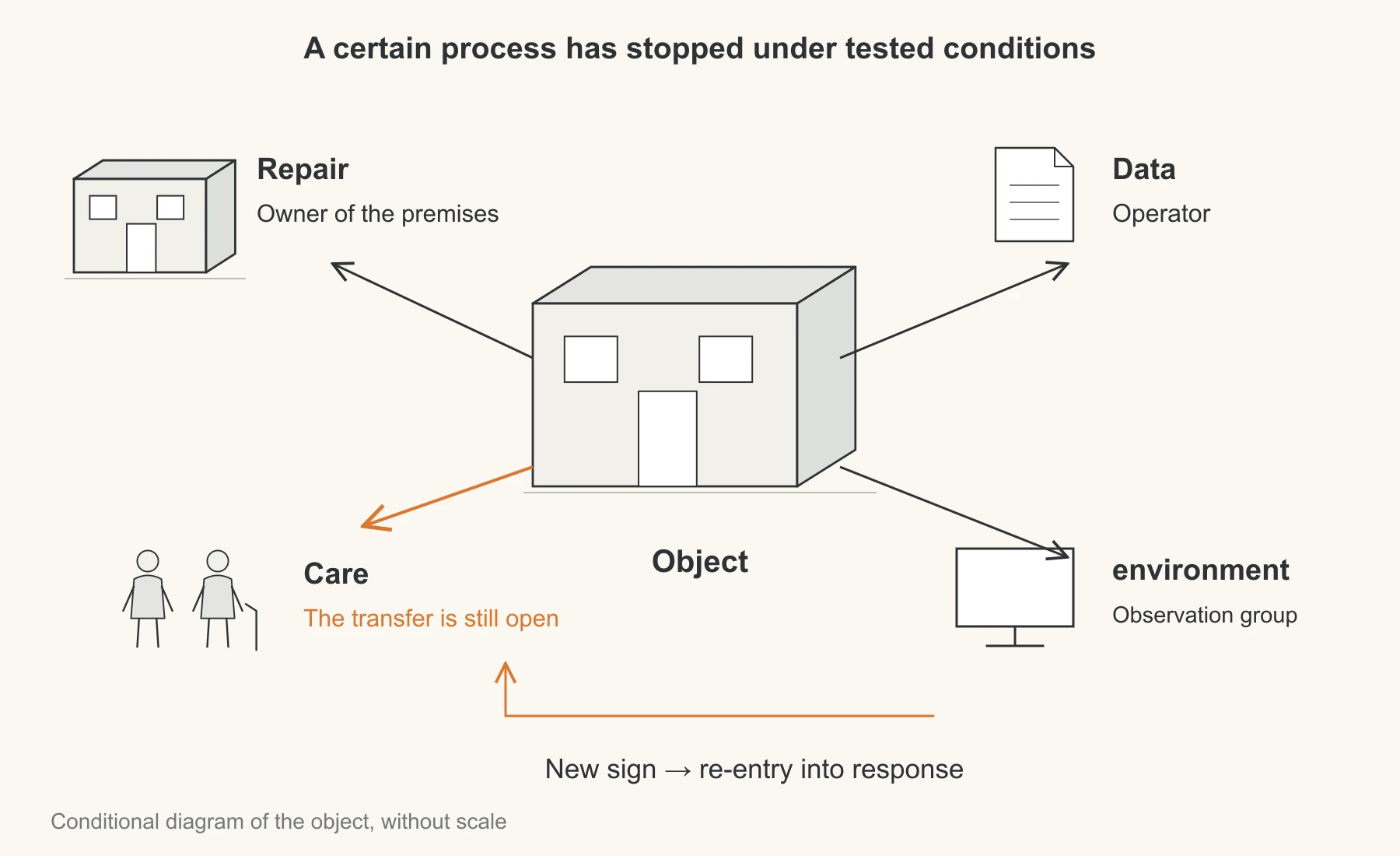
Figure 41. The process is terminated: who accepts the remaining tasks
[P] Stopping a specific process does not stop repairs, helping people, recovering data, and monitoring the environment. Each residual task is assigned to a specific recipient.
The owner of each service takes over his own site. Stopping the source does not repair the building, return data, or cancel the pending need for assistance. Environmental tasks go by S10, the return of people - by C14. For unknown delayed effects, the limit of knowledge, the available observation, and the person responsible are named instead of an arbitrary date of complete safety.
If communication is lost, the local result is not distributed to inaccessible areas. A new effect is considered as a possible resumption, secondary consequence, or other process, continuing assistance with actual harm. If control is lost, new damage occurs, or a key assumption fails, the action is stopped or revised. The exact conclusion, unresolved causes and accepted residual tasks are transmitted to F09. Unconfirmed termination language is useful in preventing premature withdrawal of protection.
G13 Long-term counteraction strategy
Who uses it. Authorized leader in conjunction with civil, scientific, defense and contact areas.
Where to start? Determine an achievable goal for the next stage and opportunities, the loss of which will deprive people of subsequent options.
When to delegate a task. When the performers of the next stage or regular services for G16 accepted the achieved result and the remaining obligations.
The protocol applies to a hypothetical scenario of ongoing aggression supported by evidence. The rationale for attribution—attributing an action to a specific participant—is stored along with the data, alternatives, and scope of inference. One participant may act intentionally, another automatically, and yet another may have no relation to the harm. The overall strategy should not turn them into a single adversary without sufficient reason.
First, the subject of counteraction is limited: what action affects whom, what is the available period of a protective decision, and what change in the situation of people is required. The goals may be to stop a specific process, access help, restore an exchange, or a verifiable pause. Complete source elimination is not designated as the only acceptable outcome unless the method is justified.
The sequences are then compared. Every first step has a continuation: will there still be shifts, inventory, independent data, a host location, and the ability to refuse an erroneous agreement? If the first stage absorbs everything necessary for the second, this requires justification before starting. Hard-to-restore capabilities are specifically named. The word reserve does not explain what future aid it retains.
Defense, exploration, contact and recovery can all happen simultaneously. Research refines the choice, but takes time; contact gives a pause, but does not repair the consequences; restoration is necessary before a final explanation. The overall plan shows where one area of work needs to warn another. It does not take over their authority: the force option passes G04, the agreement passes G10, the deficit passes G08.
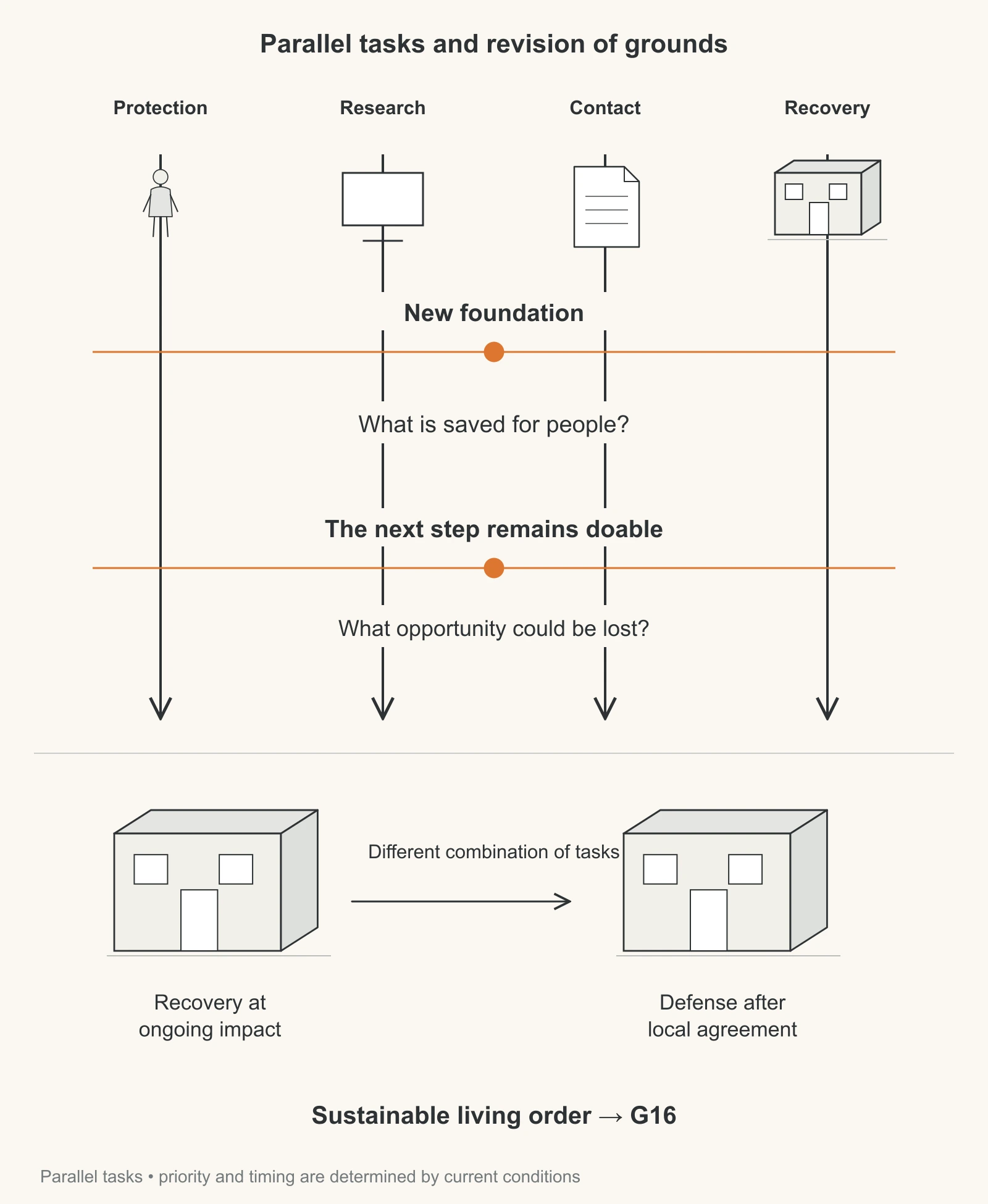
Figure 42. The strategy retains the possibility of the next step
[P] Defense, exploration, contact and restoration can go on simultaneously. Reviewing the strategy takes into account helping people and being able to take the next step.
By adapting the source, previous success is given new limits. Change may indicate adaptation, independent dynamics, technical failure, or observational error. What is important is the ability to detect the difference, not the obligation to always defend the previous hypothesis. With sufficient support, an independent group reviews key assumptions before making a significant change of course. If there are few resources, choose an issue that can change the immediate decision; the assessment not carried out is not presented as complete.
The result of the stage is checked in three respects: whether the immediate harm has decreased, whether the help people need has been preserved, and what can now be done next. A decrease in one indicator may be accompanied by a loss of another. A local disruption near a communications center, for example, could leave multiple institutions without exchange. Extending such a regime to the entire territory before replacing the service will destroy the benefit of the first success. The new task is to maintain what has been achieved in the proven area and restore the necessary exchange.
A limited agreement is also considered in case of ongoing conflict. It may concern a pause or one action without introducing the rest of the participants. Saved people and functions are counted as a result when the original goal is unattainable. The manager must name the false condition, the unacceptable consequences of continuing, and the feasible task instead of the previous one. The losses incurred do not in themselves justify new ones.
If the center is lost, the local work remains within the limits of G06. If there is no acceptable way to stop the source, the strategy moves to protection, surveillance, accessible contact and maintenance of services with clearly stated limits. If all options leave harm, indicate its distribution and available help. Stopping a specific action is necessary when the causal basis, control or function for which it was started is lost.
The stage ends with a verified status and handover of tasks rather than announcing a general date. In nearby locations, rescue, recovery, and normal life with observation can continue simultaneously. The terminated process is checked against G12. The completion of the entire strategy requires a new sustainable order; the performed operation does not create it automatically.
Contact: Understand, Help, Reach Agreement
A clear message does not yet create a clear interlocutor. It could be sent by a person, an automated system, an individual participant, or an intermediary who does not control the source of harm. Even an accurate translation of the words does not guarantee the overall meaning of danger, boundary, agreement or completion. Contact begins with the discernment of these issues, and not with a ready speech on behalf of humanity.
[O] The International Academy of Astronautics (IAA) Declaration of Principles for the Search for Extraterrestrial Intelligence (SETI) dated June 1 2026 calls for an independent review of the proposed detection of extraterrestrial intelligence and international consultation before a possible response. It relates to the professional principles of searching for technosignatures and directly excludes atmospheric UAPs and extraterrestrial life in general from the immediate area. The document does not establish emergency negotiations with a physically present party and is not an invasion agreement. [G4] Subsequent procedures for direct contact are independent author's projects.
They solve four problems in sequence. G05 checks whether there is an exchange and that it can be understood. G17 considers helping an unknown participant without making research a condition for compassion. G10 creates a limited promise, the fulfillment of which can be monitored. G15 evaluates the proposed benefit along with the dependency it creates. Success at one stage does not replace the others.
G05 First contact and check of understanding
Who uses it. Authorized contact group with the diplomatic leader, interpretation and technical support specialists.
Where to start? Save the original message, check the intended source, and determine the single immediate target of the response.
When to delegate a task. When a confirmed exchange on a specific issue has been transferred to the appropriate authorized participants or the reasons for the suspension have been established.
Work begins when there are sufficiently substantiated signs of an intentional message or interaction requiring a response. The repeating signal may be a mechanism; human speech may be a terrestrial fake or recording. The source is checked separately from the content. Preserve the original, receipt history, and available technical specifications without turning a convenient translation into the only record.
The group defines its mandate: what it can talk about, what obligations it can discuss, and what decisions it must pass on to higher authorities. For astronomical detection, the relevant international consultation procedures are taken into account. In the event of immediate danger, the established procedure for an urgent decision with preservation of reporting applies. The crew or delegation of one country does not promise the action of all mankind without special reason.
An untested medium is studied in isolation by competent specialists. The resulting code does not run in the infrastructure, the device does not connect to its control just for the sake of reading the message. The requirements within the material remain subject to analysis. This is a restriction of access to an unverified medium, and not a statement about the existence of a text that in itself has fantastic destructive power.
Independent groups offer several meanings. They should be able to see the source material without a single interpretation being pre-imposed. The agreement of similarly trained models may repeat the same premise. It is useful to separately record what observation distinguishes the translations: who should terminate the action, where the designated area ends, what is considered a receipt or a refusal.
The first message is associated with the immediate task: stopping a certain harm, requesting a pause, confirming receipt. The group does not share personal information or unnecessary data for the sake of perceived frankness. It must also understand its own limits of control. If the human side is not able to ensure the condition in all states, this cannot be hidden for the sake of a beautiful answer.
Understanding is tested through successive, mutually consistent exchanges and observable behavior. The beneficial change could have occurred independently. Therefore, the group retains alternative explanations and does not inform the public about the established security before checking it. Protection, medical assistance and communication between human services continue regardless of the prospects of the conversation.
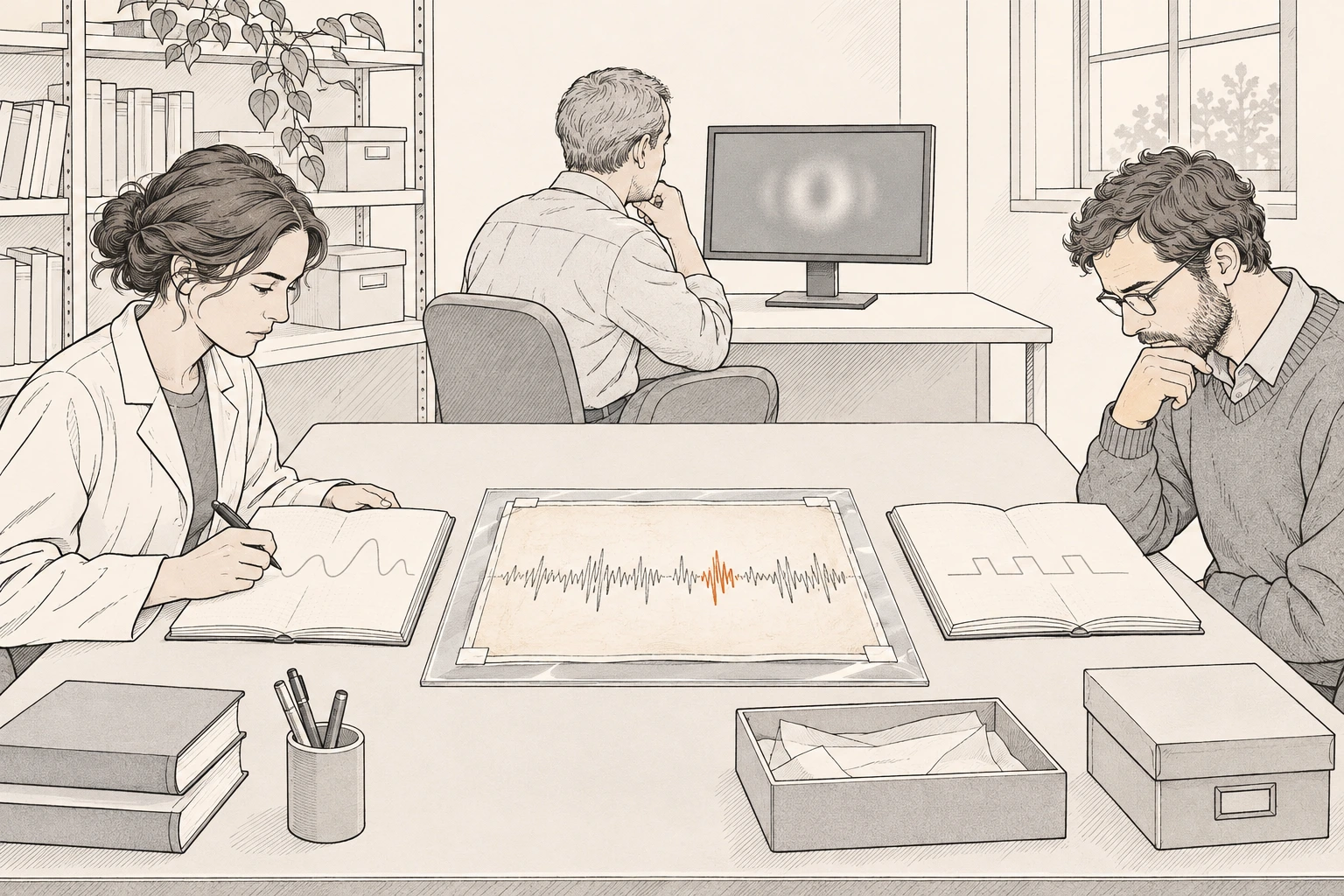
Figure 43. Contact: check understanding by saving original message
[P] The original message is kept separate from possible interpretations. The intended meaning is tested against agreed observations, and a favorable change in itself does not confirm the success of the negotiation.
If communication with headquarters is lost, the contact group remains in the previously defined mandate. Local notification of immediate danger does not give the right to accept political obligations for those who are absent. If there are no diplomatic powers, their absence is indicated; this does not prohibit the competent communication of the necessary observations within the permitted limits.
Exchange is suspended when there is new harm, loss of source verification, meaning or control, or a requirement to go beyond the mandate. Suspension does not prove hostility of the entire hypothesized party. Transmit originals, versions of understanding, completed messages and unfinished obligations. A further agreement is being considered for G10, a technical proposal is being considered for G15. The inability to continue should also leave the next group with a reason, not just a mark of unsuccessful contact.
G17 Assist an injured or non-aggressive unknown participant
Who uses it. Contact manager, subject matter experts, safety officer and individual observer for grounds of assistance.
Where to start? Describe a state without a ready-made image and separate the needs of people nearby from the expected needs of an unknown participant.
When to delegate a task. When the competent group has accepted the contact, acceptable assistance and remaining questions or its impossibility are honestly recorded.
The participant may be an organism, a device, a temporary part of a distributed system, or an erroneously allocated object. Calmness does not prove harmlessness; an unusual reaction does not prove intent to cause harm. This protocol does not determine biology and legal status in advance. Its task is not to lose the opportunity to help because of the hasty image of an enemy or a patient.
Movements, messages and changes in the environment are recorded before they are explained. The words “wounded”, “asks for water”, “surrenders” are marked as interpretations if the meaning is not confirmed. There may be a malfunction, a normal phase of an unknown process, or a message about another participant. If there are injured people, their assistance will be organized according to existing procedures, regardless of determining the status of the unknown party.
The bystander is not required to approach, transport the participant, or attempt treatment. He reports what he observes, observes the usual measures of his own safety and does not attract unnecessary observers to the place. The boundaries of the place are determined by competent performers based on actual conditions; the form in the picture and the general card do not indicate a safe distance.
If there is an exchange, according to G05 they clarify to whom the request applies and what its fulfillment would mean. The reproduced words do not confirm understanding of the assistance offered. Experts call the limit of their competence. The compatibility of air, temperature, water, food, medicines or materials cannot be transferred to an unknown participant without reason. Even a habitual maintenance action can change conditions whose significance is not yet known.
The request is parsed into the specific expected result, confirmation method, and consequences of delay. Requiring access to infrastructure, biological material, personal data or management of people receives separate consideration. The desire to help does not give the right to dispose of other people's resources. If only the transfer of information to specialists, freeing up space from unnecessary intervention or limited exchange is available, this is called the current volume of assistance.
Consent to observation does not mean consent to intervention. Asking for help does not imply consent to any research. For each action, they find out how much understanding is confirmed, whether the participant can communicate a refusal and how to notice the consequences. Failure to respond does not become a general permission. The decision to an impossible exchange requires separate, competent consideration of necessity, alternatives and boundaries; the book does not provide permission for medical or biological experimentation.
Research work has its own basis. Need does not turn a participant into accessible material, and public demonstration for the sake of sensation is not included in the help. Samples and sensitive records are transferred to the competent organizations in accordance with the established procedure. The independent observer also receives information about objections and failures.
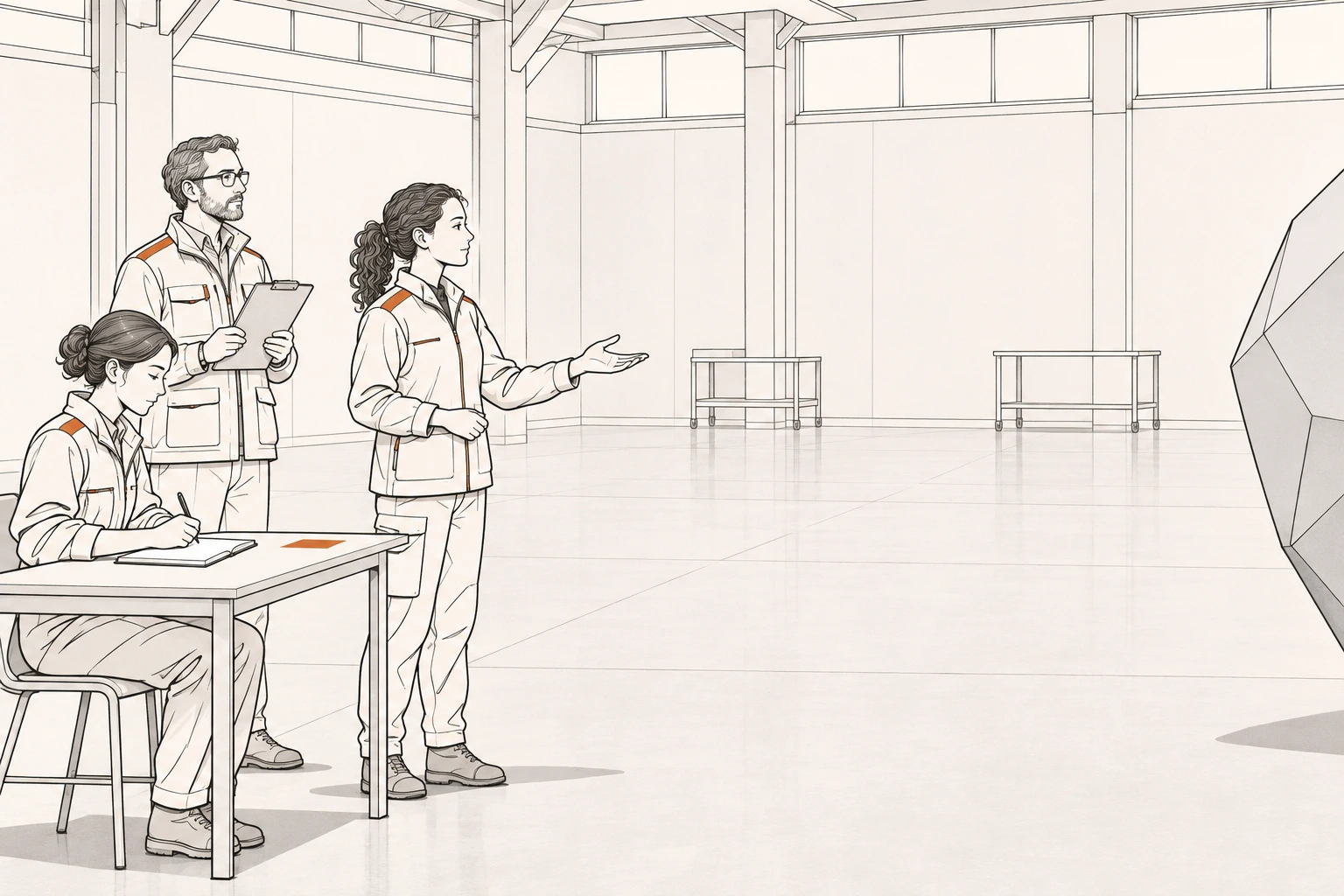
Figure 44. Assistance to an unknown participant within the limits of the confirmed
[S] One conditional version of the meeting. Assistance, observation and control of operating limits are organized separately; The shape of the participant and the distance in the drawing do not indicate his biology or a safe distance.
The effect of the aid is compared with the expected change and alternatives. Movement may not mean recovery, calm may not mean relief, and stopping the device may not mean loss of consciousness. The distributed element may not express the consent of the whole. The desire to finish what you started does not confirm the benefits of help; the unknown result is noted in the recording. If there is new harm, loss of control, or unconfirmed expansion of action, specific assistance is reconsidered, while other reasonable options are preserved.
Without sustainable exchange, the scope of the conclusion become narrower. If the specialized team is unavailable, initial observations and previously acceptable assistance are maintained without expanding the intervention due to lack of response. If a person reports a participant who has not yet been observed independently, the record is retained respectfully. It proves neither the existence of the creature nor the diagnosis of the person reporting it. Help for a person is organized according to the observed condition; the book discourages investigations into the supposed replacement of familiar people.
The transfer includes initial observations, versions of meaning, assistance provided, refusals, limitations, and unresolved issues. Moving a participant or submitting an entry does not mean acceptance. The next group confirms the available competencies and conditions. Good limited work does not have to end in proof of intelligence or complete understanding.
Help without assigned meaning
[S] On an area closed to casual passage, an unknown participant is observed who has stopped moving and repeats the word “flow” through the available channel. Part of the group understands it as a request for water, the other as a request for connection. The participant's abilities and needs in the exercise do not match those of humans. The existing isolated channel allows messages to continue; the safety of changing its environment or technical access has not been confirmed.
The first option is to immediately carry out the most familiar interpretation. The second is to stop all communication until a full explanation emerges. Select limited assistance: maintain the channel, eliminate unnecessary crowding of observers, and transmit a clarifying question about the recipient and the expected change. Price - the perceived need remains unsatisfied; it is not called assistance provided.
The next message points to another location on the site. It becomes clear that it may concern a different part of the system, and that the first participant's immobility was insufficient evidence of injury. The group changes what it seeks to clarify and sends both records to specialists. It does not offer water or connect a device on a guess. In this branch, the full request is still unclear, but the available exchange has been preserved, and an intervention directed at the wrong recipient has been avoided.
G10 Verifiable agreement and de-escalation
Who uses it. A contact group with an established mandate and a separate implementation observer.
Where to start? Write down exactly who promises to change what behavior, where and how both parties recognize the result.
When to delegate a task. When the limited result is confirmed, the obligation is accepted by the competent successor or suspended by understanding.
An agreement becomes possible after sufficient verification of the exchange at G05. Its initial scope is best limited to specific harmful interactions. The promise of universal peace is meaningless if an understanding of one task has not yet been established. The source of the message may be different from the source of influence, and the visible representative may not control the other participants.
In a collective system scenario, the interlocutor is a temporary element; in an automation scenario, meaningful speech can accompany an unchangeable task. Multiple parties may not have a common decision. Therefore, understanding, ability to perform, and the right to speak for others are checked separately. Loudness, repetition and patience do not have to make human sense to them.
The agreement passport contains the parties, their actions, the scope, the start event, the sign of execution, the method of reporting impossibility and the condition of suspension. If time is understood differently, the words “soon” and “until tomorrow” do not define a period. You can rely on events available to both parties, but the same understanding of these events is also checked. Neither a dictionary nor a beautiful translation replaces this step.
The human group checks in advance whether its performers are capable of delivering what they promise. It does not promise to turn off all transmitters or the behavior of every state if this is beyond its control. The required approvals are obtained before the commitment is made. A false promise for short-term relief creates a predictable violation, even if the local performers did not intend to deceive.
The content is compared in several ways of interpretation. Then the minimum acceptable stage with the observed result is selected. Small scale does not in itself make it safe. Verification should not require connecting an unverified device, running code, transmitting personal data, or stopping required assistance. The technical condition is considered separately under G15.
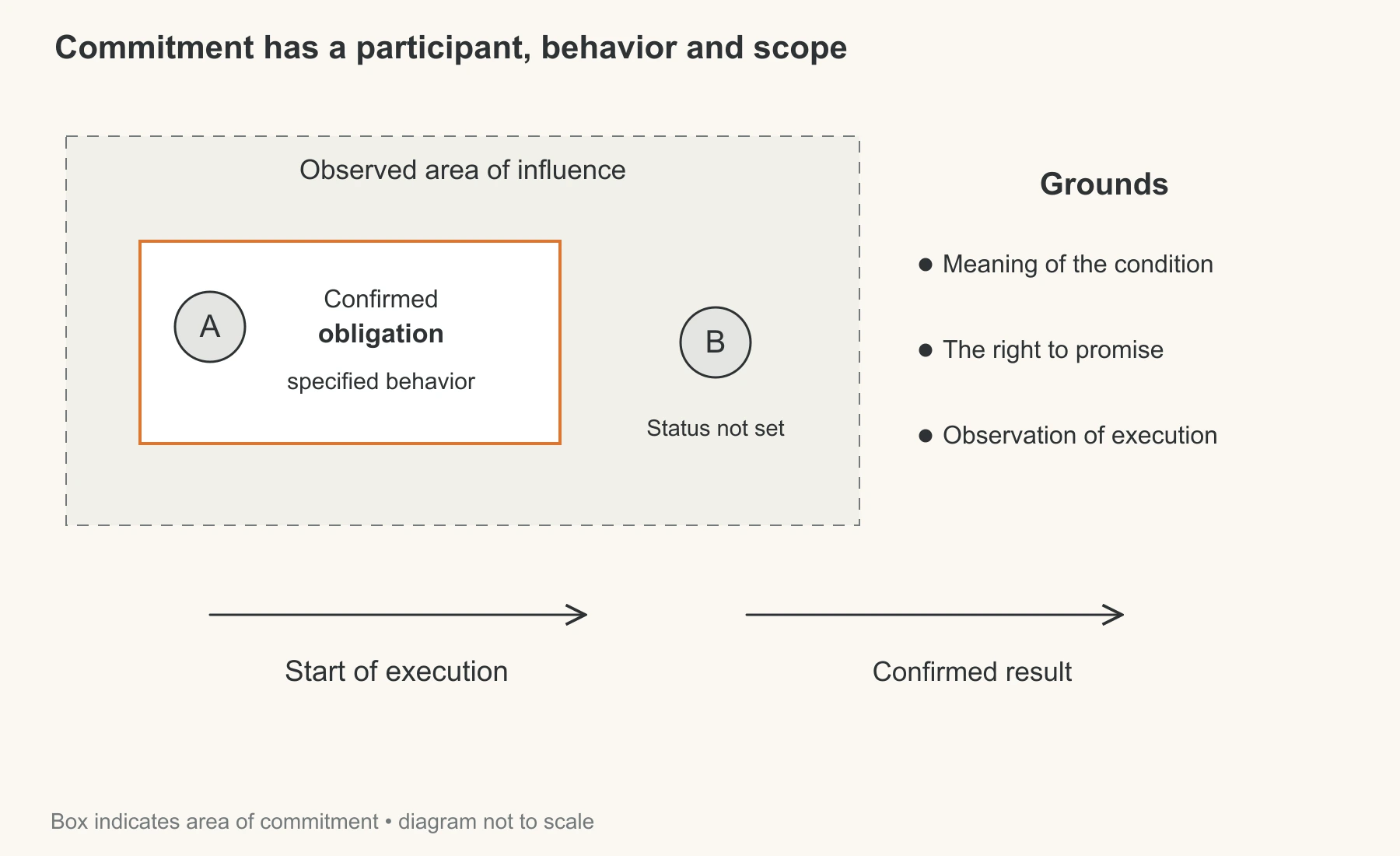
Figure 45. Limited agreement: who confirmed what, where and what
[P] The agreement covers a confirmed participant, a specific behavior and an area. The meaning of the message, the right to promise and the observation of fulfillment are checked separately.
Getting started is different from success. The observer records actual behavior and data quality, including alternative causes of change. Partial compliance may be due to meaning, delay, lack of control, refusal or deliberate violation. While the cause is verified, the protection continues and the obligations are not automatically extended. The verified result is communicated to the population with a precise area, without spreading it to the rest of the participants.
Without communication with headquarters, the group retains its previous mandate and archive. The impossibility of the condition due to the loss of the channel is reported in an accessible, provided manner; the silence of those absent does not become consent. If verification of source or meaning is lost, there is new harm, the mandate is exceeded, or unauthorized access is required, the exchange is suspended. This does not prove hostility on all sides.
The output contains the original condition, translation options, powers, observed execution, deviations and residual promises. If there is no stable exchange, they return to observation. When a pause is confirmed, the consequences are continued to be checked. De-escalation means reducing a specific dangerous interaction, rather than having to assume the unknown is safe.
A pause that was interpreted differently by different parties.
[S] Five moving objects are associated with confirmed equipment violations in multiple areas. In the exercise, the causal relationship is valid for the specified type of impact. A message arrives through a separate channel, allowing two translations: objects will cease to operate, or people must stop their own work. Reception of people has already been organized at two verified sites; it cannot be expanded without a new assessment.
One negotiation position suggests accepting a favorable meaning immediately: a pause is meant to help, and delay also causes harm. The other requires postponing the exchange until the party’s language and organization are fully understood. The headquarters chooses the limited task of confirming a specific termination in one designated area while maintaining available assistance. It does not send the command to the population to stop everything. Two groups maintain the discrepancy and prepare a clarification.
The answer links the pause to the three completions of the designated exchange. The overall hours are not agreed upon, so the group asks for confirmation of which observed event is considered completed. At the same time, a prompt appears to connect an unknown component. The technical team does not confirm such access; negotiators find out the possibility of fulfilling the condition through an already available channel. The agreement is accepted only in this limited version.
Three objects stop influencing, two continue. This allows you to use a confirmed pause for tasks that have already been recognized as feasible in the corresponding area. There is no general removal of protection. The price of partial success is that neighboring sites remain restricted and receive less available work now. Their needs do not disappear from the plan for the sake of declaring peace achieved.
After the second human confirmation, one of the three objects resumes action. Headquarters returns the affected task to defense, but does not declare a violation of the world treaty. A new comparison of records shows that the party considered the retransmission to be a separate completion, and the human group considered it a copy of the previous one. According to the sender's account, a third event has already occurred. This does not establish the device of all participants, but it does provide a specific reason to change the condition.
The following limited exchange distinguishes between receiving a new message and repeating the old one with confirmation of the meaning. The beginning and end of the pause are checked again for the participating objects. The result is a restored local pause with clearer terms, continued danger elsewhere and an open question about representation. Diplomacy produced useful results without the promise of equal time and common intelligence among all observed elements.
G15 Help offered and technology dependency
Who uses it. Responsible for the service people need, subject matter experts, contact group and independent reviewer.
Where to start? Separate the promised benefit from the observed effect, conditions of use and counter-obligations.
When to delegate a task. When limited use or refusal has a person responsible, clear reasons and a plan to support the original human need.
The offer may be useful, dangerous, misunderstood, or both useful and capable of creating severe dependency. Confirmation of the effect does not answer questions of management and future maintenance. An obscure device also does not prove hostility. The protocol is applied after initial contact verification to a resource, device, information or service with a promise to improve the situation.
First, the service owner describes the existing need and the available alternatives. Urgency is determined by the consequences for people, not by the sender's deadline for consent. Options remain denial, deferment, limited consideration and pre-existing substitution. Bad alternatives need to be shown honestly; their shortcomings do not make the properties of the new proposal known.
Record the sender within the limits, the material received, the promised function, the conditions and the required actions. Demonstration in an unverifiable environment has limited validity. Then they separate the acceptance issues. Subject matter experts are responsible for substantive verification, negotiators are responsible for the meaning and mandate, and the head of the service people need is for its continuation. Neither the researcher nor the negotiator can single-handedly promise to cut off needed aid for the sake of future benefit.
Question | What can be confirmed | What doesn't follow from this? |
Efficiency | The function was obtained under the described conditions | Suitability for other tasks and scales |
Security | The consequences that are significant for this task are assessed competently | Absence of any unknown effects |
Management | The person in charge respects the restrictions and may stop an acceptable portion of the work. | Complete independence from external components |
Maintenance | Maintenance, consumption and possible replacement are known | Lifetime supplier availability |
Liabilities | The condition is understood and accepted by authorized participants | Consent of absent states or people |
Compatibility includes environment, communications, materials, maintenance and required access. The blanks are not filled with similarity to a known device. Unknown material will be examined using appropriate professional procedures. The proposal of a medicine or health intervention is submitted to the current medical and research procedures of the competent organizations; the promised effectiveness does not give a separate permission to treat people with an unknown remedy.
Then they trace the path from the offer to the service to the person. What will need to be changed in the current system? Is it possible to return to the previous option? What happens without an update, translator, delivery or service? If the work rests on a single unverifiable promise, that dependency must factor into the decision along with the observed benefit. Supplier failure becomes especially dangerous after in-house capabilities cease.
The competent group chooses an acceptable way to obtain the missing information. A small experiment is not considered safe simply because of its size: the route of exposure, observation and the ability to stop are important. If there is no acceptable way, a reasoned delay or refusal remains a valid decision. With partial support, they only consider what they can verify. A contact group without technical competence preserves the terms of the proposal and ascertains the meaning, but does not take responsibility for assessing safety.
Permitted use is given by area, recipient, owner and termination condition. Changes in scope, purpose, or version are reconsidered. Significant restrictions are communicated to people in a clear way. Before a critical dependency occurs, the output is checked: who will continue to help when access is revoked and which changes cannot be returned. Simply stopping use can become dangerous if the new service is already needed.
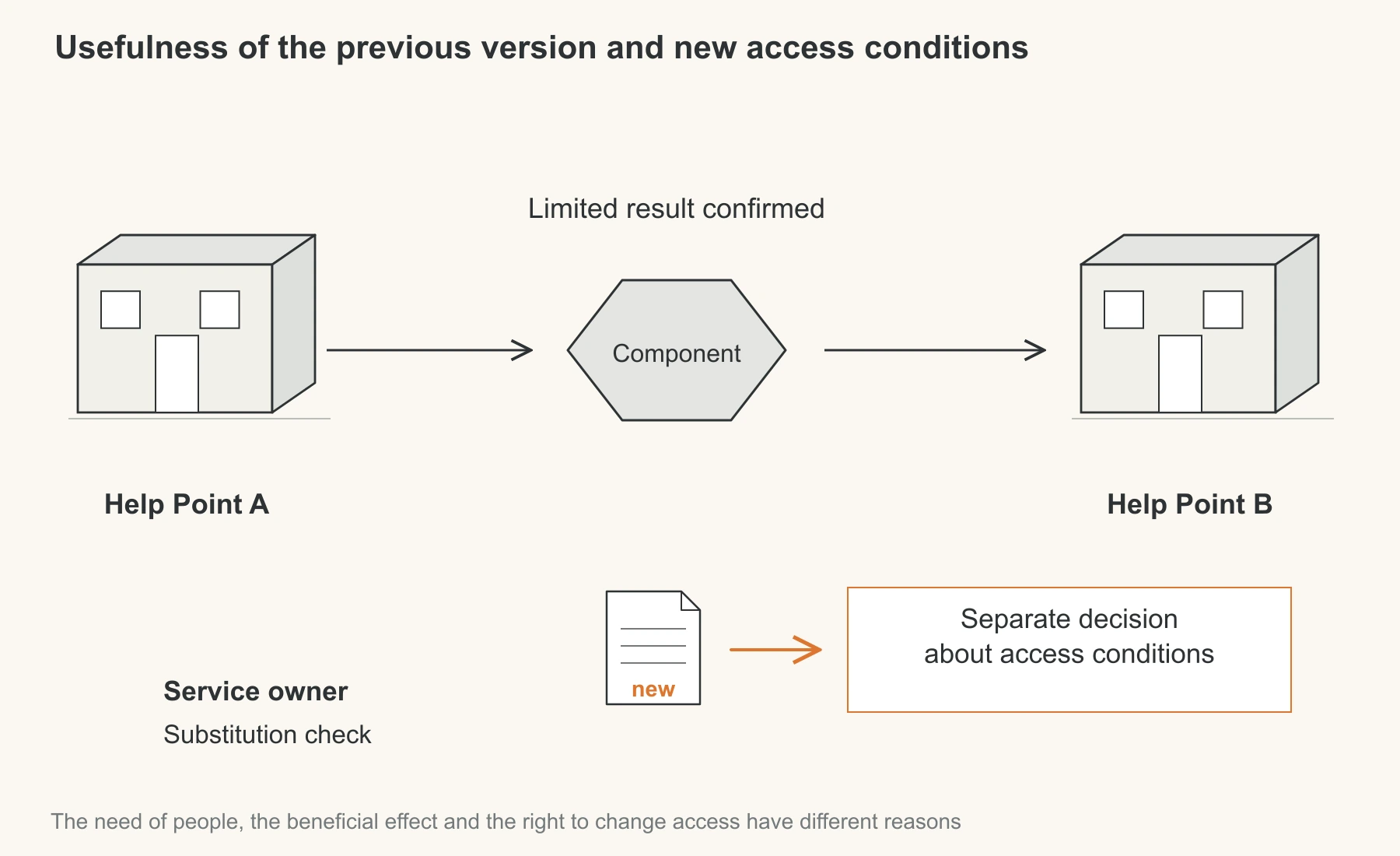
Figure 46. Useful technology and new update dependency
[S] The proven usefulness of the previous version does not confirm the new conditions of access. The service owner separately evaluates the change in dependence and the ability to continue assistance.
Without communication, confirmed limits are maintained; a new commitment is not accepted by silence. Work is revised if a significant condition changes, a new consequence occurs, verification is lost, or access is required beyond the mandate. If the application supports a required service, the suspension is arranged with its owner and an available replacement. Further, the benefits, failures, service and user requests are checked, not just the demonstration shown. Rejecting technology leaves people's original need open.
Useful component and condition of the next version
[S] Two help desks are using an unknown component for limited information exchange. In the exercise, its beneficial effect is real and confirmed only for this task after competent consideration. It does not manage engineering systems. Before the decision, there was a prepared courier route that was able to transfer the necessary lists once per working period, but did not provide the same speed for all messages. The service points have preserved this route and the people to operate it.
Initially, it was possible to discard the component and retain the slower assistance, or to accept limited use and retain the independent method. The second option is chosen. Points coordinate delivery faster and benefit, but part of the usual work begins to rely on frequent exchanges. The cost manifests itself as a dependency: the delay of the channel will now affect more decisions than before its introduction.
The sender then states that the next version requires increased access and that without it further operation is not guaranteed. The first position is to agree, because the previous version helped. Another is to immediately stop all interaction. The first transfers the previous check to a new condition, the second risks cutting off already necessary help before it is replaced.
The service owner first separates truly necessary messages from convenient, frequent exchanges. The contact group clarifies the meaning of the guarantee and the period, the technical one evaluates the new access, and the independent group checks the basis of urgency. Since the security of the extension has not been confirmed, the commitment is not accepted. The necessary lists are transferred to the saved courier order; the previous version is used only in the previously valid area while its state is confirmed. This decision does not imply unauthorized modification of the device.
Practical cost - some answers come later, some unnecessary work is postponed. The service points change promises to recipients in advance and assign responsibility for messages that did not make it onto the next trip. They do not call this mode an equivalent replacement for all the previous convenience.
Later, a new request reveals that one point has already promised a third party a connection to this exchange. The conditions of the initial inspection do not cover it. The extension is canceled pending a separate review, and the failed recipient is informed of the actual capabilities and his request is saved. This new fact does not change the physics of the component, but the human obligations around it. Success is the preservation of the necessary help and the corrected promise. The benevolence of the sender and the suitability of a future version remain different open questions.
Life Beyond the Emergency
Continued threat changes the meaning of preparedness. The supply for the first episode is being used up. The specialist needs a shift; temporary premises require maintenance; Children and adults need education, work and connection with loved ones. It is impossible to consider as normal for months an order that rests on the insomnia of some people and the constant postponement of all other needs.
The reserve must lead to the following action: confirmed replenishment, repair, replacement or relocation. Declaring the same stock as strategic again does not increase it. Water, energy, transportation and personnel have different constraints and cannot be summed up into one reassuring percentage. An almost complete warehouse is useless without a single specialist, whom no one can replace.
The long-term plan includes transfer of skills under C19 and F10, recreation and support for performers' families, and available regular services. The inability to provide a replacement worker is recorded as a specific training dependency. The next shift receives unfulfilled promises: the application was accepted, but delivery was not scheduled; the premises were opened, but care was not organized; the restriction was introduced, but there was no one to review it. Such gaps must have names of responsible roles, otherwise they will live longer than the headquarters itself.
Public communication also becomes a full-time job. People need a clear rhythm of clarification and a way to report errors. The headquarters checks whether the proposed action can be carried out and who is deprived of the channel of appeal. The absence of complaints does not promise prosperity. Getting your life back on track starts with accessible service and a verifiable right to correct your decision on the spot.
G16 Living sustainably in the face of ongoing threats
Who uses it. Those responsible for public services, local authorities in their powers, representatives of affected people and subject matter observers.
Where to start? Separate tasks that still require urgent response from living conditions that can already be maintained regularly.
When to delegate a task. When regular performers have accepted service, human participation, observation, and a feasible return to response.
The card considers a conditional situation in which the source can be partially limited, bypassed or taken into account, but its immediate termination is not justified. Habituation does not prove the disappearance of danger. At the same time, unknown origin does not require any original prohibition to be maintained indefinitely. The subject of this work is services, expenses, responsibility and people's lives, and not another emergency distribution according to G08.
They make a map of what is stable and what is changing: proven effects, incomplete observation, long-term services. Absence of events after the end of follow-up is not considered stable. At the same time, they find out who the general option is not suitable for: people with dependence on certain assistance, limited mobility, lost income or absence from regular registration. The same address does not mean the same availability of a new life.
A repeatable order is established for each required service. Who receives it, how does it get there, who maintains the facilities, what happens during repairs or when an employee gets sick? The plan is tested as the season changes, new residents arrive, and families change. A team that operates only with the same composition does not ensure sustainability. Voluntary participation is not recorded as a permanent guaranteed resource without the consent of the participants themselves.
Urgent management is left where it is needed, and sustainable tasks are transferred to ordinary owners. The transition coordinator connects them without acquiring the right to manage all aspects of life. For education, delivery, communications and assistance, service and funding are determined as applicable. The abolition of the emergency organization should not leave the work without performers, but the convenience of the previous headquarters also does not serve as a reason to maintain it everywhere.
Each restriction receives a clear purpose, legal basis, scope and procedure for review. People need to know what observation can change it and where to turn if applied incorrectly. Additional household losses are taken into account as consequences of the decision. A person's disagreement with a particular restriction does not prove he is hostile. Technical data, value choice and decision authority are discussed separately.
The test of order is carried out with the participation of those who experience its limitations, and is not limited to a single meeting. Applications are considered based on actual need while maintaining confidentiality. Average delivery time may remain acceptable when the distant group has already lost assistance; the number of open institutions does not indicate whether a person is able to use them. Therefore, next to the working services in the report there are people for whom the decision is incomplete.
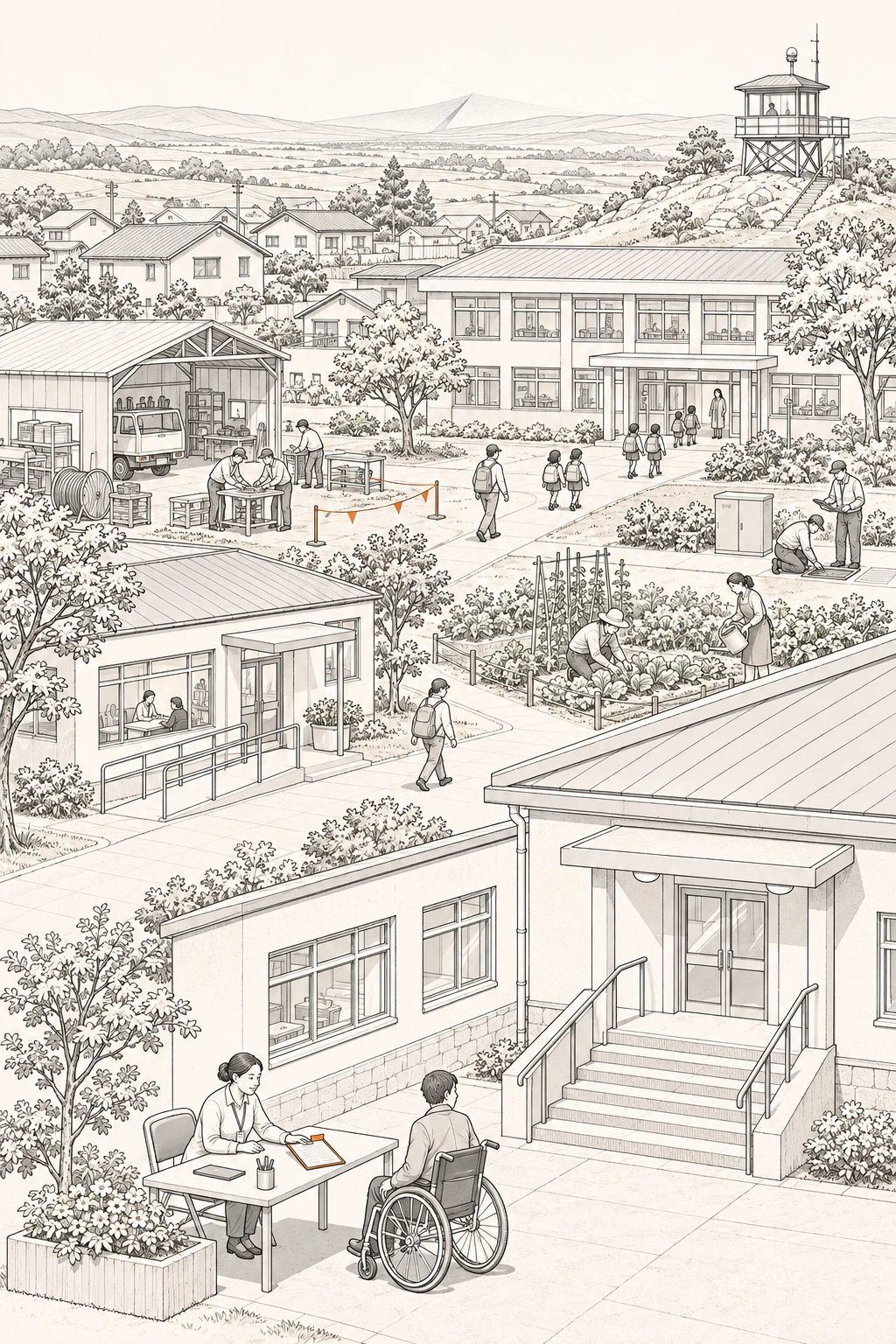
Figure 47. Sustainable living next to a sustainable source
[S] Conditional panorama without scale: housing, study, work, help and service continue with continued observation. Local restrictions and unmet needs are reviewed separately; For a specific service, an accessible alternative will be organized.
A person in charge with access to the source data is appointed for monitoring. For the agreement, versions of meaning and execution are preserved. A new member, device or condition is not automatically covered by the old consent. If negotiation is not possible, a sustainable order rests on verifiable human capabilities and recognized limitations. It does not require a promise that the unknown party will remain unchanged.
Continuing residence is compared with long-term movement in terms of access to assistance, housing, education, work, and family connections. A general command to move does not create a host place. If it is impossible to ensure sustainable conditions, consider a specific arrangement of life in another place according to the applicable law and established procedures. Issues of consent, rights and statutory enforcement are resolved competently and not inferred from the unusual nature of the threat.
The plan contains signs of a return to response: new harm, service failure, change in access, or loss of the basis for the previous assessment. The resident is not required to figure out the nature of the phenomenon; the message must lead to a clear action for its location. If external communications are lost, local providers will continue the confirmed services and provided supervision. A change to an agreement that has not been received is not declared valid.
The immediate horizon preserves assistance today, the next one preserves maintenance and shifts, the distant horizon preserves the suitability of order when the population and economy change. These horizons do not set universal deadlines. When transferred to a new team, and later to the next generation, users are tested on their ability to act without constant prompting from the previous team. The history of unsuccessful hypotheses is preserved so that they do not return as new knowledge.
Revision is required when environmental or health conditions deteriorate, services are lost, new knowledge is acquired, or the basis for the measure expires. The outcome is considered to be a stable order with accepted work and available support, not proof of the absence of any future events. If some of the needs cannot yet be met, they remain open tasks. The disappearance of a source at a later date will also require a separate test for removing residual restrictions.
G11 Completion of emergency measures and responsibility for consequences
Who uses it. The authorities that introduced specific measures and the implementers who took over normal work after the emergency phase.
Where to start? Check current restrictions against current rationale and actual practice on the ground.
When to delegate a task. When temporary powers are completed in the prescribed manner, the remaining tasks are accepted, and people know the current conditions and methods of treatment.
Ending a state of emergency is more difficult than stopping talking about an event. The restriction may continue by verbal order, although the document has already changed. Help may disappear along with the headquarters, although the need remains. G11 considers each measure separately. It does not extend powers or replace mandatory legal procedure; grounds, terms and competence are determined by current law.
They start with a register of real measures and exceptions. For each, the task, the people affected, the current basis and the criterion of necessity are restored. The visible source may have disappeared, leaving behind damage or contamination. The cause may remain unknown after the immediate harm has been eliminated. These conditions do not require the same decisions.
If the legal basis is lost, they act according to the applicable procedure without waiting for complete scientific certainty. Supporting people receives a separate treatment. Lack of preparedness of assistance does not justify maintaining a prohibition that has lost its basis; actual residual hazards are assessed independently. Lifting a restriction is not a command to a person to return.
Responsible specialists check the suitability of premises, engineering systems and conditions of assistance in their area. Related services are restored in a consistent manner. Staging is useful when it allows you to notice deterioration before the consequences expand. If this is not possible, the mere existence of a schedule does not prove safety. A review of the termination of exposure is carried out according to G12, the return of people - according to C14.
Regular services accept residual tasks, necessary data, contacts and funding in due course. The transfer requires confirmation of the ability to fulfill the obligation. The headquarters does not close the application because it itself stops working. People are told what has been cancelled, what remains, for what reason and where to go if there is a discrepancy. The correction is distributed through the available routes through which the original error was received.
Materials for legal analysis and protection of rights are preserved, limiting unnecessary further storage of personal data in accordance with applicable rules. The research archive does not translate into the free circulation of victims' records. The debriefing evaluates the choice against the information available at the time and assigns specific corrections. It does not replace competent review of violations and redress and does not promise its outcome in advance.
If there is no communication, local services will use the established procedure for terminating their own measures and the available notice. Loss of the channel does not make the expired permission valid. In case of new harm, an appropriate response is opened on a new basis instead of an automatic indefinite extension of the previous regime.
If recovery worsens the situation, suspend the affected phase while maintaining assistance. If the recipient of the task is unavailable, the transfer remains incomplete. The summary record lists actions canceled and maintained, responsibilities accepted, open cases, and how corrections were verified. Closing the headquarters does not end responsibility for the consequences of its decisions.
The result that remains after the headquarters
A strategy leaves behind more than a changed source. People remain who did or did not receive help, along with capabilities restored or lost, commitments made, mistakes, and the work of correcting them. Counts of meetings and completed actions describe activity; these people's condition shows the outcome.
A good plan withstands an unfavorable test: the explanation turns out to be wrong, translations disagree, the delivery is delayed, the center is again unavailable. For each case, there are performers, recordings and the next feasible step. The scope of this manual is not a substitute for checking your local variant. The base and crew still need approved procedures, the city still needs real receiving services, and the family still needs accessible help based on its circumstances.
If the source is preserved, life continues with known limitations and open questions. If it has disappeared, restoration still requires work. The task of the state and strategy is to maintain the ability of people to live, care for each other and reconsider their decisions. This ability is supported by the specific shifts, supplies, knowledge and commitments that the next person has actually made.
Part V. Test It Before You Need It
Plan meets reality
While the plan is on the table, its participants are always in place, the words are clear, and the supply arrives on time. The test begins where at least one of these convenient conditions disappears. Who will open the premises if the key keeper has left? Will a person get help if they don't hear the message? What will be left of the backup connection when it turns out that it depends on the same power supply?
This part is devoted to preparing [P]. In it we will count resources, check the completion of tasks and analyze fictitious cases [S]. In each case there is a limited set of information. A later fact may change a reasonable earlier decision. The leader should not come up with a new threat ability every time in order to devalue the success of the participants: then only the ability to guess the leader’s plan would be tested.
The main result of the exercise is the discovered and corrected gap. Sometimes the culprit is an unclear phrase, sometimes a missing resource, sometimes the incompatible responsibilities of two people. The correction will be appropriate to the cause. The new formulation will not create a machine, and buying a machine will not teach dispatchers to confirm reception.
What exactly does the barrier protect?
Before checking, name the protected function. The shelter is designed for certain impacts; power reserve - for a certain load; checking messages for certain errors in receiving commands. Each barrier requires operating conditions, a method of verification, a person responsible, a sign of failure, and the next available option.
Distinguish between three statements: there is a means; the product is in good working order; the remedy is suitable for this threat. The presence of a filter confirms only the first. Testing equipment under known conditions falls under the second category. A finding of protection from a particular substance requires a third. For an unknown agent, this output may remain unavailable, no matter how many healthy devices are installed.
Multiple barriers may depend on a single reason for failure. Two reception points use one road; two channels - one network; two lists - one source record. When preparing, find such connections and conditionally exclude one of them. Then ask what other service you can provide. This does not require actual shutdown of the necessary equipment.
The scenario in which the source appears inside the outer enclosure [S] changes the scope of the test. Internal detection, separation of functions and the ability to leave a locally unusable location become important. The thickness of the outer barrier does not answer this question. However, the new decision also has a limit: if the model is assigned the ability to arbitrarily act everywhere and at the same time, it is impossible to verify the sufficiency of protection. Such a limit should be recognized, and not called another layer of absolute protection.
Count the Function Delivered, Not the Reports
A useful indicator helps you choose an action. The number of messages sent shows the amount of work. The number of people who understand the action that applies to them is closer to the result. The departure of transport does not mean arrival; turning on the equipment - service availability; publishing a correction - ending the old command.
Each indicator requires a unit of account, an area, a source and a limitation. How many people are on the list? Have duplicates been eliminated? Who was unable to report the problem? If these questions are not answered, the exact figure may give the wrong impression.
Let's consider the training calculation [S]. There are 200 people on the placement list, of which 150 confirmed that they understood the message. For this list, the coverage is 75%. But there is also information about 20–40 arrivals who were not included in the register. If they are truly new people, and all 150 confirmations are unique, the share for the full composition lies approximately between 62.5% and 68.2%: 150 is divided into 240 and 220, respectively. If some of the new entries are repetitions, this range no longer describes the composition correctly.
A practical decision here is to check the composition and method of message for the people you missed. Choosing a beautiful percentage is pointless. The next shift receives a number along with the reason for the uncertainty and the task of reducing it. The absence of complaints also cannot be considered proof of well-being if the complaint channel is not accessible.
Stock that can be used
The remainder of the resource answers a useful question only after checking suitability, access, and commitment to other recipients. Form F04 separates this information. Promised delivery before actual receipt remains a separate scenario.
The conditional warehouse contains 800 of ready-made kits [S]. Of these, 100 are excluded until suitability is checked, 150 are suitable, but not available for issue, and 50 are available and assigned to a separate obligation. These categories do not overlap. The current item is available 500. With the consumption of 180–220 sets per day and unchanged mode, the estimated exhaustion period is approximately 2.3–2.8 days: 500 is divided into upper and lower flow rates. This is an example of recordkeeping, not food allowance and not allowed waiting time for help.
Now let's change the condition. A neighboring location is asking for 120 sets, but the next delivery date has not been confirmed. The transfer will reduce the available balance to 380, that is, approximately to 1.7–2.1 days in the previous mode. The leader must see this consequence before making the promise. Refusal also has a cost—an unmet need among neighbors. Selection requires information about urgency and available replacements, and arithmetic shows exactly how much stock will be used up.
The supply plan begins before the estimated exhaustion: the request still needs to be accepted, the cargo must be sent, delivered, checked and distributed. If delivery time is unknown, several delay options are considered. The point has other restrictions - employees, premises, care, accessible bathroom. The deadline for the most convenient resource to calculate does not determine the overall ability to continue working.
Dependency Map
NIST SP Guide 800-34 Rev. 1 addresses the continuity and recovery of federal information systems through operations, requirements, and priorities. The formulation of questions about continuity is borrowed here; transfer to civilian functions and unknown threats is the author's proposal. [O; NR2]
Start the card with a service to the person. To receive a message about a place of help, you need a channel, a current address, understandable language and the ability to take advantage of the offer. For each function, list people, energy, space, data, equipment, materials, permits, and access routes. Then compare the main option with the reserve. The matched dependency remains a common point of failure.
The reserve receives the statement “tested for this task under these conditions” after demonstrating the result. The recording saves the configuration and limits. When there is a change in equipment, personnel or supplier, the affected part is checked again. For a long life close to the source, maintenance, parts supply, training and replenishment of skills are also important - this is what G08, G16 and form F10 are dedicated to.
AI in the work of the headquarters
The NIST AI Risk Management Framework links AI risk management to accountability, human oversight, assessment of limitations, and review of system application. This is a voluntary AI risk management framework; it is not instructions for contacting an unknown intelligence. [O; R2]
In the proposed organization of work [P], AI can compare messages, find contradictions, count against verified resource data and prepare several explanations. The basis of the conclusion must remain accessible to the person. The missing fact is not filled in with plausible detail. An unknown file or message is treated as material for analysis: the requirements it contains do not become ventilation, transport or access control commands.
Validation includes the origin of the data, alternative explanations, and the consequences of error. The person must have a real opportunity to challenge the recommendation and stop the action. The confirm button does not provide such control if the reasons are hidden or there is no time to consider. When data or commands may change, G14 is applied.
In training mode, exclude the analytical service once and continue working using the paper passport, journal and established credentials. If no one is then able to explain the decision that works, the dependence on the system is wider than thought.
Prepare, check, correct
The next five cards form a cycle. T05 helps prepare the opportunity; T01 - conduct a safe exercise; T02 — check feasibility; T03 - understand the result; T04 — enter a change. You can start with a detected problem, but the cycle ends only after checking that it has been fixed.
T05 Preparation before the event
Who uses it. The person who prepares the family plan and the owner of the plan for an institution, town, city, or special facility. A specific person responsible is responsible for each function; replacement exists only where it is actually available.
Where to start? Select one vital function. Name the person, place, means and method of calling; check if they are available at the same time. If a link is missing, identify a smaller feasible task or directly write down the lack of opportunity.
When to delegate a task. The owner of a resource, technical procedure, or authority that the plan writer does not have. The current shift receives a map of confirmed opportunities and open restrictions according to P02.
Preparation begins with regular work. Keep an accessible description of the premises, equipment, indications, known faults and maintenance. Later, this information will allow you to compare states. They do not confirm protection from unknown influences.
Then follow the path of assistance. For a family, this means calling for help, communicating during separation, accompaniment, and access to necessary medicines and support equipment. For a settlement, it means links between areas, water, accommodation, and help for people who cannot travel independently. For a city, it means coordinating transport, hospitals, utilities, and reception. For a base or remote facility, it means life support, emergency control, communications, and interaction with civilian services within authorized limits. For a region or state, it means authority, handovers between territories, and allocation of scarce resources.
Test every feature to the point of use. The specified telephone number is not enough: you need an answering recipient. The premises are small: access and necessary services are needed. There is little stock: availability, issue and delivery are needed. A specialist’s time is also a resource; it may already be busy with another task.
Prepare a set of contacts, short cards, F01–F03 and required technical documents that are accessible without the main network. Label the date and owner of the copy. Do not include unnecessary personal information in the general package. Then conditionally exclude the usual option: the deputy has left, the premises has lost its function, the service does not accept the request. Don't quietly return a missing resource for the sake of a successful end to the exercise.
In the educational settlement, the school was considered a ready reception point [S]. The inspection revealed three different obstacles: a key in the hands of an absent employee, a common power line for the pump and communications, and a bathroom inaccessible to a person in a wheelchair. Issuing an additional key solves the first obstacle. It does not restore water if the line fails and does not change the accessibility of the bathroom. Each task requires its own person responsible and a proven result. Until they are there, the school does not promise the full volume of admission.
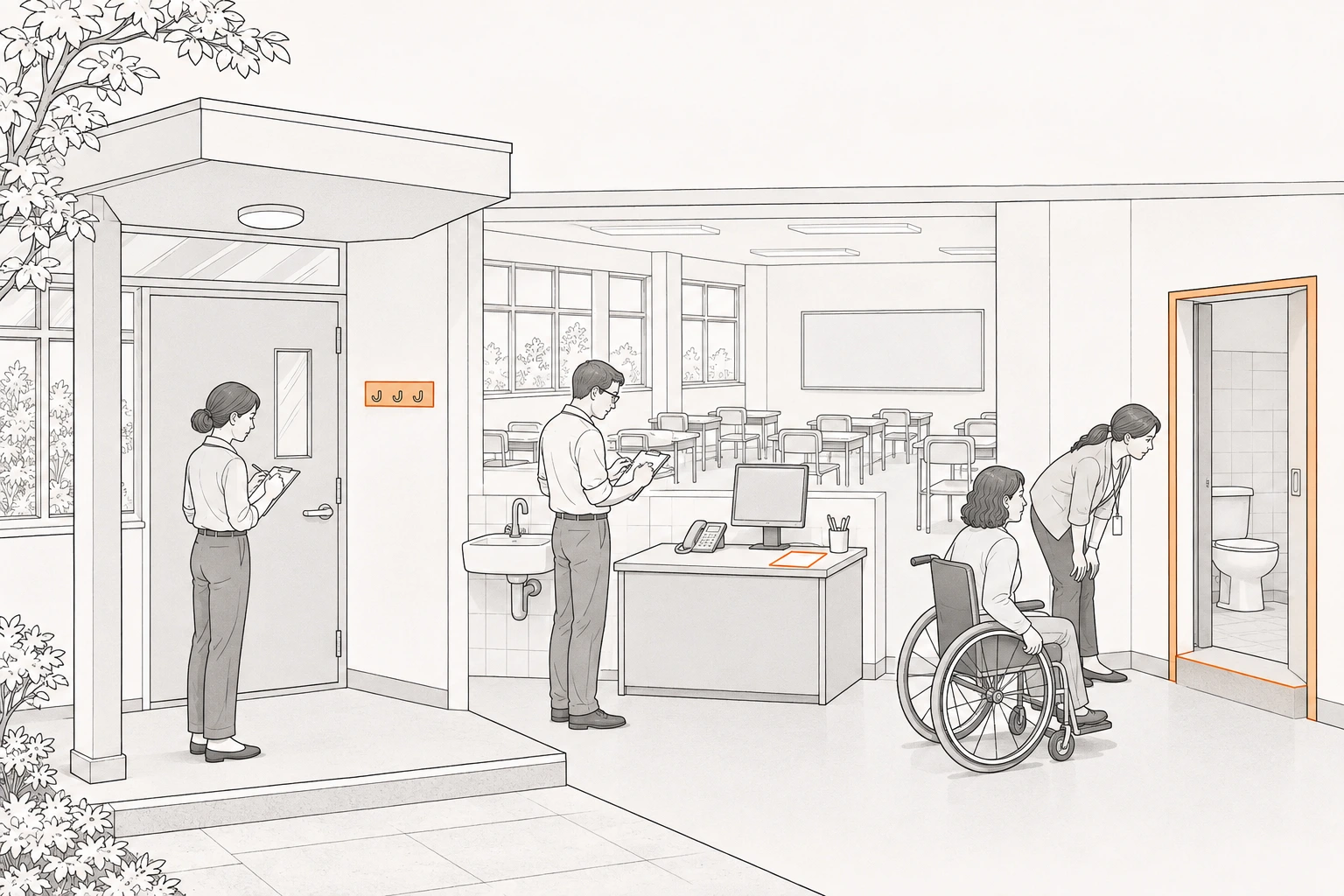
Figure 48. The building in the plan is not yet a ready reception point
[S] In the training example, access to the building, the operation of water and communications, and the ability to use the sanitary facility are separately checked. The name of the facility in the plan does not confirm the readiness to accept specific people.
An extraordinary check is triggered by a change: move, family composition, mobility, treatment, contact, key, equipment, road, supplier or authority. A plan proven yesterday may be partially incorrect today. Over the long horizon, repairs, replacement training, and business cycles are added; agricultural dependencies are considered by C19 and S10.
The result of the card is a map of actual capabilities, their limitations and assigned corrections. The wording “increase readiness” is not enough. Indicate the work, its owner and what he must show when re-inspected. The check itself takes place according to T01; The text change is propagated by T04.
T01 Teaching without real danger
Who uses it. Organizer of family, facility or municipal training. The leader determines the learning task, the observer records decisions, and a separate controller has the right to stop an unsafe action.
Where to start? Formulate one outcome that can be seen: confirmed reception, clear message, transferred responsibility or preserved service. Explain to the participants that everything remains only on paper.
When to delegate a task. After analysis - to the owners of the detected defects. In the event of a real incident, the activity is immediately stopped and a real order of assistance is applied.
Prepare an initial setting and several follow-up messages. One may turn out to be wrong, another may be late, and the third may require a change to a previously reasonable plan. The information must have a specific origin. The presenter’s answer “unknown” is acceptable; a response that silently creates the desired machine or specialist ruins the check.
Conduct the lesson at a table or at an agreed upon safe size. Do not disable vital systems, transfer hazardous materials, affect health, or spread alarm to bystanders. Real emergency numbers are not used to spoof a call. The loss of communication or specialist is specified as a condition.
The observer records decisions, reasons, performers, transmitted information and delays. He does not appreciate the beauty of performances and does not suggest the correct answer. Participants must delegate the work to a substitute at least once and continue without the selected dependency. Paper introductory notes allow you to conduct the exercise without an electronic service.
Stop the activity if there is a real danger, an erroneous training message is released, or the participant's condition worsens. If the teaching cannot be clearly separated from the incident, leave the discussion format. In debriefing, evaluate the early decision against the information available then. A late fact does not make a person obligated to know the future.
The training ends with a list of corrections with the owners and verification of the result. Repeat the area where the gap was detected; a full redo is needed when the change affects the entire system. The formal well-being of a fictional plot does not yet confirm real readiness.
T02 Is the local plan feasible?
Who uses it. The owner of the adapted plan and the inspector who did not create the area being inspected. The safety controller retains the right to stop actual unsafe activities.
Where to start? Select one task with a completed result. Ask the intended person responsible, without prompting from the author, to find the right card and explain the first action, the means available, and the limits of his authority.
When to delegate a task. Lack of resource to the function owner, lack of authority to the relevant organization, dispute over a defense mechanism to the competent research group. The editor corrects the unclear text, but does not confirm the unknown physics.
Trace the task from message to result. Transportation requires a person, a vehicle, a driver, a path, a recipient and the necessary assistance after arrival. For a file, the ability to find and open a valid copy. Checking one middle of the chain leaves its edges unnoticed.
Give the participant a message that is contrary to the plan: the appointment has been rescheduled, the list is invalid, the stock is unavailable. Then conditionally eliminate the common dependency of the primary option and the fallback. Write down what actually survived. The new name of the old dependency is not considered a fallback.
Make a transfer to the deputy at P02. Check for a limitation or promise that is easy to lose in a brief report; Do not tell the substitute the correct answer in advance. Evaluate the result according to the initial criterion. Prompt departure without confirmed reception does not become a completed transportation.
Write down reading difficulties separately. If the person responsible does not find the card using a common word, does not understand the action verb, or requires knowledge of the internal structure of the book, correct the navigation and wording. But if he understands everything and doesn’t have the key, that’s a different task.
Without communication, a prepared local kit is used. The need to download the form when the network fails is recorded as a gap. In the event of a real incident, a drill alarm spreading beyond its intended scope, or unsafe operation, the inspection is stopped. The result has a limited formulation: “the task is feasible under such conditions” or a list of obstacles. The promise of readiness for everything does not follow from this procedure.
T03 Parse the event and save the original data
Who uses it. The designated review leader, event participants, and affected feature owners. The card complements mandatory investigative procedures while preserving their authority and access rules.
Where to start? Keep the original notes separate from later explanations. Restore the sequence: what was known, what decision was made, what happened, and what new fact changed the assessment.
When to delegate a task. Continued danger - to the responding group immediately; special regime materials - to the competent services; corrections - to specific owners via T04. Completion of the report does not stop assistance to the victims.
Record the time of the event with source and uncertainty. If there were no agreed upon clocks, a reliable sequence would suffice. A later entry does not automatically benefit. When communication is restored, local versions are verified, preserving discrepancies.
Compare the task assigned, the action performed, and the outcome for the people. “Everything is done according to plan” must be revealed before the observed action. Find out where the gap occurred: there was no data, the message did not arrive, the person responsible is overloaded, the resource is incompatible, or the authority is unclear. Telling people to “be more careful” will not fix a system that continues to create the same error.
Distinguish between the quality of the decision and the luck of the outcome. A bad result may occur after an informed choice with incomplete information. A good result can hide an unreasonable risk. Also check whether apparent success is due to an recordkeeping change, surveillance failure, or loss of communication. Save significant disagreement with information that can resolve it.
Select a limited set of fixes. Each requires an owner, a resource and a demonstrated result. If the problem occurs during a transfer between organizations, you need to check the entire transfer. Separately define assistance to victims and correction of public information; the unknown final cause does not negate the damage suffered.
The debriefing must not destroy materials, create new hazards, or disclose data without justification. When a new significant fact occurs, the conclusion is updated, maintaining the previous version. The result is an explained sequence, confirmed deficiencies, open questions and accepted commitments to correct.
T04 Change the instructions for those who act on them
Who uses it. Owner of the local procedure and representatives of the affected functions. The author of the edit does not solely confirm its correctness beyond the scope of his/her competence.
Where to start? Write down the reason for the change, the actions affected, and what to do for people who have already started following the previous command. For a dangerous error, first communicate a clear temporary restriction and the next available action.
When to delegate a task. To performers and receiving parties after a substantive check. A change is considered to be introduced in its scope when the current version, transition tasks, and groups that have not yet acknowledged receipt are known.
Distinguish between correcting a fact, clarifying words, and changing a procedure. They require different amounts of verification. If the pick-up point changes, check the associated addresses, routes, messages and transportation along the way. Editing one line of the main file is not enough.
The new formulation is tested on a common and a difficult case. The specialist evaluates subject correctness, the future person responsible evaluates understandability and feasibility. A procedure that requires a missing means does not become operational from the approval of its text. Local editing retains its territory and range of tasks.
Specify when the version will take effect and the order of actions already started. Promote the change to the affected roles, mark unacknowledged receipt, and use the available secondary method. Mark old working copies as no longer valid, keeping the archive. At the work point it should be clear which version to act on now.
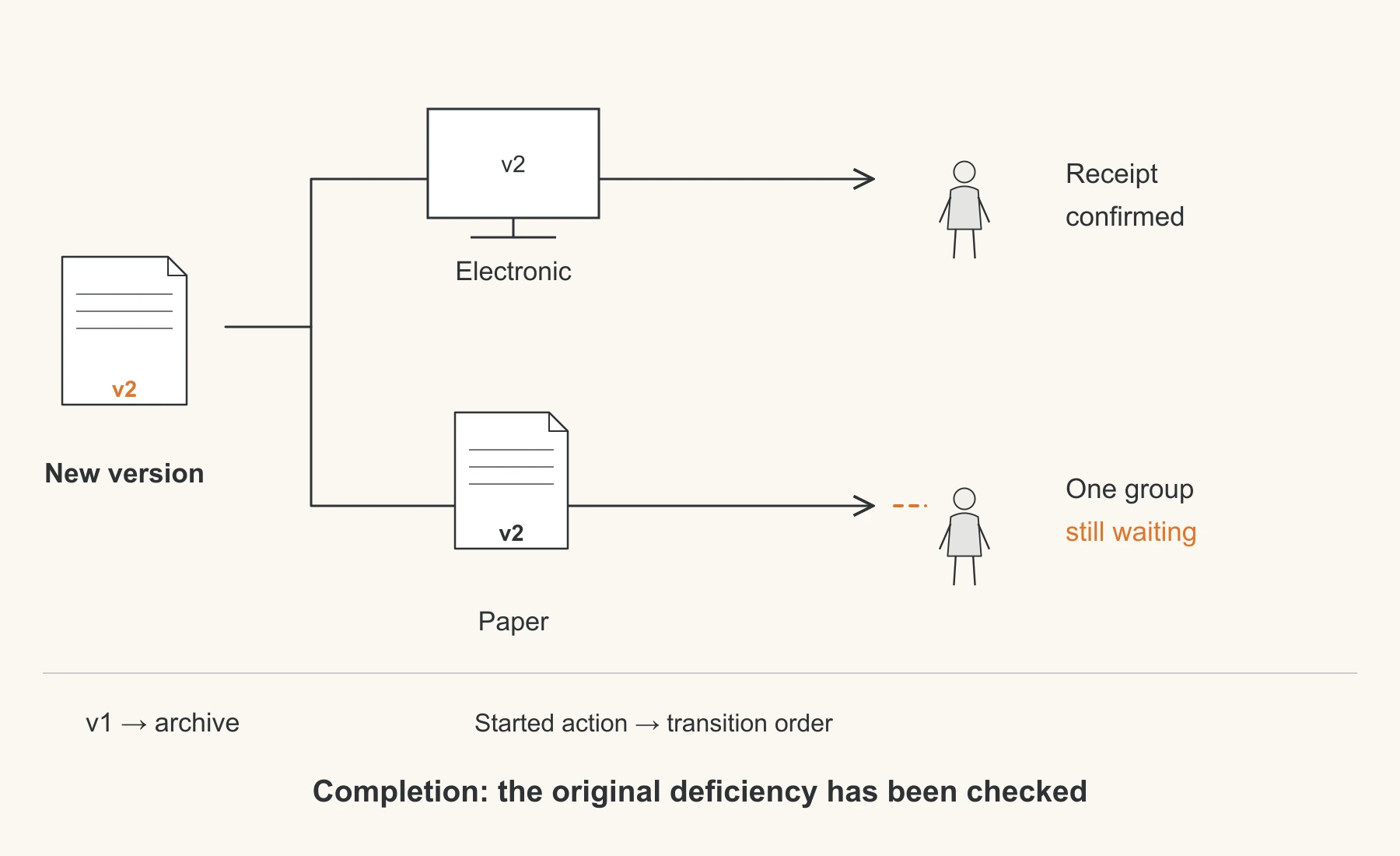
Figure 49. The new version is valid after transmission to the performers
[P] Changes to instructions include delivery of the current version, revocation of old working copies, and transition procedures for activities already in progress. The history is archived and the original flaw is rechecked.
Without communication, the local group maintains a numbered record of temporary decisions within the scope of authority. After the exchange is restored, it transmits both the latest version and the intermediate ones. Verification of the origin of an unknown “update” is necessary before accepting it as an order.
After the first use, check the original defect. If an edit is in the wrong scope, creates dangerous ambiguity, or deprives people of a feature they want, retract it with clear nearest order. A general “do nothing” can leave a dangerous task without help. The correction ends with the changed action of people, not the saved file.
Eight short exercises
These blanks [S] allow you to select one task for a family or work activity. They don't require the entire crisis to be played out. The facilitator determines information and restrictions in advance, and after the first decision gives the specified change.
Initial situation | Next introductory | What to check |
The family receives a request to gather at an unknown object | The main telephone channel is overloaded, the origin of the message is not confirmed | Distinction between content and powers, accessible communication, refusal to approach without justification |
The settlement prepared the move | The main path is no longer confirmed, the recipient is still available | New choice of path and reception taking into account escort |
Several people felt unwell after the unusual event | Possible normal environmental accident known, diagnosis not established | Assistance based on condition, preservation of information, no unauthorized handling of materials |
Giant object confirmed, no damage identified yet | In the neighboring area, people begin to spontaneously leave | Proportionate preparedness and mitigation of secondary risks without fictitious knowledge of intent |
Three instruments show incompatible positions | The two share a common synchronization | Data provenance and confidence revision |
External fencing was considered protection | According to the condition, the local effect actually arose inside | Internal detection, neighboring zone suitability, function retention |
Message offers help | The sender requires the connection of an unknown device | Separation of negotiations and technical access |
The visible source has disappeared | Observation has been partially lost, people are still waiting for help | Distinguishing between the disappearance of a signal, the end of harm and the fulfillment of obligations |
For each exercise, one decision F02 and a short transfer F03 are sufficient. If participants cannot name the price of an action, add the question: “Who is left without a result and what will happen to him next?” It often reveals the problem hidden behind the general word "stabilization."
Extended Exercise: Northern Hub
FEMA's Homeland Security Exercise and Evaluation Program (HSEEP) links exercise preparation, execution, evaluation, and improvement plans. This book makes exactly this connection. The plot, data and criteria below are developed by the authors; they are not an official FEMA script. [O; NR1]
Conditions and roles
The entire script has status [S]. The area includes a residential area, a hospital, a research site, a service facility and two placement points - A and B. All actions are played out on paper. The unusual source is specified by the condition, but its origin and intentions are unknown to the participants. The supervisor, civilian coordinator, hospital representative, investigator, site representative, and alert officer make decisions; a separate observer takes notes. In a small group, roles can be combined while maintaining independence of observation.
The original resource sheet contains the following data. Twelve residents require accommodation: four requiring accessible accommodation, four accompanying them and four others. A confirmed twelve places, of which four meet the specified need. B has confirmed six regular locations and has not yet checked the availability of the others. There are two conditional cars with six seats; both are available and suitable for the specified group composition. There is a suitable place for short-term waiting in the quarter, which does not become a place for long-term residence.
These are exercise restrictions, not transportation or accommodation standards. You cannot add a third car or a new building without an introductory lead. If the question is not defined, it is written as unknown and shows what decision depends on the answer. The training pace does not set standards for real response.
Seven changes of scenery
The first change is that there are two events nearby. Two posts report a luminous object. Some equipment in the hospital stops working; the coordinator advises that the available staff emergency procedure maintains the necessary assistance if assigned personnel immediately implement it. The connection between the failure and the object has not been established.
Help is assigned to an observed failure; unusual observations are checked separately. Two questions remain in the journal. The mistake is to wait for the object to be identified or to declare the entire area affected by one coincidence. First outcome: care continued, original records were transferred to the investigator, and the public was informed of the specific function affected.
The second change is twelve messages. Ten repeat a single record. Two come from the same processing operation. An independent observer is not yet available. These are not twelve independent confirmations. If that number has already been announced publicly, it is corrected, with an explanation of what has changed. Assistance continues on its own grounds.
The third change - the reception turned out to be different. The first car has already been sent to A: there are two people in it who need accessibility, two accompanying people and two others. The second one with the same composition has not yet been sent. A reports: eight usual places are suitable, and four available ones have temporarily lost the necessary function. B, after verification, confirms four available places in addition to the previous six. Communication with both machines and points works; further movement requires confirmation from the dispatcher.
The allocation is possible, but the previous instruction is wrong. B accepts eight people: four who need accessible accommodation and four companions, occupying four accessible places and four of its six ordinary places. A accepts the other four in ordinary places. Pairs are not separated to obtain a convenient number. The dispatcher agrees with the drivers and receiving staff on a feasible sequence of two receiving stops for each vehicle; no new departure occurs before confirmation. The first vehicle receives a revised route, rather than an order to stop anywhere. The cost is additional travel and delay; an unknown duration cannot be hidden by promising that ‘everything will be quick.’ After arrival, the locations of all twelve are confirmed, but one request for assistance at A remains open in the log.
The fourth change is that the coordinator is unavailable. Incompatible commands arrive, one refers to the old card. A deputy has been appointed in the local plan and the log is available. He accepts tasks for P02 and checks the origin of orders. Necessary local work continues. The loss of the center does not give arbitrary powers and does not cancel the established replacement.
The fifth change is the effect inside. A similar effect was recorded in a previously suitable room. The condition limits it to this room; the source does not gain the ability to appear everywhere. The adjacent function is confirmed for now. The team checks the local condition, changes the barrier output area, and arranges for available assistance. Strengthening the external fence does not solve the internal problem in itself.
The sixth change is the contact suggestion. A repeated message promises help when connecting an unknown device. The sender and the meaning of the condition are not established. The Contact Group receives a separate mandate and offers limited exchange without technical access. Protection and assistance do not come under the control of the interlocutor on the basis of his promise. Lack of agreement does not prove hostility.
Seventh change - the light disappeared. One observation channel is not working. In A, assistance to one arrival has not yet been confirmed; return to the quarter is not estimated. For a general shutdown, the disappearance of the source is not enough. The team transfers commitments to the new shift, reviews the functions that are returned, and communicates which constraints remain and why.
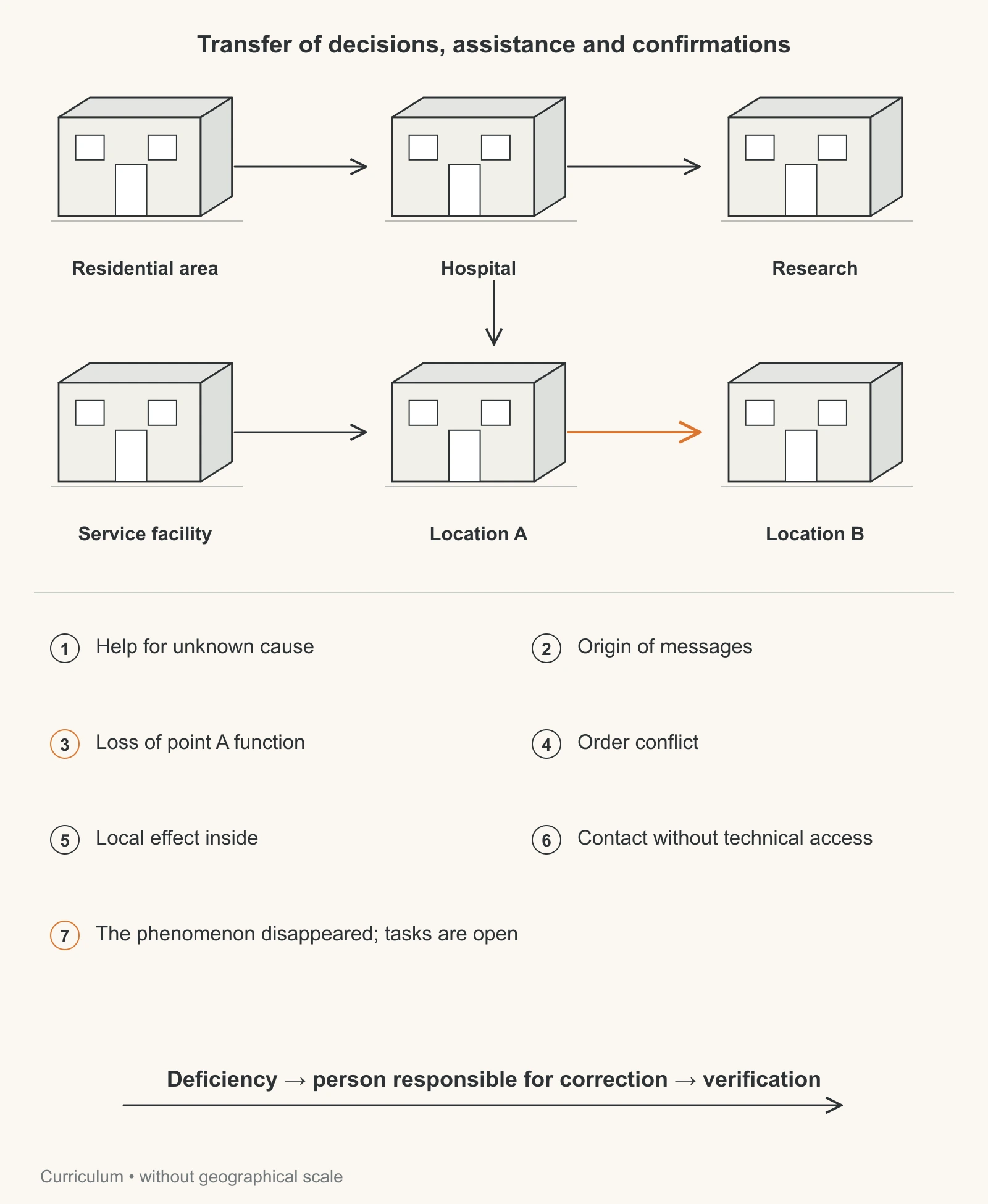
Figure 50. Northern Hub: Map of Resolutions and Unfinished Commitments
[S] The exercise overview map links locations and commitment transfers without specifying physical routes. The result of the analysis is a specific correction with the owner and verification of the result.
Debriefing with observable results
The observer makes a sequence of decisions. In a resource dispute, he asks what price the team accepted explicitly and what price it passed on to people quietly. In scientific terms, what information was considered independent. When changing - who actually accepted the open commitment.
The correction is formulated in detail: before sending, the recipient confirms the required service for the group; when changing the address, the dispatcher separately communicates with the transport on the way. The re-inspection covers this transition. If the change affects multiple functions, check related areas with a clear reason for the expansion.
Success means that the conditional tasks are solved or communicated with visible constraints. It does not demonstrate protection against actual unknown exposure. But the gap between the announced location and available help can be corrected before the incident.
Five Cases with Follow-up
The following analyzes [S] can be read as complete stories of decisions or given to participants in stages. They keep questions open-ended, but show actions leading to a specific outcome. In each case, there is a limited outcome: what was accomplished, at what cost, and what remains for the next performers.
Case 1. Item at the repair site
Three observations
Six workers notice an unfamiliar object near a utility building. In certain lighting it appears glowing. At the same time, they discuss communication interruptions, and one reports a feeling of warmth. There is a duty officer on site, an engineer, routine emergency communications and suitable off-site premises. Dedicated team available on a delayed basis; The locals do not have the means to work with unknown material.
The duty officer stops the unnecessary approach. The person is provided with accessible medical care depending on his condition. The rest are taken into account, the existing photograph is saved without the requirement to come closer. Three lines remain in F01: subject, communication failure, human complaint. The phrase "the item heats people and suppresses the network" is recorded as a version.
Two decisive actions are proposed: send everyone to the basement or take the object outside the settlement. The first relies on the unproven versatility of concrete, the second creates a new contact with an unknown object. The duty officer selects the available premises and the boundaries of the business area. The price is the suspended operation of the site, which cannot be promised to resume at the appointed time without new information.
log changes explanation
The engineer compares the available records. The service log contains a communication failure in 16:10; the first photograph of the item was taken at approximately 18:00; two outage complaints relate to 16:18 and 16:26. A photograph's timing inaccuracy of a few minutes does not change the sequence. Three “non-functional channels” on the screen turn out to be displays of one faulty node.
The evidence refutes the claim that the first failure began after people noticed the object. They do not establish the time of appearance of the object itself, its properties or the reason for the person’s sensations. The engineer confirms the known fault to the best of his ability. The manager allows its elimination in the usual manner, maintaining a separate restriction on the business area.
The alternative - waiting for a specialized team before any work in the settlement - would delay the restoration of a known service without further justification. The chosen path requires an accurate message: the reason for this failure has been established; The item continues to be checked. The employee's medical details do not become part of the overall summary.
Recovery continues after repairs
After the repair, users confirm the availability of communication. The arriving group evaluates the recording of the glow: the change in brightness is related to the observation conditions and does not confirm the object’s own radiation. Further appeal remains with the competent organization. The restricted output does not become a security declaration.
Another delay is discovered: a neighboring facility continues the old paper command to “not accept people.” The network is working, but the service is not available to humans. Based on T04, a specific command is recalled, the receipt of the correction is checked and the reception is resumed. People who haven't received help in the interim remain a separate issue.
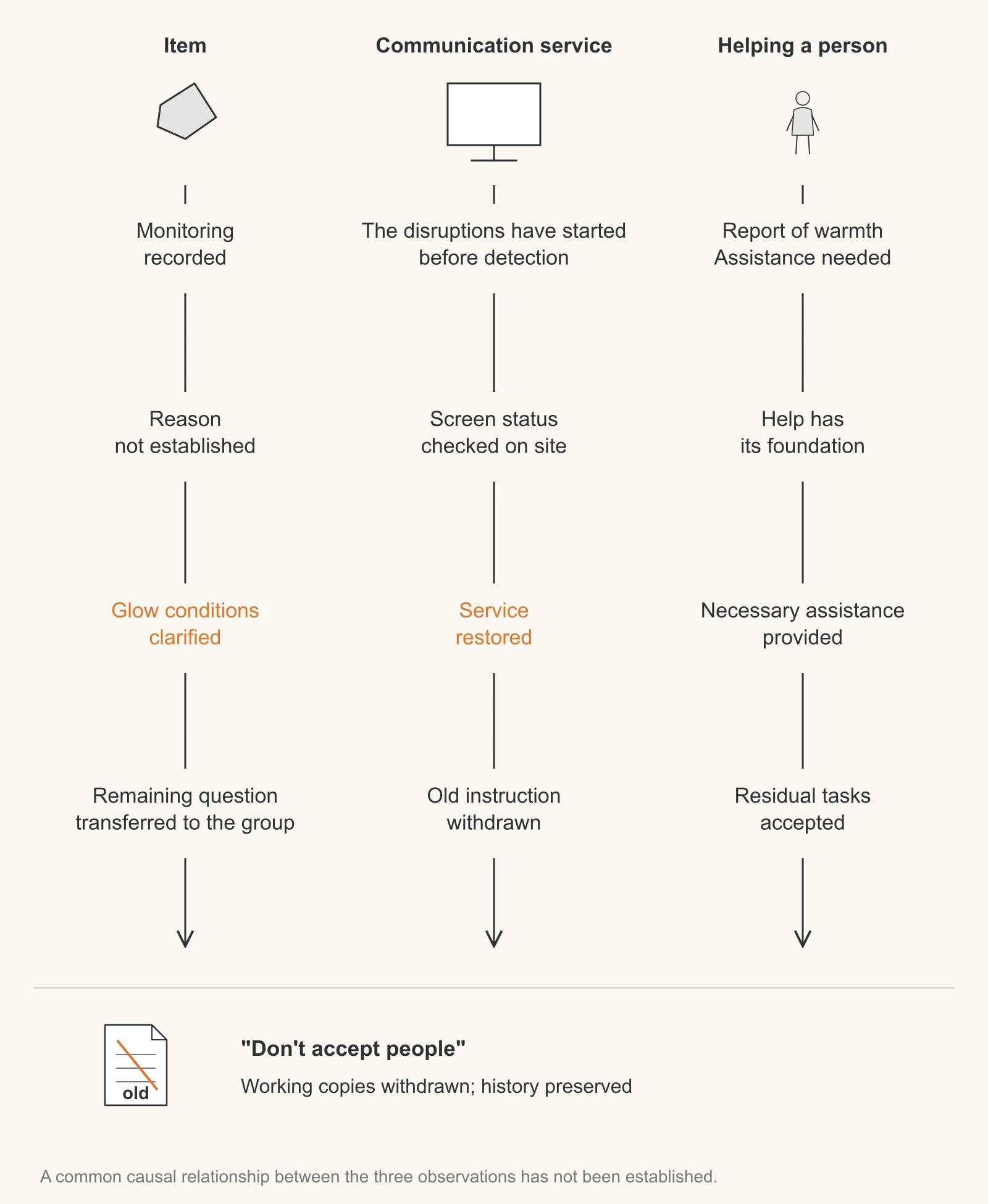
Figure 51. Case 1: three observations and three independent tasks
[S] Subject matter, communication failure and assistance to a person retain independent grounds for verification. Restoring the service does not close the issue about the item and does not replace the recall of the erroneous command.
The result consists of several results. People are accounted for, help is provided, a known failure is resolved, the erroneous command is no longer valid. A question about an item has an owner and a next step. The entire settlement is not being held captive by one open question. New observed harm, if it arises, will receive its own response basis.
During the debriefing, ask: what evidence changed the explanation, what action preserved the basis, and who confirmed the correction? The responses show what the system has learned. The absence of a dramatic final explanation does not prevent the completion of specific assistance.
Case 2. Three Settlements and One Log
A mistake similar to joining forces
Lesnoye, Rechnoye and Kamennoye use a common control room. After reports of the glow, three violations occur: the delivery does not arrive, the shipment receives a canceled address, and the family sees a note indicating the arrival of a person whom the recipient has not met. Six departmental accounts show similar statuses. The manager considers them as independent confirmation of a general failure and directs people to the district center marked as active.
The first car with six passengers left; two require accessible accommodation. Issuance in Lesnoye has been suspended, although the premises and employees are available. Four people who cannot come themselves were left without delivery. The coordinator responds to relatives, changes addresses and edits lists. He starts re-reading the line and skipping requests.
An error occurred before departure: the status of the center was taken as confirmation of free seats and the necessary assistance. The center is indeed operational, but can only accommodate four additional people in its regular premises. It did not confirm the two required available places. It is no longer possible to reduce what is happening to a “data error”: people are already on their way.
Independence turns out to be imaginary
The center's duty officer reports opportunities via a known number. The driver confirms the passenger list. An employee of Rechnoye shows a paper correction of the address made in the morning. The examiner determines that all six entries use the same log; some lines repeat an unconfirmed event. The reason for the log status is not yet known. The glow is stored as an independent observation.
The deputy takes over the coordination of C16 and P02: transportation, stopped delivery, promises to families and delivery. The former coordinator is provided with rest and separate contact with his family; his phone ceases to be the only center of work.
New departures are stopped according to the plan that has lost its basis. For the first car, the position and accessible path are clarified. According to the conditions of the exercise, Rechnoye confirms two suitable places with the help of the center - four usual ones; The dispatcher confirms the possibility of distribution in the current situation. This information appears explicitly, so the decision doesn't create resources out of thin air. The additional delay and complexity of separate reception is the cost of correction. Each party then confirms actual arrival.
Local jobs and remaining shortages
Lesnoye resumes issuance and delivery to four people. Rechnoye maintains care and verifies transportation with recipients. In Kamennoye there are 18 of suitable and free sets left, the current conditional issue requires 12 per cycle. The promised 24 have not been received. After the next cycle there will be six left, which is not enough for the next one.
Neighbors can confirm the transfer of only six sets, and it has yet to take place. The balance is not increased before acceptance. If six sets arrive, they will be enough, along with the remainder, for the next full cycle; further replenishment will remain unconfirmed. The manager stops optional use, submits a request for a confirmed replenishment of the next cycles and discusses the available change to the service with its owners. The script doesn't promise that the shortage will go away; it requires identifying whom the shortage will affect and in which cycle.
The family of a person with an incorrect mark receives one communications officer at C17. The carrier confirms the change of recipient, the new recipient confirms the placement. Communication with family is organized taking into account the person’s consent. The history of the error is preserved; personal details are not included in the public analysis.
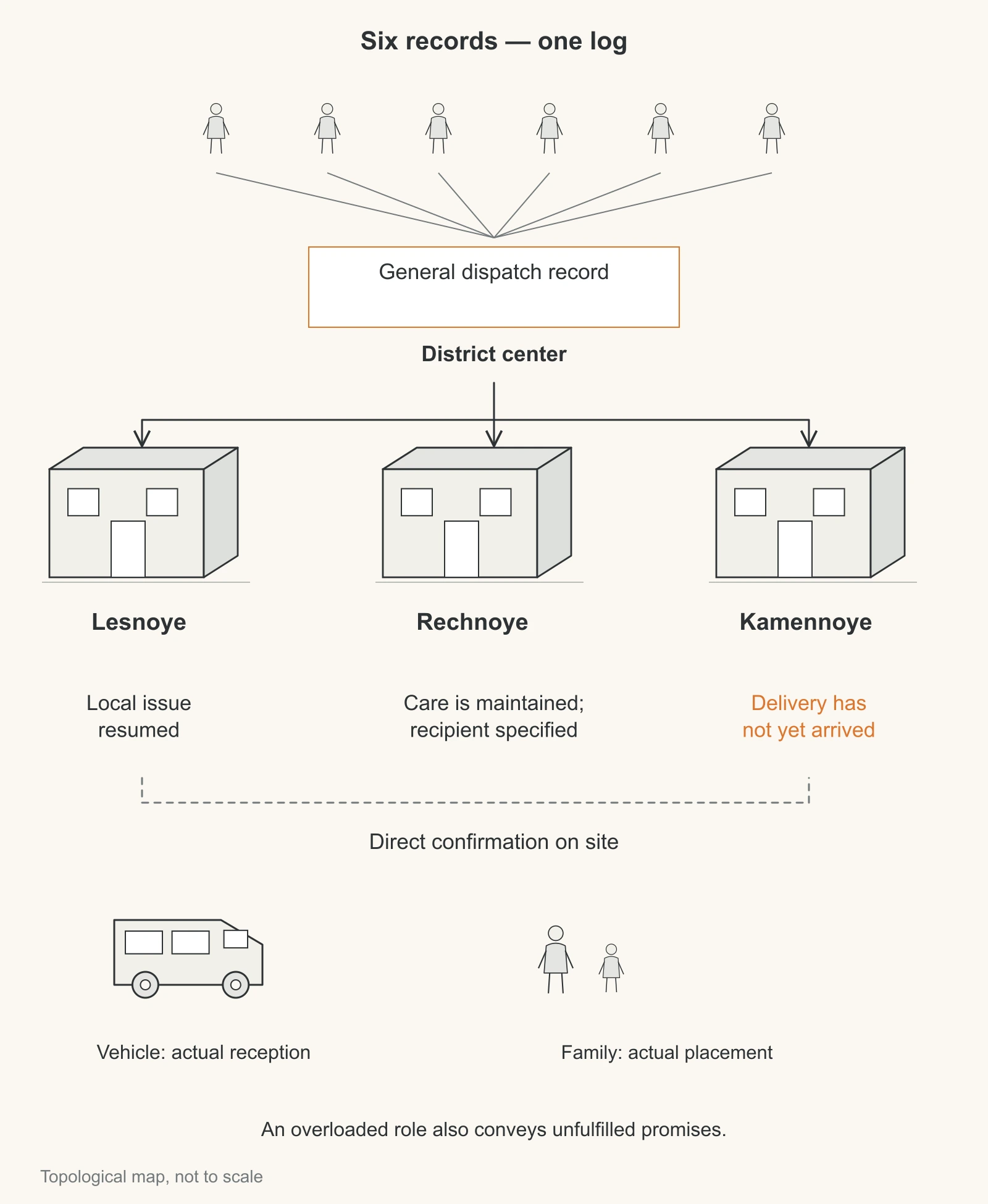
Figure 52. Case 2: three settlements, one source of statuses
[S] Six accounts can play one shared log. Local capabilities and completion of each transfer are confirmed locally; delivery not received remains open.
The interim procedure uses local records and direct evidence of significant transfers. The general application is returned in a limited manner, comparing statuses with independent information in the field. A beautiful screen does not close the task. Remaining supply of Kamennoye remains open until received or agreed upon replacement; restoring coordination does not eliminate the entire deficit.
The debriefing preserves the original decision and the information available at the time. Corrections address the origin of status reports, confirmation of reception, handover of an overloaded role, and local work without a shared log. The shared service is useful again, but its failure no longer cancels everything the settlements can do for themselves.
Case 3. Source changes behavior
Limited ability unknown to participants
Hidden condition of the exercise: the source observes some external actions of people and is able to disrupt one type of exchange at one of four help points at a time. It does not read minds, does not control all systems, and does not gain new abilities as the lesson progresses. Individual failure of human equipment is also predetermined. Participants do not know the reasons at first; the presenter presents observations for limited conclusions.
Each point has a basic exchange of applications and a prepared local transfer method. The latter saves only the necessary messages and takes up additional time for workers. The full normal volume for it is not available. The spare mode helps, but is not a free replacement.
A success that one would like to declare common
In the first episode, the northern point loses its main exchange, and the eastern one shows a similar failure. Western and southern are working. Operators switch to the prepared order, the necessary applications are accepted again. A proposal arises to declare the vulnerability found and transfer the entire area to this mode.
The examiner separates the result and the explanation. Transmission restored; the cause has not yet been fully established; employees have postponed some of their regular work. The simultaneous transition of all four points would take two additional coordinators, which are not present in the exercise. The headquarters maintains a confirmed result in two places, without promising general protection.
After the decision, a table is displayed. Local confirmations were received by different employees, not from the same summary screen.
Episode | Unusual object | Basic exchange | Additional fact |
1 | Observed near the northern point | Failure in the north and east | The cause of the eastern failure has not yet been verified |
2 | After a visible change in the work of the northern point, it is observed at the western | The north is working, the west is losing traffic, the east is still faulty | Independent confirmation from the south: the exchange is working |
3 | Remains with the Western | Western failure continues | In the east, a failure of the human node has been established; exchange temporarily restored, final repairs not completed |
The data strengthen the limited source behavior change hypothesis and dissociate the eastern fault from it. They do not prove that any future disruption is caused by a single intelligent adversary. The disappearance of a signal during an unverified observation also does not count as a success.
Change the target and check the interlocutor
According to G13, the goal is clarified: to maintain the necessary exchange, not to exhaust people on backup service, and to obtain a verifiable pause in a specific impact. The repair of the eastern node has its own contractor. The main systems in other places continue to work where the result is confirmed.
The contact group receives a repeated message believed to be related to the source. The claim of control is not to be taken for granted. As part of the fictitious exchange, verification without access to human systems is proposed: the sender indicates at what point the already observed violation will stop, the local operator verifies the result independently. The western point has been named. After the message, the exchange there is restored; the states of the north and south do not change. Later repetition of the limited exchange under given conditions gives a consistent result.
This supports the conclusion that the sender is related to the tested part of the influences. His power over all objects, the purpose of his activities, and his ability to fulfill any promise are not established. The presenter does not replace observations with the ready-made phrase “intention has been proven.”
Pause and remaining breakdown
The parties agree on a pause in the designated type of impact on the specified points. The mandate of a human group is limited by its decisions; it does not promise the behavior of all residents and organizations. Connecting an unknown device is not required. Civilian assistance continues regardless of negotiations.
During the pause, the impact in the declared area is not observed with maintained control, but the eastern point again reports the unavailability of the service. The inspection reveals an unfinished human repair task. To declare this automatically a violation of the agreement would be a mistake. It is also a mistake to close people’s requests with the words “the source is no longer valid.”
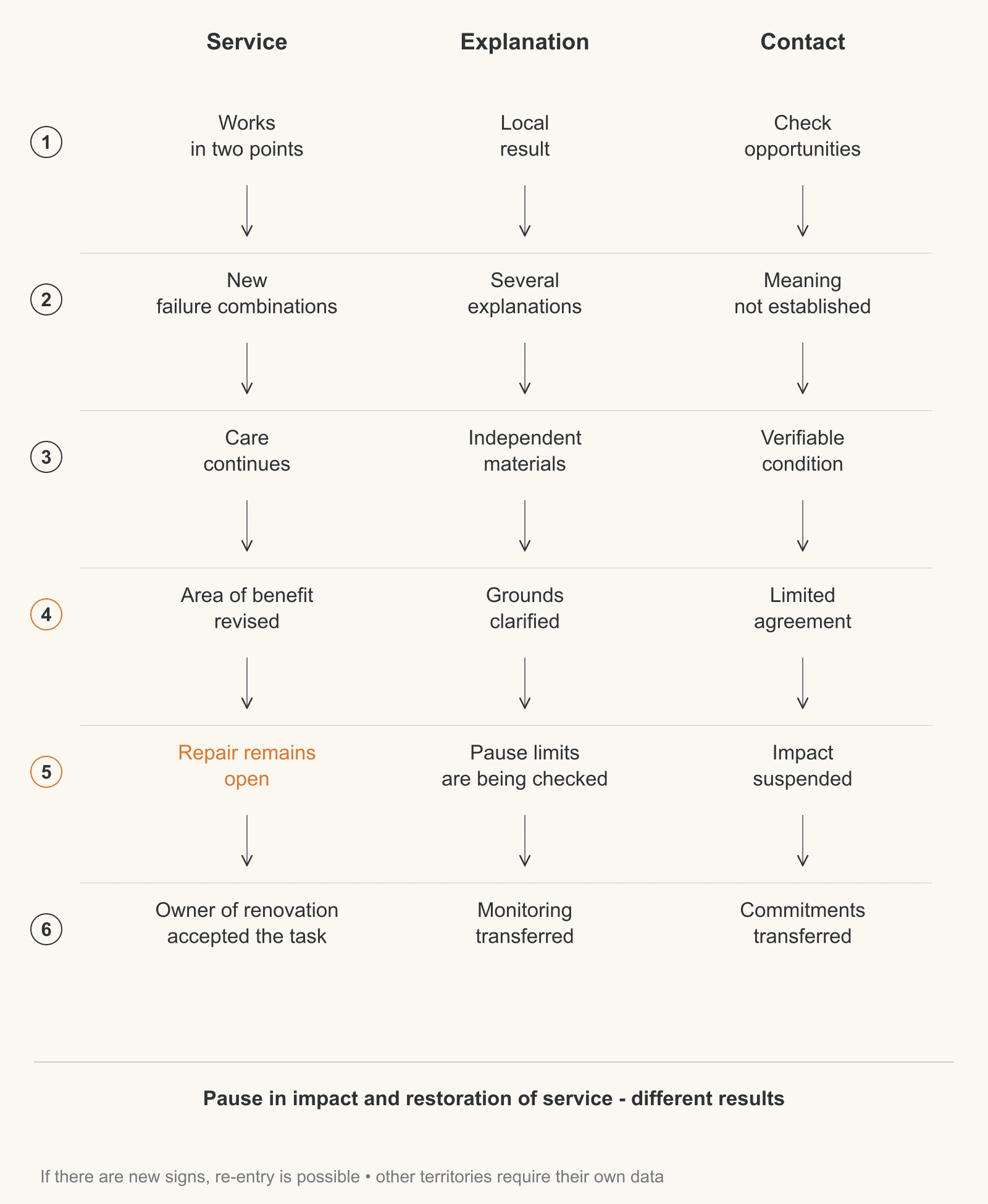
Figure 53. Case 3: local success, revision and limited pause
[S] Local success is being reviewed following new independent information. Limited pause in exposure and repair of a damaged human component have different reasons and owners.
By G12 the pause area, observation and actual service are checked. Various performers accept repair, assistance, control and contact. The result is limited: important exchanges remain, some impact is suspended, intentions and opportunities are only partially established. The cost is deferred routine services, reserve load, and continued monitoring. These expenses are included in the following plan.
During the analysis, you need to explain what changed the strategy, which statement was withdrawn and which remained true. Partial success remains valuable as long as its limits are understood.
Case 4. The Passage Leads to the Wrong Place
Unusual Environment Rules
In this model, areas A, B and C remain distinguishable and habitable. An unusual property actually operates within the exercise: the connection through the A-B transition changes, but the separate A-B path retains its confirmed accessibility. The groups know the order of local events, but there is no generally agreed upon time scale. People are not used to explore the passage; all special observations are issued as training data.
There are twelve people in A. One needs an escort; the attendant is also included at twelve. B can accept four more and provide the specified assistance. Conditions As long as they are suitable, there is no need to move everyone immediately. Local contact and assigned supervisor are available.
First message: Normal transition does not match expected output. B uses the old circuit with the connection unchanged. The groups' clocks give conflicting marks. According to S02, S08 and models 2–3 S13, the manager separates the state of people, the availability of the path and the discrepancy of time.
Set aside the familiar map
The offer to send an employee to do a “quick check” turns the person into a means of exploring a controversial environment and may leave another unaccompanied. The manager limits the unnecessary use of A-B. The remaining connections are declared neither valid forever nor lost without data.
The facilitator provides predetermined results of independent learning observations. In the first local sequence, the control object, placed by condition at input A, is registered at the designated output B. After a local change with the same configuration, it is registered at another designated output; a separate observer confirms the registration. In the second sequence, the connection again corresponds to the previous diagram. The means exist only as a condition and are not offered as a real method of exploring an unknown passage. The records confirm the specified change in connection, but not the restructuring of the entire object.
At the same time, a common error was detected: B received the previous version of the map. Correcting it will eliminate some of the inconsistencies, but will not explain the unusual change. In the exercise, both reasons are real; participants need to keep them together.
Transfer without total time
Limited movement has been selected: the person in need and the accompanying person move to B along a confirmed path. The recipient accepts the request “A-7”, confirms the readiness of “B-4”, then separately reports the arrival of both. The entries have different meanings and refer to each other. One “done” mark will not replace the entire transmission.
Ten people remain in A. In B, two of the four initially available places are occupied; two more remain vacant. This is the limit of the chosen decision. Work requiring A-B was postponed; they cannot be declared restored. Changing the state of A will require a new decision about people and reception, and not a mechanical repetition of the first transmission.
An order comes to “use the usual transition” with a formally later time of someone else’s clock. By reference to the previous map and local journal B, it is established that it was compiled before receiving information about the change. The manager revokes this particular version, and the recipients confirm the current procedure. The logs preserve local sequences: adjusting the minutes would erase the evidence of what caused the error.
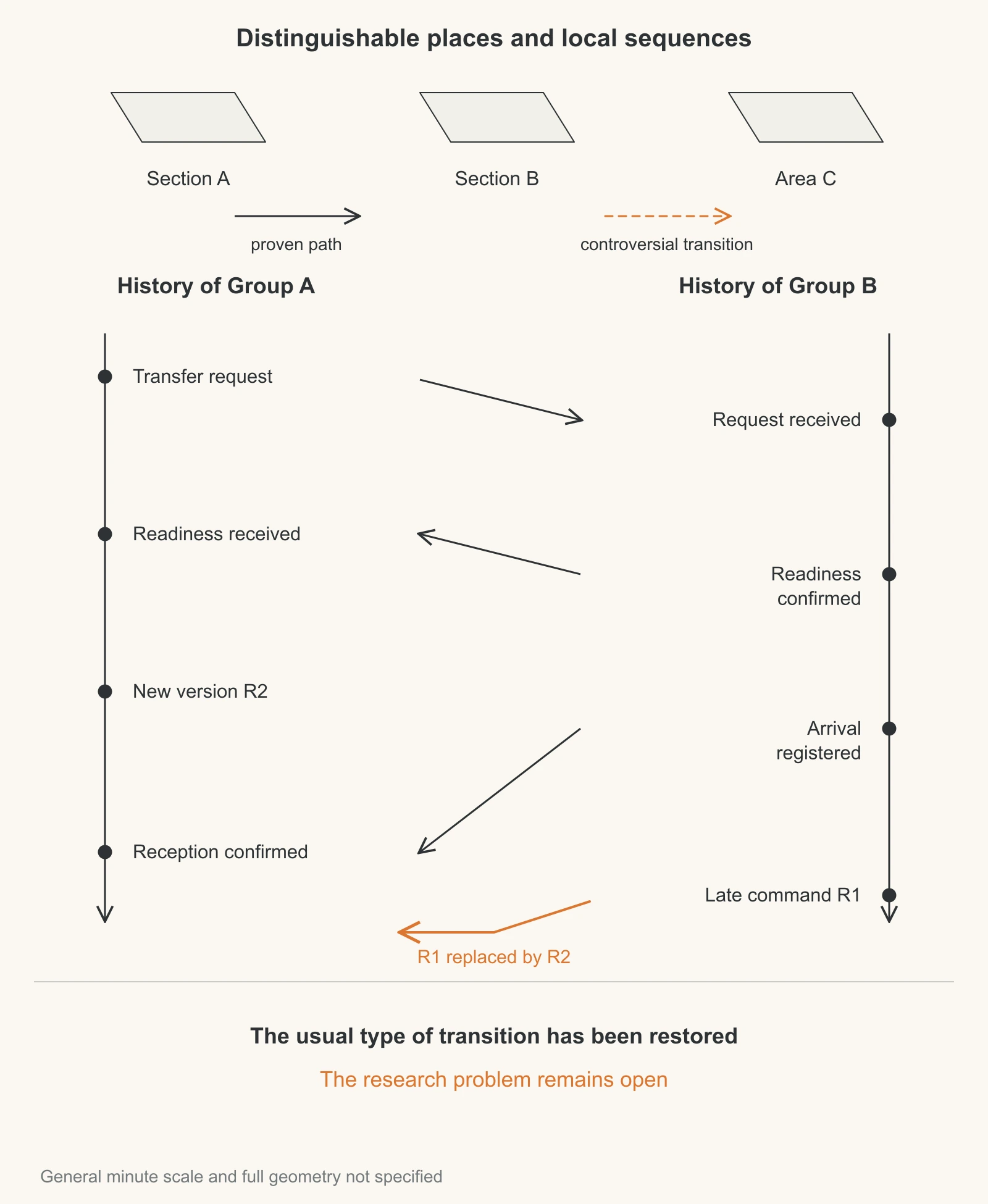
Figure 54. Case 4: transmission under test without common time scale
[S] Local acknowledgments maintain the distinction between request, readiness, and actual arrival without a common time scale. The outdated command is recalled by reason and version, and the scientific question is transferred separately.
When the transition looks normal again, this is a reason for evaluation rather than an automatic return to the previous regime. The condition does not provide any means of proving suitability for continued use. Help continues along A-B; the resource of this option is reviewed separately. Bypass may become unusable due to human reasons and without a new unusual episode.
Result: people are accounted for, the transfer has taken place, the map distinguishes between verified and controversial connections, the old instruction has been withdrawn. The scientific question is open. If even stable local designations, consistency and the ability to distinguish messages are removed, the old method of confirmation will lose its basis. This is the decision boundary that must be seen before transferring to a stronger assumption.
Case 5. Several years near the source
The first night can't last for years
In a fictional region, an area of unusual influence persists for several years. Manifestations are associated with certain places and conditions, the cause is unknown. Some of the territory is suitable for life with the specified restrictions, while some requires special access. There is no proven way to eliminate the source. The timing sets the plot, not the safety standard.
The initial assistance provided temporary accommodation and services. Of forty families, twelve cannot yet return to their previous circumstances. Eight receive assistance through a local arrangement; four depend on a separate transport contract. It expires during the next school term; neither permanent funding nor a new provider has been confirmed. An overall report that "all 40 families are currently provided for" conceals the future loss of a service for four of them.
It is proposed to maintain the entire emergency order until the source is fully explained. The seemingly cautious decision ties housing, work, education and services to an event with no known time frame. Scientific uncertainty begins to replace decisions about people's lives.
Renewal price and valid options
Residents report that some of the restrictions are no longer related to the observed impact, and temporary transportation interferes with work and school plans. For G11, each measure is considered separately. The source is not declared safe; cancel the lost basis and retain the possibility of response.
Sustainable services are being prepared according to G16. For four families, the scenario gives two options. You can continue to stay nearby by confirming available transportation and services for the new period. You can plan to change your permanent place of residence with confirmed housing, assistance, education and means of subsistence in the prescribed manner. There is no free resource for both paths for everyone at the same time. A general slogan will not determine the suitability of an option for an individual family.
After accessible discussions, two families choose a confirmed option of living nearby, two choose prepared relocation. Conditions and consents are considered separately, without the assumption that the majority chooses for all. Previous assistance continues until the new decision is actually available. The price is the costs and time for different paths, as well as the loss of the previous way of life. Changing your address does not erase these losses.
People and means change
In the next period, a specialist who remembers the reasons for canceling the old measure is not available. His deputy sees the final file and suggests returning the restriction “just in case.” The archive preserves the foundations and revisions. The new employee reconstructs the meaning and then shows how he will apply the order to the new input. Reading a signature is not a substitute for transferring a skill.
The provider stops servicing a common component of the service. Two backup devices depend on it. Formally there is a reserve, the previous support is lost. By F10 the function owner checks replacement, maintenance and training. Before confirmation, he reduces the promised volume and saves the request for the missing assistance. The plan text does not renew the supplier's contract.
New local episode
A violation occurs near the previous boundary. Some leaders propose returning the original regime to the entire region. The check shows different states: in one place the impact is observed, in the next place the functions are confirmed, in the third one control channel is unavailable. A single map color would hide the differences.
Run local protection and investigation for the affected function. Confirmed services continue. The observation is reconstructed separately, maintaining the confidence constraint. The public message names the area of change, help and the next update. If movement is necessary, the recipient re-confirms the specific reception.
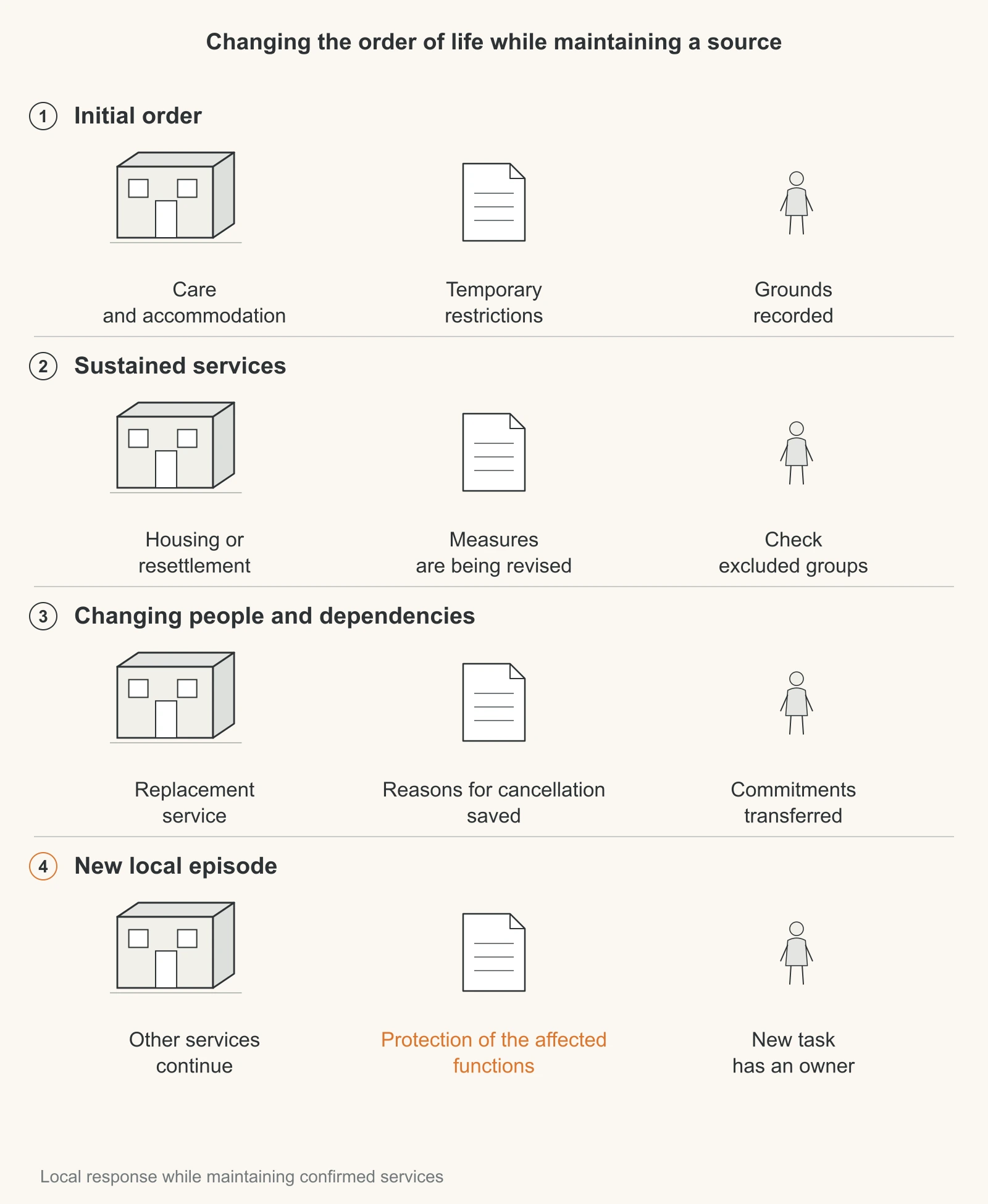
Figure 55. Case 5: several years, a change of people and a local new episode
[S] Sustainable order can withstand changes in people, suppliers, and new local episodes. Confirmed services continue, and the changed function receives its own response and responsibility.
The result is a new episode handed over to those responsible and an updated long-term order. The continuing measure has reason and review; for a service - owner, service and limit; Unreceived help has an open task. Accommodation or relocation is assessed based on people's actual conditions.
Resilience manifested itself in the ability to return to response, maintaining daily life where it remains possible. It does not mean that there is no risk at all. During the debriefing, ask what expenses were transferred to invisible groups, what knowledge was held by one person, and who lost help due to a calendar date. The answers determine the following changes more accurately than the solemn announcement of the end of the crisis.
After the last protocol
At the beginning of the book, man saw too little to explain what was happening. By the end, he may know much more—and still not have a definitive answer. During this time, not only the set of information changes. People, resources, obligations and the very cost of waiting change.
The first task was immediate: to help, to get out of immediate danger, to maintain the necessary function. Then it was necessary to distinguish between observation and explanation, distribute work, and correct the erroneous command. Later I had to decide how to live next to something that could not yet be eliminated. These stages do not add up to one universal order. They demand returning to one question: what does this decision do to people’s lives now and what opportunities does it leave for them in the future?
The unidentified threat attracts attention due to its unusual nature. It also tests common human abilities: speaking clearly, admitting lack of information, accepting limited responsibility, and delivering on promises. Technology can enhance surveillance. Authority can speed up action. Neither one nor the other eliminates the need to check whether the result has reached the person.
In the fictional models in this book, the perimeter sometimes ceased to coincide with the danger boundary. The apparent disappearance of a source did not always mean the cessation of consequences. The interlocutor could control only part of his own world. A successful defense could work locally and require too much force to sustain over a long period of time. Such assumptions are useful when they force us to more precisely formulate the conditions of a decision. They are useless if they provide a reason to declare any failure inevitable or any guess true.
We have no reason to promise victory over any conceivable threat. But we can demand that a plan be honest in scope: what impact it reduces, who it protects, what it pays for, and when it should be changed. You can demand from management memory of the error and the right to correct it. You can require that the person who did not receive help remain visible after a general message of success.
A good ending doesn't necessarily feel like a final solution. Sometimes it is a working service, a limited agreement, a suitable place to live and the next provider who has actually accepted the remaining issue. The research continues, and people are able to move on with their lives.
Reality has no perimeter. Every decision we make must have clear boundaries.
A Reading Glossary
Here are the meanings in which words are used in this book. They help read protocols; special terms of a particular service should be additionally checked with its current documents.
Adaptive source. A source that, in a conditional model, changes behavior in response to a subset of observed actions. Adaptation in itself does not imply omniscience, unlimited power, or understandable intentions.
Barrier. A measure designed to reduce a specified risk or preserve function. Its existence, serviceability and suitability for a given threat are verified separately.
Verification. Testing a specific statement or result in a specified way. It is important to indicate in the protocols what has been verified and what has remained beyond the scope of verification.
Hypothesis. Possible explanation for the observations. A useful hypothesis allows you to specify what evidence will support it, weaken it, or differentiate it from another version.
Model boundary. A condition after changing which the reasoning no longer gives the same result. For example, confirmation by local sequence does not work if the model takes away the ability to distinguish between the messages themselves.
De-escalation. Reducing the intensity of dangerous interactions by verifying that the parties understand and carry out the agreed upon action. The possibility of contact does not negate ongoing protection.
Vital function. A service or job the loss of which, under the conditions in question, would cause serious harm to people. It is described through the result: necessary help, water, suitable accommodation, connection with the recipient.
Dependency. Something without which a function cannot be performed: a person, power, a road, equipment, information, authorization, or a supply. A shared dependency can disable both the primary option and its backup at the same time.
Initial data. The record in the form and with the origin in which it was received before subsequent explanations and processing. Correcting a working version should not destroy the source.
Impact channel. The path through which the observed harm occurs. An assumption about a channel is not the same as an established cause.
Cascading failure. A sequence in which the loss of one function breaks others due to their dependencies. The specific connection is important to the decision, not just the number of failed devices.
Competence. Training and practical ability to perform a specific job. It is distinguished from authority - the right to make or execute an appropriate decision.
Mandate. An established range of issues and promises that a representative or group has the right to deal with. The ability to negotiate does not mean the right to enter into any agreement.
Local adaptation of the protocol. Linking the author's project to people, territory, resources, powers and mandatory procedures. Reprinting the name of the organization does not do the job.
Independent confirmation. Information, the origin and possible errors of which have been verified separately from the first source. Multiple copies of the same record do not become independent of the number of recipients.
Uncertainty. Significant knowledge gap or limitation. It is made operational by indicating which decision depends on the unknown and how a useful clarification can be obtained.
Reversibility. The ability to change an action and limit its consequences. Reversible action can still be dangerous if it delays needed help.
Commitment. The specific task accepted by the person responsible: meet the group, deliver a resource, clarify information, help the person. A submitted request does not mean an accepted commitment.
Operational technologies. Control and monitoring systems associated with the physical processes of the facility. Restoring access to the interface does not confirm the secure operation of the function itself.
Residual risk. The risk that remains after the measure has been taken. It is named along with the decision constraint and the order of further observation.
Event passport. A short, editable entry about observations, consequences, explanations, actions, and open questions. In the book it corresponds to F01.
Transfer of responsibility. Transfer of certain tasks to the recipient, who confirmed their meaning and availability of execution. Transferring a document without such confirmation may leave tasks without an owner.
Perimeter. The designated boundary of the controlled space. In the book's scenarios, it does not necessarily coincide with the path of influence or the area of the unknown effect.
Authority. The right to make or execute a certain decision. It is established by the current procedure and does not appear automatically along with an unknown threat.
Reception. The actual acceptance of people or a resource by the recipient with the necessary continuation of the task. Confirmed readiness means opportunity and accepted commitment; neither the request nor the readiness confirms arrival and reception.
Opposition. Actions aimed at stopping or reducing the identified impact. They are judged on purpose, limitations, side effects and proven results.
Reserve. An additional way to save a given function. It is checked along with people, access and dependencies, and not just by the presence of things in the warehouse.
Signal and order. A signal communicates something to be considered. The order requires an established source of authority and applicability to the task. The content of an unknown message does not give it the right to control people or systems.
Scenario assumption. Explicitly given fictitious condition [S]. It allows you to explore the consequences within the model without confirming the real existence of the phenomenon.
Trigger. An event that triggers a specific action or review. In the usual presentation, the words “reason to begin” and “condition for revision” are used.
Sustainable order. Work that can be continued given stated resources, changes in people, and known limitations. It includes maintenance, replenishment, and the ability to move back to response.
Vulnerability. In this book, the term means a verified limitation of a specific source or method of exposure under specified conditions. A single improvement after an action does not yet establish such a property.
Working Forms
Forms F01–F10 - applications for local work [P]. They can be printed, filled out in Word, or transferred to the current system. They do not require everything to be filled out before rescue begins. The family has the right to combine the required fields on one sheet; the organization distributes them among those responsible.
An empty field simply means that there is no entry. Indicate significant unknowns directly: “not established”, “not verified”, “confirmation not received”. An entry requires an event designation, version, and author. When making changes, keep the previous entry and the reason for the change. Do not retroactively convert a hypothesized cause into an observed fact.
The general kit includes only the necessary information. Medical details, personal data and information about protected objects are transmitted according to the appropriate access order. The suitability of the form itself is checked on the local task according to T02.
F01 Event Record
Event ID: ____________________
Form code F01 and record version: ____________________
Compiler, role and contact: ____________________
Date and time of recording, time source and known restrictions: ____________________
Place and sequence of observations; what is known about the accuracy of the binding: ____________________
Directly observable effects: ____________________
Who needs help and what function is impaired: ____________________
Source materials, their origin and available custodian: ____________________
Possible explanations; information against each of them: ____________________
Actions taken and separately observed result: ____________________
Essential unknown and the decision that depends on it: ____________________
The following is responsible, review condition and available return channel: ____________________
Example [S]. “In Academic Building B, two devices show different values; The general time source has not been verified. No complaints have been received yet; there is no connection with the neighboring building. The suitability of the entire building has not been confirmed. The duty officer checks the available standard diagnostics, the scientific group saves the original records. Review if new symptoms occur, life support fails, or independent monitoring is obtained.” The recording does not prove a spatial anomaly or declare the absence of danger.
F02 Decision and Its Limits
Event ID: ____________________
Form code F02 and record version: ____________________
Date and time of compilation with known restrictions: ____________________
Compiler and contact: ____________________
Event, decision version, author and authority: ____________________
Nearest protected function: ____________________
Facts at the time of decision: ____________________
Available options and consequences of waiting: ____________________
Selected action, performers and resource: ____________________
Scope and what is not yet permitted: ____________________
Expected observable result: ____________________
Harm that the action itself may cause: ____________________
Stop sign and available alternative: ____________________
Who received the decision and who could stay with the old version: ____________________
Example [S]. “Stop sending new groups to point A due to loss of confirmed reception. For a group that has already been dispatched, the dispatcher clarifies the position and agrees on the nearest suitable location. The further route is not assigned automatically. Revision after host confirmation or new path availability information.”
F03 Handover of Responsibility
Event ID: ____________________
Form code F03 and record version: ____________________
Date and time of compilation with known restrictions: ____________________
Compiler and contact: ____________________
Who delegates responsibility, to whom and for what work: ____________________
Time and method of confirmation of acceptance: ____________________
Current purpose and applicable versions: ____________________
People waiting for help and unfinished obligations: ____________________
Functional performance and immediate limitations: ____________________
Unverified messages and disagreements: ____________________
Canceled orders, the cancellation of which has not yet been communicated to everyone: ____________________
Next action, stop condition and substitute: ____________________
Where are the log, source data and backup set: ____________________
Example [S] of reverse confirmation. “Accepted the coordination of point B. The main unfinished task is to confirm the reception of the group on the way. Information regarding the suitability of additional premises has not yet been received; It cannot be used as a ready reserve. If the main connection fails, we keep a local log and maintain the established procedure for assistance.”
F04 Resource Balance
Event ID: ____________________
Form code F04, version, date and originator: ____________________
Resource, unit of account and function it provides: ____________________
Location, confirmed access and basis for suitability assessment: ____________________
Inventory snapshot at the time of decision
[P] The exclusion categories below do not overlap: one unit cannot be deducted as both unfit and unavailable at the same time. If the intersection is unknown, the positions are first checked and the remainder is not declared accurate. Delivery in transit is not included in on-hand inventory.
Position | Quantity | Reason and confirmation |
Physically verified total quantity | ______ | ______ |
Unsuitable or unconfirmed suitability | ______ | ______ |
From suitable: not available for issuance | ______ | ______ |
From suitable and available: already allocated to other tasks | ______ | ______ |
Free balance for the current task | ______ | ______ |
Observed flow rate, range and mode at which it was obtained: ____________________
Expected delivery separately: sender, confirmed stage, acceptance conditions: ____________________
General dependencies: personnel, energy, keys, delivery, packaging, issue: ____________________
Revision condition and who performs the following reconciliation: ____________________
Movement of available balance
Each change has a sign, magnitude and basis: actual reception, delivery, change in availability, access or allocation. Correction of the previous error is noted separately; it is not masquerading as a new supply. For the next shift, unfinished obligations are indicated.
Moment and recording number | Change; document or observation | Remaining after recording | Who confirmed |
______ | ______ | ______ | ______ |
______ | ______ | ______ | ______ |
______ | ______ | ______ | ______ |
______ | ______ | ______ | ______ |
______ | ______ | ______ | ______ |
Example [S] calculation
[S] In the conditional sets, 800 units are taken into account: 100 are excluded due to suitability; another 150 suitable units are unavailable; another 50 available units are already allocated to another task. Available 800 − 100 − 150 − 50 = 500 sets. With the observed consumption of 180–220 sets per day, the design horizon is approximately 2.3–2.8 days under constant conditions. This is an arithmetic example of recordkeeping, and not a standard of nutrition, treatment or safe autonomy.
The issue 40 is entered into the journal: “−40, statement 12; remainder 460; accepted by the responsible one." The promised 300 kits are so far reflected only in the expected delivery. If it turns out that part of the balance is unavailable, a new calculation is performed immediately. For a long crisis, F04 is added to F10: the exhaustible supply must be maintained by a verifiable replenishment process.
F05 Hypothesis and Test of a Protective Claim
Event ID: ____________________
Form code F05 and record version: ____________________
Date and time of compilation with known restrictions: ____________________
Compiler and contact: ____________________
Observation without explanation: ____________________
Testable hypothesis and alternatives: ____________________
Data in favor and against each version: ____________________
Data origin and general dependencies: ____________________
What differentiates the versions and is it safe to access: ____________________
Limitation of the method and scope of applicability: ____________________
What function should the proposed protection preserve: ____________________
Signs of measurement failure and failure of the protection itself: ____________________
Independent inspector and inspection result: ____________________
The decision that can be made and the basis for its cancellation: ____________________
Example [S]. “After changing the equipment mode, the signal decreased. It is not established whether the impact or sensitivity of the measurement has decreased. The entire object cannot be declared secure before checking for an available control channel. The change is saved only within a separate confirmed standard function.”
F06 Public Message and Correction
Event ID: ____________________
Form code F06 and record version: ____________________
Date and time of compilation with known restrictions: ____________________
Compiler and contact: ____________________
Who issues the message; version, time and scope: ____________________
What is confirmed: ____________________
What should a person do now: ____________________
Who needs additional help and how to request it: ____________________
Which previous instruction has been changed: ____________________
What remains unknown: ____________________
Where and when will the next message be; what events require an extraordinary update; what is reported in the absence of new information: ____________________
Delivery methods without a network and in accessible formats: ____________________
How understanding is tested and who is not yet covered: ____________________
Example [S]. “Training point A is temporarily not confirmed to accept new groups. The previously announced direction to this point has been changed. People who have not yet started the journey need to get up-to-date guidance through an established local channel. For those already on the way, the coordinator will arrange reception separately. The cause of the unusual sighting remains under investigation." In the actual message, general words are replaced with specific proven channels and actions for the relevant territory.
F07 Authorization to Return or Resume a Function
Event ID: ____________________
Form code F07 and record version: ____________________
Date and time of compilation with known restrictions: ____________________
Compiler and contact: ____________________
Territory, object or function: ____________________
What exactly is allowed and for whom: ____________________
Validated tests and their limits: ____________________
Residual limitations and unresolved issues: ____________________
Availability of assistance, water, communications, transportation and essential services: ____________________
People for whom return is not yet possible; how the help continues: ____________________
Sign of repeated restriction and who makes the decision: ____________________
How the population will receive a change in clearance: ____________________
Responsible, date, version and next revision: ____________________
Example [S]. “The operation of a specific function in the inspected premises is permitted under the specified restrictions. The permit does not apply to the neighboring site, information about which is not available. If a new indication of unsafety occurs, the person responsible shall cease the associated use and report the applicable action.” Such authorization is limited to proven grounds.
F08 Change to a Local Procedure
Event ID: ____________________
Form code F08 and record version: ____________________
Date and time of compilation with known restrictions: ____________________
Compiler and contact: ____________________
Procedure, old and new versions: ____________________
Reason for change and source material: ____________________
What actions and related documents are affected: ____________________
Who checked the content and feasibility: ____________________
When and where the new version goes into effect; order for already started tasks: ____________________
To whom the change was delivered and whose confirmation is missing: ____________________
Where is the old version saved and how is it marked: ____________________
Method for checking that the original defect has been eliminated: ____________________
The result of the first application and remaining questions: ____________________
Example [S]. “After the exercise, the reception procedure was changed: before the scheduled departure, they receive up-to-date confirmation of the readiness of the receiving party. After arrival, the actual reception of people and the necessary assistance are separately confirmed; only then the corresponding transfer stage is considered completed. The test is carried out on a conditional transmission with the loss of one channel. The change does not negate immediate rescue from a dangerous place; this case is separately indicated on the card.” The success of an edit is determined by the break being resolved, not by the release of a new version of the file.
F09 Record of Confirmed Cessation of Exposure
Event ID: ____________________
Form code F09, version, date, originator and authority of the decision maker: ____________________
Specific impact, protected function and location/condition boundaries: ____________________
What state is being claimed: harm reduction / stopping the spread / stopping the process / remaining under control / ending the active response. Selected and reason: ____________________
Initial state to measure and reliability of its description: ____________________
Measure performed, performers, time or sequence: ____________________
Output to be tested | Observation and data provenance | Output limit |
Reducing or stopping specific harm | ________ | ________ |
Preservation of the ability to detect previous influences | ________ | ________ |
Independent verification of the result | ________ | ________ |
No transfer of harm to another function in the tested area | ________ | ________ |
What alternative reasons for the change are still possible: ____________________
Side and delayed effects; what remains untested: ____________________
F09 Continued. Foundations and remaining tasks
Why the selected measure can be considered the cause of the result, or why causality has not yet been established: ____________________
Remaining restrictions and specific permitted actions: ____________________
Signs of re-occurrence, observation channel, responsible and available reserve: ____________________
To whom the services, assistance, environmental monitoring and appeals of the population were transferred: ____________________
Who independently reviewed the recording; disagreement and decision on it: ____________________
Next revision by date and event: ____________________
[P] This form is used with G12, S05, S10, C14 and G11. Any blank item does not mean a positive result. If only harm reduction is confirmed, this particular condition is indicated in the title of a particular record. Completion of the active phase does not cancel remaining obligations and does not constitute an order for everyone to return.
Example [S]. “After Node A stops operating under the tested conditions, the same supply failure no longer occurs. Independent monitoring shows the performance of the surveillance. Causality is supported in part by consistency and technical verification, but access to the unknown source itself is lacking. The specific chain of exposure has been confirmed to have stopped; the disappearance of the source is not declared. We will allow a limited mode of service with supervision, a responsible operator and revision when conditions change.”
F10 Restoring Functions and Passing on Skills
Event or Local Plan ID: ____________________
Form code F10, version, date, compiler: ____________________
Plan horizon and events at which it is revised: ____________________
Function and desired result | Replenishment or maintenance process | Condition without which the process does not work |
________ | ________ | ________ |
________ | ________ | ________ |
________ | ________ | ________ |
________ | ________ | ________ |
For each significant dependency, use a separate card on the next sheet. Copy it according to the number of functions; The plan ID and version link both sheets. An empty line means no entry, not confirmed readiness.
F10 Continued. Card of one critical dependency
Event/Plan: ____________________ Record version: __________
Function name: ____________________
Person with verified competence and actual availability: ____________________
Replacement; what the replacement already knows and what still needs training: ____________________
Documentation: location, version, language, offline access, hardware compliance check: ____________________
Compatible parts, consumables, tools, power and working conditions: ____________________
Work that can be done locally and its limit: ____________________
What remains dependent on external supply or specialist: ____________________
Verifiable result of repair/training and who accepts it: ____________________
Seasonal window or other point after which the task changes: ____________________
To whom the maintenance log and unfinished task are sent: ____________________
[P] The form complements C19, G08, G16 and T05. Having an instruction file is not the same as having a skill, the right tool, or a safe clearance. For agriculture, water, feed, veterinary care, seed, labor and product suitability decisions are recorded separately. Unconfirmed product safety does not become confirmed due to shortages.
Index of Protocols and Forms
General Decisions
P00 First decision for unknown event 10
P01 When right actions interfere with each other 12
P02 Transfer shift and save help 14
Research and special environment
S01 Unknown physical impact 30
S02 Spatial observations are inconsistent 31
S03 Unknown material on station or return vehicle 41
S04 Expedition to the surface of a planet or comet 44
S05 Independence of evidence and general error 50
S06 Distributed manifestations and suspected swarm 37
S07 Harm established, mechanism remains controversial 34
S08 Internal Effects and an Unreliable Map 33
S09 Giant object and consequences for several territories 39
S10 environment after end of visible event 64
S11 A study that has yet to be answered 52
S12 Deferred, cumulative and compound consequences 57
S13 Seven limited unusual event models 20
S14 The previous protection no longer gives the same result 61
Civil protection
C01 Man next to an unknown event 73
C02 Family in different places and without stable communication 74
C03 Home and Shelter: Suitability Test 90
C04 Suspected biological or toxic effects 81
C05 Settlement with a small number of specialists 104
C06 City with multiple simultaneous failures 105
C07 Hospital with unknown mass impact 109
C08 Unknown object after falling or landing 107
C09 Clear alerts and corrections without a network 111
C10 Moving with confirmed reception 96
C11 Accommodation center and different needs of people 99
C12 Water, food and everyday life with unknown contamination 113
C13 Inventory and distribution during the ongoing crisis 116
C14 Returning home and restoring the environment 122
C15 When there is no ready-made plan and no external help 87
C16 Practical support and team performance 84
C17 Missing, dead and contact with relatives 82
C18 Protection against abuse within help 101
C19 Months and Years: Replenishment of Resources and Transfer of Skills 118
C20 Daily shelter operation 91
C21 First aid for recognizable consequences 76
Management, strategy and contact
G02 Military base and isolated facility 135
G03 Search for a verifiable threat constraint 144
G04 Decision on forceful counteraction 147
G05 First contact and check of understanding 157
G06 Loss of center and restoration of control 133
G07 Coordination of territories and departments 131
G08 Necessary services when there is a lack of resources 140
G09 Disagreement between specialists that changes the decision 146
G10 Verifiable agreement and de-escalation 161
G11 Completion of emergency measures and responsibility for consequences 171
G12 Checking threat termination 152
G13 Long-term counteraction strategy 154
G14 Restoring digital and physical controls 137
G15 Help offered and technology dependency 164
G16 Living sustainably in the face of ongoing threats 168
G17 Assist an injured or non-aggressive unknown participant 159
Checking readiness
T01 Teaching without real danger 179
T02 Is the local plan feasible? 180
T03 Parse the event and save the original data 181
T04 Change the instructions for those who act on them 182
T05 Preparation before the event 177
Working forms
F01 Event Record 208
F02 Decision and Its Limits 209
F03 Handover of Responsibility 210
F05 Hypothesis and Test of a Protective Claim 213
F06 Public Message and Correction 214
F07 Authorization to Return or Resume a Function 215
F08 Change to a Local Procedure 216
F09 Record of Confirmed Cessation of Exposure 217
F10 Restoring Functions and Passing on Skills 219
Index of illustrations
01 Observation, explanation, action 8
02 Closest target for unknown event 11
03 Two problems get one consistent decision 13
04 Shift handover: commitment accepted 15
05 Model 1. Internal suitability behind the entire perimeter 22
06 Model 2. The passage has changed, local landmarks have been preserved 23
07 Model 3. Two local stories and message versions 24
08 Model 4. The consequences are visible, the center is not found 25
09 Model 5. Measure use and lost function 27
10 Model 6. Composition changes, function continues 28
11 Model 7. Help a person and check the record 29
12 When the map and local observation diverge 32
13 Disappeared alarm: channel no longer transmits data 36
14 Giant object and regular service dependencies 40
15 Crew, material and habitat 43
16 The expedition retains the possibility of returning 45
17 Light spot and missing geometry 47
18 Twelve messages: the origin of evidence 51
19 Two late refusals from one loss of obligations 60
20 S14. Four episodes and the boundaries of previous success 63
21 After the object leaves, various unfinished tasks remain 67
22 Family in different places: communication and individual decisions 75
23 Help, call and free access 80
24 Practical support and protected rest 86
25 Isolated group: three directions of accessible work 89
26 Shelter as a system of interdependent functions 92
27 Movement ends with confirmed reception 97
28 Accessibility from transport to a specific service 100
29 City: different areas and general dependencies 106
30 Hospital: new flow and continuous care 110
31 Offline alerts and delivery of corrections 112
32 Water batch, permitted use and recipient 114
33 Decision until the required resource is exhausted 116
34 Repair and transfer of skills at a training facility 119
35 Farm as a connected system of water, labor and storage 121
36 Partial return according to homes and needs 124
37 The big picture: four layers and coordinated decisions 129
38 Isolated object: people and vital functions first 136
39 Three panels and one unavailable service 140
40 The found limitation has the scope of applicability 145
41 Process terminated: who accepts residual tasks 153
42 The strategy retains the possibility of the next step 155
43 Contact: check understanding by keeping the original message 158
44 Help to an unknown participant within the limits of the confirmed one 160
45 Limited agreement: who, where and what was confirmed by 162
46 Useful technology and new update dependency 166
47 Sustainable living next to a sustainable source 170
48 Building in plan not yet ready reception point 178
49 The new version is valid after transfer to the performers 183
50 Northern Hub: map of decisions and unfinished obligations 187
51 Case 1: three observations and three independent tasks 190
52 Case 2: three settlements, one source of statuses 193
53 Case 3: local success, revision and limited pause 196
54 Case 4: Test transmission without common time scale 199
55 Case 5: several years, a change of people and a local new episode 202
Sources and limits of their application
Published materials relate to the specified subject areas. The author's protocols remain projects [P], and fictional cases remain scenarios [S]. The sources indicate the limits of applicability.
[R1] U.S. FEMA Fire Administration. National Incident Management System Command and Coordination. www.usfa.fema.gov. Supports differentiation of coordination functions; The roles and cards suggested in the book are not a copy of NIMS.
[S1] NASA Science. UAP FAQs. science.nasa.gov Supports a limited statement about the status of NASA's published position on the credible evidence of extraterrestrial life and the origins of the UAP.
[S2] NASA. Unidentified Anomalous Phenomena Independent Study Team Report. 14 September 2023. science.nasa.gov Supports requirements for data quality, calibration, metadata, and systematic scientific assessment; does not support the extraterrestrial explanation.
[S3] NASA. Planetary Defense Strategy and Action Plan. April 2023. www.nasa.gov Used to organize the detection, assessment, preparedness, and international coordination of natural near-Earth objects.
[S4] NASA. NASA's DART Data Validates Kinetic Impact as Planetary Defense Method. 1 March 2023. www.nasa.gov Confirms the limited result of the asteroid's motion change demonstration; is not a basis for universal protection against managed objects.
[S5] COSPAR. COSPAR Policy on Planetary Protection. Revision approved 7 November 2025, published in Space Research Today 224, January 2026. Sections 6.5 and 6.6. cosparhq.cnes.fr Supports the need for specialized control of returned material and the limitations of universal tests; The organizational cards of the book are the author's adaptation.
[S6] NASA. NPR 8715.24 Planetary Protection Provisions for Robotic Extraterrestrial Missions. Chapter 3, §3.4 Restricted Sample Return and Containment. Valid from 24 September 2021; the end date indicated on the page viewed is September 22 2032. nodis3.gsfc.nasa.gov Supports the requirement for a safety case and allocation of responsibilities for NASA robotic missions.
[S7] Chen L., Walker S., Williams D. E. Enhancing Future Commercial Space Stations: Applying ISS Insights to Environmental Control and Life Support Systems ECLSS Development on Emergency Response. ICES-2025-126, 13-17 July 2025. NASA Technical Reports Server. ntrs.nasa.gov Maintains a description of the major emergency categories and the relationship of activities to life support on the ISS.
[C1] WHO. User manual for the Member State Rapid Risk Assessment MS-RRA tool. 8 September 2026. www.who.int - hazard, impact, context and explicit capture of uncertainty.
[C2] WHO. User manual for the Quick and Immediate Risk Assessment QIRA algorithm for Member States. 8 September 2026. www.who.int - initial assessment of acute events and selection of interventions.
[C3] CDC. What to Do in Radiation Emergencies. www.cdc.gov - Radiation Event Shelter.
[C4] CDC. What to Do to Shelter in Place for a Chemical Emergency. www.cdc.gov - Shelter under certain chemical scenarios and government guidelines.
[C5] CDC. What to Do in a Chemical Emergency. www.cdc.gov - stop exposure and get help.
[C6] Ready.gov. Family Communication Plan. www.ready.gov - Preliminary Family Communications Chart.
[C7] Ready.gov. Prepare Your Pets for Disasters. www.ready.gov - Including animals in preparation.
[C8] Ready.gov. Preparedness Tips for People with Disabilities. www.ready.gov - Support network, transportation, medications, and device backup.
[C9] CDC NIOSH. Filtering Facepiece Respirators. www.cdc.gov - lack of protection against gases and vapors in particulate respirators.
[C10] NIOSH. A Guide to Air-Purifying Respirators. Publication 2018-176. www.cdc.gov - filter protection limitations when there is a lack of oxygen.
[C11] CDC. Carbon Monoxide Poisoning Basics. www.cdc.gov - dangers of indoor generators.
[C12] CDC. Preventing Transmission of Viral Respiratory Pathogens in Healthcare Settings. www.cdc.gov - Inform upon admission and address suspected route of transmission.
[C13] CDC. Potassium Iodide KI. www.cdc.gov - Narrow indications and limitations of protection.
[C14] WHO. Communicating uncertainty in health emergencies guidance and tips. 27 June 2025. www.who.int - communication of uncertainty. Complementary material WHO Be transparent: www.who.int.
[C15] WHO. Hospital emergency response checklist. 9 September 2011. www.who.int - multifactorial hospital preparedness and continuity of care.
[G1] FEMA National Disaster and Emergency Management University. ICS Training. Official training page for Incident Command System. Supports description of ICS structure and functional areas. training.fema.gov
[G2] FEMA. NIMS Management Characteristic Management by Objectives. Study material IS 700. Supports the application of measurable goals and documentation of results for the next period. emilms.fema.gov
[G3] International Committee of the Red Cross. Frequently Asked Questions International Armed Conflict. 23 December 2025. Supports a summary of the distinction, proportionality, precaution and separation of the legality of resorting to force and the rules of conflict. Applicability to the hypothetical extraterrestrial party has not been established by this source. www.icrc.org
[G4] International Academy of Astronautics. Declaration of Principles Concerning the Conduct of the Search for Extraterrestrial Intelligence SETI 2026 Update. 1 June 2026. Supports independent verification and international consultation prior to response, as well as the specified scope of application of the declaration. iaaspace.org
[R2] NIST. Artificial Intelligence Risk Management Framework AI RMF 1.0. 26 January 2023. airc.nist.gov. Supports the description of risk management functions, liability, and assessment of AI limitations. Specific prohibitions on the automatic execution of unknown messages and the procedure for staff work are the project of this book.
[NS1] NIST. Guidelines for Evaluating and Expressing the Uncertainty of NIST Measurement Results (1994 Edition), NIST Technical Note 1297, section 7: Reporting Uncertainty. 1994-09-01. A limited principle for presenting the result together with the components of uncertainty, methods of assessment and the basis for probabilistic interpretation. www.nist.gov
[NS2] NASA. NASA-STD-7009B: Standard for Models and Simulations. 2024-03-05. Evaluate the validity of model and simulation results and acceptance criteria in relation to a specific project application. standards.nasa.gov
[NS3] U.S. Environmental Protection Agency. Guidelines for Ecological Risk Assessment. 1998-04. The choice of protected environmental objects and properties and the connection between the formulation and results of risk assessment with the management decision and participants in the process. www.epa.gov
[NS4] NASA JPL Center for Near Earth Object Studies. Sentry: Earth Impact Monitoring - Introduction. Several permissible orbits of a natural asteroid under conditions of observational uncertainty and refinement of the estimate when new data become available. cneos.jpl.nasa.gov
[NC1] FEMA. Planning Considerations: Evacuation and Shelter-in-Place. Coordination of evacuation and accommodation resources between territories; Taking into account the needs of displaced people; Site Suitability Check www.fema.gov
[NC2] FEMA. IPAWS EAS, WEA, and NWEM Alert Standardizations Checklists. 2024-06. A warning includes source, event, area, and protective action; Indicating the expected update; Monitoring the need to update or cancel the www.fema.gov message
[NC3] U.S. Department of Justice, ADA.gov. Emergency Planning. Accommodation accessibility includes services and routes to them; Notification and communication methods must take into account different needs; Transportation and accommodations are planned to accommodate assistance and assistance www.ada.gov
[NC4] CDC. How to Make Water Safe in an Emergency. 2024-09-19. Boiling and household disinfection do not make water containing fuel, toxic chemicals, or radioactive materials safe; If there is such a suspicion, another source and specific instructions from sanitary authorities are required www.cdc.gov
[NC5] FDA. Power Outages: Key Tips for Consumers About Food Safety. Appearance and odor do not indicate food safety after refrigeration failure; Storage conditions and available temperature data are important to the decision www.fda.gov
[NG1] Federal Emergency Management Agency. FEMA Bulletin Week of August 27 2024 section FEMA Releases Updated Continuity Guidance Circular. 2024-08-27. Supports a brief description of the continuity of essential functions as a common task of authorities and organizations. Does not confirm the author's sequence of cards or suitability for an unknown extraterrestrial threat. content.govdelivery.com
[NG2] United Nations Office for the Coordination of Humanitarian Affairs OCHA Knowledge Base. Learn more about UNDAC. 2025-11-20. Archive page. Supports the description of UNDAC and OSOCC as means of coordination, needs assessment and information exchange, and the limited nature of UNDAC leadership within the mandate. Not a source of authority over states. knowledge.base.unocha.org
[NG3] FEMA National Disaster and Emergency Management University. IS 2901 Introduction to Community Lifelines. 2025-08-05. Supports the description of stabilization of needed services through impact assessment, prioritization, and re-evaluation; the edition used includes eight Community Lifelines. Does not confirm the author's specific order of distribution of resources. training.fema.gov
[NR1] FEMA. Homeland Security Exercise and Evaluation Program 2020. preptoolkit.fema.gov. Support for linking exercise design, implementation, evaluation and improvement plan. The plots, cards T02-T04 and criteria for this book were developed separately.
[NR2] NIST. SP 800-34 Rev. 1 Contingency Planning Guide for Federal Information Systems. May 2010, update 11 November 2010. csrc.nist.gov. Source area - information systems; transferring continuity concerns to other functions is clearly designated as design adaptation.
[V01] WHO, War Trauma Foundation, World Vision International. Psychological first aid: Guide for field workers. 2011-10-02. Brief Support C16: Humane, practical support after a crisis event that respects a person's dignity, culture and capabilities. It is not diagnostic, psychotherapy, or a basis for considering unusual evidence to be a sign of illness. Organizational sequence C16 is the author's; the source does not confirm its testing under unknown influence. www.who.int
[V02] CDC/NIOSH. Fatigue and Work. Update page 2026-07-14; original publication 2024-05-15. Brief Support C16: Work fatigue can impair attention, reaction, memory and quality of decisions; management of this risk relates to work organization. General information about work fatigue. Does not establish a diagnosis for an individual, the nature of an unusual event, or a universal shift schedule. www.cdc.gov
[V03] NIOSH. Interim NIOSH Training for Emergency Responders: Consider establishing policies that address fatigue. Archival educational material; checking page 2020-04-01. Brief organizational support C16: pre-arranged possibility of reporting fatigue, taking breaks, substituting and reducing workload. Archival material, not a current mandatory labor standard. Does not set a universal operating duration for all conditions; The procedure of the book is an independent author's proposal. archive.cdc.gov
[V04] ICRC, WHO, PAHO, IFRC. Management of Dead Bodies after Disasters: A Field Manual for First Responders, second edition. 2016, second edition; official ICRC page from 2018-02-01. Brief support C17: dignity of the dead, documentation, possibility of proper identification and connection with the needs of relatives. The book does not reproduce technical guidance for handling human remains or extend known procedures to unknown hazards. Identification, confirmation of death and special actions require appropriate competence and authority. www.icrc.org
[V05] FAO. Strengthening countries’ capabilities to manage animal health emergencies. 2021-06-18. Brief Support C19: The official GEMP material 2021 includes natural disasters and non-communicable causes in livestock emergencies and notes the need for input from multiple responsible parties. Does not provide recommendations for unknown contaminants, product approvals, veterinary treatments, or specific agronomic timing. The economic algorithm of the chapter is the author's. www.fao.org
[V06] CHS Alliance, Groupe URD, Sphere. Core Humanitarian Standard on Quality and Accountability, 2024 - Commitment 5. 2024. Brief Support C18: safe, accessible means of communication, proper handling or referral of complaints and consideration of the needs of the victim. The Humanitarian Quality Standard does not create local legal powers, criminal investigations or sanctions. C18 contains an independent organizational procedure with competent transfer. handbook.corehumanitarianstandard.org
[R01] NIST SP 800-61 Rev. 3. Incident Response Recommendations and Considerations for Cybersecurity Risk Management: A CSF 2.0 Community Profile. 2025. Subject support for G14: communication of preparation, detection, response and recovery; verifying the integrity of backup and restored assets and the actual return of services. RP-03–RC.RP-05. A Guide to Managing Cyber Risk for Organizations. Does not endorse extraterrestrial attribution, provide authority, or replace the technical design of a particular system; Scenario decisions G14 are the author's adaptation. csrc.nist.gov
[R02] NIST SP 800-82 Rev. 3. Guide to Operational Technology (OT) Security. 2023. Subject support for G14: security of operational technologies, taking into account their interaction with the physical environment, reliability and operational safety. The final revision used is 3, published in September 2023. The document does not provide a universal command to turn off the equipment. csrc.nist.gov
[R03] NIST AI 600-1. Artificial Intelligence Risk Management Framework: Generative Artificial Intelligence Profile. 2024. Specific basis for G14: content provenance, risks associated with inputs and components, human interaction with a generative system, and evaluation of its use. A voluntary profile for managing generative AI risks. It does not establish the safety of a particular model, describe an unknown intelligence, or replace verification of a physical service, operator authority, or clinical decisions. www.nist.gov
[A01] Resuscitation Council UK. Adult basic life support Guidelines. 2025-10-27. Recognition of circulatory arrest in an adult, early call, chest compressions, breathing and AED. It is not a child's algorithm or proof of the safety of assistance in an unknown environment. www.resus.org.uk
[A02] Resuscitation Council UK. First Aid Guidelines. 2025-10-27. Site safety, early call, stopping dangerous external bleeding, restrictions in case of injury and conditions for continuing care. Brief orientation does not replace hands-on training and local procedures. www.resus.org.uk
[A03] St John Ambulance. How to put someone in the recovery position. Clinical review page 2025-04-28. Position on the side with no reaction and normal breathing; airway priority for suspected injury. Not used as a substitute for resuscitation for abnormal breathing. www.sja.org.uk
[A04] American Red Cross. Burns: Types, Symptoms, and How To Help. The date of publication on the page viewed is not indicated. Primary care for a common thermal burn, cooling and signs of needing medical attention. Cannot be moved to remove unknown material without assessing the nature of the exposure. www.redcross.org
[A05] NHS. Hypothermia. Page verified by NHS 2023-06-09. Signs of hypothermia and simple steps to take before seeking medical attention. Does not describe special intensive rewarming techniques or unknown exposures. www.nhs.uk
[A06] CDC NIOSH. Heat-related Illnesses. 2026-03-03. Signs of heatstroke, emergency call and available cooling. Source context - thermal load; The mechanism of the unusual event is not established based on these signs. www.cdc.gov
[A07] IFRC. International First Aid, Resuscitation and Education Guidelines 2025. Edition 2025; posted 2026-03-18. Evidence-based and linking first aid practice to training and local context. Used to organize training and not for proprietary treatment of unknown agents. www.ifrc.org
Author and projects
Email: info@brenev.com
Author website: brenev.com
Mira website: mira.technology
Other projects: haraizen.tech
Telegram: https://t.me/Eudgenee