Part IV. Governance, Strategy, and Contact
Governance That Withstands the Unknown
Three messages arrive at the general headquarters. Water supply stopped in one area. In another, a huge object is observed above the city. The third message promises safety and demands an immediate response on behalf of all humanity. On the screen they stand side by side, but for now these are three different tasks. People need water regardless of the origin of the object. Observation requires verification. The words of the unknown sender do not yet confirm the connection between the first two events.
We will return to the analysis of this conditional situation [S] after we identify the participants in the common work. Its difficulty lies in the need to act before the final explanation. A manager who waits for the full picture wastes time helping. The leader who immediately declares the picture complete links all subsequent decisions to the first impression. Between these errors lies the work of management: to make a fairly definite decision for the immediate task and retain the opportunity to change it.
All protocols in this part have status [P]: they are author's drafts applied in conjunction with existing authorities, local plans and professional procedures. Known subject supports are marked [O], fictitious conditions of analysis are marked [S]. The properties of the unusual source only apply within the specified exercise. Neither the source nor the origin of an incident in and of itself creates new rights to control people or other people's resources.
People, roles and feedback
The headquarters needs answers to four questions: what has been confirmed, who needs help, what actions are available and who has the authority to authorize them. These answers are related but have different owners. The scientific team can explain the discrepancy in measurements, but does not make treatment decisions instead of the doctor. The commander knows the capabilities of his facility, but does not become the leader of the neighboring city. The coordinator connects their decisions and analyzes the consequences for others.
[O] The Incident Command System (ICS) uses a common structure and terminology. The incident commander or unified command sets the objectives, and the lines of operations, planning, logistics and administrative recordkeeping support the work. The results are documented and used in the next planning period. [G1; G2] The joint headquarters proposed here builds on this organizational approach. Its legal basis and dispute resolution procedures must be determined before actual implementation.
Who is responsible | What answer do others need from him? |
Coordinator | What are we doing now, who is doing it, where decisions contradict each other |
Head of assistance to the population | Where is protection available to people and who is not yet receiving it? |
Scientific group and individual reviewer | What was observed, how is it explained, what decision depends on the dispute |
Work safety specialist | At what change will a particular job have to be stopped? |
Head of Supply | What is usable, accessible and truly transferable |
Responsible for Law and Notification | What is allowed and what clear action is communicated to people |
In a small group, roles are combined. This reduces the number of people, but does not create independent verification: the boss repeating his own conclusion does not become second evidence. If there is no individual reviewer, the constraint is stated directly and a task is selected that the group can actually control.
The connection between control levels must be closed by response. The family communicates who needs help; settlement - what cannot be provided on your own; region - what dependencies go beyond its borders. The state returns specific obligations and limits of support. The received application, the accepted application and the delivered assistance are different states. The response to the request requires a recipient, an executor, conditions for transfer, and an action in case of failure. A small settlement should not be left without help because of an imperfect document: the receiving service helps clarify the information.
The ongoing crisis has several horizons. Now we need to eliminate the harm that does not wait for a meeting. Then - provide a shift, service and the next delivery. Next is to restore order that people can maintain for a long time. These horizons do not set the same number of hours for the city and the space crew. They are determined by real dependencies. A plan that survived the first episode at the expense of all its people and reserves may not survive the second.
[O] In the Continuity Guidance Circular 2024, FEMA links the continuation of essential functions to the performance of governments, organizations, and communities when business as usual is disrupted. [NG1] This is the support for setting an organizational goal; the suitability of subsequent decisions against exotic exposure remains subject to separate testing.
G01 State coordination
Who uses it. The legally appointed interregional response coordinator and the heads of participating services.
Where to start? Name confirmed consequences that local services can no longer eliminate on their own or that are transferred between territories.
When to delegate a task. When a specific job has been accepted by the current head of the regular service, and the remaining restrictions and obligations are assigned to the performers.
Government coordination is needed not because the whole country saw an unusual video. The basis arises when several territories actually depend on a common decision: they use the same communication system, receive displaced people, share transport, or can transfer danger to each other. The first meeting should end with a list of such connections and a short work plan.
The coordinator appoints heads of areas and deputies with access to current information. He announces who makes medical, transportation, engineering, and defense decisions, where conflict is referred, and who can stop dangerous work. Pre-delegated reversible actions allow you to help without waiting for every general agreement. Decisions with irreversible consequences go through their own established order.
The overall picture separates confirmed harm, observations without an established cause, available resources, and limits of information. These layers cannot be replaced with a single hazard color. If one area loses power, a neighboring area retains service, and a third is unknown, these are three conditions that require different actions. The map also shows people who were not included in the regular count.
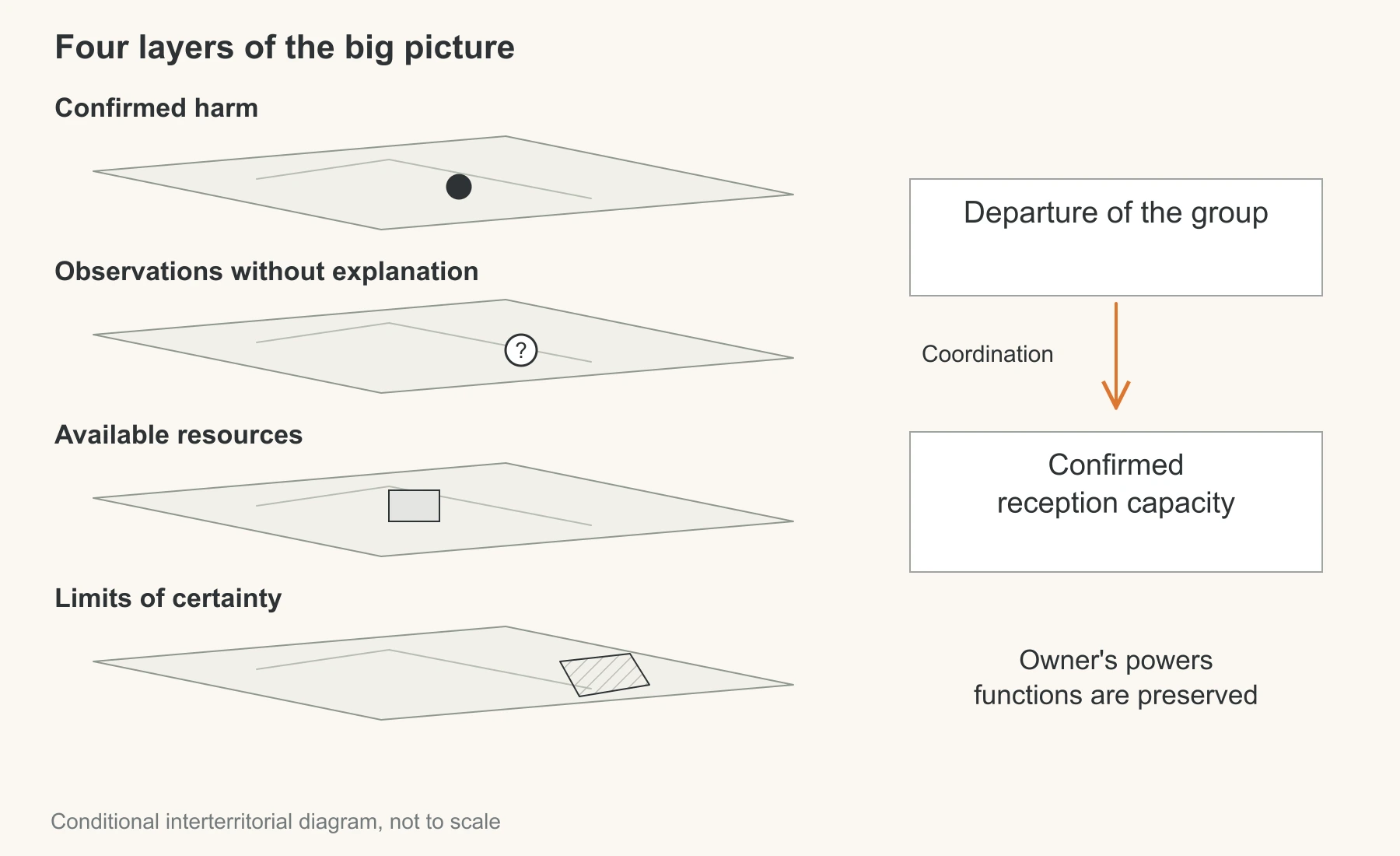
Figure 37. The big picture: four layers and coordinated decisions
[P] The overall picture distinguishes between substantiated harm, observations, resources, and limits of knowledge. Coordination coordinates the consequences of decisions while maintaining the authority of function owners.
Choose several verifiable goals for the current period. Instead of a general promise of safety, preserve care for dependent patients, confirm reception of a specified group, or establish why a particular channel failed. Name the person responsible and an observable sign of completion for each goal. Then check compatibility: will movement overload a neighboring area, will a change in power supply interrupt medical care, or will research delay rescue?
International exchange occurs through competent channels. Transmit observations and information necessary for protection, taking into account personal data and infrastructure security. An unknown reason does not become an indictment on another country. If participants disagree on an explanation, they can still agree to help based on the evidenced consequences.
A public message answers the questions of a specific territory: what happened within the available limits of knowledge, what a person should do, where to get help and when to wait for clarification. If clarification is delayed, this will be reported. Silence should not quietly prolong the old command. Correction is checked by whether people have stopped following the previous instructions.
If the center is lost, the regions fulfill the pre-agreed minimum in their powers; the detailed order gives G06. They maintain a sequence of decisions, including commitments that cannot yet be fulfilled. The returned channel requires a reconciliation of local actions and source data, rather than a mechanical replacement of the local log with a later file.
The coordinator returns the decision for consideration if there is a contradiction in orders, loss of the basis for the restriction, or signs of harm from the measure itself. Independently supported assistance continues. Transfer to normal services is completed when the recipients have confirmed the people, facilities and tasks. The disappearance of attention to the event does not close the work. For continued counteraction, G13 is needed, for sustainable life - G16.
Three messages: decision before general explanation
[S] Three regions are involved in the exercise. In the first, the failure of two pumping stations was confirmed. In the second, two groups observe a large stationary object; Some of the published records have not yet been verified. In the third, the unknown sender promises to stop violating if he is given technical access. There is no available confirmation of the connection between these events. The water supply in the first region allows for one agreed assistance cycle; The next one depends on recovery or delivery.
One option is to assemble all forces to test the proposed invasion, postponing major civilian movements. The argument for this option is clear: with an unknown scale, transport cannot be spent blindly. Another is to immediately declare a general evacuation. It responds to the fear of being late, but no host region has yet confirmed such a volume. Both decisions subordinate different problems to one unproven picture.
The headquarters chooses the third order. Engineers and civil services are given a separate task on water. The scientific group is checking the object. Contact - saving the message and finding out the source without providing access. Of the available transport, only confirmed delivery to the first region is selected; the remaining opportunity is not promised to new recipients until approval. The price of choice is a slower expansion of object surveillance: part of the communications and field support equipment is occupied with assistance. The headquarters directly fixes this price, without pretending to do everything at the same time.
Then it turns out that six videos repeat the same material, and several devices use a common processing module. Two initial observations remain unexplained. The team reduces confidence in the scale of the phenomenon, but does not curtail assistance: water failure is confirmed separately. The proposal to show force is rejected precisely because the object of the action and the expected protective result are not established. The Contact Group proposes to continue the exchange without technical conditions.
Later renovations restore one station. The second one needs an element that is not yet available. The released transport is transferred for targeted delivery to places where restoration has not taken place; Some communications and field support are again available for object observation. In the exercise, the object does exist, but its involvement in the failures remains unknown. This is an open research question and not a reason to declare the work useless.
In other versions of such teaching, the organizer pre-sets an earthly explanation for all observations or a causal connection between the object and the failure with an unknown intention. It does not change the properties of the world after the decisions of the participants. Comparison of versions checks whether the headquarters retains the help and ability to correct the explanation, and not whether it guesses the only prepared outcome.
G07 Coordination of territories and departments
Who uses it. Representatives of neighboring territories and services who have the right to accept obligations for a common task.
Where to start? Indicate the specific discrepancy between plans: who is directing whom, what the other side accepts and what condition has not yet been confirmed.
When to delegate a task. When the recipient has accepted the people, resource, or ongoing work, and the unresolved dispute is referred to the competent authority.
The line of responsibility often runs in the middle of a single human task. The district sent transport; the neighboring district has not yet confirmed the placement. The military facility is willing to provide the facility, but the civilian service does not know the terms of access. The government offers support without checking compatibility with local infrastructure. Coordination must connect these parts before the gap reaches people on the road.
Start with the owners of the services you need. A large meeting without the right to make commitments does not solve the issue. Each party names its task, the actual possibilities available, and the condition under which the promise will become unfulfillable. Estimated capacity differs from today's readiness and may not have staff, accessible space, or support for a person with special needs.
Together, formulate the closest result for a particular group. Then check the entire path: departure, transit, reception, continuation of assistance. Endpoint approval does not confirm the suitability of the road. The route correction must reach the sending and receiving parties. If one part of the plan goes wrong, the person should not find out about it after arriving.
The obligation is recorded with the recipient, executor and method of communicating the change. Submitting a resource does not mean it is available on site; The arrival of transport does not mean the transfer of care. The inspection ends with actual acceptance and confirmation of the necessary conditions. The part remaining without a person responsible is saved in the general list of tasks.
If agreement is not possible, a portion of the assistance that can be performed independently is allocated, and the dispute is referred according to the established procedure, with a description of the consequences of the delay. The coordinator does not hide disagreement for the sake of a single press release. Messages to the public may vary by area, but should not direct the same people to opposite places at the same time.
[O] The UN Office for the Coordination of Humanitarian Affairs (OCHA) archive page describes the UN Disaster Assessment and Coordination (UNDAC) system and the Operations On-Site Coordination Center (OSOCC). They support needs assessment, information exchange and coordination of international actors with national services. The UNDAC handbook summarizes practices within its mandate. [NG2] Therefore, the participation of an international organization does not create a world headquarters with automatic power over states. The parties agree on powers, contact points and actual terms of assistance.
Before the exchange, a language, format and available channel that the participants can understand are agreed upon. Information about the victims is provided to the extent necessary for assistance, and about the infrastructure - sufficient to coordinate the work. Complete concealment of data under the pretext of uncertainty makes independent verification impossible; Publishing the entire array without assessing the consequences also does not solve the problem. The recipient must understand the limits of use of the transmitted information.
If communication is unavailable, fulfill previously agreed upon local obligations. Unverified external support is not included in the guaranteed portion of the plan. The disappearance of a key condition for admission requires a revision of the movement that has not yet begun; direct rescue according to current emergency procedures has its basis.
Change the work if reception capacity is lost, the route becomes dangerous, authority is exceeded, or the plan itself causes new harm. Hand over the work actually completed, partial assistance, outstanding shortfalls, and disputes. States may disagree about a phenomenon's origin and still undertake verifiable commitments concerning water, communications, and medical support. That is already a result of cooperation.
G06 Loss of center and restoration of control
Who uses it. The intended successor to the head of a facility, institution, municipality, region or crew.
Where to start? Distinguish between the inaccessibility of a person, a channel, a room, and the most necessary work.
When to delegate a task. When the current successor has confirmed acceptance of specific functions along with ongoing decisions and outstanding commitments.
A missed call does not prove loss of control. First, the provided means of communication are checked without delaying the rescue. Perhaps the manager is available through another channel; The connection may have been restored, but operators and data are still unavailable. Availability of a position and the ability to organize assistance are checked separately.
The replacement procedure is prepared in advance. It includes the basis for the beginning and end of temporary execution, the limit of decisions, documents available without the network and information that the replacement will need. A name on a list is not a substitute for preparation and access to funds. The Protocol does not establish a constitutional procedure for changing state power.
The temporary leader compares the event with the provided basis, informs the available participants of his function and the immediate task. He lists those who have not yet been notified. The work continues to help people, safely maintain systems, account for resources and essential messages. Incomplete management does not require simultaneously changing all previous plans.
Disputed orders are recorded with the origin, content and state to which they related. If two supposed centers require incompatible actions, do not take a more decisive tone. They check the sender and the consequences of execution here and now. While the dispute is being considered, permissible assistance continues and the possibility of correction is preserved. Submitting later does not make the old card new.
The returning center receives a local sequence of events: what has already been accomplished, what had to be abandoned, who has been promised support, and what information remains controversial. The transfer is carried out by function. The local group does not stop helping until it is confirmed that it has been accepted by a recipient capable of carrying it out. Incompatible decisions are reviewed after the current harm has been eliminated; the log is not rewritten as if the period of autonomous operation did not exist.
Without communication, they use a local log, a pre-agreed notification and a permitted range of decisions. The messenger is sent only according to the existing safe order. A risky trek through an unknown area does not correct a management failure. If the interim manager exceeds the limits of his role or becomes incapacitated, the decision is reviewed and the assigned shift is initiated.
There is a more difficult border: there is no prepared successor or order. Then this protocol does not create the missing right. The doctor, operator, and head of the institution continue available actions within their competence; the local group advises that the legal transfer of wider powers has not been established and refers to available competent authorities. Emergency care and political representation remain distinct issues.
The complete collapse of established institutions requires a separate societal and legal decision that this book cannot replace. Name such a situation explicitly in a training review. Check which duties remain feasible, who recognizes the people actually exercising responsibility, and which decisions will remain temporary and contested. G06 ends with a confirmed handover of work; a retained record of unresolved authority must not be presented as a restored state.
Divided Region
[S] Three settlements — Severnoye, Rechnoye, and Stantsionnoye — lose regional communications. Severnoye receives an old instruction to send residents to Rechnoye. Local rescue workers confirm a fire near the designated reception point. Stantsionnoye needs medicines and support for people who depend on electricity. Severnoye and Stantsionnoye have verified premises for residents who remain; their shared transport is limited to two trips prepared in advance. The cause of the communications failure is unknown.
The first option is to execute the last confirmed general order. It retains the usual chain of control, but relies on an receiving arrangements that have already changed. The second is to cancel all movements until the center responds. It reduces the risk of sending people into a fire, but deprives Stantsionnoye of the necessary delivery. Local leaders choose to divide the tasks: people near the fire are rescued on an emergency basis, mass departures from Severnoye are suspended, one confirmed trip is used for medicine and support for Stantsionnoye. The second is retained until the actual need is clarified.
The price of the decision is that Severnoye supports the deployment on its own for one more shift; Some workers remain on site instead of the planned transfer. This load is taken into account and the shift is organized, and is not called free autonomy. Then a second order comes, supposedly regional: to send all transport in the opposite direction. Its origin is unconfirmed. Local participants retain the necessary assistance already started, and the new team is checked.
Later, Rechnoye confirms that its other service point is ready to accept only a small group, and not the entire stream. The second trip is used for the coordinated movement of those who really need it; the rest remain in the inspected premises. Finally the center reestablishes contact and demands the original plan. Having received information about the fire, the actual location and the delivery completed, it takes over transport coordination according to the updated picture. Local services continue to provide care.
The case does not end with the call being restored. One distant post is still carrying out the old order. The region schedules delivery of the fix and receives confirmation that it has been cancelled. Only after this the contradiction is closed. The temporary decisions preserved aid but did not establish local leaders as the new regional government.
G02 Military base and isolated facility
Who uses it. The base commander, the head of an isolated facility or the crew commander together with regular specialists.
Where to start? Test people and real life functions against the facility's emergency procedures without waiting for the source name.
When to delegate a task. When the next shift or responsible function has accepted the verified condition, work restrictions and obligations to external participants.
An isolated object does not become its own world just because it has a fence. It depends on people, energy, air, supplies, maintenance and external support. A military base can simultaneously maintain its own security and support civilian services. The station can receive commands from the Earth when the Earth itself does not yet know its current state. Therefore, the commander's first task is to establish that the object is indeed capable of continuing.
Based on the observed signs, the appropriate standard emergency mode is selected. They count people, find out the situation of the victims, and transmit actual signs of exposure to doctors. Engineers check air, pressure, power, fire safety and availability of assistance with the means provided for a given facility. On the apparatus, the preservation of the habitable environment has immediate priority over the study of the phenomenon. The general text of the book does not replace on-board procedures.
Technical notes, observer explanations and automated recommendations are considered separately. A common fault may have a common source of power, timing, processing, or communication. Available independent paths are used for verification. If they are not present, the commander knows which part of the state cannot be confirmed and does not expand the inference by the confidence of the interface; digital recovery is discussed in G14.
Non-essential work that could increase the impact or look like an attack is suspended within the limits of authority. But this is not a general command to turn off equipment. Isolating the room, changing the power supply, or stopping the process can damage life support. Acceptable changes are determined by facility procedures experts, and an unidentified signal does not by itself trigger an irreversible action. The reasons for the forceful decision are discussed separately in G04.
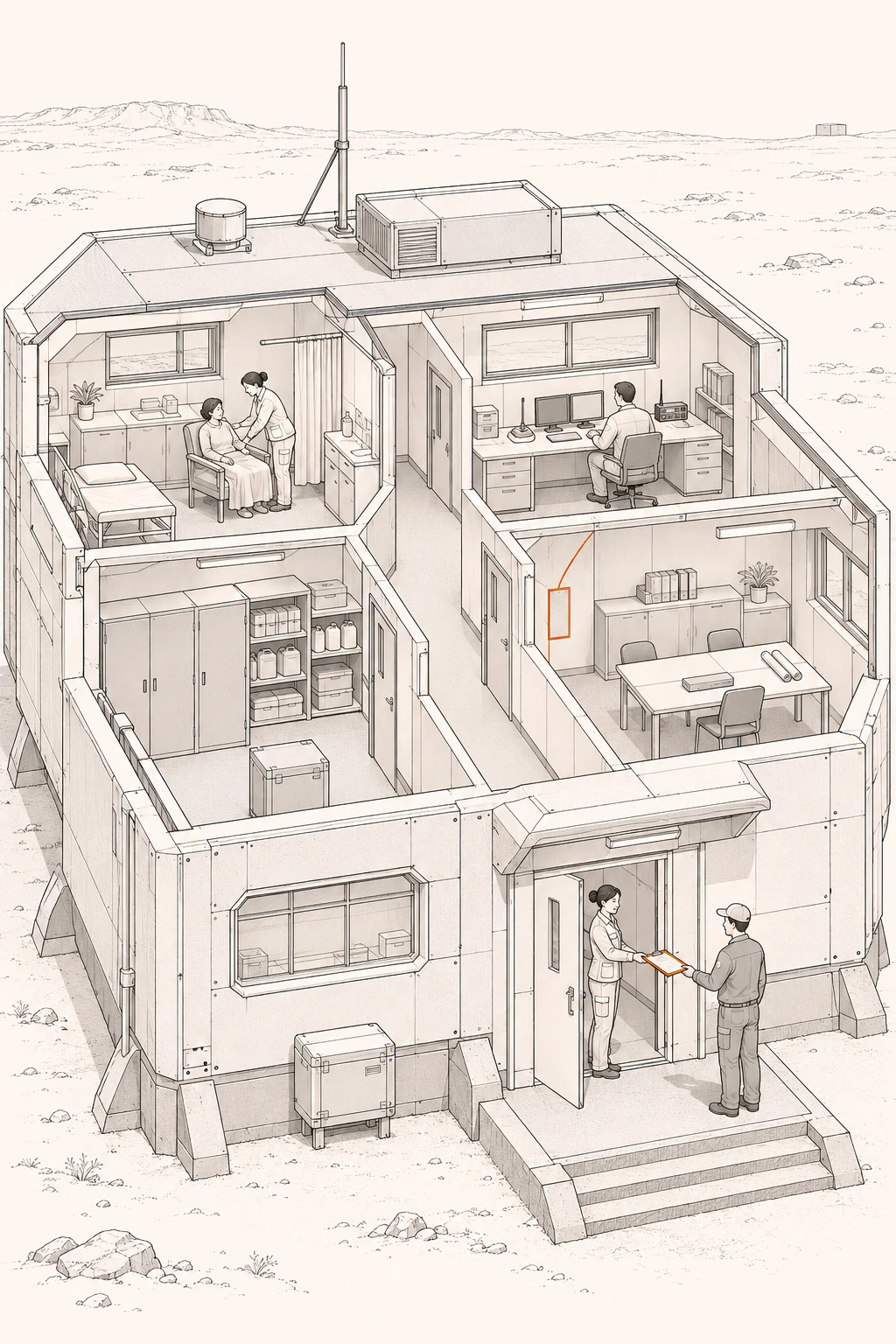
Figure 38. Isolated object: people and vital functions first
[S] A cross-section without scale shows assistance to people, staff management, engineering support and external commitment. Continuing essential functions and suspending non-essential work require separate decisions.
If the premises are dangerous due to fire or loss of suitable environment, approved emergency relocation procedures are in place. If protective conditions remain inside, but a greater risk is confirmed outside, unjustified exit will only increase harm. If there is a lack of information, compare specific available options; the rule about the constant superiority of one of them does not apply here.
A shared service with the city creates a shared obligation. The commander informs civilian services of available capabilities, limitations, and the operating liaison officer. The proposal to retain the entire resource inside the base is evaluated along with the implications for water, medical care, and rescue outside. This requires approval by G07, but does not transfer control of the city to the commander. For civilians arriving for help, a contact service, acceptable support and communication with confirmed accommodation points are determined in advance. A closed facility cannot be declared a guaranteed shelter without confirmation of its capabilities by responsible persons. Separately, families of workers and people who do not have access to regular transport are taken into account.
If the center is lost, the crew or base uses the intended autonomy. The on-call shift must be aware of what staff continue to do manually, what is being stopped, and what is not possible without outside support. Failure to respond does not expand the permitted use of force. The late team checks the current situation within the established distribution of authority; the message from the center does not yet confirm the possibility of providing physical assistance.
Stop or reconsider an action if it threatens life support, loses a confirmed object, or creates unintended consequences. Not only are observations communicated to the replacement, but also people's condition, flow rates, technical safety restrictions, pending civilian requests, and the limit of available support. When transferring via P02, they separately check whether the new composition is capable of performing the work. The resulting log does not in itself make the object stable.
G14 Restoring digital and physical controls
Who uses it. The incident manager, the owner of the service people need, its trained operator and digital response specialists.
Where to start? Compare the system readings with the actual service and find out how this comparison is confirmed.
When to delegate a task. When the designated operator manages the restored service, he can verify the result and knows the signs of a repeat violation.
Digital disruption becomes a physical problem when the wrong command, entry or mark changes the way people are helped. An accessible panel does not prove the controllability of the equipment. The saved copy does not prove the suitability of the restoration. At the same time, the coincidence of an unusual observation with a program failure does not establish an extraterrestrial cause: assistance is first required for the actual loss of service.
[O] NIST SP 800-61 Rev. 3 links response to preparation, detection, recovery and improved risk management; recovery considers the integrity of reserves and assets, the return of services and their surveillance. These provisions relate to the cybersecurity of organizations. [R01] NIST SP 800-82 Rev. 3 examines operational technologies that interact with the physical environment, taking into account performance, reliability and security. [R02]
The manager first names what exactly has lost reliability: the state of the equipment, the sender, the content of the command, the history of changes, or the service itself. The operator compares the digital picture with the provided independent observation without additional risk. If there is no such path, the loss of acknowledgment is recorded directly. Three applications from the same base remain one dependent statement.
The closest mode is chosen together with the service owner. A digital security specialist can recommend containment of the violation, but physical switching is assessed by the operator of a particular process. A general command to shut down everything on one system will stop the failure from spreading, but on another it will create immediate danger. In the absence of trained personnel, the local team reports the observed failure and uses only known acceptable modes; Urgent household assistance has its basis.
Information about the initial condition is preserved in an accessible, professional manner without delaying rescue. Separately note logs that may have changed and records from observers outside the affected system. Then they check the general dependencies of the channels: data source, account, operator, time service. Revocation of trust in a particular verification method must have a clear scope and be delivered in a verified manner. It does not nullify all previous work without reason.
The next step is to reconsider the decisions already made on the affected information. First priority goes to those whose continuation could cause harm. A questionable supply record does not negate an identified human need. Correcting the instructions and supporting the needy go at the same time.
To restore, the origin, completeness, compatibility and integrity of copies are checked. The old one may not contain the necessary change, the new one may already be a violation. The selected configuration must support the current physical task. Before returning control, the observed result, the right to stop, and the failure assistance are determined. Each stage is decided by the service owner; phasing is useful only when it allows you to detect a dangerous deviation before it causes harm. Employees receive a list of current and revoked verification methods to ensure that old rules do not continue to apply in parallel.
[O] NIST AI 600-1 addresses content provenance, information security, human interaction with the generative system, and component risks, including exposure through processed input materials. [R03] Therefore, after a violation, inputs, version, external materials and model rights are checked. A plausible explanation does not restore the lost origin of the data. Another model on the same distorted material also does not provide independence. Validation work cases include invalid input and instruction conflicts without executing actual dangerous commands.
If the analytical output is associated with a physical action, check who is able to reject the recommendation and how work will continue if this person is unavailable. An overall assessment of the model does not replace acceptance of a given configuration for a given service. Confirmation on the screen must be accompanied by a real possibility of intervention by an authorized person.
Without communication, they keep a local record and check it after the return of the exchange. Work is suspended if there is a new physical effect, an unreliable recovery basis, or a loss of check. Exit requires an available service, a known provider, understandable restrictions, and a feasible return to review. Closing a digital incident does not stop helping victims, restoring the environment, and analyzing the consequences.
Three panels and one queue
[S] In the facility, three panels and an analytical model show the usual intake. The queue on site is growing: the system does not issue assigned requests to responsible employees. There is a prepared paper order for one department; for the rest its power is not enough. All panels use the same thread, but the manager does not know this yet. His first choice is to trust the general display or limit digital reception at the cost of delaying part of the work.
He opens the paper procedure in an accessible branch, assigns a separate employee to check already accepted requests and temporarily does not promise the same speed to new visitors. Price - the queue moves more slowly, some people receive a later confirmed appointment. They are not excluded from the register for the sake of a beautiful indicator. The check finds that the shared data stream has stopped updating; The timestamp reflects the screen update, not the service status.
Once the flow is restored, it is tempting to immediately return automatic recommendations. Instead, employees confirm that requests actually reach the performers and check previously stalled decisions. A new observation shows the second defect: some of the old treatment orders were received again. The launch has resolved the inaccessibility, but has not yet restored a reliable list. Paper records allow you to verify repetitions. The automatic part is returned only for the verified branch, and the current confirmed order is retained for others.
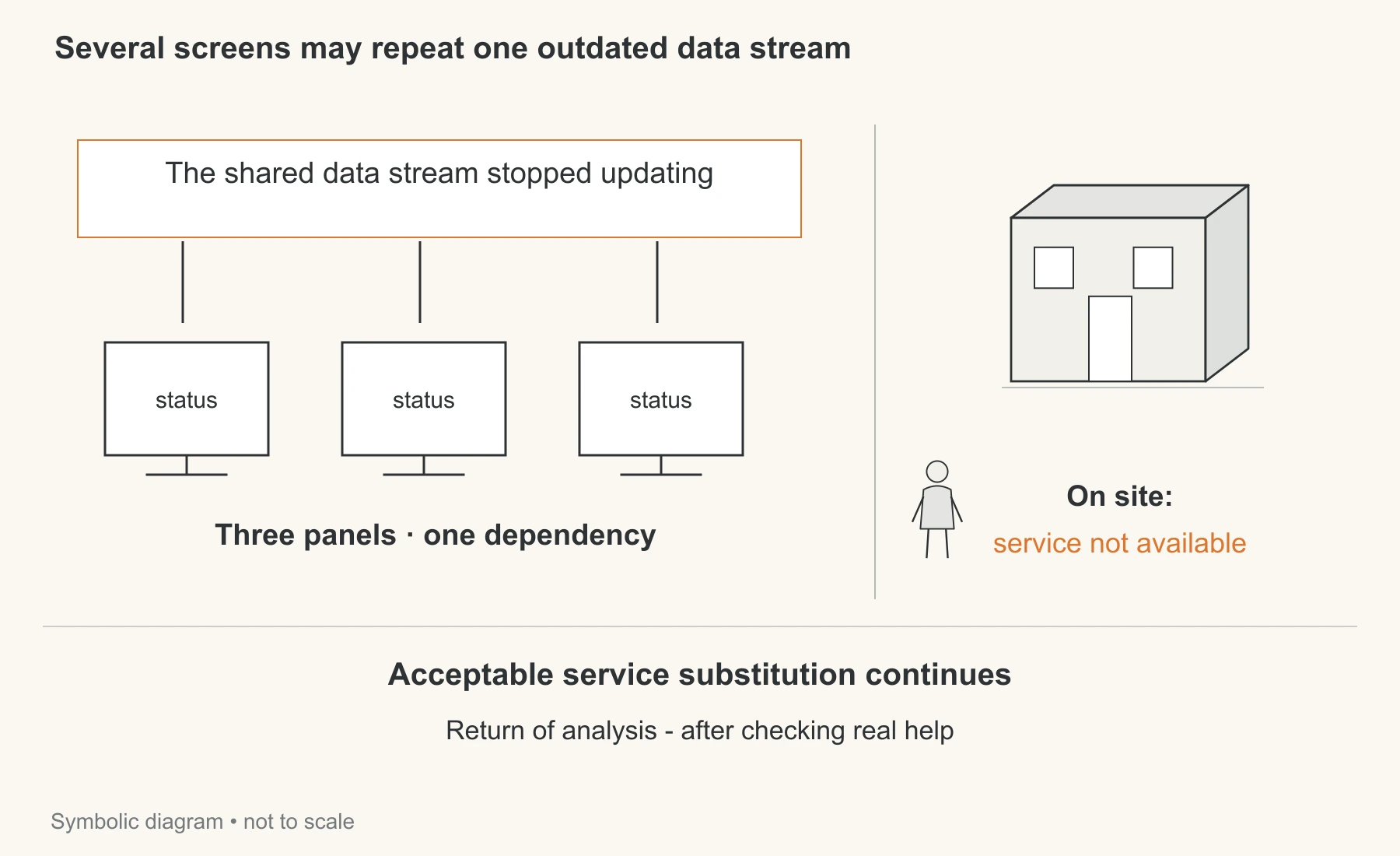
Figure 39. Three panels and one unavailable service
[S] Three panels agreeing does not create three independent confirmations if they receive the same thread. Acceptance of restoration is based on the service actually available.
The incident ends not with a green screen, but with tasks delivered to the performers and corrections for those who were given the wrong time. The cause of the initial disruption remains a research question. Having analyzed this mechanism once, we will then check not the number of identical confirmations, but their origin and real connection with the result.
G08 Necessary services when there is a lack of resources
Who uses it. The head of supply along with those responsible for the affected services.
Where to start? Check the usable available balance and state what harm would result from the loss of each function.
When to delegate a task. When the performers have confirmed the received resource and its use, and the remaining deficit is transferred with a specific request.
Scarcity cannot be resolved merely by ranking buildings by importance. A hospital depends on water; the water supply depends on power and an operator; transport depends on a road, a driver, and a suitable vehicle. Preserving an institution’s sign is easier than preserving the help people need. Planning therefore begins with outcomes: who needs a service, which parts of it are needed now, and what may change only after professional assessment.
They check the warehouse and available balance, access to it, obligations already assumed and actual delivery. The promised delivery remains a separate scenario. The number of devices does not indicate the possibility of operation without compatible consumables, trained personnel or suitable conditions. The same dependence of the fixed asset and the reserve must be visible before failure.
Service owners name the available options: maintain the mode, professionally acceptable to reduce the load, replace part of the work, move it to a confirmed recipient, or restore the damaged element. For each option, the expectation limit and its uncertainty are indicated. The coordinator does not assign a generator mode or select treatment based on the overall administrative score. Clinical triage remains a separate, competent job.
Priorities relate to the harm being prevented, urgency, alternatives and implications for other services. The fame of the institution and the influence of the petitioner do not determine the value of people. If any available option leaves heavy losses, the decision must name them and the remaining assistance. The general provision formula has no right to hide those who did not have enough of it.
After the selection, the distribution, provider and the nearest revision event are fixed. A delivered but unusable resource does not close the request. A change in recipient, setting, or data is immediately returned to the general plan. The return of funds to the reserve is agreed upon with the dependent service: it becomes free after the termination of the obligation, and not after correcting the recordkeeping line.
If connection is lost, the agreed upon local minimum and available registry operates. Unconfirmed delivery is not included in the guaranteed calculation. Distribution is stopped or changed when there is a new immediate danger, technical inapplicability or loss of basis; available assistance continues. Remains, working services, unmet needs and exact shortages are passed on to the next level. They separately name what can be provided to neighbors without losing their own necessary minimum. For recordkeeping, F04 is used, for long-term replenishment - C19 and F10.
[O] FEMA's Introduction to Community Lifelines course examines the stabilization of needed public services through consequences, priorities, and re-evaluation; in the version used, eight directions are listed. [NG3] The general principle is borrowed here. The composition of dependencies and the order of distribution remain the author's project. The reserve buys time, but does not create replenishment: the headquarters must know what the next step will be taken during this time.
Fuel: a decision that has a price
[S] All numbers in the following analysis are fictitious. “Unit of fuel” is a conventional recordkeeping unit, not a liter or an equipment standard. One period is also given only by the exercise. Profile services have already checked compatibility and presented the modes allowed for their objects, including the intermediate volumes that are used below. These limits cannot be changed at the request of the coordinator.
The city has 135 suitable and affordable units. Also 20 were promised from outside, but not delivered. There are two hospitals, a water supply, an accommodation center and a transport group. Transport may, within the limits of its assignment, combine the necessary delivery with the pre-agreed movement of eight residents to a confirmed neighboring location; its personnel and reception are already provided for by the conditions. The same composition prepared another necessary trip for the next period with the presence of ten units. There are no additional transport or unknown warehouse in the problem. Even the expected supply does not cover the next full cycle: its shortage has already been transferred to a separate decision.
Recipient | Requested for period | Proven minimum | Minimum price |
Northern Hospital | 60 | 45 | The specialized service reschedules part of the planned work while maintaining the necessary assistance |
Southern Hospital | 35 | 25 | Available scheduled appointments are being reduced; people receive confirmed new appointments |
Water supply | 35 | 30 | There is no additional production reserve; smaller mode not confirmed |
Accommodation point | 20 | 10 | New admission is limited; eight matched residents are moved to the specified recipient |
Transport | 10 | 10 | Only the agreed required trip is operated |
Total | 160 | 120 | Full declared work is not provided |
Equal shares of 27 units do not provide water supply and the Northern Hospital with even the permitted minimum. Transferring everything to the main hospital leaves it without proven water and deprives others of help. But two reasonable options remain: distribute 120 across the minimums and hold onto 15 for the next step, or use part of this difference now, reducing aid delays.
The headquarters initially chooses the second: Northern hospital - 50, Southern - 30, water - 30, point - 15, transport - 10. Total 135. The additional five units of each of the three services have a named task, and are not issued for complete satisfaction of the request. Physicians confirm what work can be retained beyond the minimum; The point is preparing a less stressful transfer of residents. The price is the absence of your own balance after the period. The promised 20 are designated as the risk of the next stage. The decision is subject to review before the second issue if delivery is not confirmed.
To this point, 85 units have been issued to: 30 Northern Hospital, 20 Southern, 20 Water, 10 Point and 5 Transport. Already issued volumes are not redistributed in the new decision. New confirmed information arrives: external 20 will not arrive in the horizon under consideration. 50 physically remain in the warehouse, so you can still change the unfulfilled part of the plan.
Service owner verification confirms ability to move to specified minimums for the remainder of the period. The new issue is 15 Northern Hospital, 5 Southern, 10 water, zero point and 5 transport - a total of 35. The resulting distribution is 120. The remaining 15 are stored separately: 10 is associated with the next necessary trip that has already been prepared, the assignment of the remaining five is clarified according to the confirmed task. Five units is not declared sufficient to run any service whose minimum is higher.
Now the cost is visible to people: some planned care has been postponed, new intake is limited, eight residents are using the agreed transfer. The service point does not automatically promise vacant seats to the next group. Leaders communicate the changes to those affected and verify the actual intake of displaced residents.
Fifteen units do not provide the next full period, which even at the minimums needs 120. The city passes on this unresolved deficit to the top and prepares available, confirmed replacement options for each service. The analysis does not end with the appearance of an unknown reserve. It shows where choices were saved, who got the price of the cuts, and what promises can no longer be made. If the coordinator continues to spend on the original statement, he will violate his own pre-named revision condition.
From Observation to Countermeasures
The vulnerability is needed for a specific task. A restriction that allows the premises to be preserved may say nothing about the ability to stop the source. An observation that is useful for negotiations may not provide a basis for influencing the target. So the search starts with asking what harm needs to stop and what needs to change for people.
The ability to cause harm, intention, and resistance to change are different properties. Automation is capable of continuing dangerous work without a hostile target. The rational party may misunderstand human actions. A distributed process may not have the central node that is most convenient to draw on a map. To find the limit, you must first stop attributing all threats to one organization.
Scenario model | What Really Changes a Decision | What cannot be assumed yet |
Controlled vehicle | Relationship between an observed action and a specific harm | That a noticeable detail is the main unit |
Autonomous participant | Maintained task and response to natural changes | That silence confirms deliberate aggression |
Collective or swarm | Common dependencies and differences between participants | That stopping one element will stop the rest |
Environmental or physical process | Route of exposure and conditions of distribution | That danger has an interlocutor |
Source of disparate scale | Achievable protective result and cost of action | That a show of force will definitely improve the situation |
Source size alone explains little. An unnoticed disturbance can deprive a closed apparatus of a suitable environment; a huge, distant object may not yet cause immediate harm. The area of impact, distribution, duration, dependence of people on the affected environment and the possibility of recovery are important to the plan. These questions organize the investigation, but do not ask the probability of unfamiliar physics.
G03 Search for a verifiable threat constraint
Who uses it. Scientific supervisor, competent researchers and a separate specialist checking the protective conclusion.
Where to start? Write down one question, the answer to which will change a specific decision about protection.
When to delegate a task. When the headquarters received a conclusion with conditions for application and cancellation, or a clear explanation why the available data does not provide such a conclusion.
Exploration of limitations is required when explanations for the same effect lead to different interventions. The manager, together with the decision maker, selects an issue of the required scale. Checking the suitability of a given route is one task. Explaining all the disappearances of passages is another matter. The answer to the first question may come sooner; it is not presented as a general theory. The subject branches of the study are considered in S05–S10.
The initial record is compiled without explanation: what was observed, by what means, under what conditions and with what known uncertainty. Images and recordings are stored separately before processing. Retelling, improved picture and model result do not replace the original source. Competing versions are then recorded, including normal technical cause and general measurement failure. Each requires observation that can weaken it. A version that explains any possible outcome does not yet help in choosing an action.
The team verifies data provenance and common dependencies. Two devices with the same power, program or source flow can repeat the same error. Independence is required not as a sign of the quality of the entire organization, but in relation to a specific possible failure. If a second route of observation is not available, this limits the power of the inference, but does not invalidate all extant evidence.
First, differences are sought in archives, passive observations, and securely accessible data. New methods pass S11; direct influence on people to confirm the hypothesis is not allowed. The model allows you to test the consequences of an assumption, but its result remains dependent on this assumption. Changing the boundaries of a fictitious source after each failure means changing the problem, not exploring it.
For the constraint found, the location, condition, scale, and observed result are recorded. If the effect ceases after a change in the operation of the system, check whether the observation itself is preserved and whether another change has occurred. The negative result is also important: the measure did not help in the specified conditions, and it cannot be repeated as a proven protection. Unspecified vulnerability does not mean invulnerability; local success does not promise general victory.
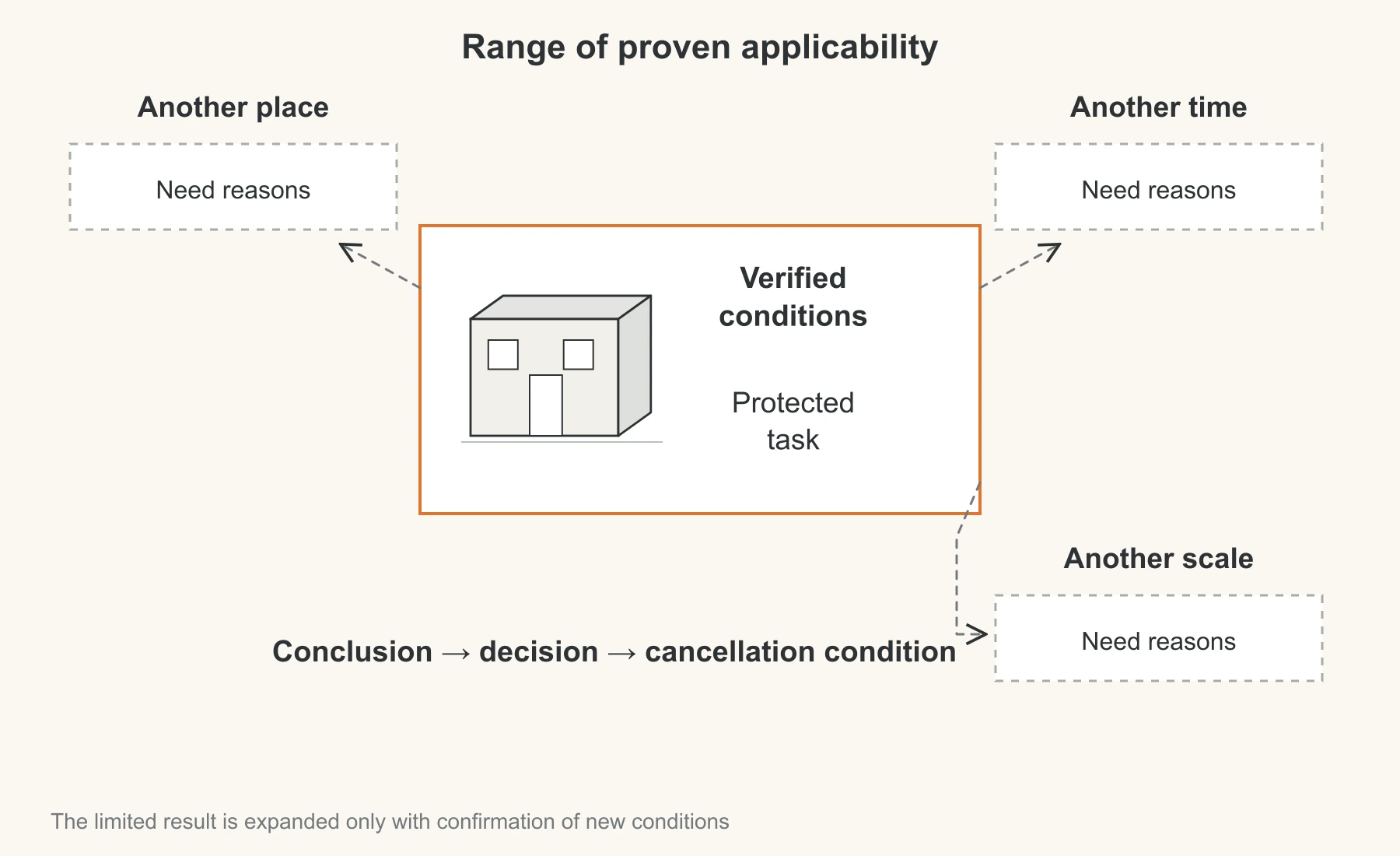
Figure 40. The found limitation has a range of applicability
[P] The observed limitation relates to the conditions, scale and task tested. Transfer to another place, time or scale requires its own reasons.
The independent reviewer receives the original records and alternatives, not just the final report. The reviewer evaluates whether a particular protective recommendation can withstand known limitations. The result is drawn up according to F05: what is confirmed, what decision can be justified, what remains unknown and what observation will require revision. The contradiction between the groups is resolved according to G09. The inability to obtain the output by available means is also conveyed as a result.
If communication is lost, the team retains materials and continues only authorized safe checks. The local conclusion does not become a general recommendation due to the unavailability of an external expert. The study is terminated or returned to observation if the intervention unintendedly changes the phenomenon, interferes with protection, or false independence of evidence is found. The safety officer must be able to stop the work; The competence of the researcher does not negate this right.
If the behavior of the source changes, the previous constraint is considered again according to S14. His story remains in the journal: the conditions of the first success, the new failure and possible reasons. This protects against both blind repetition and the hasty conclusion that the source is devoid of any boundaries.
G09 Disagreement between specialists that changes the decision
Who uses it. The principal decision maker and reviewer who was not responsible for the original determination.
Where to start? Name the action on which positions diverge and the consequences of error or delay for people.
When to delegate a task. When the executor has received a decision, a significant objection, remaining uncertainty and observation for reconsideration.
A scientific dispute becomes managerial when different explanations require incompatible actions. It is not enough for a manager to know who is more confident. It is necessary to understand whether the path remains suitable, whether work should continue, whether a specific restriction can be removed. Separately, decisions are called that are independent of the dispute: the provision of already necessary assistance is not required to wait for agreement on the origin.
Both sides present the observations they share and the point of disagreement. The reviewer receives the raw data, versions of the analysis, and access to the participants. They check whether both conclusions rely on one faulty data stream, the same model, or an assumption nobody has tested. The name of a second department does not create independence. A researcher's public standing likewise does not replace the grounds for a particular conclusion.
Each party is asked to indicate what would change the recommendation. If there is no possible rebuttal, the position cannot serve as a verifiable basis for an exceptional decision. At the same time, part of the dispute may be value-based: one group is more worried about the loss of current assistance, the other - the dependence of the next stage. The experiment will not cancel this choice; it must be openly conveyed to those who have the right to make a decision.
The verification time is determined by the consequences of waiting. Delayed irreversible action requires a more complete consideration. In the event of an immediate threat, available assistance continues while investigators verify the material. Safe ways to distinguish between versions include re-analysis of stored records, available independent observation, and verification of a common technical cause. Additional influence on people does not become permissible because it would end the dispute.
The options are then compared for each remaining explanation. If one reversible measure is useful in all conditions under consideration, it can be carried out in parallel with the study. If the options produce opposite consequences, the manager directly accepts the residual uncertainty within the authority. Even if the consequences cannot yet be discerned, the decision is narrowed down to a feasible temporary task with a minimum set of unconfirmed conditions.
The entry includes an election, a substantive objection, and a reconsideration event. The examiner must be able to communicate a new contradiction to a person who can change the action. The expert's signature does not transfer the full responsibility of the manager to him. After new data, dependent commands and messages are corrected; the old hypothesis is retained with a reason for rejection, so that it does not return as if new evidence.
Without external communication, the local group formalizes the dispute and carries out the authorized protective part. An old report on a different situation does not replace the missing examination. If the key basis is lost, the dependent action is revised; if the test itself is dangerous, it is changed or stopped. A conclusion is possible even without general agreement: it is enough to clearly state which limited conclusion is suitable for the task and which is not yet suitable. Voting does not resolve physical conflict.
G04 Decision on forceful counteraction
Who uses it. Body or official with valid authority to make the relevant decision and a successor provided for by law.
Where to start? Identify the specific hazardous action, its intended source, and the protective outcome to be achieved.
When to delegate a task. After stopping or completing the action, transfer the result check to G12, and assistance and residual consequences to the relevant services.
Defense begins with maintaining the people and capabilities needed. This may include limiting exposure, replacing damaged service, dispersing dependencies, and stopping dangerous interactions. An attack requires a separate justification: how the chosen action will stop a certain harm and why its consequences are acceptable. The formula for the complete destruction of an unknown enemy says nothing about the boundaries of the task and its completion.
The basis for consideration is the established impact and a sufficiently substantiated causal relationship with the source in question. Intentional action, accident, and erroneous attribution of harm to that source require distinction. Silence in response to a request is not independent evidence of aggression. The urgent protection of people in this case may have a sufficient basis in the observed harm itself.
[O] In international armed conflict, international humanitarian law requires a distinction between civilians and combatants, and between civilian and military objects. It prohibits attacks in which the expected collateral harm to civilians would be excessive in relation to the specific and immediate military advantage anticipated, and requires all practicable precautions to reduce such harm. The legality of resorting to force and the legal qualification of the situation remain separate issues; the applicability of norms depends on the participants and the facts. [G3] The book does not declare a hypothetical extraterrestrial party to be a party to an existing treaty. Protection of civilians, verification of the object, necessity and limitations of consequences are accepted here as conditions of its own project and do not supersede the existing law in relation to people.
The review proceeds through a sequence of questions.
1. What help can already be provided, regardless of the final explanation? What happens if the action in question is delayed?
2. What options are available: maintaining protection, moving, reducing interaction, negotiation, or forceful counteraction? What are the results and irreversible consequences of each?
3. What links the suspected source to the harm? What alternatives remain and who will be affected by a mistake in this regard?
4. What will change our actions in the environment, transportation, assistance and surveillance? Failure to evaluate is not considered to be the absence of collateral damage.
5. What limited result can be seen, who will check it independently of the person responsible, and who will stop the continuation if conditions change?
After these questions, the authorized manager makes a decision recording assumptions and significant objections. Automatic recommendation helps the analysis, but does not give responsibility and authority. Performers must know the purpose, scope, termination conditions and the limit of further actions. The execution of the operation and the achievement of a protective result are checked separately.
If the source is disproportionately superior, rescue, contact reduction, service retention, and a verifiable pause may remain achievable goals. Refusal of a specific force action must name the defense performed instead. The opposite extreme - waiting for full knowledge before any help - also leaves people without a decision.
In the event of a loss of communication, only pre-legally authorized measures to the established extent are permissible. The inability to check the condition is fixed without expanding the action. Loss of identification, cessation of immediate threat, new civil consequences, or loss of control require termination or reconsideration. Failure does not automatically give permission for a more destructive option. After the action, civilian objects are checked and assistance is organized. F02 conveys the limited purpose, basis, actual performance, cancellation conditions and residual risk.
Adaptive Source: Success That Stops Repeating
[S] In this exercise, an unusual feature does exist: one of the three crossings between the district network of aid stations and the general center periodically becomes inaccessible, although local facilities and people remain in the usual state. We are talking about a given spatial violation, and not about a map malfunction. The source can change the affected transition after the next cycle of human decisions, but only breaks one of the three at a time. The origin and mode of action are not explained; These limits are set by the organizer and are not expanded retroactively.
Each of the three district points has a local supply for one work cycle, a trained shift and the established authority to make immediate decisions about assistance. The internal district network maintains each point's access to three transitions; two unaffected paths in each episode are tested in an accessible way. The shared center maintains aggregated data but is not the sole point of care. These are the conditions of a learning task, and not a statement about the safe autonomy of a real object.
In the first episode, the northern route is unavailable. The headquarters transfers the general exchange to the Western one and receives a confirmed result. In the second, the source disrupts the western path after transfer. Two versions arise: the found limitation is erroneous or the source has adapted to the new order. Old records confirm that the northern route was indeed restored; The initial success was not contrived, but its postponement in time was not justified.
The first reasonable option is to continue to rapidly change the single main route. It retains a convenient central coordination, but each new transfer makes all points again dependent on one connection. The second is to collect the work in the very center. But the center’s proven capacity allows it to accommodate only one regional point; the rest will lose help. Force on a conspicuous object is discussed in G04, but available data do not link its defeat to tract restoration, and adverse effects on remaining access are unknown.
The headquarters chooses limited counteraction to the dependency itself. Local locations continue confirmed work to the permitted extent; the center receives reports through available connections and does not require the same response time. The reserve is intended specifically to survive one violation, and the reception of the next transmission is confirmed separately. The goal of the stage is to maintain help at all three points when one path is lost, and not to declare the source defeated.
The cost is slower overall reconciliation and the inability to immediately distribute every available resource throughout the district. One specialist remains with the local shift instead of working in the center. This reduces research productivity but maintains assistance. Success is measured by the continuation of local tasks and the actual reception of subsequent transmissions.
In the next cycle, the source transfers the disruption to the next supply path. The provided local reserves only last up to a known limit. The headquarters does not accuse the local service point of misapplication of the previous protection: the change is expected within the model. It rotates the transmission queue along the two confirmed paths and keeps a separate entry for the unavailable one. When it is discovered that the next cycle will require more service than available shifts can support, the new goal becomes training replacement people rather than another reshuffling of routes.
A limited result was obtained: the adaptation of the source continues, but one episode no longer stops helping everyone at once. The conclusion about the simultaneous violation of only one connection remains valid only under the conditions of the exercise. In a real observation, it would have to be rechecked every time there was a discrepancy. The strategic discovery here lies in the impact limit and the reduction of human dependence on it, and not in the discovery of a part to defeat.
Distributed source: stop a part and not declare war on the whole
[S] In another exercise, six observed elements look the same and move in concert. However, the given world contains three independent pairs; they do not have a common leader. Staff members do not receive this answer immediately. They have independent records of two local harmful processes associated only with the first pair. The second transmits a message about readiness to pause its own movement in the designated area. The third is not associated with confirmed harm, although its presence frightens the population.
For strategic choice, two technically considered options with limitations are given, and the methods for executing them are not included in the exercise. The local cessation of activity of the first pair stops two established processes, but temporarily deprives one area of the main human communication channel. An already verified reserve is capable of transmitting the necessary messages, but has less bandwidth. The attempted general suppression also affects the water supply of the two areas; recovery and influence on other elements have not been confirmed. Decisions are considered by authorized participants according to G04.
There is an argument to common action: identical elements can be parts of the same dangerous system, and delay can give it time. Local has a narrower causal relationship and preserves other services. Negotiators offer another way: wait for the answer of the second couple and hope that it applies to everyone. But two confirmed processes are ongoing and the sender's authority is unknown. The expectation of shared peace also has a price.
The headquarters chooses a limited termination of the two established processes. Before execution, the person in charge of the reserve confirms acceptance of the required exchange; optional messages receive a later queue. Contact with the second pair continues separately. The third is observed without being declared an accomplice only by external resemblance. The task of the operation ends with the cessation of a specific harm, and not with the disappearance of all six marks.
An independent audit confirms the result at two sites. The main channel is indeed unavailable; The reserve works, but citizens wait longer for some non-urgent responses. This consequence of your own decision is stored in the report. The second pair pauses movement in the specified area, the third does not change behavior. This picture weakens the version of unified control, but does not yet prove the structure of the entire system.
A new event changes the plan: one element of the second pair begins another harmful process in the neighboring area. General suppression again seems to be the simple answer. However, the records show that the message received was related to the previous area and specific action. The headquarters saves the local result that has taken place, opens a separate task of protecting the neighboring area and specifies the subject of the exchange. The previous interlocutor does not automatically receive the authority to be responsible for the new behavior.
Success here is partial. Two processes have been terminated, one new one requires resolution, the general nature of the participants has not been established. But widespread action with unconfirmed results was not paid for by the loss of water. A significant limitation of the human plan has been found: the same appearance does not allow the transfer of attribution and agreement between all elements. Within the exercise, this corresponds to the real independence of the pairs. The strategy changed because the difference was noticed and maintained, not because the headquarters found the universal center of the swarm.
Disparate Scale: Preserving Society Without the Promise of Victory
[S] There is a huge object above several regions. Under given conditions, its movements are causally related to disturbances in the centralized energy supply; this is a real property of the exercise, not observer error. There is no available means of stopping the source itself. At the same time, local premises are preserved, some services operate from the provided independent means, and the consequences vary from place to place. The Source does not have the ability to arbitrarily overrule any human decision.
Two cities confirm violations. The third is not observing them yet and can accommodate a quarter of the people in need of relocation from the first two - there are no more verified places. Transport and receiving assistance are designed specifically for this volume. The host city has a pre-arranged reserve to maintain the agreed upon commitments for one given period of disruption. The remaining areas have support for the current period; further work will require maintenance and shifts. The boundary beyond which the object supposedly does not operate has not been established.
Three strategies are proposed. The first is to focus available resources on demonstrating power. Its proponents hope to change the behavior of the source, but cannot justify a causal path to reducing harm; the expense will deprive some people of confirmed movement. The second is to send everyone to the third city. It comes from an understandable desire to leave the affected area, but turns a limited reception into a fictional one. The third links the confirmed displacement of some people with the preservation of local services and research into the nature of the impact.
Choose the third option. Relevant services determine who needs what kind of movement; the receiving party confirms each group. Those who remain are given available help, explaining its limits. Researchers are faced with a potentially transformative next step: Which relationships actually overlap with impairment, and do independent means hold true under the same observed conditions? The search for the origin of the object continues, but does not delay this decision.
The cost is heavy: immediate relocation is not available to everyone; Some usual services have been discontinued, and families are receiving different support options. These losses are not hidden under the word stabilization. The host city also bears the load and maintains its confirmed reserves provided before the groups arrive. Its temporary well-being does not count as proven invulnerability.
Later, a short disturbance occurs there too. The observation refutes the assumption of some participants that the source is not capable of affecting a third city. The prepared reserve supports already accepted obligations for the period specified in the task. The new departure is suspended until the reception is reconfirmed; those who have already arrived are not automatically returned to their original risk. The next goal shifts from finding a supposedly safe city to maintaining verifiable services across multiple locations and reducing duplicate dependencies.
The debriefing maintains a distinction between two questions: what the source has not yet done and what it cannot do. The observed lack of effect may have been temporary. Refusal of an unjustified demonstration of force gave a concrete result - the transfer took place and the resource of assistance was preserved. It did not establish the origin of the threat and did not eliminate it. The strategy continues on the basis of available human capabilities, rather than a promise to necessarily match the scale of the source.
G12 Checking threat termination
Who uses it. Response leader, profile executor, independent verifier and those responsible for renewable services.
Where to start? Name the process that supposedly stopped and check whether it is possible to observe its continuation.
When to delegate a task. When recipients have accepted assistance, repairs, supervision and other residual duties within the scope of the confirmed result.
After an intervention, it is easy to mix up five events: people are protected, distribution is limited, the process is stopped, the service is restored, the active phase is completed. One does not automatically contain the others. This protocol associates the result with a single base and continues after G03 or G04. The technical method of intervention is chosen by competent specialists; G12 checks its total.
Before the action, the initial state, area of influence, measurement conditions and gaps are preserved. Record the expected change, its expected relationship to the measure, and alternatives. If the source appeared periodically, the usual period of rest is not considered a stop. The duration of the check is selected according to the task and data; There is no general period of guaranteed security here. You cannot later replace the expected result with any convenient change.
The reviewer must have access to the original records and a way to detect failure: ongoing harm, transfer to an adjacent site, or damage to the observation itself. Combining verification and execution is noted as a limitation. If there is no separate control, it is possible to record the action performed and the uncertainty of its result, while maintaining the necessary protection. The person responsible's confidence does not restore missing observation.
The measure is consistent with the support of people before the start. Are deliveries, care, or exit options interrupted? Who accepts new needs? Immediate rescue is not delayed until all documentation is complete; the missing entries are then reconstructed with the gaps marked. The contractor reports what has been done, what steps have not been completed, and what else has changed at the same time. The passage of time does not turn unfinished work into completed work.
After the action, the expected effect and explanations that could create the same picture are checked. In the disassembled digital failure, the normal appearance of the panel did not confirm the availability of the service. Also, the disappearance of anxiety after intervention may mean a break in the transmission of measurements; this does not prove either the cessation of external influence or its continuation. Comparison with another site is only permissible if the differences are taken into account. People are not put back under the influence to test causality.
Confirmed status | What else remains to be seen |
People are protected by this measure | Who is not covered by it and is the source preserved? |
Distribution limited | Is observation enough and another way has not arisen? |
The process stopped under tested conditions | Is this related to the action and is it possible to resume |
The service is available again | How to maintain it and detect deterioration |
Active task completed | Who continues to help and other obligations |
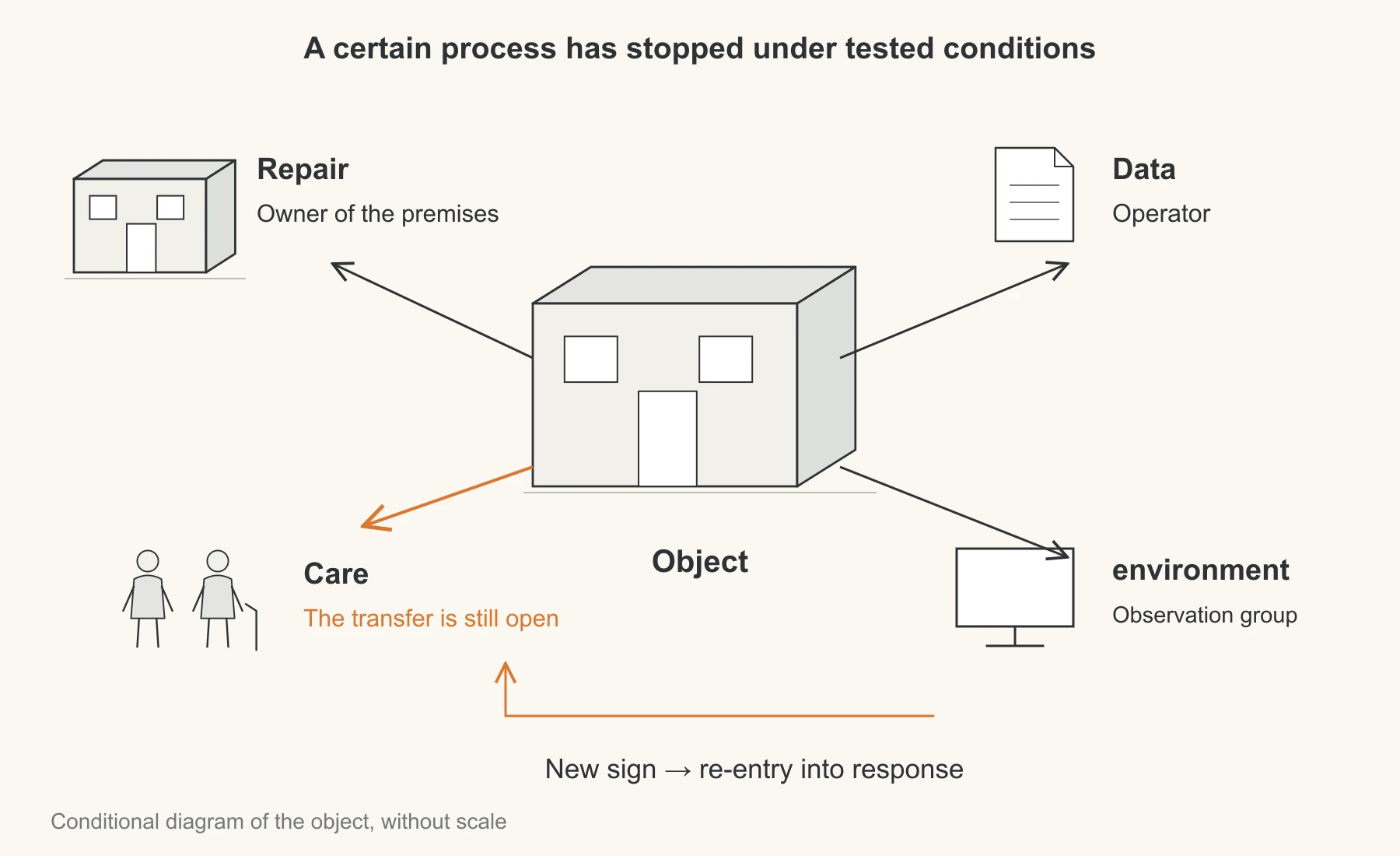
Figure 41. The process is terminated: who accepts the remaining tasks
[P] Stopping a specific process does not stop repairs, helping people, recovering data, and monitoring the environment. Each residual task is assigned to a specific recipient.
The owner of each service takes over his own site. Stopping the source does not repair the building, return data, or cancel the pending need for assistance. Environmental tasks go by S10, the return of people - by C14. For unknown delayed effects, the limit of knowledge, the available observation, and the person responsible are named instead of an arbitrary date of complete safety.
If communication is lost, the local result is not distributed to inaccessible areas. A new effect is considered as a possible resumption, secondary consequence, or other process, continuing assistance with actual harm. If control is lost, new damage occurs, or a key assumption fails, the action is stopped or revised. The exact conclusion, unresolved causes and accepted residual tasks are transmitted to F09. Unconfirmed termination language is useful in preventing premature withdrawal of protection.
G13 Long-term counteraction strategy
Who uses it. Authorized leader in conjunction with civil, scientific, defense and contact areas.
Where to start? Determine an achievable goal for the next stage and opportunities, the loss of which will deprive people of subsequent options.
When to delegate a task. When the performers of the next stage or regular services for G16 accepted the achieved result and the remaining obligations.
The protocol applies to a hypothetical scenario of ongoing aggression supported by evidence. The rationale for attribution—attributing an action to a specific participant—is stored along with the data, alternatives, and scope of inference. One participant may act intentionally, another automatically, and yet another may have no relation to the harm. The overall strategy should not turn them into a single adversary without sufficient reason.
First, the subject of counteraction is limited: what action affects whom, what is the available period of a protective decision, and what change in the situation of people is required. The goals may be to stop a specific process, access help, restore an exchange, or a verifiable pause. Complete source elimination is not designated as the only acceptable outcome unless the method is justified.
The sequences are then compared. Every first step has a continuation: will there still be shifts, inventory, independent data, a host location, and the ability to refuse an erroneous agreement? If the first stage absorbs everything necessary for the second, this requires justification before starting. Hard-to-restore capabilities are specifically named. The word reserve does not explain what future aid it retains.
Defense, exploration, contact and recovery can all happen simultaneously. Research refines the choice, but takes time; contact gives a pause, but does not repair the consequences; restoration is necessary before a final explanation. The overall plan shows where one area of work needs to warn another. It does not take over their authority: the force option passes G04, the agreement passes G10, the deficit passes G08.
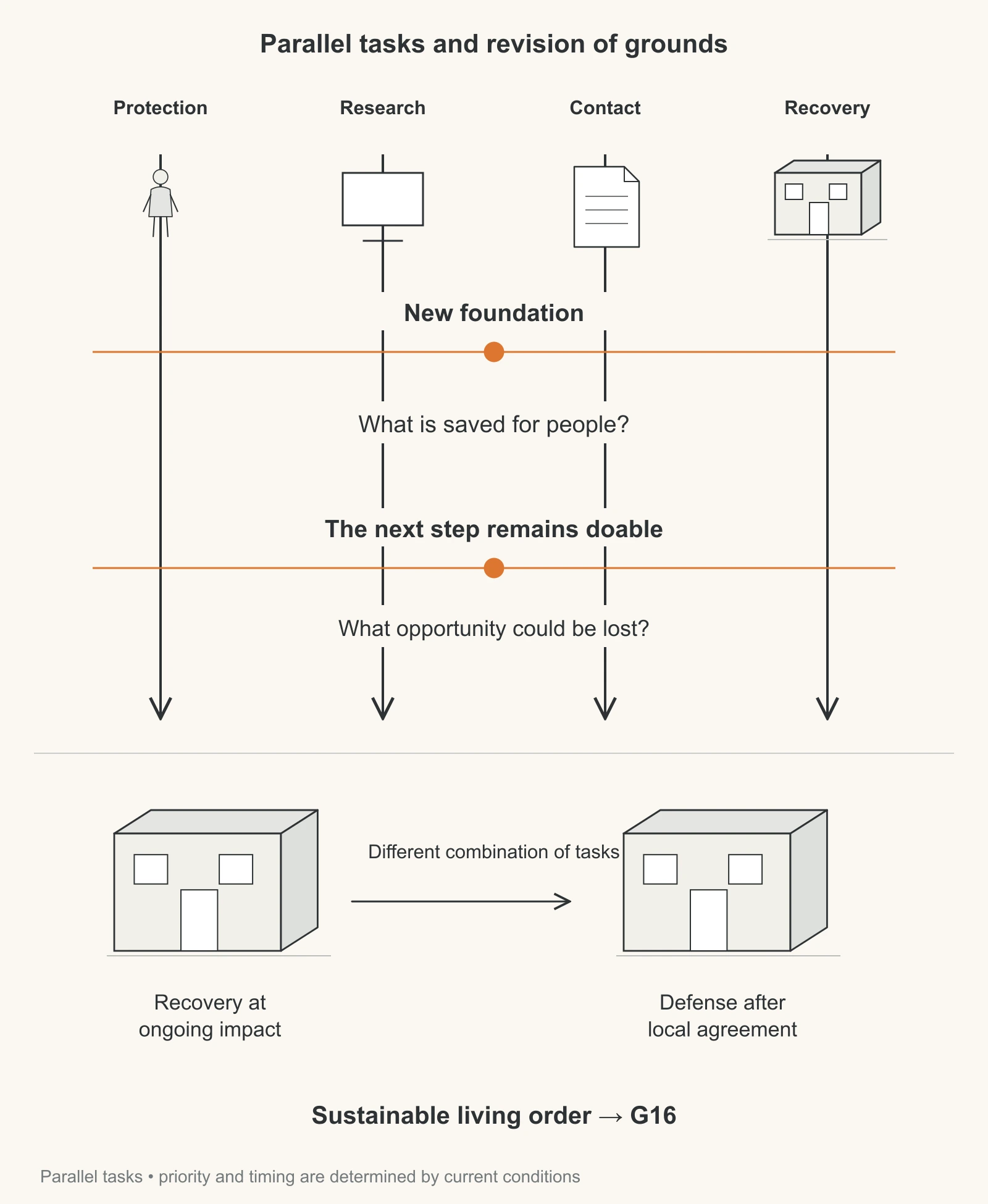
Figure 42. The strategy retains the possibility of the next step
[P] Defense, exploration, contact and restoration can go on simultaneously. Reviewing the strategy takes into account helping people and being able to take the next step.
By adapting the source, previous success is given new limits. Change may indicate adaptation, independent dynamics, technical failure, or observational error. What is important is the ability to detect the difference, not the obligation to always defend the previous hypothesis. With sufficient support, an independent group reviews key assumptions before making a significant change of course. If there are few resources, choose an issue that can change the immediate decision; the assessment not carried out is not presented as complete.
The result of the stage is checked in three respects: whether the immediate harm has decreased, whether the help people need has been preserved, and what can now be done next. A decrease in one indicator may be accompanied by a loss of another. A local disruption near a communications center, for example, could leave multiple institutions without exchange. Extending such a regime to the entire territory before replacing the service will destroy the benefit of the first success. The new task is to maintain what has been achieved in the proven area and restore the necessary exchange.
A limited agreement is also considered in case of ongoing conflict. It may concern a pause or one action without introducing the rest of the participants. Saved people and functions are counted as a result when the original goal is unattainable. The manager must name the false condition, the unacceptable consequences of continuing, and the feasible task instead of the previous one. The losses incurred do not in themselves justify new ones.
If the center is lost, the local work remains within the limits of G06. If there is no acceptable way to stop the source, the strategy moves to protection, surveillance, accessible contact and maintenance of services with clearly stated limits. If all options leave harm, indicate its distribution and available help. Stopping a specific action is necessary when the causal basis, control or function for which it was started is lost.
The stage ends with a verified status and handover of tasks rather than announcing a general date. In nearby locations, rescue, recovery, and normal life with observation can continue simultaneously. The terminated process is checked against G12. The completion of the entire strategy requires a new sustainable order; the performed operation does not create it automatically.
Contact: Understand, Help, Reach Agreement
A clear message does not yet create a clear interlocutor. It could be sent by a person, an automated system, an individual participant, or an intermediary who does not control the source of harm. Even an accurate translation of the words does not guarantee the overall meaning of danger, boundary, agreement or completion. Contact begins with the discernment of these issues, and not with a ready speech on behalf of humanity.
[O] The International Academy of Astronautics (IAA) Declaration of Principles for the Search for Extraterrestrial Intelligence (SETI) dated June 1 2026 calls for an independent review of the proposed detection of extraterrestrial intelligence and international consultation before a possible response. It relates to the professional principles of searching for technosignatures and directly excludes atmospheric UAPs and extraterrestrial life in general from the immediate area. The document does not establish emergency negotiations with a physically present party and is not an invasion agreement. [G4] Subsequent procedures for direct contact are independent author's projects.
They solve four problems in sequence. G05 checks whether there is an exchange and that it can be understood. G17 considers helping an unknown participant without making research a condition for compassion. G10 creates a limited promise, the fulfillment of which can be monitored. G15 evaluates the proposed benefit along with the dependency it creates. Success at one stage does not replace the others.
G05 First contact and check of understanding
Who uses it. Authorized contact group with the diplomatic leader, interpretation and technical support specialists.
Where to start? Save the original message, check the intended source, and determine the single immediate target of the response.
When to delegate a task. When a confirmed exchange on a specific issue has been transferred to the appropriate authorized participants or the reasons for the suspension have been established.
Work begins when there are sufficiently substantiated signs of an intentional message or interaction requiring a response. The repeating signal may be a mechanism; human speech may be a terrestrial fake or recording. The source is checked separately from the content. Preserve the original, receipt history, and available technical specifications without turning a convenient translation into the only record.
The group defines its mandate: what it can talk about, what obligations it can discuss, and what decisions it must pass on to higher authorities. For astronomical detection, the relevant international consultation procedures are taken into account. In the event of immediate danger, the established procedure for an urgent decision with preservation of reporting applies. The crew or delegation of one country does not promise the action of all mankind without special reason.
An untested medium is studied in isolation by competent specialists. The resulting code does not run in the infrastructure, the device does not connect to its control just for the sake of reading the message. The requirements within the material remain subject to analysis. This is a restriction of access to an unverified medium, and not a statement about the existence of a text that in itself has fantastic destructive power.
Independent groups offer several meanings. They should be able to see the source material without a single interpretation being pre-imposed. The agreement of similarly trained models may repeat the same premise. It is useful to separately record what observation distinguishes the translations: who should terminate the action, where the designated area ends, what is considered a receipt or a refusal.
The first message is associated with the immediate task: stopping a certain harm, requesting a pause, confirming receipt. The group does not share personal information or unnecessary data for the sake of perceived frankness. It must also understand its own limits of control. If the human side is not able to ensure the condition in all states, this cannot be hidden for the sake of a beautiful answer.
Understanding is tested through successive, mutually consistent exchanges and observable behavior. The beneficial change could have occurred independently. Therefore, the group retains alternative explanations and does not inform the public about the established security before checking it. Protection, medical assistance and communication between human services continue regardless of the prospects of the conversation.

Figure 43. Contact: check understanding by saving original message
[P] The original message is kept separate from possible interpretations. The intended meaning is tested against agreed observations, and a favorable change in itself does not confirm the success of the negotiation.
If communication with headquarters is lost, the contact group remains in the previously defined mandate. Local notification of immediate danger does not give the right to accept political obligations for those who are absent. If there are no diplomatic powers, their absence is indicated; this does not prohibit the competent communication of the necessary observations within the permitted limits.
Exchange is suspended when there is new harm, loss of source verification, meaning or control, or a requirement to go beyond the mandate. Suspension does not prove hostility of the entire hypothesized party. Transmit originals, versions of understanding, completed messages and unfinished obligations. A further agreement is being considered for G10, a technical proposal is being considered for G15. The inability to continue should also leave the next group with a reason, not just a mark of unsuccessful contact.
G17 Assist an injured or non-aggressive unknown participant
Who uses it. Contact manager, subject matter experts, safety officer and individual observer for grounds of assistance.
Where to start? Describe a state without a ready-made image and separate the needs of people nearby from the expected needs of an unknown participant.
When to delegate a task. When the competent group has accepted the contact, acceptable assistance and remaining questions or its impossibility are honestly recorded.
The participant may be an organism, a device, a temporary part of a distributed system, or an erroneously allocated object. Calmness does not prove harmlessness; an unusual reaction does not prove intent to cause harm. This protocol does not determine biology and legal status in advance. Its task is not to lose the opportunity to help because of the hasty image of an enemy or a patient.
Movements, messages and changes in the environment are recorded before they are explained. The words “wounded”, “asks for water”, “surrenders” are marked as interpretations if the meaning is not confirmed. There may be a malfunction, a normal phase of an unknown process, or a message about another participant. If there are injured people, their assistance will be organized according to existing procedures, regardless of determining the status of the unknown party.
The bystander is not required to approach, transport the participant, or attempt treatment. He reports what he observes, observes the usual measures of his own safety and does not attract unnecessary observers to the place. The boundaries of the place are determined by competent performers based on actual conditions; the form in the picture and the general card do not indicate a safe distance.
If there is an exchange, according to G05 they clarify to whom the request applies and what its fulfillment would mean. The reproduced words do not confirm understanding of the assistance offered. Experts call the limit of their competence. The compatibility of air, temperature, water, food, medicines or materials cannot be transferred to an unknown participant without reason. Even a habitual maintenance action can change conditions whose significance is not yet known.
The request is parsed into the specific expected result, confirmation method, and consequences of delay. Requiring access to infrastructure, biological material, personal data or management of people receives separate consideration. The desire to help does not give the right to dispose of other people's resources. If only the transfer of information to specialists, freeing up space from unnecessary intervention or limited exchange is available, this is called the current volume of assistance.
Consent to observation does not mean consent to intervention. Asking for help does not imply consent to any research. For each action, they find out how much understanding is confirmed, whether the participant can communicate a refusal and how to notice the consequences. Failure to respond does not become a general permission. The decision to an impossible exchange requires separate, competent consideration of necessity, alternatives and boundaries; the book does not provide permission for medical or biological experimentation.
Research work has its own basis. Need does not turn a participant into accessible material, and public demonstration for the sake of sensation is not included in the help. Samples and sensitive records are transferred to the competent organizations in accordance with the established procedure. The independent observer also receives information about objections and failures.
Figure 44. Assistance to an unknown participant within the limits of the confirmed
[S] One conditional version of the meeting. Assistance, observation and control of operating limits are organized separately; The shape of the participant and the distance in the drawing do not indicate his biology or a safe distance.
The effect of the aid is compared with the expected change and alternatives. Movement may not mean recovery, calm may not mean relief, and stopping the device may not mean loss of consciousness. The distributed element may not express the consent of the whole. The desire to finish what you started does not confirm the benefits of help; the unknown result is noted in the recording. If there is new harm, loss of control, or unconfirmed expansion of action, specific assistance is reconsidered, while other reasonable options are preserved.
Without sustainable exchange, the scope of the conclusion become narrower. If the specialized team is unavailable, initial observations and previously acceptable assistance are maintained without expanding the intervention due to lack of response. If a person reports a participant who has not yet been observed independently, the record is retained respectfully. It proves neither the existence of the creature nor the diagnosis of the person reporting it. Help for a person is organized according to the observed condition; the book discourages investigations into the supposed replacement of familiar people.
The transfer includes initial observations, versions of meaning, assistance provided, refusals, limitations, and unresolved issues. Moving a participant or submitting an entry does not mean acceptance. The next group confirms the available competencies and conditions. Good limited work does not have to end in proof of intelligence or complete understanding.
Help without assigned meaning
[S] On an area closed to casual passage, an unknown participant is observed who has stopped moving and repeats the word “flow” through the available channel. Part of the group understands it as a request for water, the other as a request for connection. The participant's abilities and needs in the exercise do not match those of humans. The existing isolated channel allows messages to continue; the safety of changing its environment or technical access has not been confirmed.
The first option is to immediately carry out the most familiar interpretation. The second is to stop all communication until a full explanation emerges. Select limited assistance: maintain the channel, eliminate unnecessary crowding of observers, and transmit a clarifying question about the recipient and the expected change. Price - the perceived need remains unsatisfied; it is not called assistance provided.
The next message points to another location on the site. It becomes clear that it may concern a different part of the system, and that the first participant's immobility was insufficient evidence of injury. The group changes what it seeks to clarify and sends both records to specialists. It does not offer water or connect a device on a guess. In this branch, the full request is still unclear, but the available exchange has been preserved, and an intervention directed at the wrong recipient has been avoided.
G10 Verifiable agreement and de-escalation
Who uses it. A contact group with an established mandate and a separate implementation observer.
Where to start? Write down exactly who promises to change what behavior, where and how both parties recognize the result.
When to delegate a task. When the limited result is confirmed, the obligation is accepted by the competent successor or suspended by understanding.
An agreement becomes possible after sufficient verification of the exchange at G05. Its initial scope is best limited to specific harmful interactions. The promise of universal peace is meaningless if an understanding of one task has not yet been established. The source of the message may be different from the source of influence, and the visible representative may not control the other participants.
In a collective system scenario, the interlocutor is a temporary element; in an automation scenario, meaningful speech can accompany an unchangeable task. Multiple parties may not have a common decision. Therefore, understanding, ability to perform, and the right to speak for others are checked separately. Loudness, repetition and patience do not have to make human sense to them.
The agreement passport contains the parties, their actions, the scope, the start event, the sign of execution, the method of reporting impossibility and the condition of suspension. If time is understood differently, the words “soon” and “until tomorrow” do not define a period. You can rely on events available to both parties, but the same understanding of these events is also checked. Neither a dictionary nor a beautiful translation replaces this step.
The human group checks in advance whether its performers are capable of delivering what they promise. It does not promise to turn off all transmitters or the behavior of every state if this is beyond its control. The required approvals are obtained before the commitment is made. A false promise for short-term relief creates a predictable violation, even if the local performers did not intend to deceive.
The content is compared in several ways of interpretation. Then the minimum acceptable stage with the observed result is selected. Small scale does not in itself make it safe. Verification should not require connecting an unverified device, running code, transmitting personal data, or stopping required assistance. The technical condition is considered separately under G15.
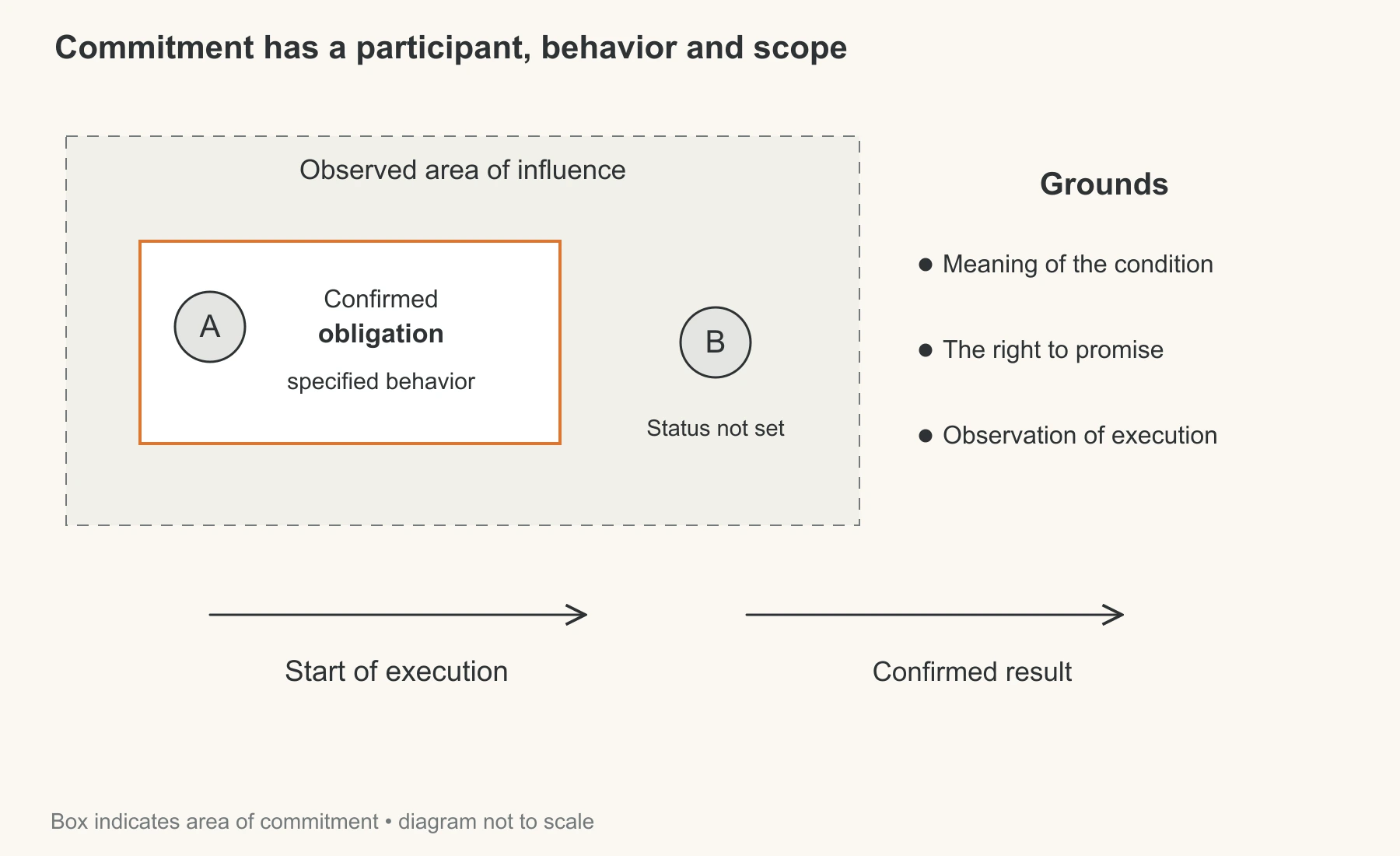
Figure 45. Limited agreement: who confirmed what, where and what
[P] The agreement covers a confirmed participant, a specific behavior and an area. The meaning of the message, the right to promise and the observation of fulfillment are checked separately.
Getting started is different from success. The observer records actual behavior and data quality, including alternative causes of change. Partial compliance may be due to meaning, delay, lack of control, refusal or deliberate violation. While the cause is verified, the protection continues and the obligations are not automatically extended. The verified result is communicated to the population with a precise area, without spreading it to the rest of the participants.
Without communication with headquarters, the group retains its previous mandate and archive. The impossibility of the condition due to the loss of the channel is reported in an accessible, provided manner; the silence of those absent does not become consent. If verification of source or meaning is lost, there is new harm, the mandate is exceeded, or unauthorized access is required, the exchange is suspended. This does not prove hostility on all sides.
The output contains the original condition, translation options, powers, observed execution, deviations and residual promises. If there is no stable exchange, they return to observation. When a pause is confirmed, the consequences are continued to be checked. De-escalation means reducing a specific dangerous interaction, rather than having to assume the unknown is safe.
A pause that was interpreted differently by different parties.
[S] Five moving objects are associated with confirmed equipment violations in multiple areas. In the exercise, the causal relationship is valid for the specified type of impact. A message arrives through a separate channel, allowing two translations: objects will cease to operate, or people must stop their own work. Reception of people has already been organized at two verified sites; it cannot be expanded without a new assessment.
One negotiation position suggests accepting a favorable meaning immediately: a pause is meant to help, and delay also causes harm. The other requires postponing the exchange until the party’s language and organization are fully understood. The headquarters chooses the limited task of confirming a specific termination in one designated area while maintaining available assistance. It does not send the command to the population to stop everything. Two groups maintain the discrepancy and prepare a clarification.
The answer links the pause to the three completions of the designated exchange. The overall hours are not agreed upon, so the group asks for confirmation of which observed event is considered completed. At the same time, a prompt appears to connect an unknown component. The technical team does not confirm such access; negotiators find out the possibility of fulfilling the condition through an already available channel. The agreement is accepted only in this limited version.
Three objects stop influencing, two continue. This allows you to use a confirmed pause for tasks that have already been recognized as feasible in the corresponding area. There is no general removal of protection. The price of partial success is that neighboring sites remain restricted and receive less available work now. Their needs do not disappear from the plan for the sake of declaring peace achieved.
After the second human confirmation, one of the three objects resumes action. Headquarters returns the affected task to defense, but does not declare a violation of the world treaty. A new comparison of records shows that the party considered the retransmission to be a separate completion, and the human group considered it a copy of the previous one. According to the sender's account, a third event has already occurred. This does not establish the device of all participants, but it does provide a specific reason to change the condition.
The following limited exchange distinguishes between receiving a new message and repeating the old one with confirmation of the meaning. The beginning and end of the pause are checked again for the participating objects. The result is a restored local pause with clearer terms, continued danger elsewhere and an open question about representation. Diplomacy produced useful results without the promise of equal time and common intelligence among all observed elements.
G15 Help offered and technology dependency
Who uses it. Responsible for the service people need, subject matter experts, contact group and independent reviewer.
Where to start? Separate the promised benefit from the observed effect, conditions of use and counter-obligations.
When to delegate a task. When limited use or refusal has a person responsible, clear reasons and a plan to support the original human need.
The offer may be useful, dangerous, misunderstood, or both useful and capable of creating severe dependency. Confirmation of the effect does not answer questions of management and future maintenance. An obscure device also does not prove hostility. The protocol is applied after initial contact verification to a resource, device, information or service with a promise to improve the situation.
First, the service owner describes the existing need and the available alternatives. Urgency is determined by the consequences for people, not by the sender's deadline for consent. Options remain denial, deferment, limited consideration and pre-existing substitution. Bad alternatives need to be shown honestly; their shortcomings do not make the properties of the new proposal known.
Record the sender within the limits, the material received, the promised function, the conditions and the required actions. Demonstration in an unverifiable environment has limited validity. Then they separate the acceptance issues. Subject matter experts are responsible for substantive verification, negotiators are responsible for the meaning and mandate, and the head of the service people need is for its continuation. Neither the researcher nor the negotiator can single-handedly promise to cut off needed aid for the sake of future benefit.
Question | What can be confirmed | What doesn't follow from this? |
Efficiency | The function was obtained under the described conditions | Suitability for other tasks and scales |
Security | The consequences that are significant for this task are assessed competently | Absence of any unknown effects |
Management | The person in charge respects the restrictions and may stop an acceptable portion of the work. | Complete independence from external components |
Maintenance | Maintenance, consumption and possible replacement are known | Lifetime supplier availability |
Liabilities | The condition is understood and accepted by authorized participants | Consent of absent states or people |
Compatibility includes environment, communications, materials, maintenance and required access. The blanks are not filled with similarity to a known device. Unknown material will be examined using appropriate professional procedures. The proposal of a medicine or health intervention is submitted to the current medical and research procedures of the competent organizations; the promised effectiveness does not give a separate permission to treat people with an unknown remedy.
Then they trace the path from the offer to the service to the person. What will need to be changed in the current system? Is it possible to return to the previous option? What happens without an update, translator, delivery or service? If the work rests on a single unverifiable promise, that dependency must factor into the decision along with the observed benefit. Supplier failure becomes especially dangerous after in-house capabilities cease.
The competent group chooses an acceptable way to obtain the missing information. A small experiment is not considered safe simply because of its size: the route of exposure, observation and the ability to stop are important. If there is no acceptable way, a reasoned delay or refusal remains a valid decision. With partial support, they only consider what they can verify. A contact group without technical competence preserves the terms of the proposal and ascertains the meaning, but does not take responsibility for assessing safety.
Permitted use is given by area, recipient, owner and termination condition. Changes in scope, purpose, or version are reconsidered. Significant restrictions are communicated to people in a clear way. Before a critical dependency occurs, the output is checked: who will continue to help when access is revoked and which changes cannot be returned. Simply stopping use can become dangerous if the new service is already needed.
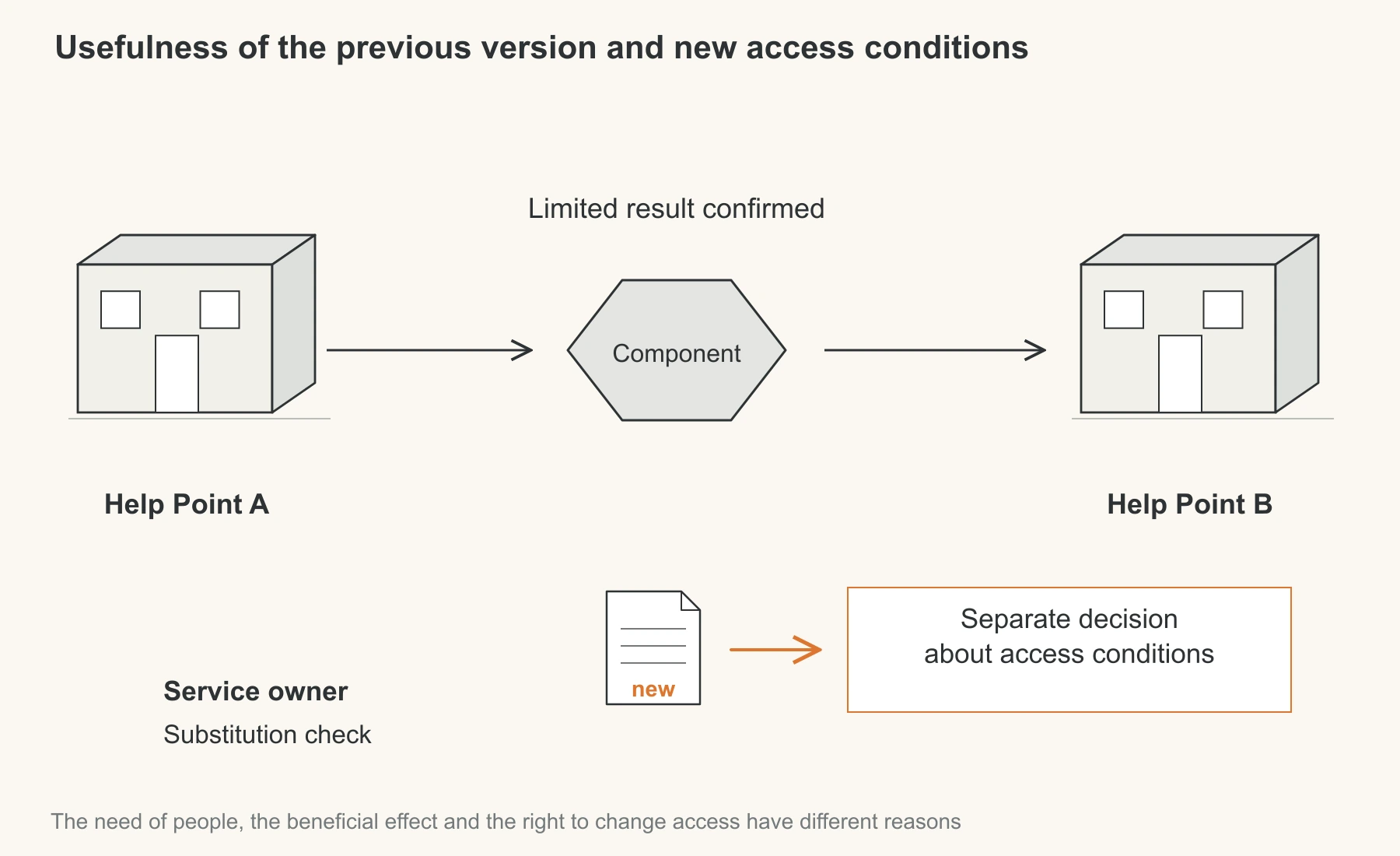
Figure 46. Useful technology and new update dependency
[S] The proven usefulness of the previous version does not confirm the new conditions of access. The service owner separately evaluates the change in dependence and the ability to continue assistance.
Without communication, confirmed limits are maintained; a new commitment is not accepted by silence. Work is revised if a significant condition changes, a new consequence occurs, verification is lost, or access is required beyond the mandate. If the application supports a required service, the suspension is arranged with its owner and an available replacement. Further, the benefits, failures, service and user requests are checked, not just the demonstration shown. Rejecting technology leaves people's original need open.
Useful component and condition of the next version
[S] Two help desks are using an unknown component for limited information exchange. In the exercise, its beneficial effect is real and confirmed only for this task after competent consideration. It does not manage engineering systems. Before the decision, there was a prepared courier route that was able to transfer the necessary lists once per working period, but did not provide the same speed for all messages. The service points have preserved this route and the people to operate it.
Initially, it was possible to discard the component and retain the slower assistance, or to accept limited use and retain the independent method. The second option is chosen. Points coordinate delivery faster and benefit, but part of the usual work begins to rely on frequent exchanges. The cost manifests itself as a dependency: the delay of the channel will now affect more decisions than before its introduction.
The sender then states that the next version requires increased access and that without it further operation is not guaranteed. The first position is to agree, because the previous version helped. Another is to immediately stop all interaction. The first transfers the previous check to a new condition, the second risks cutting off already necessary help before it is replaced.
The service owner first separates truly necessary messages from convenient, frequent exchanges. The contact group clarifies the meaning of the guarantee and the period, the technical one evaluates the new access, and the independent group checks the basis of urgency. Since the security of the extension has not been confirmed, the commitment is not accepted. The necessary lists are transferred to the saved courier order; the previous version is used only in the previously valid area while its state is confirmed. This decision does not imply unauthorized modification of the device.
Practical cost - some answers come later, some unnecessary work is postponed. The service points change promises to recipients in advance and assign responsibility for messages that did not make it onto the next trip. They do not call this mode an equivalent replacement for all the previous convenience.
Later, a new request reveals that one point has already promised a third party a connection to this exchange. The conditions of the initial inspection do not cover it. The extension is canceled pending a separate review, and the failed recipient is informed of the actual capabilities and his request is saved. This new fact does not change the physics of the component, but the human obligations around it. Success is the preservation of the necessary help and the corrected promise. The benevolence of the sender and the suitability of a future version remain different open questions.
Life Beyond the Emergency
Continued threat changes the meaning of preparedness. The supply for the first episode is being used up. The specialist needs a shift; temporary premises require maintenance; Children and adults need education, work and connection with loved ones. It is impossible to consider as normal for months an order that rests on the insomnia of some people and the constant postponement of all other needs.
The reserve must lead to the following action: confirmed replenishment, repair, replacement or relocation. Declaring the same stock as strategic again does not increase it. Water, energy, transportation and personnel have different constraints and cannot be summed up into one reassuring percentage. An almost complete warehouse is useless without a single specialist, whom no one can replace.
The long-term plan includes transfer of skills under C19 and F10, recreation and support for performers' families, and available regular services. The inability to provide a replacement worker is recorded as a specific training dependency. The next shift receives unfulfilled promises: the application was accepted, but delivery was not scheduled; the premises were opened, but care was not organized; the restriction was introduced, but there was no one to review it. Such gaps must have names of responsible roles, otherwise they will live longer than the headquarters itself.
Public communication also becomes a full-time job. People need a clear rhythm of clarification and a way to report errors. The headquarters checks whether the proposed action can be carried out and who is deprived of the channel of appeal. The absence of complaints does not promise prosperity. Getting your life back on track starts with accessible service and a verifiable right to correct your decision on the spot.
G16 Living sustainably in the face of ongoing threats
Who uses it. Those responsible for public services, local authorities in their powers, representatives of affected people and subject matter observers.
Where to start? Separate tasks that still require urgent response from living conditions that can already be maintained regularly.
When to delegate a task. When regular performers have accepted service, human participation, observation, and a feasible return to response.
The card considers a conditional situation in which the source can be partially limited, bypassed or taken into account, but its immediate termination is not justified. Habituation does not prove the disappearance of danger. At the same time, unknown origin does not require any original prohibition to be maintained indefinitely. The subject of this work is services, expenses, responsibility and people's lives, and not another emergency distribution according to G08.
They make a map of what is stable and what is changing: proven effects, incomplete observation, long-term services. Absence of events after the end of follow-up is not considered stable. At the same time, they find out who the general option is not suitable for: people with dependence on certain assistance, limited mobility, lost income or absence from regular registration. The same address does not mean the same availability of a new life.
A repeatable order is established for each required service. Who receives it, how does it get there, who maintains the facilities, what happens during repairs or when an employee gets sick? The plan is tested as the season changes, new residents arrive, and families change. A team that operates only with the same composition does not ensure sustainability. Voluntary participation is not recorded as a permanent guaranteed resource without the consent of the participants themselves.
Urgent management is left where it is needed, and sustainable tasks are transferred to ordinary owners. The transition coordinator connects them without acquiring the right to manage all aspects of life. For education, delivery, communications and assistance, service and funding are determined as applicable. The abolition of the emergency organization should not leave the work without performers, but the convenience of the previous headquarters also does not serve as a reason to maintain it everywhere.
Each restriction receives a clear purpose, legal basis, scope and procedure for review. People need to know what observation can change it and where to turn if applied incorrectly. Additional household losses are taken into account as consequences of the decision. A person's disagreement with a particular restriction does not prove he is hostile. Technical data, value choice and decision authority are discussed separately.
The test of order is carried out with the participation of those who experience its limitations, and is not limited to a single meeting. Applications are considered based on actual need while maintaining confidentiality. Average delivery time may remain acceptable when the distant group has already lost assistance; the number of open institutions does not indicate whether a person is able to use them. Therefore, next to the working services in the report there are people for whom the decision is incomplete.
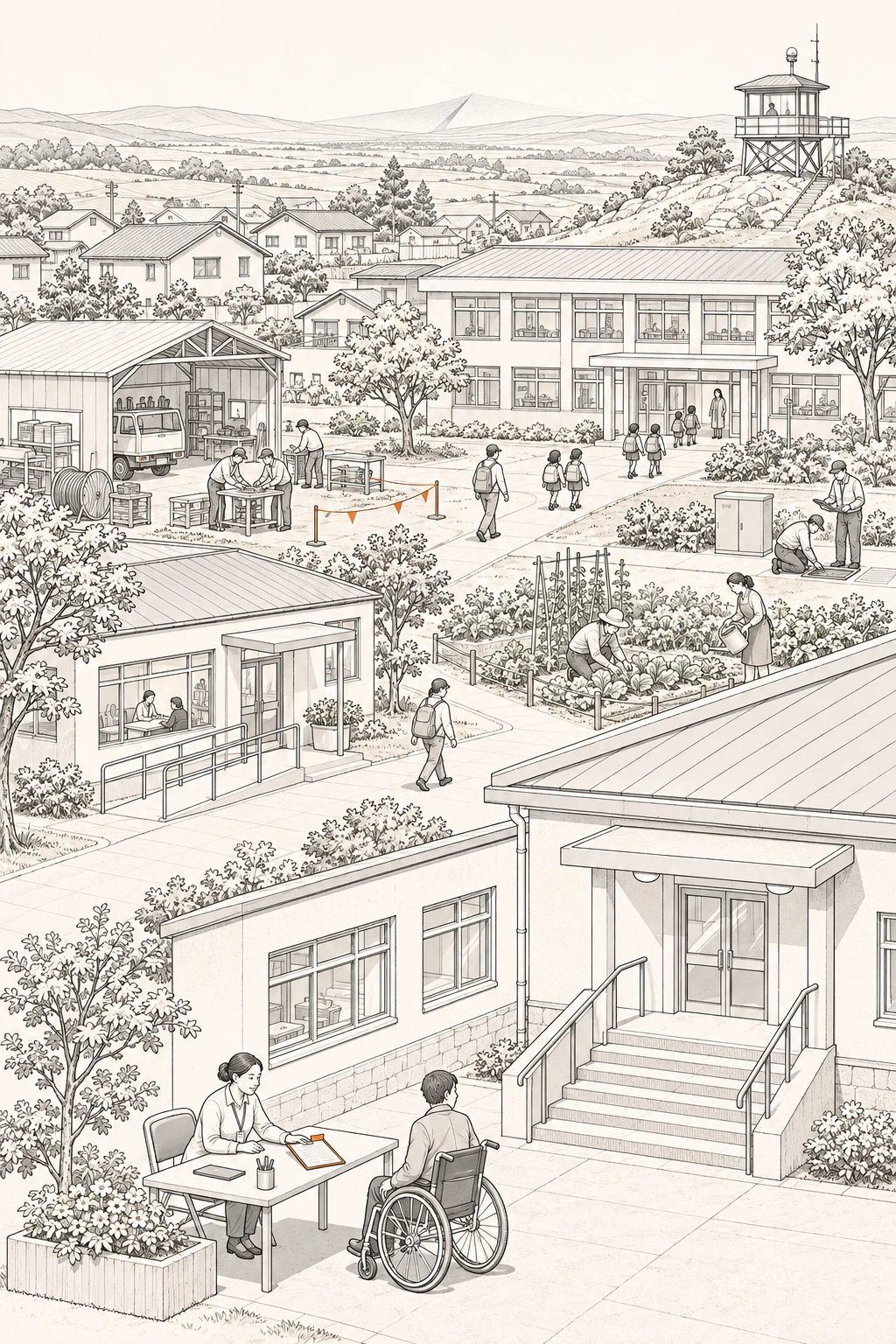
Figure 47. Sustainable living next to a sustainable source
[S] Conditional panorama without scale: housing, study, work, help and service continue with continued observation. Local restrictions and unmet needs are reviewed separately; For a specific service, an accessible alternative will be organized.
A person in charge with access to the source data is appointed for monitoring. For the agreement, versions of meaning and execution are preserved. A new member, device or condition is not automatically covered by the old consent. If negotiation is not possible, a sustainable order rests on verifiable human capabilities and recognized limitations. It does not require a promise that the unknown party will remain unchanged.
Continuing residence is compared with long-term movement in terms of access to assistance, housing, education, work, and family connections. A general command to move does not create a host place. If it is impossible to ensure sustainable conditions, consider a specific arrangement of life in another place according to the applicable law and established procedures. Issues of consent, rights and statutory enforcement are resolved competently and not inferred from the unusual nature of the threat.
The plan contains signs of a return to response: new harm, service failure, change in access, or loss of the basis for the previous assessment. The resident is not required to figure out the nature of the phenomenon; the message must lead to a clear action for its location. If external communications are lost, local providers will continue the confirmed services and provided supervision. A change to an agreement that has not been received is not declared valid.
The immediate horizon preserves assistance today, the next one preserves maintenance and shifts, the distant horizon preserves the suitability of order when the population and economy change. These horizons do not set universal deadlines. When transferred to a new team, and later to the next generation, users are tested on their ability to act without constant prompting from the previous team. The history of unsuccessful hypotheses is preserved so that they do not return as new knowledge.
Revision is required when environmental or health conditions deteriorate, services are lost, new knowledge is acquired, or the basis for the measure expires. The outcome is considered to be a stable order with accepted work and available support, not proof of the absence of any future events. If some of the needs cannot yet be met, they remain open tasks. The disappearance of a source at a later date will also require a separate test for removing residual restrictions.
G11 Completion of emergency measures and responsibility for consequences
Who uses it. The authorities that introduced specific measures and the implementers who took over normal work after the emergency phase.
Where to start? Check current restrictions against current rationale and actual practice on the ground.
When to delegate a task. When temporary powers are completed in the prescribed manner, the remaining tasks are accepted, and people know the current conditions and methods of treatment.
Ending a state of emergency is more difficult than stopping talking about an event. The restriction may continue by verbal order, although the document has already changed. Help may disappear along with the headquarters, although the need remains. G11 considers each measure separately. It does not extend powers or replace mandatory legal procedure; grounds, terms and competence are determined by current law.
They start with a register of real measures and exceptions. For each, the task, the people affected, the current basis and the criterion of necessity are restored. The visible source may have disappeared, leaving behind damage or contamination. The cause may remain unknown after the immediate harm has been eliminated. These conditions do not require the same decisions.
If the legal basis is lost, they act according to the applicable procedure without waiting for complete scientific certainty. Supporting people receives a separate treatment. Lack of preparedness of assistance does not justify maintaining a prohibition that has lost its basis; actual residual hazards are assessed independently. Lifting a restriction is not a command to a person to return.
Responsible specialists check the suitability of premises, engineering systems and conditions of assistance in their area. Related services are restored in a consistent manner. Staging is useful when it allows you to notice deterioration before the consequences expand. If this is not possible, the mere existence of a schedule does not prove safety. A review of the termination of exposure is carried out according to G12, the return of people - according to C14.
Regular services accept residual tasks, necessary data, contacts and funding in due course. The transfer requires confirmation of the ability to fulfill the obligation. The headquarters does not close the application because it itself stops working. People are told what has been cancelled, what remains, for what reason and where to go if there is a discrepancy. The correction is distributed through the available routes through which the original error was received.
Materials for legal analysis and protection of rights are preserved, limiting unnecessary further storage of personal data in accordance with applicable rules. The research archive does not translate into the free circulation of victims' records. The debriefing evaluates the choice against the information available at the time and assigns specific corrections. It does not replace competent review of violations and redress and does not promise its outcome in advance.
If there is no communication, local services will use the established procedure for terminating their own measures and the available notice. Loss of the channel does not make the expired permission valid. In case of new harm, an appropriate response is opened on a new basis instead of an automatic indefinite extension of the previous regime.
If recovery worsens the situation, suspend the affected phase while maintaining assistance. If the recipient of the task is unavailable, the transfer remains incomplete. The summary record lists actions canceled and maintained, responsibilities accepted, open cases, and how corrections were verified. Closing the headquarters does not end responsibility for the consequences of its decisions.
The result that remains after the headquarters
A strategy leaves behind more than a changed source. People remain who did or did not receive help, along with capabilities restored or lost, commitments made, mistakes, and the work of correcting them. Counts of meetings and completed actions describe activity; these people's condition shows the outcome.
A good plan withstands an unfavorable test: the explanation turns out to be wrong, translations disagree, the delivery is delayed, the center is again unavailable. For each case, there are performers, recordings and the next feasible step. The scope of this manual is not a substitute for checking your local variant. The base and crew still need approved procedures, the city still needs real receiving services, and the family still needs accessible help based on its circumstances.
If the source is preserved, life continues with known limitations and open questions. If it has disappeared, restoration still requires work. The task of the state and strategy is to maintain the ability of people to live, care for each other and reconsider their decisions. This ability is supported by the specific shifts, supplies, knowledge and commitments that the next person has actually made.