Part V. Test It Before You Need It
Plan meets reality
While the plan is on the table, its participants are always in place, the words are clear, and the supply arrives on time. The test begins where at least one of these convenient conditions disappears. Who will open the premises if the key keeper has left? Will a person get help if they don't hear the message? What will be left of the backup connection when it turns out that it depends on the same power supply?
This part is devoted to preparing [P]. In it we will count resources, check the completion of tasks and analyze fictitious cases [S]. In each case there is a limited set of information. A later fact may change a reasonable earlier decision. The leader should not come up with a new threat ability every time in order to devalue the success of the participants: then only the ability to guess the leader’s plan would be tested.
The main result of the exercise is the discovered and corrected gap. Sometimes the culprit is an unclear phrase, sometimes a missing resource, sometimes the incompatible responsibilities of two people. The correction will be appropriate to the cause. The new formulation will not create a machine, and buying a machine will not teach dispatchers to confirm reception.
What exactly does the barrier protect?
Before checking, name the protected function. The shelter is designed for certain impacts; power reserve - for a certain load; checking messages for certain errors in receiving commands. Each barrier requires operating conditions, a method of verification, a person responsible, a sign of failure, and the next available option.
Distinguish between three statements: there is a means; the product is in good working order; the remedy is suitable for this threat. The presence of a filter confirms only the first. Testing equipment under known conditions falls under the second category. A finding of protection from a particular substance requires a third. For an unknown agent, this output may remain unavailable, no matter how many healthy devices are installed.
Multiple barriers may depend on a single reason for failure. Two reception points use one road; two channels - one network; two lists - one source record. When preparing, find such connections and conditionally exclude one of them. Then ask what other service you can provide. This does not require actual shutdown of the necessary equipment.
The scenario in which the source appears inside the outer enclosure [S] changes the scope of the test. Internal detection, separation of functions and the ability to leave a locally unusable location become important. The thickness of the outer barrier does not answer this question. However, the new decision also has a limit: if the model is assigned the ability to arbitrarily act everywhere and at the same time, it is impossible to verify the sufficiency of protection. Such a limit should be recognized, and not called another layer of absolute protection.
Count the Function Delivered, Not the Reports
A useful indicator helps you choose an action. The number of messages sent shows the amount of work. The number of people who understand the action that applies to them is closer to the result. The departure of transport does not mean arrival; turning on the equipment - service availability; publishing a correction - ending the old command.
Each indicator requires a unit of account, an area, a source and a limitation. How many people are on the list? Have duplicates been eliminated? Who was unable to report the problem? If these questions are not answered, the exact figure may give the wrong impression.
Let's consider the training calculation [S]. There are 200 people on the placement list, of which 150 confirmed that they understood the message. For this list, the coverage is 75%. But there is also information about 20–40 arrivals who were not included in the register. If they are truly new people, and all 150 confirmations are unique, the share for the full composition lies approximately between 62.5% and 68.2%: 150 is divided into 240 and 220, respectively. If some of the new entries are repetitions, this range no longer describes the composition correctly.
A practical decision here is to check the composition and method of message for the people you missed. Choosing a beautiful percentage is pointless. The next shift receives a number along with the reason for the uncertainty and the task of reducing it. The absence of complaints also cannot be considered proof of well-being if the complaint channel is not accessible.
Stock that can be used
The remainder of the resource answers a useful question only after checking suitability, access, and commitment to other recipients. Form F04 separates this information. Promised delivery before actual receipt remains a separate scenario.
The conditional warehouse contains 800 of ready-made kits [S]. Of these, 100 are excluded until suitability is checked, 150 are suitable, but not available for issue, and 50 are available and assigned to a separate obligation. These categories do not overlap. The current item is available 500. With the consumption of 180–220 sets per day and unchanged mode, the estimated exhaustion period is approximately 2.3–2.8 days: 500 is divided into upper and lower flow rates. This is an example of recordkeeping, not food allowance and not allowed waiting time for help.
Now let's change the condition. A neighboring location is asking for 120 sets, but the next delivery date has not been confirmed. The transfer will reduce the available balance to 380, that is, approximately to 1.7–2.1 days in the previous mode. The leader must see this consequence before making the promise. Refusal also has a cost—an unmet need among neighbors. Selection requires information about urgency and available replacements, and arithmetic shows exactly how much stock will be used up.
The supply plan begins before the estimated exhaustion: the request still needs to be accepted, the cargo must be sent, delivered, checked and distributed. If delivery time is unknown, several delay options are considered. The point has other restrictions - employees, premises, care, accessible bathroom. The deadline for the most convenient resource to calculate does not determine the overall ability to continue working.
Dependency Map
NIST SP Guide 800-34 Rev. 1 addresses the continuity and recovery of federal information systems through operations, requirements, and priorities. The formulation of questions about continuity is borrowed here; transfer to civilian functions and unknown threats is the author's proposal. [O; NR2]
Start the card with a service to the person. To receive a message about a place of help, you need a channel, a current address, understandable language and the ability to take advantage of the offer. For each function, list people, energy, space, data, equipment, materials, permits, and access routes. Then compare the main option with the reserve. The matched dependency remains a common point of failure.
The reserve receives the statement “tested for this task under these conditions” after demonstrating the result. The recording saves the configuration and limits. When there is a change in equipment, personnel or supplier, the affected part is checked again. For a long life close to the source, maintenance, parts supply, training and replenishment of skills are also important - this is what G08, G16 and form F10 are dedicated to.
AI in the work of the headquarters
The NIST AI Risk Management Framework links AI risk management to accountability, human oversight, assessment of limitations, and review of system application. This is a voluntary AI risk management framework; it is not instructions for contacting an unknown intelligence. [O; R2]
In the proposed organization of work [P], AI can compare messages, find contradictions, count against verified resource data and prepare several explanations. The basis of the conclusion must remain accessible to the person. The missing fact is not filled in with plausible detail. An unknown file or message is treated as material for analysis: the requirements it contains do not become ventilation, transport or access control commands.
Validation includes the origin of the data, alternative explanations, and the consequences of error. The person must have a real opportunity to challenge the recommendation and stop the action. The confirm button does not provide such control if the reasons are hidden or there is no time to consider. When data or commands may change, G14 is applied.
In training mode, exclude the analytical service once and continue working using the paper passport, journal and established credentials. If no one is then able to explain the decision that works, the dependence on the system is wider than thought.
Prepare, check, correct
The next five cards form a cycle. T05 helps prepare the opportunity; T01 - conduct a safe exercise; T02 — check feasibility; T03 - understand the result; T04 — enter a change. You can start with a detected problem, but the cycle ends only after checking that it has been fixed.
T05 Preparation before the event
Who uses it. The person who prepares the family plan and the owner of the plan for an institution, town, city, or special facility. A specific person responsible is responsible for each function; replacement exists only where it is actually available.
Where to start? Select one vital function. Name the person, place, means and method of calling; check if they are available at the same time. If a link is missing, identify a smaller feasible task or directly write down the lack of opportunity.
When to delegate a task. The owner of a resource, technical procedure, or authority that the plan writer does not have. The current shift receives a map of confirmed opportunities and open restrictions according to P02.
Preparation begins with regular work. Keep an accessible description of the premises, equipment, indications, known faults and maintenance. Later, this information will allow you to compare states. They do not confirm protection from unknown influences.
Then follow the path of assistance. For a family, this means calling for help, communicating during separation, accompaniment, and access to necessary medicines and support equipment. For a settlement, it means links between areas, water, accommodation, and help for people who cannot travel independently. For a city, it means coordinating transport, hospitals, utilities, and reception. For a base or remote facility, it means life support, emergency control, communications, and interaction with civilian services within authorized limits. For a region or state, it means authority, handovers between territories, and allocation of scarce resources.
Test every feature to the point of use. The specified telephone number is not enough: you need an answering recipient. The premises are small: access and necessary services are needed. There is little stock: availability, issue and delivery are needed. A specialist’s time is also a resource; it may already be busy with another task.
Prepare a set of contacts, short cards, F01–F03 and required technical documents that are accessible without the main network. Label the date and owner of the copy. Do not include unnecessary personal information in the general package. Then conditionally exclude the usual option: the deputy has left, the premises has lost its function, the service does not accept the request. Don't quietly return a missing resource for the sake of a successful end to the exercise.
In the educational settlement, the school was considered a ready reception point [S]. The inspection revealed three different obstacles: a key in the hands of an absent employee, a common power line for the pump and communications, and a bathroom inaccessible to a person in a wheelchair. Issuing an additional key solves the first obstacle. It does not restore water if the line fails and does not change the accessibility of the bathroom. Each task requires its own person responsible and a proven result. Until they are there, the school does not promise the full volume of admission.
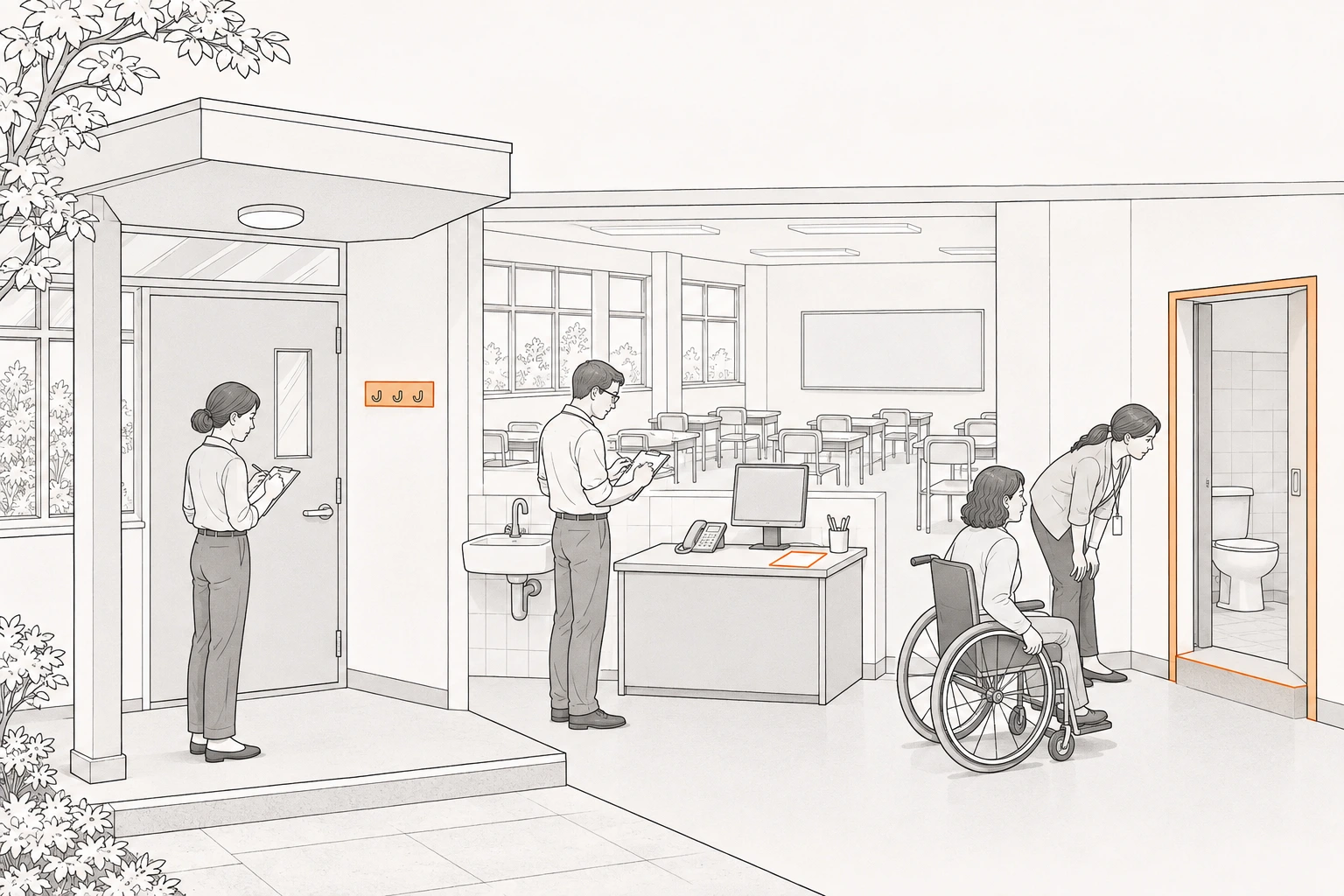
Figure 48. The building in the plan is not yet a ready reception point
[S] In the training example, access to the building, the operation of water and communications, and the ability to use the sanitary facility are separately checked. The name of the facility in the plan does not confirm the readiness to accept specific people.
An extraordinary check is triggered by a change: move, family composition, mobility, treatment, contact, key, equipment, road, supplier or authority. A plan proven yesterday may be partially incorrect today. Over the long horizon, repairs, replacement training, and business cycles are added; agricultural dependencies are considered by C19 and S10.
The result of the card is a map of actual capabilities, their limitations and assigned corrections. The wording “increase readiness” is not enough. Indicate the work, its owner and what he must show when re-inspected. The check itself takes place according to T01; The text change is propagated by T04.
T01 Teaching without real danger
Who uses it. Organizer of family, facility or municipal training. The leader determines the learning task, the observer records decisions, and a separate controller has the right to stop an unsafe action.
Where to start? Formulate one outcome that can be seen: confirmed reception, clear message, transferred responsibility or preserved service. Explain to the participants that everything remains only on paper.
When to delegate a task. After analysis - to the owners of the detected defects. In the event of a real incident, the activity is immediately stopped and a real order of assistance is applied.
Prepare an initial setting and several follow-up messages. One may turn out to be wrong, another may be late, and the third may require a change to a previously reasonable plan. The information must have a specific origin. The presenter’s answer “unknown” is acceptable; a response that silently creates the desired machine or specialist ruins the check.
Conduct the lesson at a table or at an agreed upon safe size. Do not disable vital systems, transfer hazardous materials, affect health, or spread alarm to bystanders. Real emergency numbers are not used to spoof a call. The loss of communication or specialist is specified as a condition.
The observer records decisions, reasons, performers, transmitted information and delays. He does not appreciate the beauty of performances and does not suggest the correct answer. Participants must delegate the work to a substitute at least once and continue without the selected dependency. Paper introductory notes allow you to conduct the exercise without an electronic service.
Stop the activity if there is a real danger, an erroneous training message is released, or the participant's condition worsens. If the teaching cannot be clearly separated from the incident, leave the discussion format. In debriefing, evaluate the early decision against the information available then. A late fact does not make a person obligated to know the future.
The training ends with a list of corrections with the owners and verification of the result. Repeat the area where the gap was detected; a full redo is needed when the change affects the entire system. The formal well-being of a fictional plot does not yet confirm real readiness.
T02 Is the local plan feasible?
Who uses it. The owner of the adapted plan and the inspector who did not create the area being inspected. The safety controller retains the right to stop actual unsafe activities.
Where to start? Select one task with a completed result. Ask the intended person responsible, without prompting from the author, to find the right card and explain the first action, the means available, and the limits of his authority.
When to delegate a task. Lack of resource to the function owner, lack of authority to the relevant organization, dispute over a defense mechanism to the competent research group. The editor corrects the unclear text, but does not confirm the unknown physics.
Trace the task from message to result. Transportation requires a person, a vehicle, a driver, a path, a recipient and the necessary assistance after arrival. For a file, the ability to find and open a valid copy. Checking one middle of the chain leaves its edges unnoticed.
Give the participant a message that is contrary to the plan: the appointment has been rescheduled, the list is invalid, the stock is unavailable. Then conditionally eliminate the common dependency of the primary option and the fallback. Write down what actually survived. The new name of the old dependency is not considered a fallback.
Make a transfer to the deputy at P02. Check for a limitation or promise that is easy to lose in a brief report; Do not tell the substitute the correct answer in advance. Evaluate the result according to the initial criterion. Prompt departure without confirmed reception does not become a completed transportation.
Write down reading difficulties separately. If the person responsible does not find the card using a common word, does not understand the action verb, or requires knowledge of the internal structure of the book, correct the navigation and wording. But if he understands everything and doesn’t have the key, that’s a different task.
Without communication, a prepared local kit is used. The need to download the form when the network fails is recorded as a gap. In the event of a real incident, a drill alarm spreading beyond its intended scope, or unsafe operation, the inspection is stopped. The result has a limited formulation: “the task is feasible under such conditions” or a list of obstacles. The promise of readiness for everything does not follow from this procedure.
T03 Parse the event and save the original data
Who uses it. The designated review leader, event participants, and affected feature owners. The card complements mandatory investigative procedures while preserving their authority and access rules.
Where to start? Keep the original notes separate from later explanations. Restore the sequence: what was known, what decision was made, what happened, and what new fact changed the assessment.
When to delegate a task. Continued danger - to the responding group immediately; special regime materials - to the competent services; corrections - to specific owners via T04. Completion of the report does not stop assistance to the victims.
Record the time of the event with source and uncertainty. If there were no agreed upon clocks, a reliable sequence would suffice. A later entry does not automatically benefit. When communication is restored, local versions are verified, preserving discrepancies.
Compare the task assigned, the action performed, and the outcome for the people. “Everything is done according to plan” must be revealed before the observed action. Find out where the gap occurred: there was no data, the message did not arrive, the person responsible is overloaded, the resource is incompatible, or the authority is unclear. Telling people to “be more careful” will not fix a system that continues to create the same error.
Distinguish between the quality of the decision and the luck of the outcome. A bad result may occur after an informed choice with incomplete information. A good result can hide an unreasonable risk. Also check whether apparent success is due to an recordkeeping change, surveillance failure, or loss of communication. Save significant disagreement with information that can resolve it.
Select a limited set of fixes. Each requires an owner, a resource and a demonstrated result. If the problem occurs during a transfer between organizations, you need to check the entire transfer. Separately define assistance to victims and correction of public information; the unknown final cause does not negate the damage suffered.
The debriefing must not destroy materials, create new hazards, or disclose data without justification. When a new significant fact occurs, the conclusion is updated, maintaining the previous version. The result is an explained sequence, confirmed deficiencies, open questions and accepted commitments to correct.
T04 Change the instructions for those who act on them
Who uses it. Owner of the local procedure and representatives of the affected functions. The author of the edit does not solely confirm its correctness beyond the scope of his/her competence.
Where to start? Write down the reason for the change, the actions affected, and what to do for people who have already started following the previous command. For a dangerous error, first communicate a clear temporary restriction and the next available action.
When to delegate a task. To performers and receiving parties after a substantive check. A change is considered to be introduced in its scope when the current version, transition tasks, and groups that have not yet acknowledged receipt are known.
Distinguish between correcting a fact, clarifying words, and changing a procedure. They require different amounts of verification. If the pick-up point changes, check the associated addresses, routes, messages and transportation along the way. Editing one line of the main file is not enough.
The new formulation is tested on a common and a difficult case. The specialist evaluates subject correctness, the future person responsible evaluates understandability and feasibility. A procedure that requires a missing means does not become operational from the approval of its text. Local editing retains its territory and range of tasks.
Specify when the version will take effect and the order of actions already started. Promote the change to the affected roles, mark unacknowledged receipt, and use the available secondary method. Mark old working copies as no longer valid, keeping the archive. At the work point it should be clear which version to act on now.
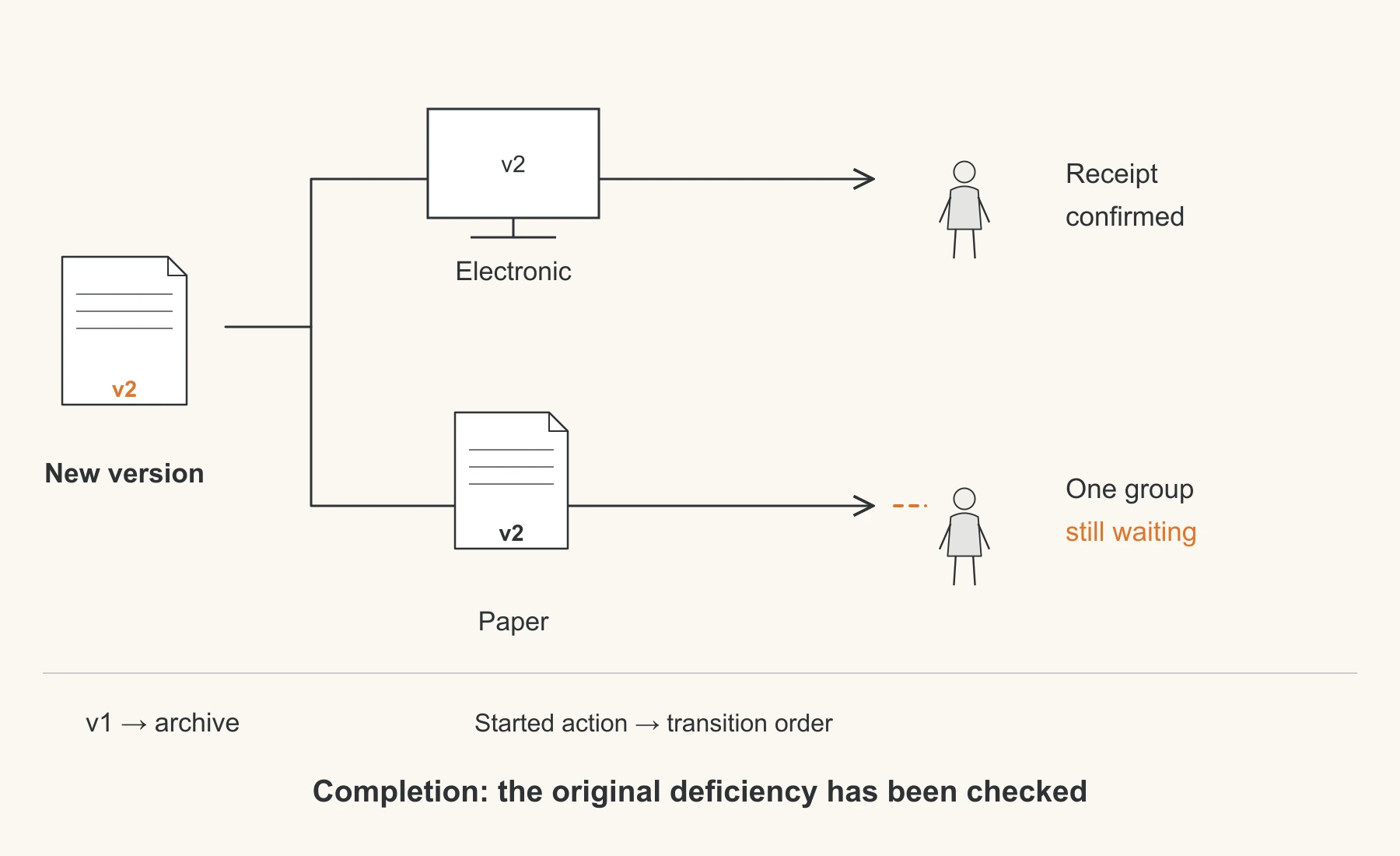
Figure 49. The new version is valid after transmission to the performers
[P] Changes to instructions include delivery of the current version, revocation of old working copies, and transition procedures for activities already in progress. The history is archived and the original flaw is rechecked.
Without communication, the local group maintains a numbered record of temporary decisions within the scope of authority. After the exchange is restored, it transmits both the latest version and the intermediate ones. Verification of the origin of an unknown “update” is necessary before accepting it as an order.
After the first use, check the original defect. If an edit is in the wrong scope, creates dangerous ambiguity, or deprives people of a feature they want, retract it with clear nearest order. A general “do nothing” can leave a dangerous task without help. The correction ends with the changed action of people, not the saved file.
Eight short exercises
These blanks [S] allow you to select one task for a family or work activity. They don't require the entire crisis to be played out. The facilitator determines information and restrictions in advance, and after the first decision gives the specified change.
Initial situation | Next introductory | What to check |
The family receives a request to gather at an unknown object | The main telephone channel is overloaded, the origin of the message is not confirmed | Distinction between content and powers, accessible communication, refusal to approach without justification |
The settlement prepared the move | The main path is no longer confirmed, the recipient is still available | New choice of path and reception taking into account escort |
Several people felt unwell after the unusual event | Possible normal environmental accident known, diagnosis not established | Assistance based on condition, preservation of information, no unauthorized handling of materials |
Giant object confirmed, no damage identified yet | In the neighboring area, people begin to spontaneously leave | Proportionate preparedness and mitigation of secondary risks without fictitious knowledge of intent |
Three instruments show incompatible positions | The two share a common synchronization | Data provenance and confidence revision |
External fencing was considered protection | According to the condition, the local effect actually arose inside | Internal detection, neighboring zone suitability, function retention |
Message offers help | The sender requires the connection of an unknown device | Separation of negotiations and technical access |
The visible source has disappeared | Observation has been partially lost, people are still waiting for help | Distinguishing between the disappearance of a signal, the end of harm and the fulfillment of obligations |
For each exercise, one decision F02 and a short transfer F03 are sufficient. If participants cannot name the price of an action, add the question: “Who is left without a result and what will happen to him next?” It often reveals the problem hidden behind the general word "stabilization."
Extended Exercise: Northern Hub
FEMA's Homeland Security Exercise and Evaluation Program (HSEEP) links exercise preparation, execution, evaluation, and improvement plans. This book makes exactly this connection. The plot, data and criteria below are developed by the authors; they are not an official FEMA script. [O; NR1]
Conditions and roles
The entire script has status [S]. The area includes a residential area, a hospital, a research site, a service facility and two placement points - A and B. All actions are played out on paper. The unusual source is specified by the condition, but its origin and intentions are unknown to the participants. The supervisor, civilian coordinator, hospital representative, investigator, site representative, and alert officer make decisions; a separate observer takes notes. In a small group, roles can be combined while maintaining independence of observation.
The original resource sheet contains the following data. Twelve residents require accommodation: four requiring accessible accommodation, four accompanying them and four others. A confirmed twelve places, of which four meet the specified need. B has confirmed six regular locations and has not yet checked the availability of the others. There are two conditional cars with six seats; both are available and suitable for the specified group composition. There is a suitable place for short-term waiting in the quarter, which does not become a place for long-term residence.
These are exercise restrictions, not transportation or accommodation standards. You cannot add a third car or a new building without an introductory lead. If the question is not defined, it is written as unknown and shows what decision depends on the answer. The training pace does not set standards for real response.
Seven changes of scenery
The first change is that there are two events nearby. Two posts report a luminous object. Some equipment in the hospital stops working; the coordinator advises that the available staff emergency procedure maintains the necessary assistance if assigned personnel immediately implement it. The connection between the failure and the object has not been established.
Help is assigned to an observed failure; unusual observations are checked separately. Two questions remain in the journal. The mistake is to wait for the object to be identified or to declare the entire area affected by one coincidence. First outcome: care continued, original records were transferred to the investigator, and the public was informed of the specific function affected.
The second change is twelve messages. Ten repeat a single record. Two come from the same processing operation. An independent observer is not yet available. These are not twelve independent confirmations. If that number has already been announced publicly, it is corrected, with an explanation of what has changed. Assistance continues on its own grounds.
The third change - the reception turned out to be different. The first car has already been sent to A: there are two people in it who need accessibility, two accompanying people and two others. The second one with the same composition has not yet been sent. A reports: eight usual places are suitable, and four available ones have temporarily lost the necessary function. B, after verification, confirms four available places in addition to the previous six. Communication with both machines and points works; further movement requires confirmation from the dispatcher.
The allocation is possible, but the previous instruction is wrong. B accepts eight people: four who need accessible accommodation and four companions, occupying four accessible places and four of its six ordinary places. A accepts the other four in ordinary places. Pairs are not separated to obtain a convenient number. The dispatcher agrees with the drivers and receiving staff on a feasible sequence of two receiving stops for each vehicle; no new departure occurs before confirmation. The first vehicle receives a revised route, rather than an order to stop anywhere. The cost is additional travel and delay; an unknown duration cannot be hidden by promising that ‘everything will be quick.’ After arrival, the locations of all twelve are confirmed, but one request for assistance at A remains open in the log.
The fourth change is that the coordinator is unavailable. Incompatible commands arrive, one refers to the old card. A deputy has been appointed in the local plan and the log is available. He accepts tasks for P02 and checks the origin of orders. Necessary local work continues. The loss of the center does not give arbitrary powers and does not cancel the established replacement.
The fifth change is the effect inside. A similar effect was recorded in a previously suitable room. The condition limits it to this room; the source does not gain the ability to appear everywhere. The adjacent function is confirmed for now. The team checks the local condition, changes the barrier output area, and arranges for available assistance. Strengthening the external fence does not solve the internal problem in itself.
The sixth change is the contact suggestion. A repeated message promises help when connecting an unknown device. The sender and the meaning of the condition are not established. The Contact Group receives a separate mandate and offers limited exchange without technical access. Protection and assistance do not come under the control of the interlocutor on the basis of his promise. Lack of agreement does not prove hostility.
Seventh change - the light disappeared. One observation channel is not working. In A, assistance to one arrival has not yet been confirmed; return to the quarter is not estimated. For a general shutdown, the disappearance of the source is not enough. The team transfers commitments to the new shift, reviews the functions that are returned, and communicates which constraints remain and why.
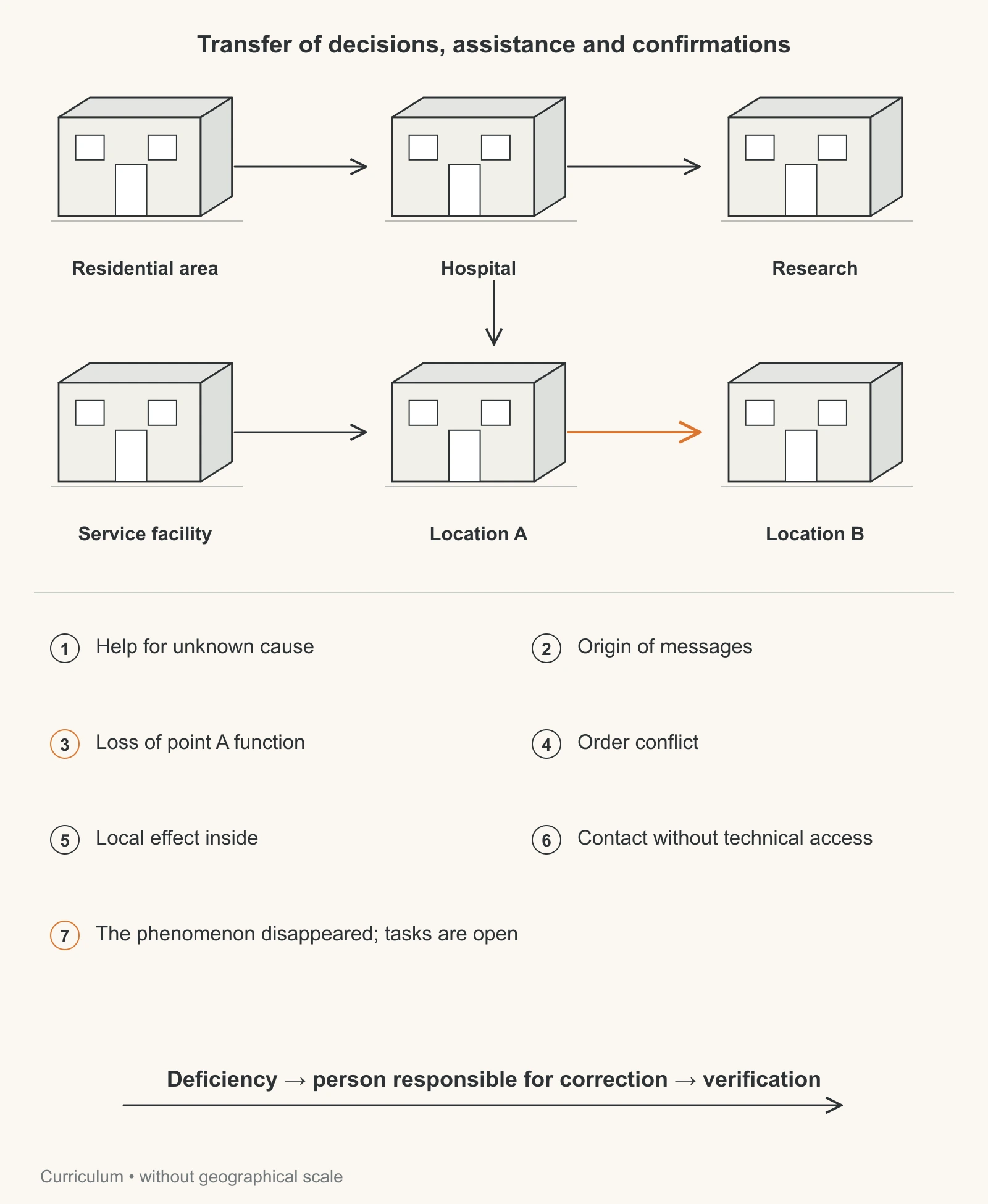
Figure 50. Northern Hub: Map of Resolutions and Unfinished Commitments
[S] The exercise overview map links locations and commitment transfers without specifying physical routes. The result of the analysis is a specific correction with the owner and verification of the result.
Debriefing with observable results
The observer makes a sequence of decisions. In a resource dispute, he asks what price the team accepted explicitly and what price it passed on to people quietly. In scientific terms, what information was considered independent. When changing - who actually accepted the open commitment.
The correction is formulated in detail: before sending, the recipient confirms the required service for the group; when changing the address, the dispatcher separately communicates with the transport on the way. The re-inspection covers this transition. If the change affects multiple functions, check related areas with a clear reason for the expansion.
Success means that the conditional tasks are solved or communicated with visible constraints. It does not demonstrate protection against actual unknown exposure. But the gap between the announced location and available help can be corrected before the incident.
Five Cases with Follow-up
The following analyzes [S] can be read as complete stories of decisions or given to participants in stages. They keep questions open-ended, but show actions leading to a specific outcome. In each case, there is a limited outcome: what was accomplished, at what cost, and what remains for the next performers.
Case 1. Item at the repair site
Three observations
Six workers notice an unfamiliar object near a utility building. In certain lighting it appears glowing. At the same time, they discuss communication interruptions, and one reports a feeling of warmth. There is a duty officer on site, an engineer, routine emergency communications and suitable off-site premises. Dedicated team available on a delayed basis; The locals do not have the means to work with unknown material.
The duty officer stops the unnecessary approach. The person is provided with accessible medical care depending on his condition. The rest are taken into account, the existing photograph is saved without the requirement to come closer. Three lines remain in F01: subject, communication failure, human complaint. The phrase "the item heats people and suppresses the network" is recorded as a version.
Two decisive actions are proposed: send everyone to the basement or take the object outside the settlement. The first relies on the unproven versatility of concrete, the second creates a new contact with an unknown object. The duty officer selects the available premises and the boundaries of the business area. The price is the suspended operation of the site, which cannot be promised to resume at the appointed time without new information.
log changes explanation
The engineer compares the available records. The service log contains a communication failure in 16:10; the first photograph of the item was taken at approximately 18:00; two outage complaints relate to 16:18 and 16:26. A photograph's timing inaccuracy of a few minutes does not change the sequence. Three “non-functional channels” on the screen turn out to be displays of one faulty node.
The evidence refutes the claim that the first failure began after people noticed the object. They do not establish the time of appearance of the object itself, its properties or the reason for the person’s sensations. The engineer confirms the known fault to the best of his ability. The manager allows its elimination in the usual manner, maintaining a separate restriction on the business area.
The alternative - waiting for a specialized team before any work in the settlement - would delay the restoration of a known service without further justification. The chosen path requires an accurate message: the reason for this failure has been established; The item continues to be checked. The employee's medical details do not become part of the overall summary.
Recovery continues after repairs
After the repair, users confirm the availability of communication. The arriving group evaluates the recording of the glow: the change in brightness is related to the observation conditions and does not confirm the object’s own radiation. Further appeal remains with the competent organization. The restricted output does not become a security declaration.
Another delay is discovered: a neighboring facility continues the old paper command to “not accept people.” The network is working, but the service is not available to humans. Based on T04, a specific command is recalled, the receipt of the correction is checked and the reception is resumed. People who haven't received help in the interim remain a separate issue.
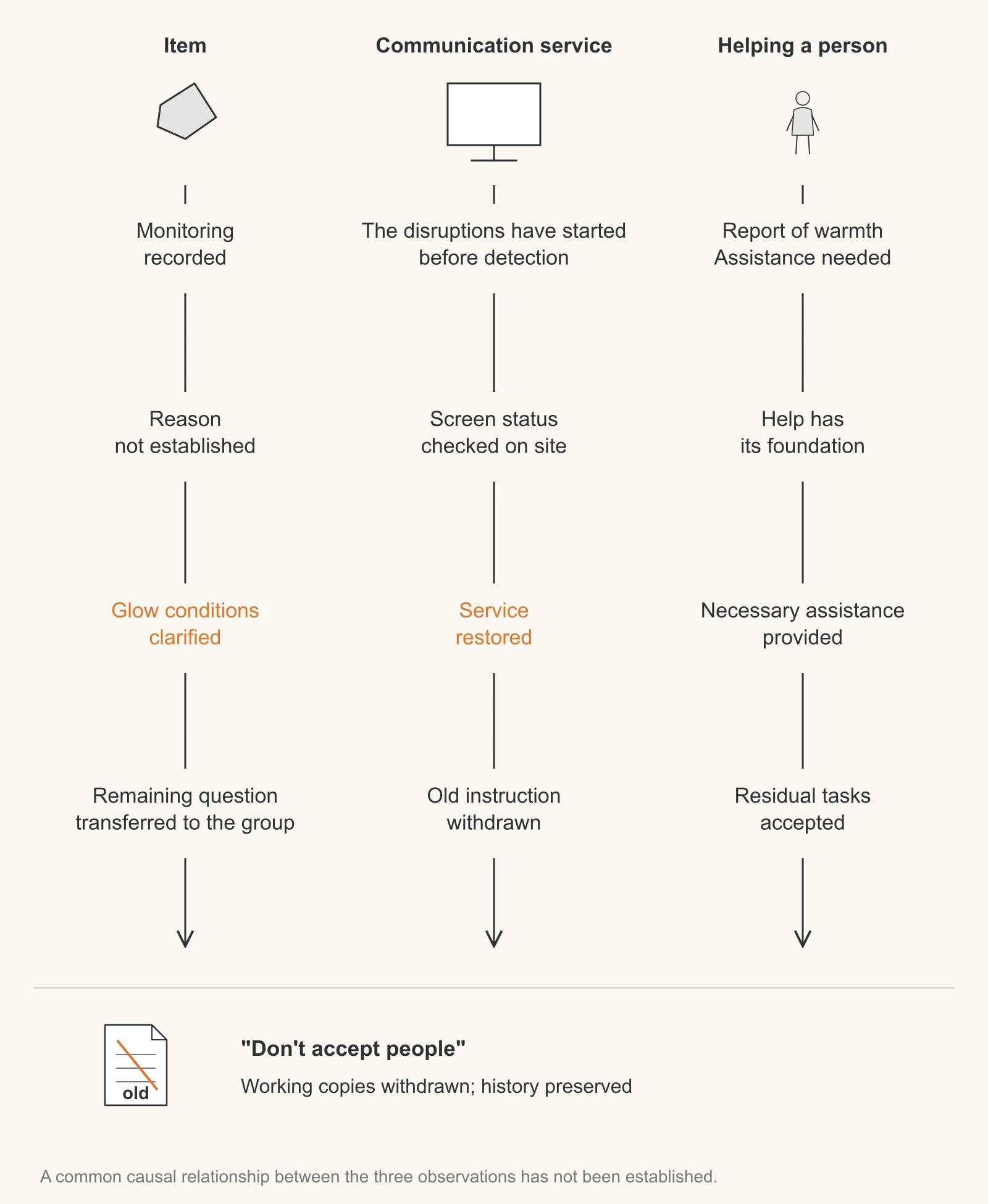
Figure 51. Case 1: three observations and three independent tasks
[S] Subject matter, communication failure and assistance to a person retain independent grounds for verification. Restoring the service does not close the issue about the item and does not replace the recall of the erroneous command.
The result consists of several results. People are accounted for, help is provided, a known failure is resolved, the erroneous command is no longer valid. A question about an item has an owner and a next step. The entire settlement is not being held captive by one open question. New observed harm, if it arises, will receive its own response basis.
During the debriefing, ask: what evidence changed the explanation, what action preserved the basis, and who confirmed the correction? The responses show what the system has learned. The absence of a dramatic final explanation does not prevent the completion of specific assistance.
Case 2. Three Settlements and One Log
A mistake similar to joining forces
Lesnoye, Rechnoye and Kamennoye use a common control room. After reports of the glow, three violations occur: the delivery does not arrive, the shipment receives a canceled address, and the family sees a note indicating the arrival of a person whom the recipient has not met. Six departmental accounts show similar statuses. The manager considers them as independent confirmation of a general failure and directs people to the district center marked as active.
The first car with six passengers left; two require accessible accommodation. Issuance in Lesnoye has been suspended, although the premises and employees are available. Four people who cannot come themselves were left without delivery. The coordinator responds to relatives, changes addresses and edits lists. He starts re-reading the line and skipping requests.
An error occurred before departure: the status of the center was taken as confirmation of free seats and the necessary assistance. The center is indeed operational, but can only accommodate four additional people in its regular premises. It did not confirm the two required available places. It is no longer possible to reduce what is happening to a “data error”: people are already on their way.
Independence turns out to be imaginary
The center's duty officer reports opportunities via a known number. The driver confirms the passenger list. An employee of Rechnoye shows a paper correction of the address made in the morning. The examiner determines that all six entries use the same log; some lines repeat an unconfirmed event. The reason for the log status is not yet known. The glow is stored as an independent observation.
The deputy takes over the coordination of C16 and P02: transportation, stopped delivery, promises to families and delivery. The former coordinator is provided with rest and separate contact with his family; his phone ceases to be the only center of work.
New departures are stopped according to the plan that has lost its basis. For the first car, the position and accessible path are clarified. According to the conditions of the exercise, Rechnoye confirms two suitable places with the help of the center - four usual ones; The dispatcher confirms the possibility of distribution in the current situation. This information appears explicitly, so the decision doesn't create resources out of thin air. The additional delay and complexity of separate reception is the cost of correction. Each party then confirms actual arrival.
Local jobs and remaining shortages
Lesnoye resumes issuance and delivery to four people. Rechnoye maintains care and verifies transportation with recipients. In Kamennoye there are 18 of suitable and free sets left, the current conditional issue requires 12 per cycle. The promised 24 have not been received. After the next cycle there will be six left, which is not enough for the next one.
Neighbors can confirm the transfer of only six sets, and it has yet to take place. The balance is not increased before acceptance. If six sets arrive, they will be enough, along with the remainder, for the next full cycle; further replenishment will remain unconfirmed. The manager stops optional use, submits a request for a confirmed replenishment of the next cycles and discusses the available change to the service with its owners. The script doesn't promise that the shortage will go away; it requires identifying whom the shortage will affect and in which cycle.
The family of a person with an incorrect mark receives one communications officer at C17. The carrier confirms the change of recipient, the new recipient confirms the placement. Communication with family is organized taking into account the person’s consent. The history of the error is preserved; personal details are not included in the public analysis.
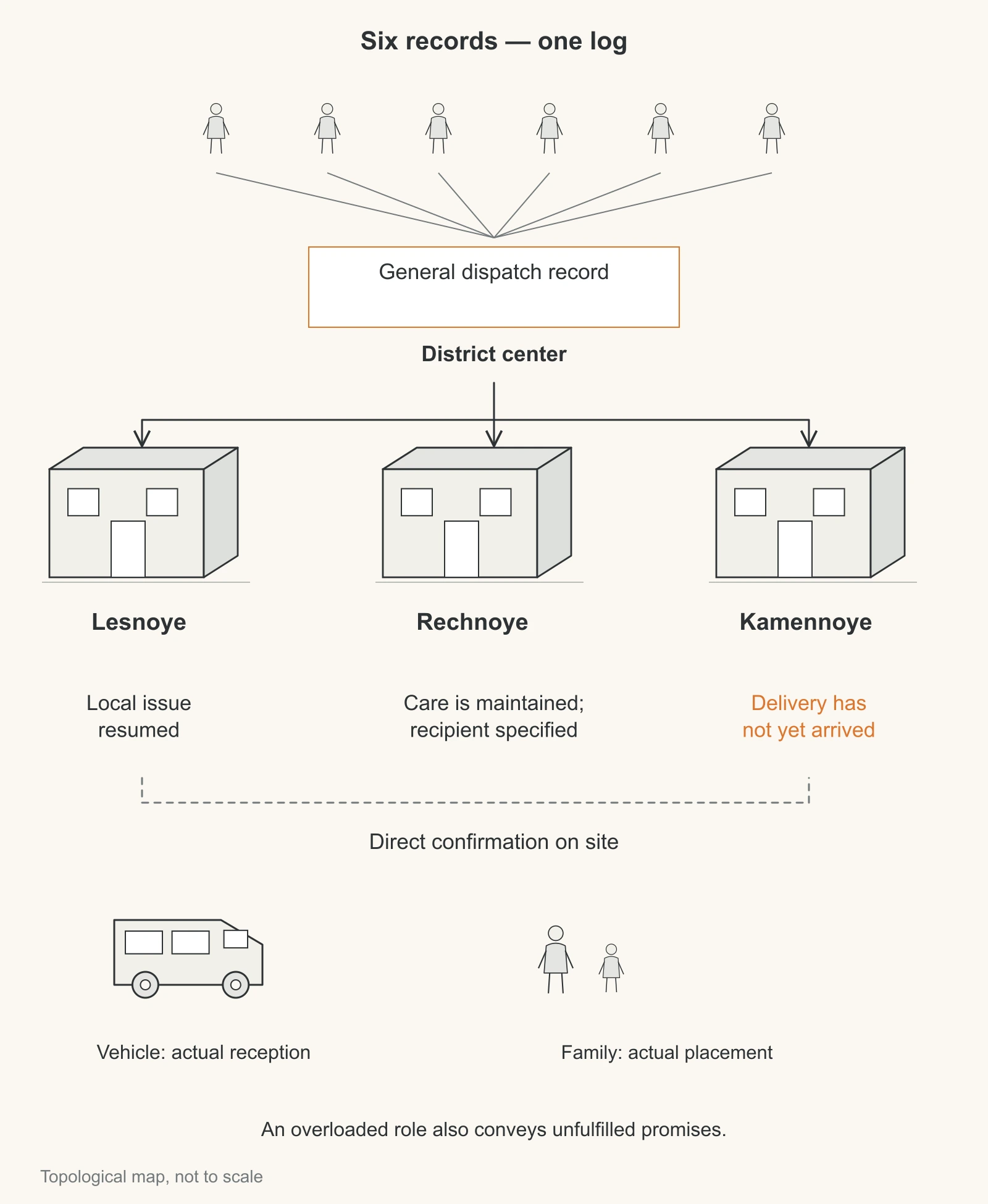
Figure 52. Case 2: three settlements, one source of statuses
[S] Six accounts can play one shared log. Local capabilities and completion of each transfer are confirmed locally; delivery not received remains open.
The interim procedure uses local records and direct evidence of significant transfers. The general application is returned in a limited manner, comparing statuses with independent information in the field. A beautiful screen does not close the task. Remaining supply of Kamennoye remains open until received or agreed upon replacement; restoring coordination does not eliminate the entire deficit.
The debriefing preserves the original decision and the information available at the time. Corrections address the origin of status reports, confirmation of reception, handover of an overloaded role, and local work without a shared log. The shared service is useful again, but its failure no longer cancels everything the settlements can do for themselves.
Case 3. Source changes behavior
Limited ability unknown to participants
Hidden condition of the exercise: the source observes some external actions of people and is able to disrupt one type of exchange at one of four help points at a time. It does not read minds, does not control all systems, and does not gain new abilities as the lesson progresses. Individual failure of human equipment is also predetermined. Participants do not know the reasons at first; the presenter presents observations for limited conclusions.
Each point has a basic exchange of applications and a prepared local transfer method. The latter saves only the necessary messages and takes up additional time for workers. The full normal volume for it is not available. The spare mode helps, but is not a free replacement.
A success that one would like to declare common
In the first episode, the northern point loses its main exchange, and the eastern one shows a similar failure. Western and southern are working. Operators switch to the prepared order, the necessary applications are accepted again. A proposal arises to declare the vulnerability found and transfer the entire area to this mode.
The examiner separates the result and the explanation. Transmission restored; the cause has not yet been fully established; employees have postponed some of their regular work. The simultaneous transition of all four points would take two additional coordinators, which are not present in the exercise. The headquarters maintains a confirmed result in two places, without promising general protection.
After the decision, a table is displayed. Local confirmations were received by different employees, not from the same summary screen.
Episode | Unusual object | Basic exchange | Additional fact |
1 | Observed near the northern point | Failure in the north and east | The cause of the eastern failure has not yet been verified |
2 | After a visible change in the work of the northern point, it is observed at the western | The north is working, the west is losing traffic, the east is still faulty | Independent confirmation from the south: the exchange is working |
3 | Remains with the Western | Western failure continues | In the east, a failure of the human node has been established; exchange temporarily restored, final repairs not completed |
The data strengthen the limited source behavior change hypothesis and dissociate the eastern fault from it. They do not prove that any future disruption is caused by a single intelligent adversary. The disappearance of a signal during an unverified observation also does not count as a success.
Change the target and check the interlocutor
According to G13, the goal is clarified: to maintain the necessary exchange, not to exhaust people on backup service, and to obtain a verifiable pause in a specific impact. The repair of the eastern node has its own contractor. The main systems in other places continue to work where the result is confirmed.
The contact group receives a repeated message believed to be related to the source. The claim of control is not to be taken for granted. As part of the fictitious exchange, verification without access to human systems is proposed: the sender indicates at what point the already observed violation will stop, the local operator verifies the result independently. The western point has been named. After the message, the exchange there is restored; the states of the north and south do not change. Later repetition of the limited exchange under given conditions gives a consistent result.
This supports the conclusion that the sender is related to the tested part of the influences. His power over all objects, the purpose of his activities, and his ability to fulfill any promise are not established. The presenter does not replace observations with the ready-made phrase “intention has been proven.”
Pause and remaining breakdown
The parties agree on a pause in the designated type of impact on the specified points. The mandate of a human group is limited by its decisions; it does not promise the behavior of all residents and organizations. Connecting an unknown device is not required. Civilian assistance continues regardless of negotiations.
During the pause, the impact in the declared area is not observed with maintained control, but the eastern point again reports the unavailability of the service. The inspection reveals an unfinished human repair task. To declare this automatically a violation of the agreement would be a mistake. It is also a mistake to close people’s requests with the words “the source is no longer valid.”
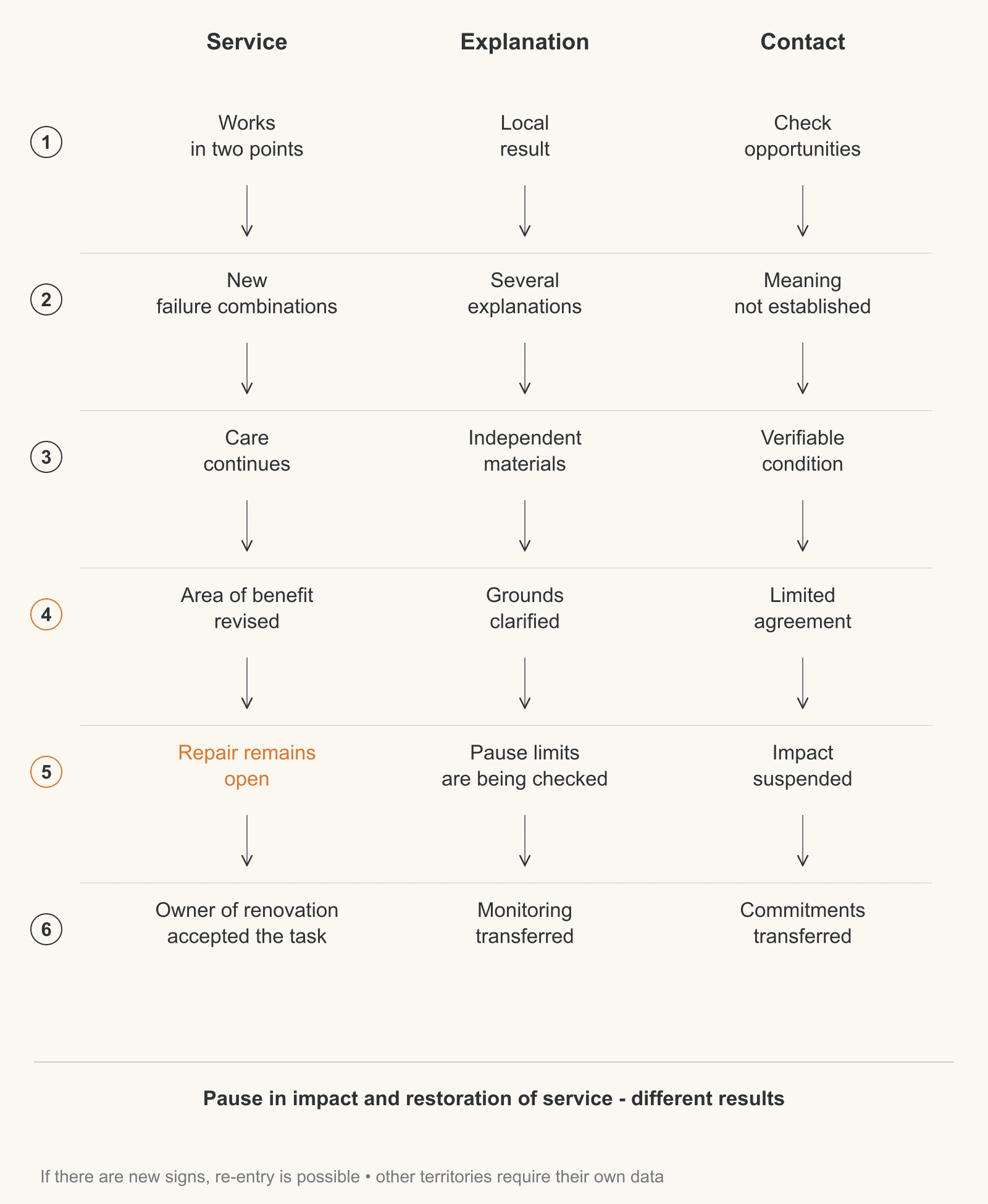
Figure 53. Case 3: local success, revision and limited pause
[S] Local success is being reviewed following new independent information. Limited pause in exposure and repair of a damaged human component have different reasons and owners.
By G12 the pause area, observation and actual service are checked. Various performers accept repair, assistance, control and contact. The result is limited: important exchanges remain, some impact is suspended, intentions and opportunities are only partially established. The cost is deferred routine services, reserve load, and continued monitoring. These expenses are included in the following plan.
During the analysis, you need to explain what changed the strategy, which statement was withdrawn and which remained true. Partial success remains valuable as long as its limits are understood.
Case 4. The Passage Leads to the Wrong Place
Unusual Environment Rules
In this model, areas A, B and C remain distinguishable and habitable. An unusual property actually operates within the exercise: the connection through the A-B transition changes, but the separate A-B path retains its confirmed accessibility. The groups know the order of local events, but there is no generally agreed upon time scale. People are not used to explore the passage; all special observations are issued as training data.
There are twelve people in A. One needs an escort; the attendant is also included at twelve. B can accept four more and provide the specified assistance. Conditions As long as they are suitable, there is no need to move everyone immediately. Local contact and assigned supervisor are available.
First message: Normal transition does not match expected output. B uses the old circuit with the connection unchanged. The groups' clocks give conflicting marks. According to S02, S08 and models 2–3 S13, the manager separates the state of people, the availability of the path and the discrepancy of time.
Set aside the familiar map
The offer to send an employee to do a “quick check” turns the person into a means of exploring a controversial environment and may leave another unaccompanied. The manager limits the unnecessary use of A-B. The remaining connections are declared neither valid forever nor lost without data.
The facilitator provides predetermined results of independent learning observations. In the first local sequence, the control object, placed by condition at input A, is registered at the designated output B. After a local change with the same configuration, it is registered at another designated output; a separate observer confirms the registration. In the second sequence, the connection again corresponds to the previous diagram. The means exist only as a condition and are not offered as a real method of exploring an unknown passage. The records confirm the specified change in connection, but not the restructuring of the entire object.
At the same time, a common error was detected: B received the previous version of the map. Correcting it will eliminate some of the inconsistencies, but will not explain the unusual change. In the exercise, both reasons are real; participants need to keep them together.
Transfer without total time
Limited movement has been selected: the person in need and the accompanying person move to B along a confirmed path. The recipient accepts the request “A-7”, confirms the readiness of “B-4”, then separately reports the arrival of both. The entries have different meanings and refer to each other. One “done” mark will not replace the entire transmission.
Ten people remain in A. In B, two of the four initially available places are occupied; two more remain vacant. This is the limit of the chosen decision. Work requiring A-B was postponed; they cannot be declared restored. Changing the state of A will require a new decision about people and reception, and not a mechanical repetition of the first transmission.
An order comes to “use the usual transition” with a formally later time of someone else’s clock. By reference to the previous map and local journal B, it is established that it was compiled before receiving information about the change. The manager revokes this particular version, and the recipients confirm the current procedure. The logs preserve local sequences: adjusting the minutes would erase the evidence of what caused the error.
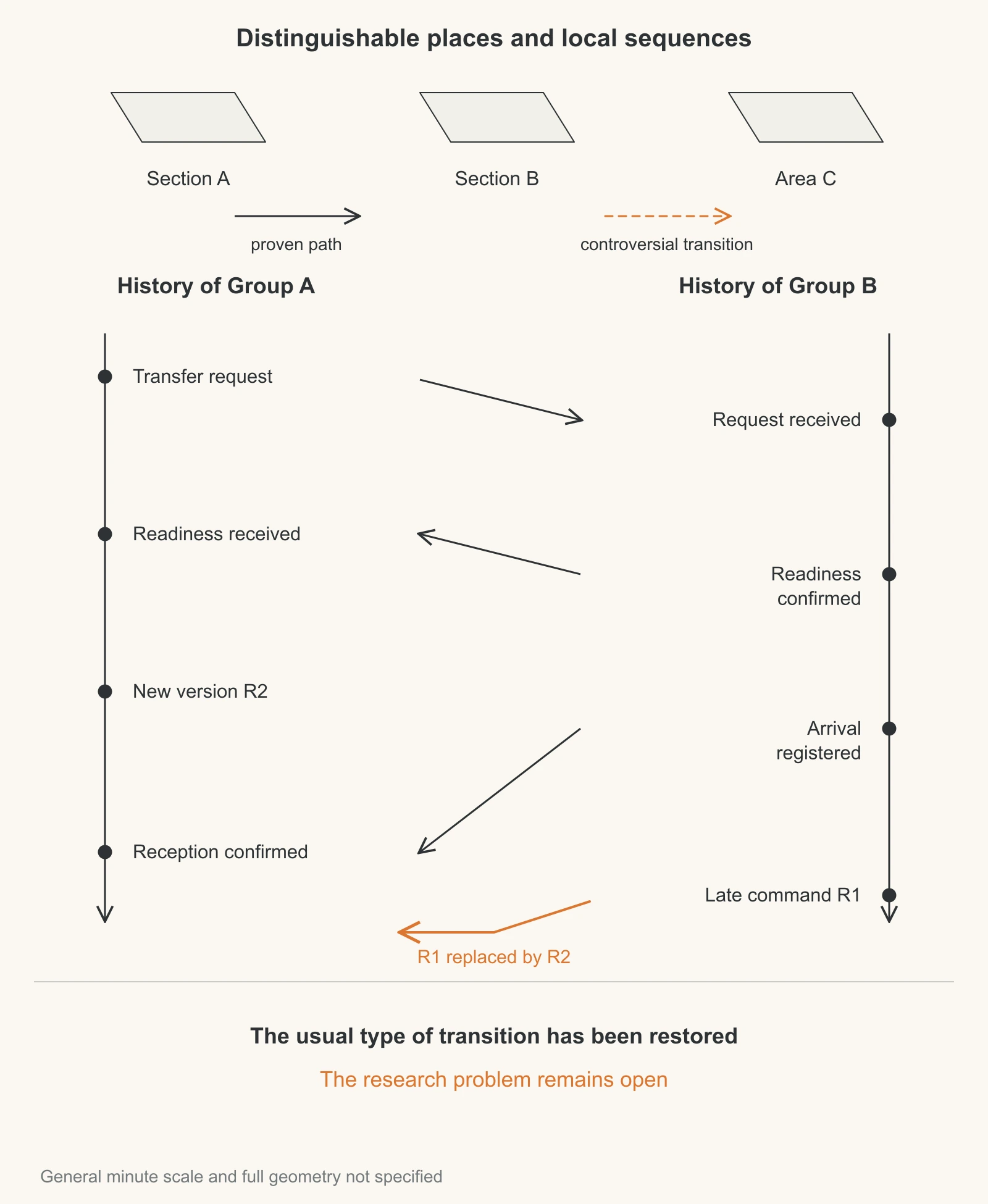
Figure 54. Case 4: transmission under test without common time scale
[S] Local acknowledgments maintain the distinction between request, readiness, and actual arrival without a common time scale. The outdated command is recalled by reason and version, and the scientific question is transferred separately.
When the transition looks normal again, this is a reason for evaluation rather than an automatic return to the previous regime. The condition does not provide any means of proving suitability for continued use. Help continues along A-B; the resource of this option is reviewed separately. Bypass may become unusable due to human reasons and without a new unusual episode.
Result: people are accounted for, the transfer has taken place, the map distinguishes between verified and controversial connections, the old instruction has been withdrawn. The scientific question is open. If even stable local designations, consistency and the ability to distinguish messages are removed, the old method of confirmation will lose its basis. This is the decision boundary that must be seen before transferring to a stronger assumption.
Case 5. Several years near the source
The first night can't last for years
In a fictional region, an area of unusual influence persists for several years. Manifestations are associated with certain places and conditions, the cause is unknown. Some of the territory is suitable for life with the specified restrictions, while some requires special access. There is no proven way to eliminate the source. The timing sets the plot, not the safety standard.
The initial assistance provided temporary accommodation and services. Of forty families, twelve cannot yet return to their previous circumstances. Eight receive assistance through a local arrangement; four depend on a separate transport contract. It expires during the next school term; neither permanent funding nor a new provider has been confirmed. An overall report that "all 40 families are currently provided for" conceals the future loss of a service for four of them.
It is proposed to maintain the entire emergency order until the source is fully explained. The seemingly cautious decision ties housing, work, education and services to an event with no known time frame. Scientific uncertainty begins to replace decisions about people's lives.
Renewal price and valid options
Residents report that some of the restrictions are no longer related to the observed impact, and temporary transportation interferes with work and school plans. For G11, each measure is considered separately. The source is not declared safe; cancel the lost basis and retain the possibility of response.
Sustainable services are being prepared according to G16. For four families, the scenario gives two options. You can continue to stay nearby by confirming available transportation and services for the new period. You can plan to change your permanent place of residence with confirmed housing, assistance, education and means of subsistence in the prescribed manner. There is no free resource for both paths for everyone at the same time. A general slogan will not determine the suitability of an option for an individual family.
After accessible discussions, two families choose a confirmed option of living nearby, two choose prepared relocation. Conditions and consents are considered separately, without the assumption that the majority chooses for all. Previous assistance continues until the new decision is actually available. The price is the costs and time for different paths, as well as the loss of the previous way of life. Changing your address does not erase these losses.
People and means change
In the next period, a specialist who remembers the reasons for canceling the old measure is not available. His deputy sees the final file and suggests returning the restriction “just in case.” The archive preserves the foundations and revisions. The new employee reconstructs the meaning and then shows how he will apply the order to the new input. Reading a signature is not a substitute for transferring a skill.
The provider stops servicing a common component of the service. Two backup devices depend on it. Formally there is a reserve, the previous support is lost. By F10 the function owner checks replacement, maintenance and training. Before confirmation, he reduces the promised volume and saves the request for the missing assistance. The plan text does not renew the supplier's contract.
New local episode
A violation occurs near the previous boundary. Some leaders propose returning the original regime to the entire region. The check shows different states: in one place the impact is observed, in the next place the functions are confirmed, in the third one control channel is unavailable. A single map color would hide the differences.
Run local protection and investigation for the affected function. Confirmed services continue. The observation is reconstructed separately, maintaining the confidence constraint. The public message names the area of change, help and the next update. If movement is necessary, the recipient re-confirms the specific reception.
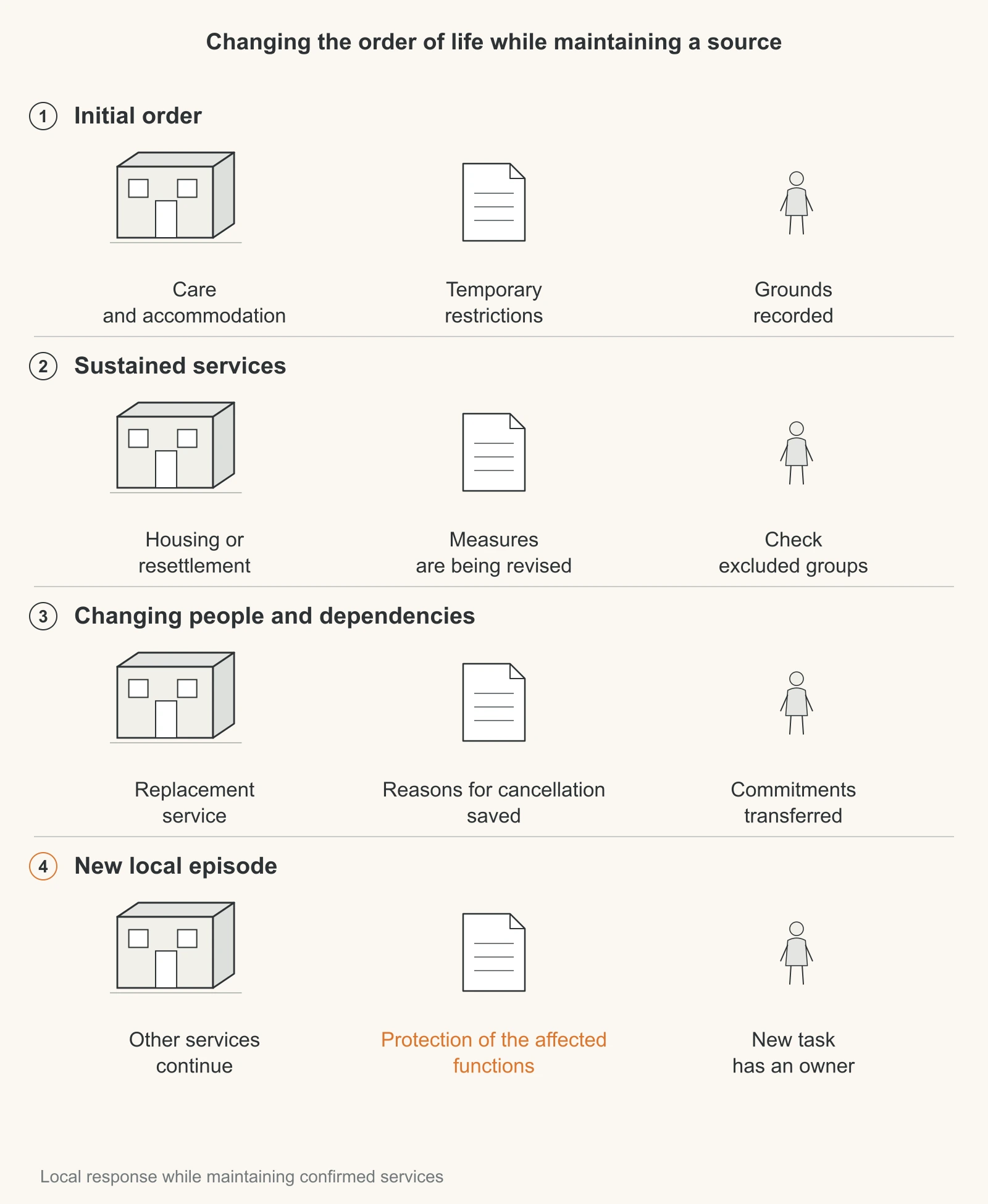
Figure 55. Case 5: several years, a change of people and a local new episode
[S] Sustainable order can withstand changes in people, suppliers, and new local episodes. Confirmed services continue, and the changed function receives its own response and responsibility.
The result is a new episode handed over to those responsible and an updated long-term order. The continuing measure has reason and review; for a service - owner, service and limit; Unreceived help has an open task. Accommodation or relocation is assessed based on people's actual conditions.
Resilience manifested itself in the ability to return to response, maintaining daily life where it remains possible. It does not mean that there is no risk at all. During the debriefing, ask what expenses were transferred to invisible groups, what knowledge was held by one person, and who lost help due to a calendar date. The answers determine the following changes more accurately than the solemn announcement of the end of the crisis.