Part II. Scientific Work and a Map of Unknown Threats
When the usual picture stops helping
In training scenario [S], the attendants receive a message: the familiar passage no longer connects the rooms it used to connect. People recognize the rooms, normal equipment works inside, some communications are preserved. However, the general layout of the building no longer allows us to promise that a person will end up where he is directed. Within the exercise, a change did occur. Participants must decide what assistance can continue in place, what movements can be stopped, and what needs to be confirmed before the next action.
If you start with a debate about extra dimensions, the work stops at the first question, which no one knows how to answer. If you continue to use the old map, the scientific debate will turn into someone else's lost road. It is more useful to first separate the lost knowledge from what is still preserved: the position of specific people, the state of occupied rooms, accepted obligations, available methods of communication. This is how work with an unknown threat begins.
An unknown is a threat for which there is insufficient knowledge about the cause, mechanism, or limits of impact. This is not the name of the creature or evidence of an attack. People can be removed from a collapsing building until the cause of the destruction is determined. But the intentional action of the enemy does not follow from the destruction itself. Observable harm, unusual recording, the existence of a source, and its intent require different reasons.
The NASA materials used in the book report the absence of reliable evidence of extraterrestrial life and confirmation of the extraterrestrial technological origin of unidentified anomalous phenomena (UAP). Therefore, extraterrestrial intelligence, extra dimensions, and unknown forms of influence are treated in the book as scenario conditions rather than as established settings. This limitation leaves room for research and determines what is acceptable to pass off as its result. [O; S1]
In this part, [O] denotes reliance on published research or professional approaches to the extent of their applicability. [P] is the author’s design procedure, which still needs training and expert assessment. All S-protocols belong to this level. [S] is a fictitious condition or training data that has not been proven to actually exist. A link to a study does not turn our card into an official regulation. In a scenario, by contrast, an unusual property can be explicitly specified as true: the decision under that condition is then tested, rather than the physical existence of the property itself.
The part begins with a problem map and constrained models. They are followed by actions for specific manifestations, then ways to verify observations and organize research. The final chapters deal with consequences that continue or change after the first episode. It is not necessary to read all chapters before emergency treatment. The card is chosen according to the problem that needs to be solved now.
What needs to be addressed | Basic protocol | What to check additionally |
Physical harm of an unknown nature occurred | Independence of information - S05; dispute about the mechanism - S07 | |
Previous route does not agree with observation | Availability of occupied sites - S08 | |
The effect appeared inside the protected object | Limited space models - S13 | |
There are many manifestations, the composition or connections change | History of consequences - S12; applicability of protection - S14 | |
A major event affects several territories | Shared resources and secondary failures - S12 | |
Unknown material detected on device | Mission Specific Procedures | |
The expedition risks losing the possibility of returning | Receiving machine status - S03 | |
There is no right answer or suitable method yet | Data origin - S05 | |
The visible event has ended, the environment remains changed | Delayed and compound consequences - S12 | |
The previous protection no longer gives the same results | Checking the new explanation - S11 |
Protocols vary in purpose. Some describe the effect, others describe the working conditions, and others describe the testing method. They can be used together. This avoids squeezing a complex incident into a single label: a giant object may be accompanied by a local communication failure, and a general summary error may coexist with actual damage to the building.
What constitutes a threat description?
The first information is almost always incomplete. The eyewitness knows that it has become hot; the operator sees the loss of telemetry; the doctor receives a complaint; A bright spot appears in the video. Their messages must be kept separate before being combined with a common cause. If you immediately write down the “energy attack”, subsequent participants will read the assumption as a finished result.
The Work Passport links observations to decisions. It indicates the effect, possible route of exposure, coverage, changes over time, latency of manifestation, possible signs of control and reliability of the information. Each significant amendment receives a new version. The old one is kept so that later it can be seen on what knowledge the decision was made.
Passport field | What needs to be distinguished in it | Why is this necessary? |
Consequence | Condition of people, environment and equipment | Select first aid and protected function |
Possible channel | Air, water, contact, matter, radiation, mechanical action, data | Check connections between sections |
Scale | The size of the observed object and separately the area of consequences | Determine who needs help and coordination |
Dynamics | Stability, expansion, repetition, movement, lack of data | Assign grounds for review |
Delay | Confirmed sequence and unknown intervals | Do not close the consequences along with the visible episode |
Signs of control | No signs, possible response, repeatable conditioned response | Set a separate contact task |
Credibility | Source, independence, limitations of the method | Balance confidence and severity of decision |
Size and danger are not the same. A small source can affect the overall system and cause a large cascade of failures. A giant, distant object may not cause observable harm yet. The map therefore shows separately affected locations, suspected pathways and areas for which nothing is known. A strong local effect does not prove the ability to cover the planet.
Biology, matter, energy, technology and information
The biological version includes various issues: possible infection, toxic products, changes in habitat. Illness after an unusual event may have an earthly cause, be related to a chemical, a water outage, or a coincidence. The assumption of extraterrestrial biology does not establish compatibility with human cells and does not provide grounds for considering the material safe. The first work is built around the cases observed, the help needed and possible routes of impact. Handling unknown material remains a separate professional challenge.
“Energy threat” is too broad a term for choosing a defense. Heating, optical flash, ionizing radiation, electromagnetic interference and mechanical wave require different observations. The glow image does not measure all of these phenomena. One wall, suit or material does not receive a universal purpose due to the similarity of names. When the mechanism is unknown, a narrower conclusion is possible: a particular measure retained a certain function under the described conditions. Checking this output is discussed in S07.
The technological version distinguishes between the medium, possible control and consequences for people. An autonomous vehicle can observe, perform someone else's task, be in an accident, or be part of a distributed system. His appearance does not establish the role. Damage to the apparatus, loss of signal, and cessation of harm are three different results; one does not replace checking the others.
The information case starts with the usual problems: misinterpretation, forged message, insecure data processing. The untrusted file is saved as testing material without automatically turning it into an executable command. Unusual content, which supposedly affects perception in a special way, refers to a separate scenario assumption. People's complaints require help and assessment of their condition; the public label “infected with information” does not provide either a diagnosis or a decision.
If there is a spatial discrepancy, time, coordinate reference, optical effects, platform position and processing are checked. With a temporary one, they preserve the local “earlier - later”, without correcting the records for the sake of a beautiful general scale. With the expected impact on perception, the person’s words, his condition and equipment readings are separated. An unusual experience does not prove an external agent, and the absence of suitable instrumentation does not eliminate the need for assistance.
In each family, it is useful to look not for a spectacular name, but for an observation that can change the choice. If two explanations require the same immediate assistance, the dispute between them should not delay it. If they lead to incompatible actions, the discriminating issue takes precedence. The inability to quickly select an explanation remains an unfinished study.
S13 Seven limited unusual event models
Who uses it. The leader of the exercise or plan review; at an incident - a group helping the current leader deal with an unusual condition.
Where to start? Name the lost assumption and list what else can be reliably taken into account: people, areas, functions, messages or sequences of actions.
When to delegate a task. When the next decision requires a measurement assessment, a special check, or a change in existing access restrictions.
The models below have a status of [S], and the order of their application is [P]. They are needed when the plan rested on an assumption that is no longer supported: an external boundary does not explain an internal event, a familiar path is inaccessible, the overall timeline is inconsistent. The similarity of the real message to the model does not confirm its physical nature. In a real investigation, the usual explanations and verification of data on S05 are retained.
The presenter fixes the properties of the scenario in advance and appoints a deputy who knows the same initial conditions. Participants receive a map of required features, available information, and a list of conditions that do not change. These conserved conditions are further called invariants: they are the ones that allow you to check the result. You can't add a new ability to a threat every time the group finds a workable decision. If the source arbitrarily changes any record and any physical process by condition, a verifiable universal plan for victory cannot be derived. A meaningful exercise requires at least one conserved feature or available observation.
Model 1. The effect occurs inside the perimeter
In the scenario, the damaging effect appears inside the object without observable crossing of the external boundary. It affects several areas, does not appear everywhere instantly, and leaves some of the necessary functions working. These properties are set by the host; the word “multidimensional” does not in itself define them.
The group can still account for people, recognize specific spaces, and maintain some of the communication. However, a functioning fence now only answers the question about the fence. It cannot be used to judge every room. The general “object is protected” mark is replaced with a map of local suitability: where help is available, what functions are confirmed, from where and where you can actually move.
This changes the security device. They try not to associate the required service exclusively with one internal point; the possibility of the intended replacement is verified using real people and equipment. The presence of a door between rooms does not prove the suitability of both. No one is sent to an unknown area to fill out a map. If harm has already occurred near people, the immediate action is determined by the local danger and the available emergency route.
In reality, this set of messages may be due to an internal source, incorrect schema, or registration error. It does not prove penetration from another dimension, nor the uselessness of all physical barriers. The training model remains meaningful as long as at least some of the local states can be independently verified. If this opportunity is completely lost, the assessment of protection against a given effect is stopped; Available recordkeeping and assistance are assessed separately.
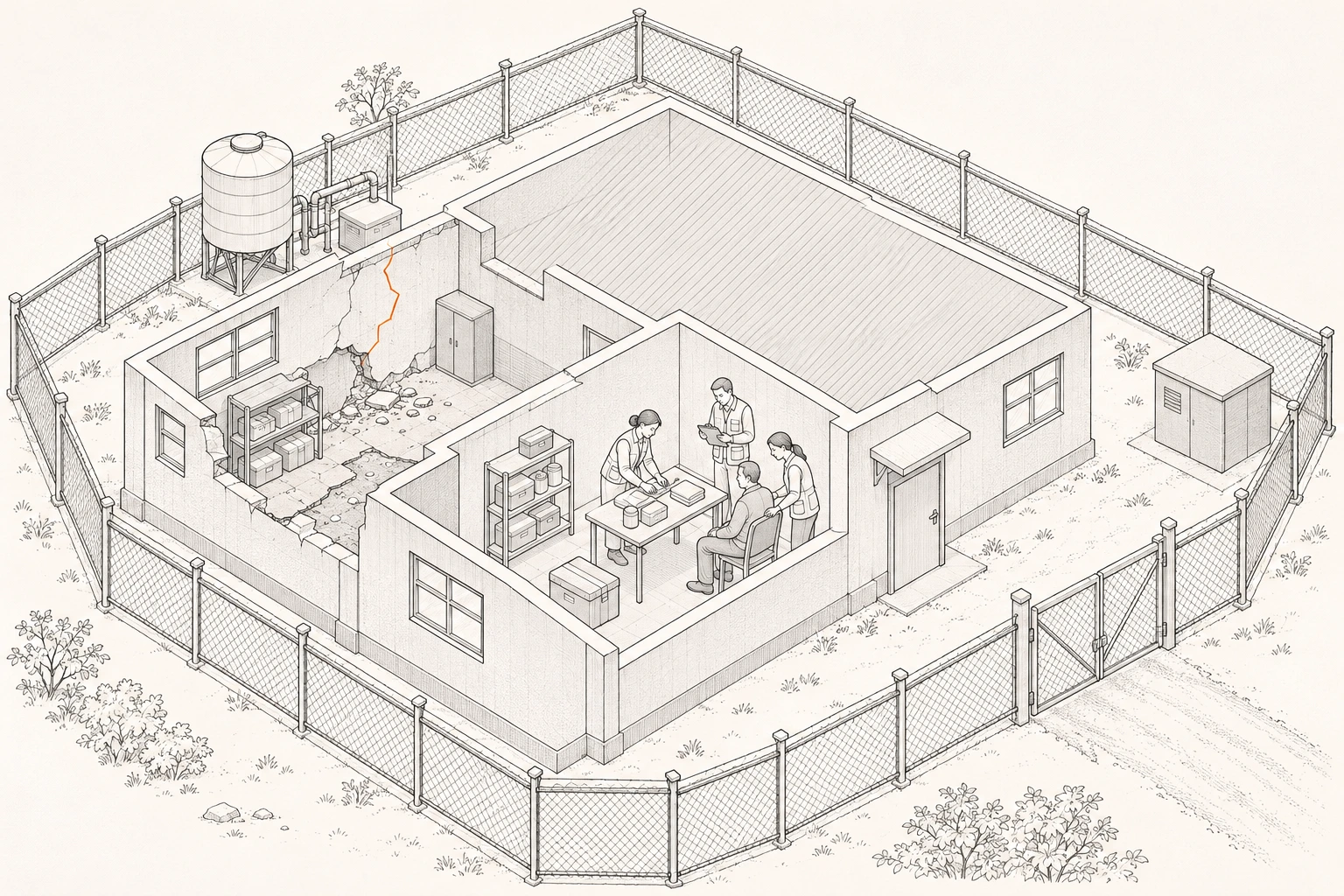
Figure 05. Model 1. Internal fitness beyond the entire perimeter
[S] The entire external fence is combined with the different condition of the internal areas. The determination of suitability applies only to the tested function and location.
Model 2. Connections between familiar places change
In this exercise, the previous passage actually no longer leads to the expected location or becomes unusable. Confirmed rooms retain recognizable local features. Changing one connection does not reveal anything specific about all the others.
People can confirm their presence in the room, the state of the receiving party, and the fact that the transmission has already completed. It does not follow from this that the same path is available now or suitable in the opposite direction. Therefore, the plan is based on a map of confirmed connections with the conditions for their relevance. For the next task, the receiving party confirms readiness again. The memory of a recent passage remains history, not the resolution of a new movement.
Let's go back to the opening scene. In tabletop problem [S], there are three areas: Hall A, Warehouse B, and Help Room C. There are people in each; local suitability and communication between duty officers confirmed. One repair kit from the warehouse is needed for two tasks: to restore additional lighting in the hall and a backup communications facility in the help room. The main connection is still working. The original plan gave the kit to the hall and called for the attendant to return to the warehouse. There is no other kit or free accompanying person. The presenter reports a change in the A-B connection; participants receive existing entries rather than sending a person to check the passage. Room B remains suitable for its own local mission, but its connection to the warehouse is not yet known.
The manager cancels the promised delivery to the hall and leaves the accompanying person at his current work. Some work in the hall is stopped due to deferred repairs. The following introductory note confirms the existing possibility of transferring a set from B to C without the transfer of an accompanying person; the people's return route is still unknown. The manager now directs the kit to the help room: its communications reserve receives priority over additional lighting. The receiving party acknowledges receipt. The previous repair A remains unfulfilled, and some of the work there has not been resumed. The changed condition allowed a different task to be completed, but did not restore the lost path or eliminate the cost of the original failure.
In a real event, a navigation error, an obstacle, and a change in numbering do not yet mean a new geometry. If neither local sites nor transfers can be confirmed, the result is a list of local activities and unknown connections. Immediate rescue continues according to available emergency procedures; exploration does not keep a person in a dangerous place or allow exploration of an unknown passage.

Figure 06. Model 2. The passage has changed, local landmarks have been preserved
[S] Local features persist between two episodes, but the availability of connectivity between sites requires new confirmation.
Model 3. The overall time scale does not add up
Several groups maintain their own sequences, but the available data does not reduce to a single reliable time. For some records, the local “earlier - later” remains known. The reason is not given: a common technical error is acceptable even within this script.
The group can determine what order it received, what it followed, and what confirmation it sent. Therefore, messages are provided with identifiers and an indication of the version being replaced. The reception request, the response about readiness and the message about actual arrival remain different events. A large number on the clock does not make a late-delivered order valid if its conditions have already changed.
The presenter gives participants different hours and delayed messages. Their task is to reconcile the commitment while preserving both original stories. Until the reconciliation is completed, everyone reports what they actually committed to do. If you rewrite the archive under one convenient scale, the very information that explains the discrepancy in actions will disappear.
The model does not establish violations of causality or time travel. Mismatched memories do not allow a person to be declared to have come from another timeline. If participants can no longer distinguish between their own actions and specific messages, the overall history is considered unestablished and limited to locally verifiable tasks. Help does not wait for the restoration of the common calendar.
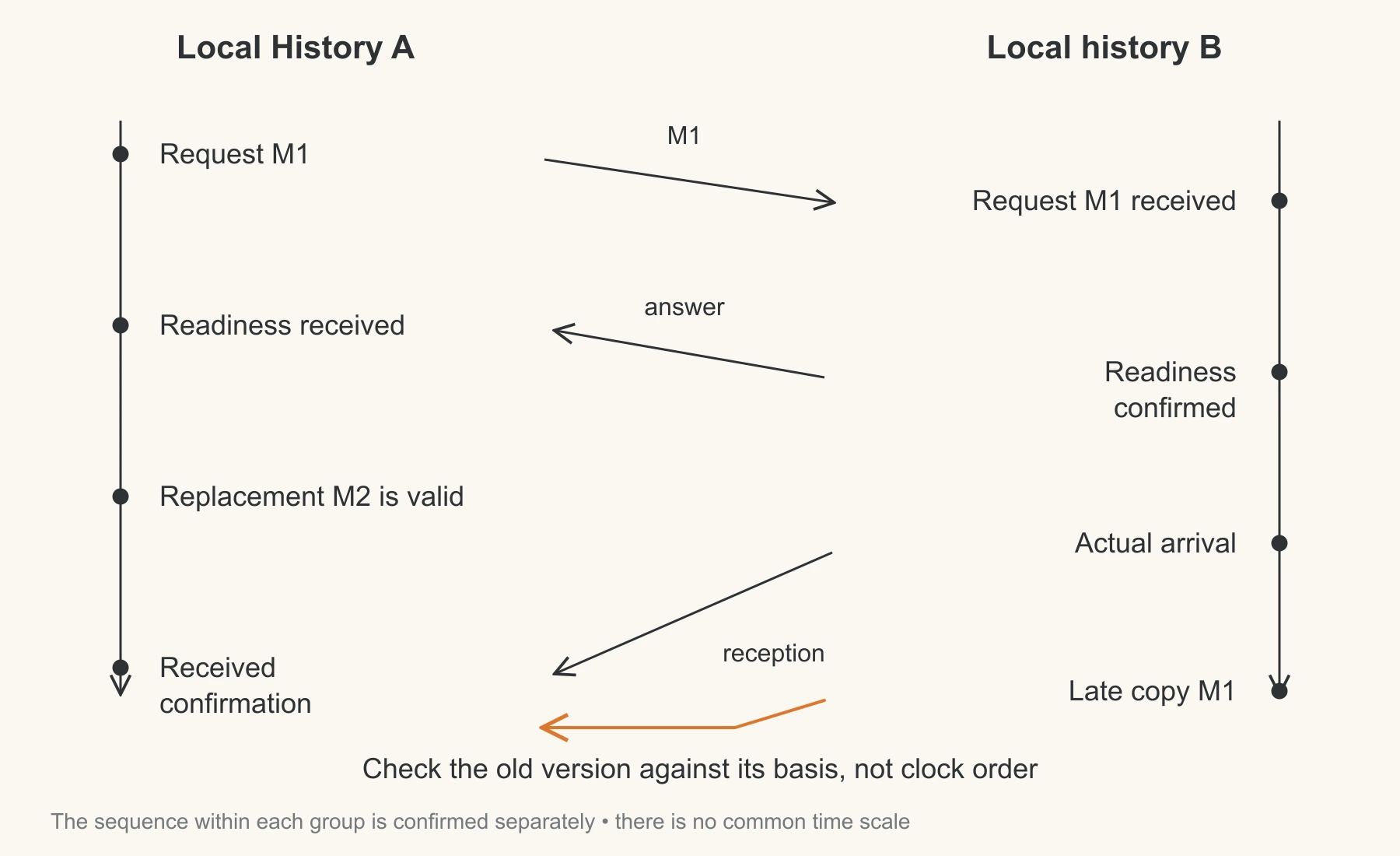
Figure 07. Model 3. Two local stories and message versions
[S] Request, readiness and actual arrival remain separate records. When the overall timeline diverges, the current version is determined by origin, replacement, and confirmed local events.
Model 4. There are consequences, the only source has not been found
The consequence is repeated in several areas, but available methods do not allow localizing a single physical source. The impact is limited to the observable area and does not destroy all verification methods. The facilitator maintains these conditions throughout the exercise.
People, functions and availability of assistance remain subject to observation. The map of confirmed consequences is maintained separately from the assumptions about the origin. This allows you to begin service restoration, for which precise localization is not needed. The movement of people is not directed to the drawn “center” just because the diagram looks more convenient with it.
The search for the source receives a specific question: what decision will change if the location is established? The researchers compare distributed cause, multiple local causes, and global registration error. Additional observation should distinguish between these versions. If the chosen method does not do this, the useful result is to set a limit to the method and stop the fruitless consumption of the resource.
Lack of localization does not prove a source outside space, the conscious field, or the planetary scale. Similar consequences can have different causes. The termination of the effect is confirmed in the area and for the function where suitable observation is available. The unknown position of the source does not provide a basis for influencing an arbitrarily selected object.
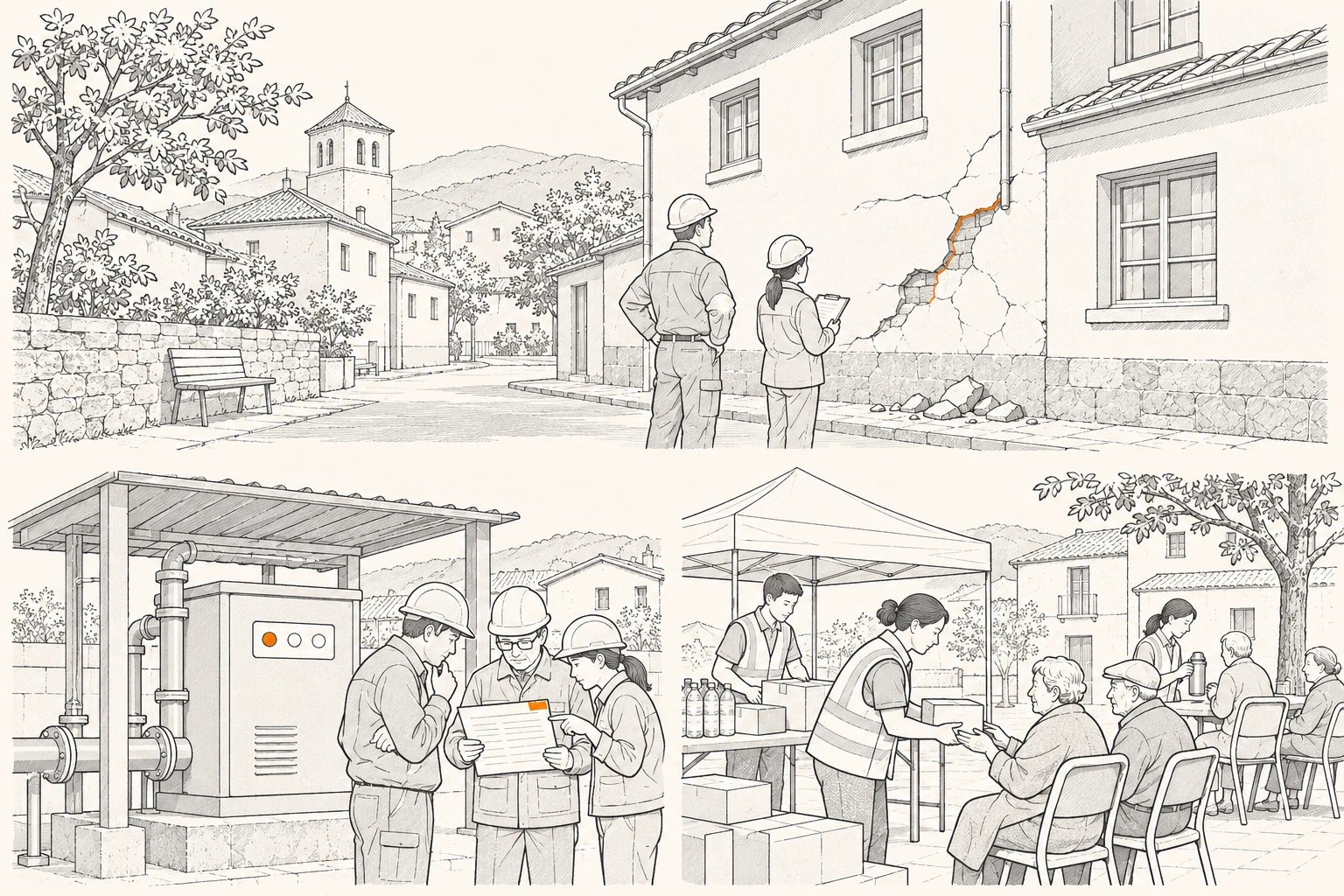
Figure 08. Model 4. The consequences are visible, the center is not found
[S] Local impacts and assistance needs are confirmed, although the source of impact is not localized. The plots shown represent individual observations.
Model 5. Protecting one function degrades another
Several consequences are discernible in an episode, and a measure useful for one task disrupts another necessary function. The reasons may be common or independent. Comparison options are available, but everything is not guaranteed to remain the same.
For each function, you can describe the condition and sign of deterioration. Your own actions are also included in the log. If a measure improved one indicator, that observation remains true after the collateral harm is detected, but the overall assessment of the decision changes. Success cannot be reduced to the most convenient schedule.
First, the leader formulates the conflict: which action helps what and hinders the necessary service for whom. Then, according to P01, he compares existing combinations of measures, temporary replacement and assistance to those whose needs still remain unmet. Scientific groups transmit recommendations to one person responsible for the overall decision. Incompatible advice should not be sent to performers as parallel commands.
In the teaching, the following introduction reveals the lost function. Participants are required to review the measure and check the consequences of the proposed replacement. Two effects do not establish a single mechanism, and the word “energetic” does not make the remedy universal. The special mode of the equipment is authorized by its operator according to the applicable procedure. The benchtop task does not require actual shutdown of vital systems or human testing of protection. In the absence of the necessary capabilities, they retain available organizational assistance and directly convey the unresolved conflict.
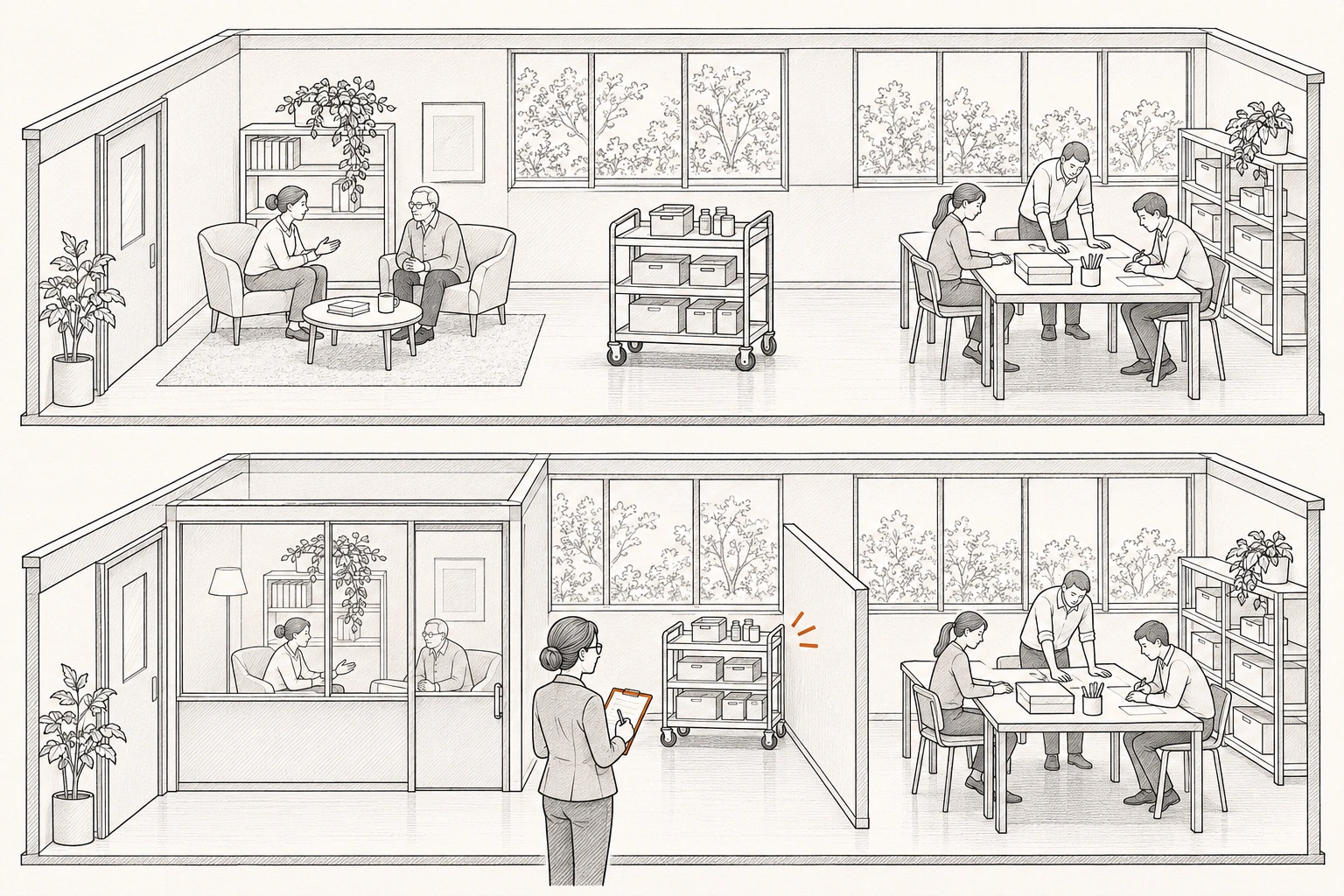
Figure 09. Model 5. Measure benefit and lost function
[S] The benefit of a measure for one task coexists with a new limitation of another function. Both sides of the outcome require joint revision.
Model 6. The composition of the system changes, its action continues
Observable elements appear and disappear, and some functions can be traced through changes in composition. It is not specified whether the elements are organisms, apparatuses, temporary manifestations, or the result of errors of discrimination. There are known episodes, places and some recurring relationships between them.
recordkeeping therefore has two layers: the assumed identity of the element and the continuity of the function. A continuing effect does not prove that the observer saw one object the entire time. The disappearance of a familiar element does not close the general episode, but the appearance of a new one requires checking the transfer of previous conclusions.
In the tabletop task, some elements change after a break, but the previously confirmed limited exchange with one participant continues. The group retains this useful result. At the same time, it does not extend the agreement to the entire new composition without reason. The map shows confirmed relationships, disputed identities, and areas of uncertainty. Contact is carried out within a separate mandate.
The growth of registrations does not establish reproduction, self-regeneration, or general intelligence. A negotiated change may have an external cause; the absence of a center in the data does not prove a lack of control. When tools do not distinguish individual elements, output is limited to episodes and functions. Names do not add resolution to the method. Further work is related to S06 and S11; the assumed structure does not make each part responsible for all the observed harm.
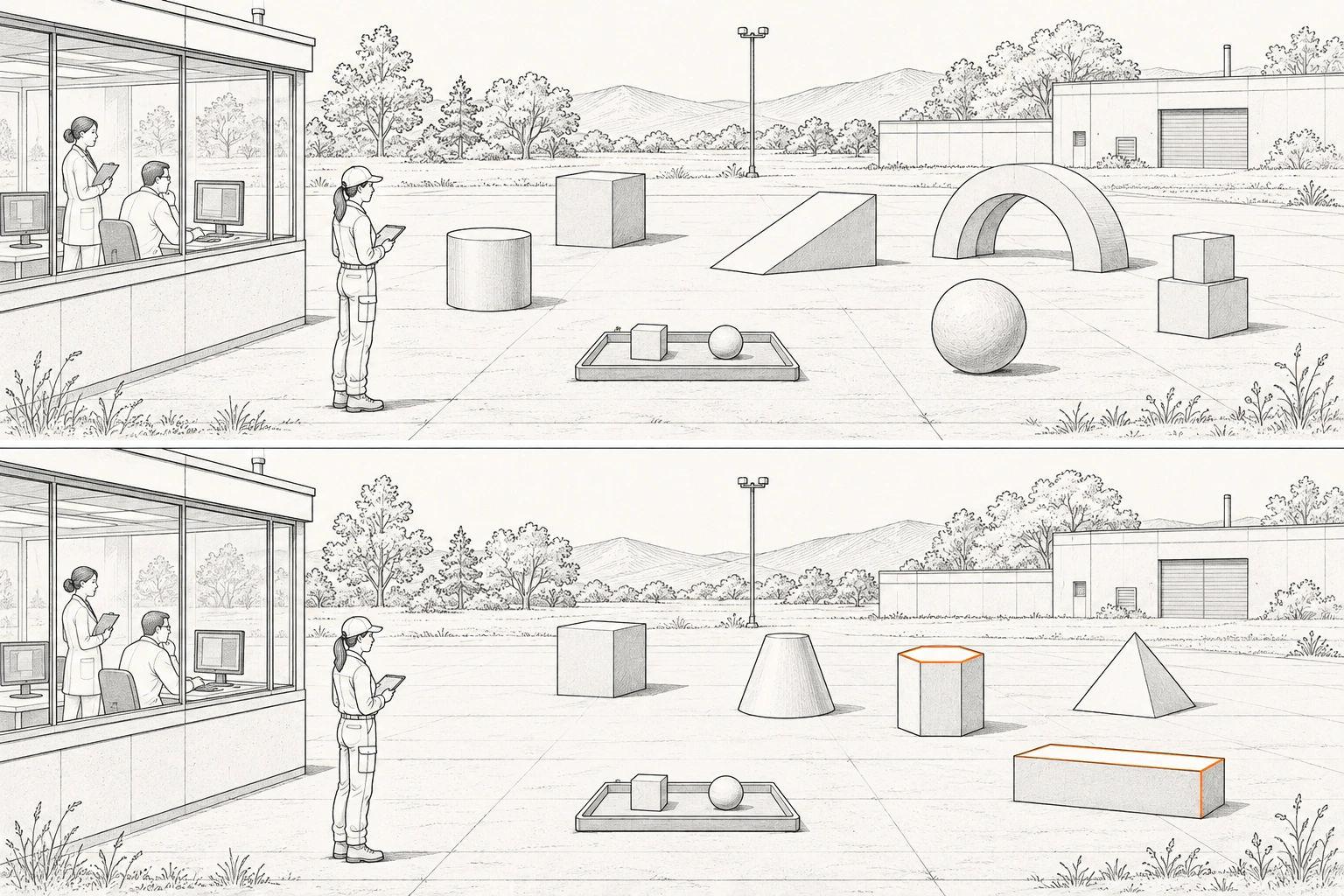
Figure 10. Model 6. The composition changes, the function continues
[S] Between episodes the set of observed elements changes, while one limited local function is preserved. The identity of the elements is checked separately.
Model 7. People and devices report different aspects of the event
People describe a similar unusual experience, but the technical records do not support it or reflect a different aspect. The condition of people and the safety of records can be assessed separately; the mechanism of divergence remains open.
Store each person's words, circumstances of contact, and observed needs. For the device, it is indicated what exactly it is capable of registering. Help and data verification go in parallel. A person does not need to accept the headquarters' explanation to receive support; in case of disorientation, the need for accompaniment is determined by his condition and situation.
Researchers check the origin of similar stories: their own observations, a common source, retellings, identical questions. Experts consider the usual causes and suitability of technical supervision. A late introduction may change the explanation, but should not change how people are treated with respect.
The victim should not be declared to be an entity carrier, an accomplice, or an unreliable person in general. The coincidence of stories does not prove a new channel of influence; the silence of an inappropriate instrument does not prove the absence of an event. The model does not define a diagnosis and does not propose to reproduce the experience. If it is not yet possible to distinguish between versions, the help, original messages, and output limit are retained. An unusual hypothesis does not permit forced experimentation or disclosure of personal information.

Figure 11. Model 7. Helping a person and checking a record
[S] Human support and technical record checking are carried out in parallel. The original message is retained along with the limits of possible output.
How to finish the model
The selected condition must be brought to a change in plan. First, the group names the affected function and what is still being tested. Then it saves the usual alternatives, notes the decision that changes specifically because of the scenario property, and checks the resource, authority, and failure flag of this decision. The new input tests its limits without arbitrarily changing the original rules.
When communication is lost, local confirmations, general designations, and a log of accepted commitments work. After the exchange is restored, the events and versions are first checked, then the explanations. The test is stopped if it requires influencing people, substituting conditions, or does not allow a discernible result. Convey the specific plan amendment, retained assumptions, and applicability limits. It is not necessary to choose a single unusual model where the information equally allows for several.
The First Action and the Local Situation
The atlas expands the range of questions, but the incident begins from a specific place. Someone remains in a damaged room, someone needs a clear path to help, the operator has to choose the operating mode of the system. The following protocols link these decisions to observed consequences. The explanation may change; assistance must maintain an independent basis.
S01 Unknown physical impact
Who uses it. Incident Manager and Technical Team; the witness performs the accessible part and contacts the usual emergency service.
Where to start? Stop unnecessary exposure to observed harm, consider people and report what is happening now.
When to delegate a task. In the event of casualties, damage to the environment, or the need to change access and mode of infrastructure, medical and technical services with the appropriate powers.
S01 is used when acute complaints, damage or unusual changes in the environment are already observed along with equipment failures, and the origin is unknown. One unclear entry is enough to verify the message. Separate grounds are required to declare an attack. The card does not specify a universal screen, distance or acceptable dose.
The incident commander connects the defense tasks. The medical director is responsible for assistance, the technical director is responsible for the condition of the devices and environment, and the communications officer is responsible for transmitting the information being verified. Each person is assigned a deputy in advance. Before such a group appears, an eyewitness reports the location, manifestation, number of known victims, and whether the exposure is ongoing. He is not required to name the mechanism.
The first steps have a simple order:
1. Reduce unnecessary exposure by using an accessible route that does not lead through obvious fire, destruction, or other known hazard.
2. Determine who was in the affected area, where they are now, and who needs help. Don't hold it up for the sake of a complete list.
3. Communicate observed facts; separately indicate the assumption about the cause.
4. Compare information about people, environment and equipment. Experts check whether these channels are truly independent.
5. Define temporary access restrictions and indicate who will review them and when they change.
The choice between exiting and temporarily staying inside depends on the position of the danger. If the source of harm is in an occupied space, the previous decision to remain there is reconsidered. If the danger is outside, exiting may make the situation worse. If the safe route is unknown, people are not directed to the source to clarify the situation; rescue is planned by services based on available means and current conditions. The discovery of a known hazard moves the work to the appropriate professional order.
Preparation for S01 consists of knowledge of standard surveillance tools, their limitations and the procedure for transmitting source codes. A person's well-being is not used as a device for testing protection. In the event of a communication failure, the provided local notification method applies, which does not require approaching the dangerous area. When the sensors fail, the manager records the loss of control. Lack of readings does not give permission to return; unnecessary presence in an undefined area is reduced.
New casualties, expansion of effect, deterioration of cover, or loss of surveillance require immediate reassessment. Research work that creates additional impact is stopped, while assistance remains in place. Access is restored after an assessment of the specific hazard and suitability of the environment by authorized services. The disappearance of a light, sound or object does not automatically eliminate the remaining effects.
The next group is given three distinct notes: the observed effect, the instrument reading, and the explanation. The general error is checked using S05, the controversial mechanism is checked using S07. The limited protection finding is recorded in F05 along with the conditions under which it will no longer apply.
S02 Spatial observations are inconsistent
Who uses it. Access Manager, Engineering and Research Team when route or position information conflicts.
Where to start? Stop unnecessary passages through a suspect location and preserve the last confirmed positions of people and objects.
When to delegate a task. If there is a known engineering hazard - to the specialized service; in case of unresolved contradiction - to the data verification group, without transferring to it the right to independently open the route.
The protocol is activated when, after the first check, there remains incompatible information about an obstacle, object or path accessibility and there is reason to fear harm. If there is no threat to people, an investigation is carried out without an automatic emergency regime. “Spatial anomaly” here refers to an observational or environmental problem. The existence of a portal is not assumed, and no method of passage through it is suggested.
The incident commander decides the issue of access. Engineers evaluate common spatial hazards; researchers compare explanations; an independent reviewer is looking for a general error. Prepared diagrams and information about their origin help in comparison. It is especially important to know how the position was determined: from a digital map, a local landmark, a human report or calculation.
After stopping nonessential movements, the team marks the last reliably established locations and how each was confirmed. The original records are compared before they are combined on a common map: is time defined consistently, do the coordinate reference systems agree, and was the same processing applied? Several explanations are then formulated, together with an observation that would contradict each one. Only then is an authorized program of remote checks prepared. The safety and permissibility of this work are assessed separately.
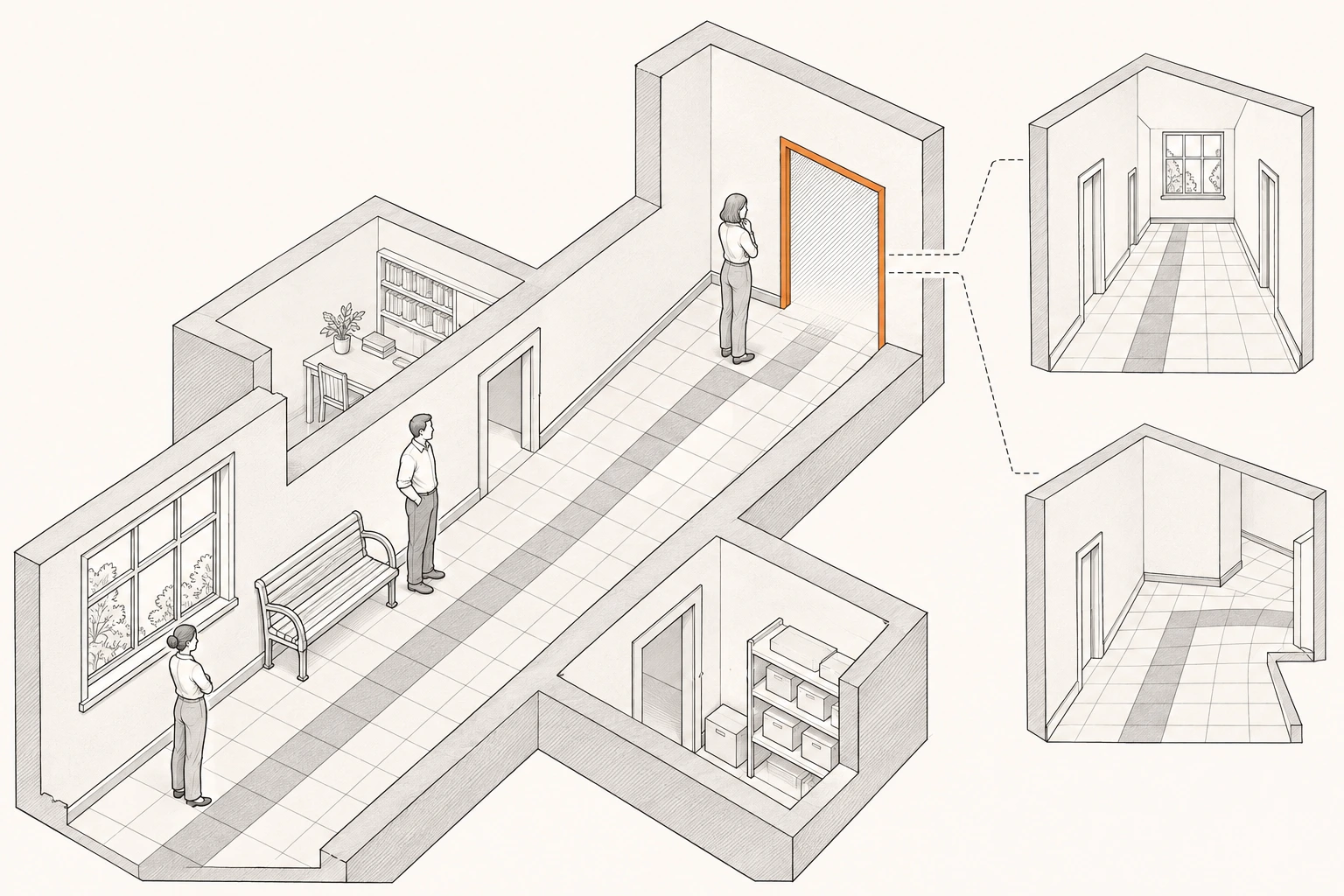
Figure 12. When the map and local observation diverge
[S] In a conventional episode, local landmarks are recognizable, but ideas about the passage diverge. The verified area and the unknown connection are recorded separately.
An identified navigation or image error still requires an independent verification of the fix before opening the path. Destruction, gas hazard or other known cause transfers the work to the appropriate services. If there is no explanation, the restriction relates to a specific questionable area. Uncertainty does not define an arbitrary zone around it.
In case of unreliable coordinates, use local landmarks whose connection with the site is confirmed. Returning to previous numbers does not guarantee exit. The loss of a remote control device is recorded as a loss with an unknown cause: it is not compensated for by the immediate dispatch of a person. In the absence of communication, local groups retain the designations and original observations, act within the limits of the known picture and do not present their incomplete scheme as a general one.
New casualties, changes in availability, divergence of independent means, or established common cause trigger a review. The exploration is stopped if it requires a dangerous passage or interferes with rescue. Completion of S02 means a transition to a known regulation or the preservation of controlled access with clear reasons. This does not require solving a fundamental physical problem.
During transmission, the verified part of the map, contradictions, observation limits and unverified connections are shown. The organization of traffic inside the object continues according to S08; The appropriate training model is selected in S13. The observation history is maintained separately from the simplified operational scheme.
S08 Internal Effects and an Unreliable Map
Who uses it. The site security manager, duty engineer and their trained deputies.
Where to start? Check the actual condition of occupied areas and the position of people, without drawing conclusions about the interior from the entire outer boundary.
When to delegate a task. When relocation requires rescue equipment, changes in engineering procedures, or verification of measurements beyond local capabilities.
S08 is needed if an internal event is not explained by the external perimeter condition, systems show incompatible locations, or the control map no longer corresponds to people and hazards. It complements S02 with practical access management. The reason may be ordinary; the additional dimension remains a hypothesis.
The duty engineer provides information about the premises and general systems. The researcher explains the limits of spatial inference. The decision to make a rescue move remains within the established chain of command of the facility. Before the event, it is useful to have local room names, up-to-date diagrams, alternative communications and procedures for autonomous decisions when external guidance is delayed.
The first difference is between the damage and the position of the suspected source. A damaged door can be located directly, while the coordinates of an unusual object are obtained through a controversial calculation. Dangerous passage is limited by the condition of the door. To do this, you do not need to first recognize a certain method of penetration.
Next, people are counted according to their last confirmed places. Missing information about a person and reporting his distress require different records. Others are not sent into an untested area just to fill out a chart. At the same time, they check the language of the map: one shift could use the room number, another could use the coordinates, and a third could use the old numbering. The matching table includes confirmed elements; controversial connections remain visible.
The operational map contains suitable areas, known hazardous areas and areas without sufficient data. To proceed, indicate the source of verification and the event after which the information needs to be updated. An unknown area does not become passable by default. If there is immediate danger inside, the available emergency route is used without waiting for a full map. If this path is also unsuitable, the goal of rescue requires a change in the decision according to the local plan. When safe exit is not confirmed, apply C15.
Before dividing areas or closing access, the engineer checks common dependencies: who will not be able to get help, which resource crosses the border, which functions will lose control. Modifications to equipment should only be made by authorized personnel. The previous diagram may be incorrect, but this does not change the requirements of a particular installation.
The reasons for the discrepancy are investigated by map versions, observer positions, time and infrastructure changes, using permitted documentary and remote means. The identified bug receives a fix. An unidentified cause does not receive additional properties. Recipients of the new diagram confirm the meaning of the signage and closed crossings, and mark the old digital and paper copies as replaced.
Without communication, agreed local symbols and methods of conveying the situation apply. The silence of a room does not mean that it is empty. Every new internal event, movement of people, change of path, or communication failure requires re-evaluation. The study is stopped if it blocks the lifeline, worsens the condition of people, or requires an untrained observer.
The result is a scheme suitable for current protection or a fairly limited local operating mode. When a manager changes, the people accounted for, current restrictions, unverified connections, the latest confirmed version and the reasons for its use are transferred. Open questions of geometry are not hidden, but do not replace this transmission.
S07 Harm established, mechanism remains controversial
Who uses it. Technical director of the study and specialist capable of accepting its journal; the medical team provides care independently.
Where to start? Separate the consequences and name the decisions that actually depend on the choice of mechanism.
When to delegate a task. When verification requires a special method, infrastructure changes, or conflict resolution between required functions.
This protocol continues S01. Its cause is heating, light effect, damage, deterioration of people's condition or equipment failure, for which various protective measures have been proposed. A special reason is an attempt to adopt a new defense only after the anxiety disappears. The words "energy" and "field" do not establish a mechanism; normal causes and multiple simultaneous events remain under consideration.
The team collects in advance available information about the state of the systems before the episode, logs, descriptions of surveillance equipment and the provided protective modes. Its operator together with the incident manager has the right to change the operation of the infrastructure. The research hypothesis itself does not provide authority for switching.
First, give each consequence a separate record. A report of heat, a measured temperature, and an image of a glow mean different things. One channel describes a sensation, another a measured quantity, and a third the result of recording and processing. Then check whether the channel remained intact after the event: were data lost, did its operating mode change, and is there a shared dependency? Missing data must not be replaced with zero exposure.
For each explanation, researchers note supporting evidence, contradictions, and the missing distinguishing feature. You cannot choose a mechanism just because there is a familiar protective agent for it. The suitability of a measure itself involves three different questions: whether the measure exists, whether it works, and whether it is fit for purpose. The first two answers do not replace the third.
The protected functions are compared: suitability of the premises, availability of assistance, operation of the required system. If the methods of defense are incompatible, the manager receives a common conflict and its consequences. The measure should not quietly destroy the only channel for checking its own result. When it is not possible to maintain such an observation, uncertainty is taken into account before making a decision; surveillance at the cost of unnecessary exposure to humans is not supported.
After the change, the state of people, systems and assistance is compared with the previous one, taking into account other changes that have occurred. Success on one metric does not automatically compensate for the loss of a more important function. F05 records proven benefit, its conditions, possible explanations for apparent success, and signs of withdrawal. The medical and technical teams receive one valid version, with significant differences remaining.
Disappearing anxiety
Learning conditions [S]. A light effect and loss of some telemetry were noticed at the object. Unpleasant heat is reported from the adjacent room. The common cause has not been confirmed. The operator has a design-defined method for dividing the site; there is an already operational aid station outside the site. The adjacent premises retain a separate local connection to this point. There is no additional control equipment in the conditions. Once the switch is allowed, the alarm on the central screen disappears and the duty officer is ready to announce success.
Before the switchover, it was necessary to maintain a suitable environment and limit the spread of control failure. Upon acceptance, both tasks were quietly replaced by the absence of an alarm icon. The inspector asks for the log: what did the signal mean, is its source working, what has changed in the transmission? The recording shows that the division has stopped receiving previous telemetry. Now the lack of alarm is due to a lack of data. It proves neither the success nor the failure of physical separation.
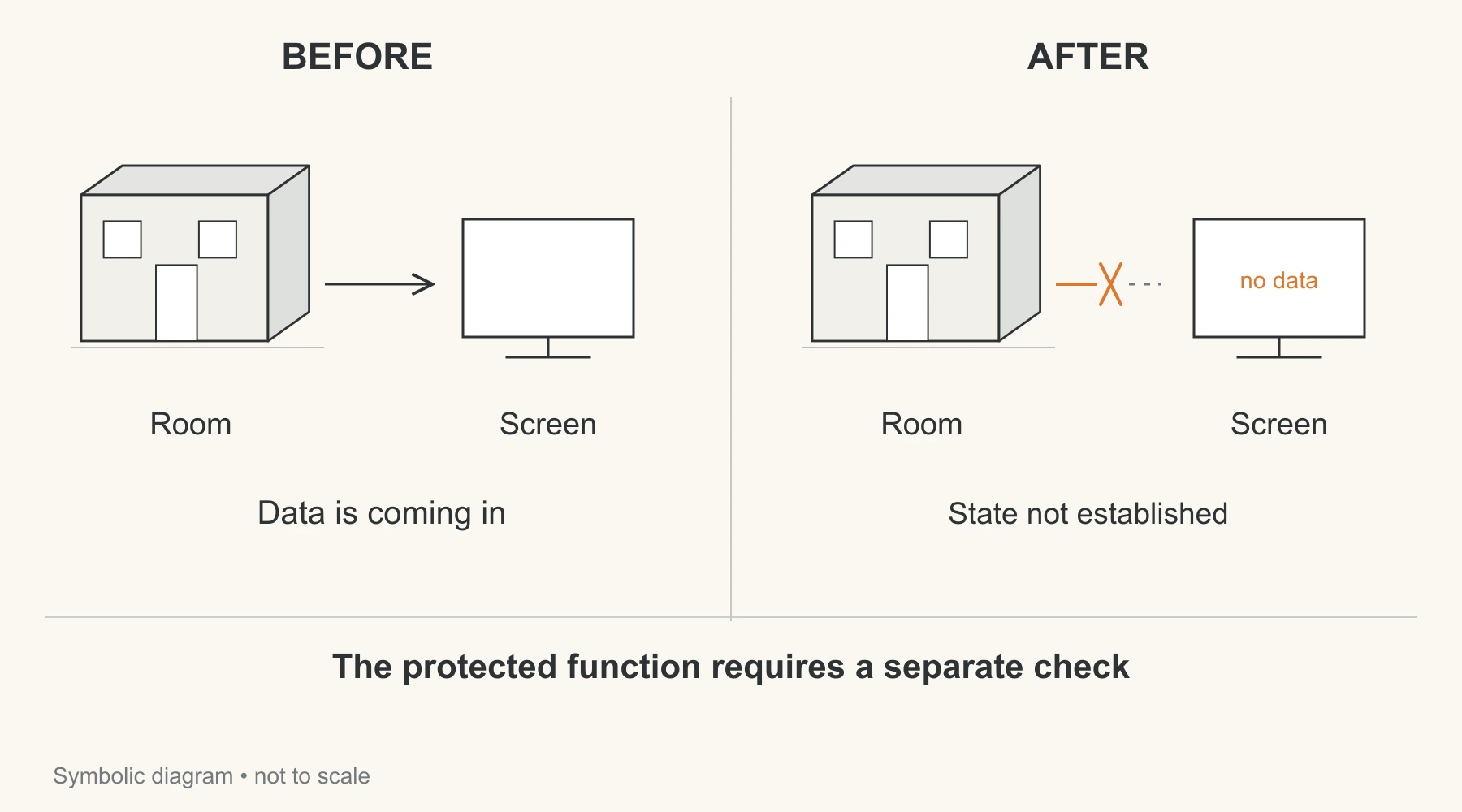
Figure 13. Disappeared alarm: channel no longer transmits data
[S] The disappearance of the alarm when telemetry is lost does not establish the state of the room. Acceptance of a measure requires confirmation of the protected function.
At least three explanations remain for the apparent improvement: the measure reduced impact; the effect stopped on its own; the screen stopped showing the ongoing effect. Existing records do not yet distinguish between them. The manager maintains the independently justified part of the restriction and does not return people to check the premises for their well-being. Help is provided at an already accessible point. The price is the suspended operation of the site, the load on this point and the lack of response about the suitability of the original premises. These losses are included in the decision.
The next introductory message informs that the division has stopped confirming applications for the provision of neighboring premises in the common system. The manager transfers these requests to an already existing local connection with the help point: the recipient repeats the meaning and separately reports what he can do. An accepted application is not considered a completed supply; until confirmation of fulfillment, the requirement remains open. The operator preserves the technical measure only within the limits of its remaining bases and checks the side effects with its order. Planned work on the original site is not being resumed. No new equipment or personnel appeared; The existing point also has to spend time on separate recordkeeping. If confirmations disappear again, this replacement method will also need to be revised.
The exercise can be continued with another introduction: available independent control has confirmed a certain function. Then they accept the limited result precisely according to it. Another option is that the source completed the action on its own, and it is impossible to separate this from the action of the measure. In this case, causal efficacy remains undetermined. For all options, the distinction between service state, control channel, and event explanation remains.
In the final record, three statements are allowed simultaneously: the failure did not affect the listed systems; legacy telemetry is not available after separation; The cause of the heat report has not been determined. This picture gives the next leader more than an overall green or red status. In the analysis, they check whether a loss of observation was detected, whether collateral damage was taken into account, and whether the performers received correction.
If the danger is known, S07 switches to professional regulations; for several reasons, tasks are distributed among the appropriate services. Without communication, the operator maintains the allowed mode, resource control and local log. The absence of an analyst does not allow new equipment modes. Urgent rescue is carried out according to the current emergency procedure.
The test is stopped if there is a new threat to people, loss of control, or an unintended impact on a vital function. The conclusion is the chosen known order, confirmed limited benefit or established unsuitability of the measure. They convey effects, alternatives, protected functions, accepted passport, open questions and conditions for a new assessment. The study of the next method is organized by S11, the loss of previous applicability is considered by S14.
Scale, Multiplicity, and Distance
An unknown event may be larger than a site managed by one person on duty. Sometimes it looks like many elements, sometimes it looks like one giant object. Sometimes the problem is so far away that the response from the external manager will come later than the necessary decision. In all three cases, it is dangerous to replace real connections with a general image: “swarm”, “planetary threat”, “expedition under control”. You need to know what exactly is involved, what is available to local participants and what obligations remain feasible.
S06 Distributed manifestations and suspected swarm
Who uses it. Distributed surveillance coordinator, area teams and a deputy from another active team.
Where to start? Map separately registrations, confirmed harm and general services; check what exactly is considered a separate element.
When to delegate a task. When local consequences require a general distribution of aid or inferences about relationships need to be verified by an independent group.
S06 applies to multiple elements or consequences for which the single source hypothesis may be incorrect. Registrations appear in different places, the number of elements varies, they are difficult to track, and the end of one episode does not end the rest. An increase in messages after news does not in itself establish spread. "Swarm" and "collective" here refer to a testable organizational hypothesis rather than known biology or general intelligence.
Local leaders are responsible for their areas. The analyst links the registrations, but does not have the authority to declare each element to be part of a single adversary. The group needs consistent descriptions, identifiers, a surveillance coverage map, and a way to communicate local landmarks and time with its limitations.
The work begins with the unit of account. One object can appear in several records, and one record can contain several indistinguishable elements. An undefined number cannot be rounded to a convenient precision. Each confirmed consequence for people and infrastructure receives a separate record: location, available sequence, assistance and service status. This map is not automatically redrawn with each new guess about the number of features.
The analyst then checks for changes in the observation itself. Connected cameras, a new message channel, or new classification rules can increase the number of registrations without increasing the number of sources. The periods are compared indicating these differences. Careful connections are left between episodes: probably one element, perhaps different, there is not enough data. If an alternative group changes its decision on protection, it is retained along with the main one.
The assumption of common coordination is compared with common external cause and common error. The simultaneous change may be due to the environment, the observer, or the processing instruction. The version needs a differentiating check. A center not found does not prove that there is no control; similarity of actions does not establish a single mind.
The practical decision determines what can be done locally and where exchange is needed. If the effect moves, confirmed effects and available resources are transferred to neighbors. The disappearance of registrations in the sector does not close the entire system. Flows of people and vehicles are compared to the state of the receiving area to ensure that protective movement does not lead to an unassessed area. Emergency rescue in cases of immediate danger continues according to available conditions; further reception is coordinated in parallel.
If the set turns out to be a repeated count, the number is corrected, preserving the real consequences. If the events are independent, resource coordination may still be necessary. If a connection between events is confirmed, exchanges are strengthened and general measures are checked. The lost area is marked as an area of insufficient information: it is neither automatically cleared nor captured.
Without communications, local teams perform the assigned security mission and maintain logs of IDs, times, and restrictions. After the exchange is restored, the records are first verified and only then combined. Coinciding names do not establish the identity of the object. Exploratory movements are stopped if they require dangerous proximity, leave the area unassisted, or create the risk of people being mistaken for elements of the proposed system.
S06 ends with a general picture sufficient to distribute protection, or a fixed mode of independent local response. Communicate the map of consequences, contested identities, shared dependencies and tasks to groups. The summary shows which decisions will change if the disputed elements are separated or combined. Composite consequences continue according to S12, composition changes - taking into account model S13.
S09 Giant object and consequences for several territories
Who uses it. Head of Scientific Scope Assessment, State Coordinator and Territorial Services; a deputy has been appointed to the scientific supervisor.
Where to start? Separate the location and properties of the object, observed harm, calculated forecast and secondary service dependencies.
When to delegate a task. When the consequences exceed the capabilities of the region or a verified assessment requires interterritorial and international decisions.
In actual planetary defense, NASA's strategy integrates detection, tracking, property assessment, impact modeling, response preparation, and international coordination. Its subject is natural near-Earth objects. For this book it is an organizational pillar; transfer to a controlled unknown system remains a design assumption. [O; S3]
The DART mission demonstrated the ability to change the motion of a specific asteroid by impacting the vehicle. This is limited evidence of the method under certain conditions. It does not follow from it that it is possible to stop any gigantic object, especially one that is maneuvering or has an unknown structure. [O; S4]
NASA's Center for Near-Earth Object Studies (CNEOS) Sentry system considers a set of feasible orbits consistent with available observations. New data refines the set; An updated estimate does not necessarily mean that the previous estimate was in error. But this approach is associated with natural asteroids and the accepted model of motion. For another object, the applicability of the model must be justified separately. [O; NS4]
S09 is turned on based on a confirmed event that requires an inter-territorial assessment, or on consequences that one region cannot cope with. The impressive image and its many publications do not replace this foundation. The scope of a decision determines the possible consequences for people and systems. This card does not specify the method of physical destruction of an object.
The astronomy group is responsible for the applicability of the propulsion model, the engineers are responsible for the implications for systems, and the medical service is responsible for the needs of people. The State Coordinator combines the findings into protective decisions. Neither group replaces the authority of another. Before the event, channels of competent exchange, a register of critical services, a map of cross-regional dependencies, and information about existing deployment and assistance are needed.
The scientific team first ensures that the messages refer to one event and one version of the data. The observed position, estimated dimensions, calculated motion, and estimated behavior are recorded separately. An unknown parameter remains unknown. Disagreement with past trajectory is considered in conjunction with data quality; deliberate maneuvering gets its own check.
The manager is offered several scenarios with explicit conditions: what is already happening, what follows from the applicable model, and what is additionally specified for the exercise. An invented set does not become a probabilistic forecast without a basis for the probabilities. For each option, the territories, necessary functions and decisions requiring approval are shown.
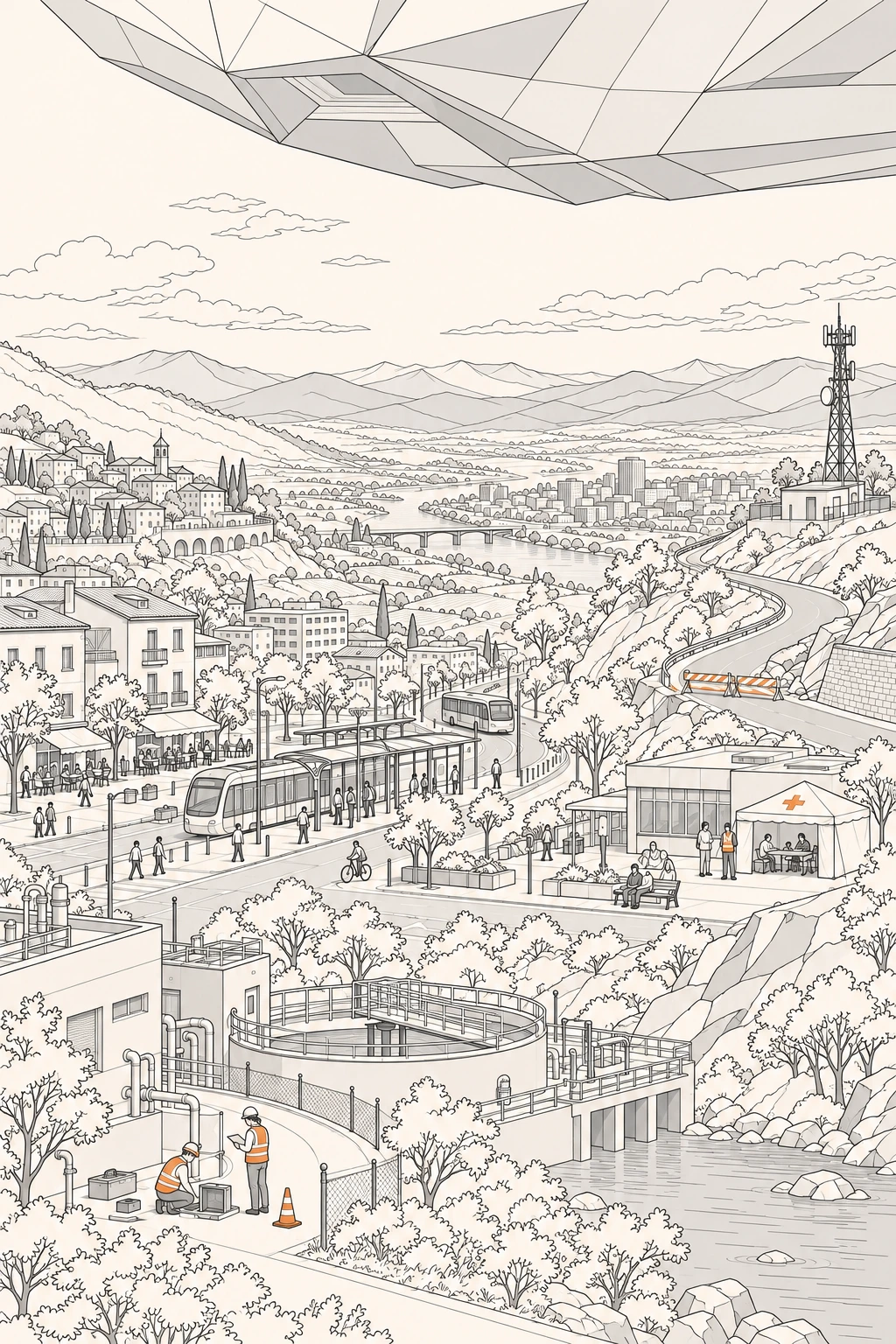
Figure 14. Giant object and regular service dependencies
[S] Conditional panorama without scale. The size of the unknown object and the state of communications, transport, water and assistance are estimated from individual observations; causal relationships require verification.
In the secondary dependency map, each node is associated with a service to people. Loss of communication, traffic stops, water outages and disruption of assistance remain separate challenges even with a common unknown source. The operator indicates the existing reserve and to whom it is already assigned. Multiple plans cannot consider the same vehicle, staff, or receiving facility available at the same time.
The movements are compared with actual reception, support and continuation of treatment. The planetary image of the event does not create the possibility of a general evacuation. Local rescue is not waiting for the inter-regional scheme to be completed. If physical counteraction is unattainable, the strategy retains the subject matter: loss reduction, knowledge, recovery resources and representation of people in possible contact. Relocation to another planet or an autonomous underground city can only enter into the current plan if a proven possibility exists; otherwise it is a long-term research task.
Each update of the forecast is translated into a specific change in actions: who needs to review what and why, where the previous reasons are preserved. Patterns and disagreements are conveyed to management; for the population - addressees, actions, assistance and reason for the amendment. The object's potential power is not described as a proven intent to destroy.
If part of the observations is lost, the actual local consequences retain their basis for response. The old trajectory does not operate indefinitely. Without communication, territories perform agreed upon tasks and record the use of shared resources; After the exchange is restored, help conflicts are resolved first. The plan is revised if the applicability of the model is lost, there is a danger on the route, a refusal to accept or a disproportionate harm to the measure. The result is sustainable interdepartmental management of consequences or reasonable observation without emergency measures. They transmit versions of scenarios, secondary failures, decisions of territories and assumptions that can change them.
Unknown environment far from Earth
At a station and on a field expedition, the protective equipment itself can deprive a person of the atmosphere, the resource of return, or access to reception. Therefore, the general scenario here is always subordinate to the capabilities of a specific mission. The book helps you ask questions and keep the information conveyed. On-board commands, equipment modes and medical decisions are taken from the approved procedures of the device.
S03 Unknown material on station or return vehicle
Who uses it. Commander, life support engineer, medical specialist and designated planetary protection officer along with ground control.
Where to start? Notify the crew, stop non-essential material handling, and check the condition of people and vital systems.
When to delegate a task. In case of violation of containment, deterioration of habitability, or the need to change the reception and further operations - the responsible services of the mission according to its emergency procedures.
Reasons include suspected violation of intended material containment, unusual post-contact effects, or detection of cargo outside the planned handling chain. Returning from another celestial body itself does not prove infection. An unknown material does not become safe just because its properties have not yet been established.
Committee on Space Research (COSPAR) Policy 2026 calls for strict control of samples during limited return to Earth and warns that universal biosafety testing and disposal procedures may not be reliable without an assessment of the specific extraterrestrial life form. NASA requirements for robotic missions provide evidence for the safety of sample return and containment. Mechanical transfer of these documents to any manned vehicle is unacceptable. [O; S5; S6]
The commander makes decisions within the limits of on-board authority. The engineer assesses the suitability of the environment, the medical specialist assesses the condition of the crew, the person responsible for planetary protection assesses restrictions on handling, and the ground team assesses further operations. Their functions and replacement must be determined by the mission in advance. When there is a delay in communication, the established autonomous sequence operates, rather than an independent experiment with an unknown sample.
First, the unnecessary movement of material between compartments is stopped and the crew is accounted for. Then, immediate threats and vital systems are checked using standard means. The history of possible contact is reconstructed based on operations: where the material was located, what barriers were expected, who could have been nearby. The container is not opened for amateur inspection. The status of people, equipment and containment is communicated to the ground team; decisions about ventilation, sealing, and movement are made according to machine procedures.
In a published review of the ISS experience, the main emergency categories are related to fire, toxic pollution and rapid depressurization. The general lesson for this card is that protecting against one risk should not deprive the crew of a suitable atmosphere or intended shelter. Commands for the ISS are not universal commands for another ship. [O; S7]
In the event of an established fire, depressurization or toxic exposure, on-board emergency procedures are carried out first. If habitability is stable and containment is in doubt, non-essential operations and cargo transfers are suspended. Emergency care begins its on-board order. The commander and medical director evaluate the further movement of people along with the possible transfer of material; the receiving party is warned in advance. Incomplete identification does not in itself justify delaying life-saving care.
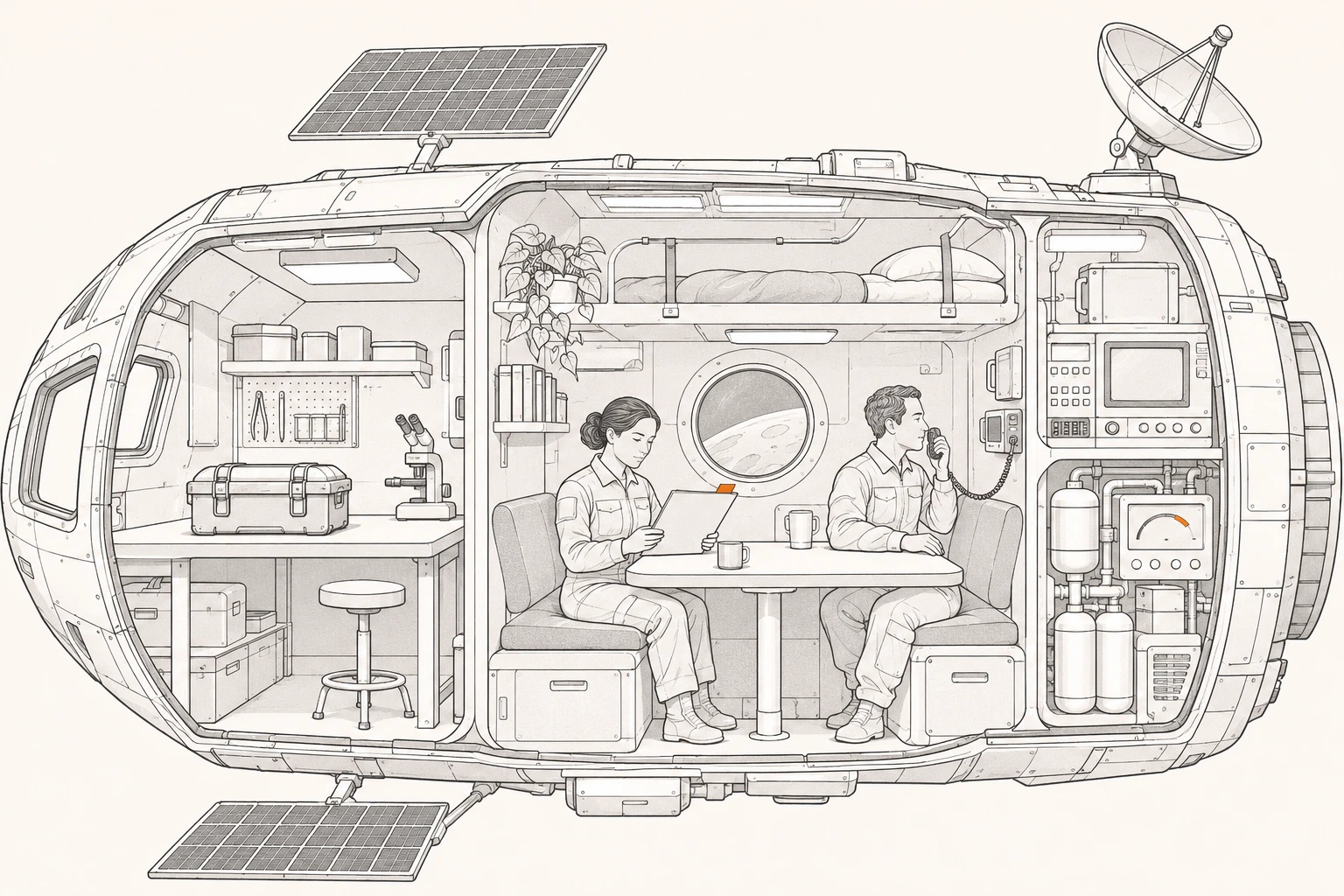
Figure 15. Crew, material and habitat
[S] The condition of the crew, the history of possible contact with the material and the performance of the habitable environment are considered simultaneously.
Without external communication, the commander maintains life support and follows the restrictions agreed upon before the flight. The shared ledger does not create a new return plan. Proven options for crew assistance and handling of potentially dangerous cargo must exist in the mission design. If they are not there, the confident promise of airtightness during an accident does not close the gap.
Deterioration of people, loss of barrier, reduction of resource and change in fit or reception require immediate review. Work with the material is stopped if acceptable conditions are lost. The absence of immediate symptoms or a negative result on one earthly test does not prove its safety. Resumption of operations is subject to the applicable mission procedure. The next group is relayed the status of the crew and required functions, contact history, observation limitations and decisions made; obtaining a complete scientific description does not delay the assistance needed.
S04 Expedition to the surface of a planet or comet
Who uses it. Field Team Leader, Trained Deputy, Engineering, Navigation and Medical Specialists.
Where to start? Stop the non-essential study, check each participant and the actual possibility of returning to the designated facility or base.
When to delegate a task. If there is a threat to a resource, route, human condition or reception - into the mission emergency chain; You can wait for the Earth only as long as the wait is compatible with its conditions.
S04 is used when there is an unknown impact, human deterioration, the environment does not correspond to the calculation, the loss of a reliable path or the consumption of a resource that puts the completion of the exit in doubt. There is no need to prove an extraterrestrial biological threat or hostility to stop the research. Return here means reaching the intended habitable environment. The subsequent flight to Earth is a separate decision.
The commander acts within the limits of pre-established autonomy. The engineer monitors transport and life support, the navigation specialist monitors the route, and the medical officer monitors people. Trained deputies assume functions as planned. If one person combines roles, the limited ability to perform them simultaneously is taken into account explicitly. The research director communicates the cost of abandoning the program, but does not reverse the safety decision.
A proven exit plan must contain autonomous credentials, realistic communications, resources, and reception options. None of these points is restored by the general confidence that the apparatus is “designed for such a period.” The actual state and the current task are in effect.
1. Check people using regular means and begin the necessary assistance. Maintain the established emergency category according to its procedure.
2. Compare the remaining resources, protection and transport with the route, assistance to the victim, delay in reception and already detected failures. The engineer reports the calculation assumptions and signs of its unsuitability.
3. Confirm the primary path and the intended backup path by available safe means. Consider terrain, lighting, navigation and transportation. A previously traveled path is not automatically considered suitable.
4. Convey to the receiving apparatus the condition of the people, the required assistance and the possibility of external contamination. Check available reception according to the procedure of a specific gateway.
5. Inform ground control of the situation and communication delay. If vital functions are threatened, perform a pre-authorized autonomous sequence.
6. Choose an existing option: return, a suitable shelter provided, or other realistically available assistance. Additional observations are allowed only if compatible with this choice.
Possible contamination does not justify leaving a person outside with depleted life support: urgent rescue and protection of the habitable environment are considered together under the emergency plan. An unknown object also does not become mandatory return cargo. Earth's late response is checked against current conditions before being executed as a standing order.
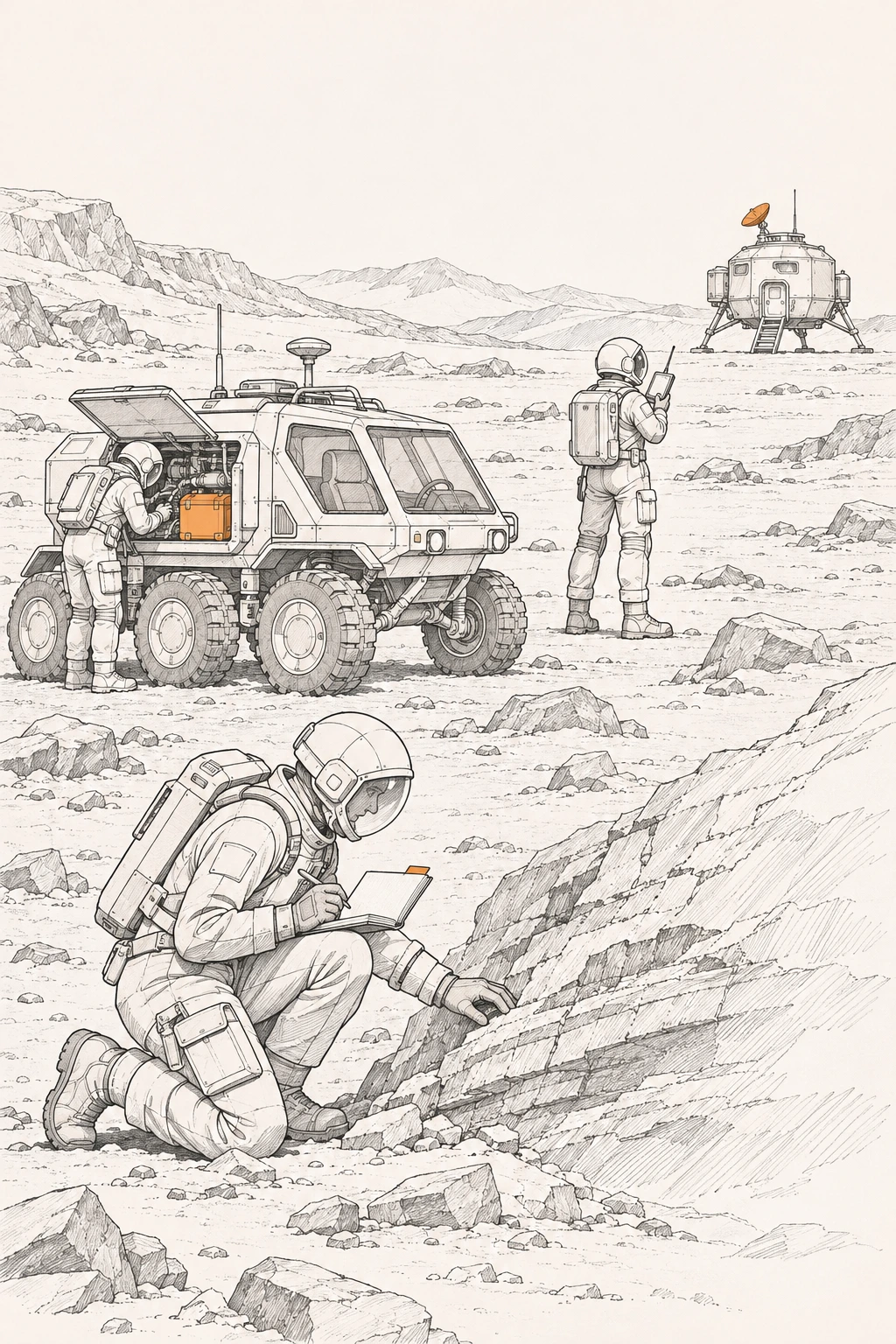
Figure 16. The expedition retains the possibility of return
[S] People, resource, accessibility of the route and confirmed reception form interconnected conditions for the continuation of the expedition. The image is conditional, not to scale.
During the movement, they continue to check people, flow, path and reception. Failure of transport, loss of landmarks, deterioration of the participant or exceeding the calculated consumption change the decision. If the direct path is not suitable, the existing reserve is chosen. Lack of resource does not make it safe to make an impromptu shortcut through an unknown area.
Without communication, the established autonomous order operates; decisions and actual situations are preserved in an accessible way. A relief team is not sent without assessing its own return and ability to help. Scientific work ceases until the resource of return or the ability to support participants is lost. There is no universal waiting time here.
Completion of S04 requires the entire crew to be accounted for, placed in a suitable environment, and medical and technical implications communicated to those responsible. Report the position of equipment, the condition of people, route restrictions, unresolved issues and decisions made without communication, along with their reasons. Reaching the vehicle does not yet allow a new exit or interplanetary return.
How to get an actionable answer
Previous chapters have repeatedly left the explanation open. This is a necessary first honesty, but it cannot be limited to it. The research team must turn “we don’t know” into an accessible sequence of questions. Its result may be modest: a corrected summary, an established device limit, a confirmed function. This result changes the decision and allows the next group to continue the work.
From recording to output
The phrase "anomaly confirmed" hides several different statements: the recording exists, the measurement is unusual, the source is physically present, the source caused harm. Each requires its own verification path. The work chain includes source material, measured characteristic, data transformation, explanation and decision. The missing link is not supplemented with a plausible guess.
A light spot moves in the frame. The speed of a physical object will require distance, geometry, and a suitable time reference. Meanwhile, falling debris can provide an independent reason to remove people from the affected area. Help and speed setting are associated with one episode, but require different completeness of knowledge.
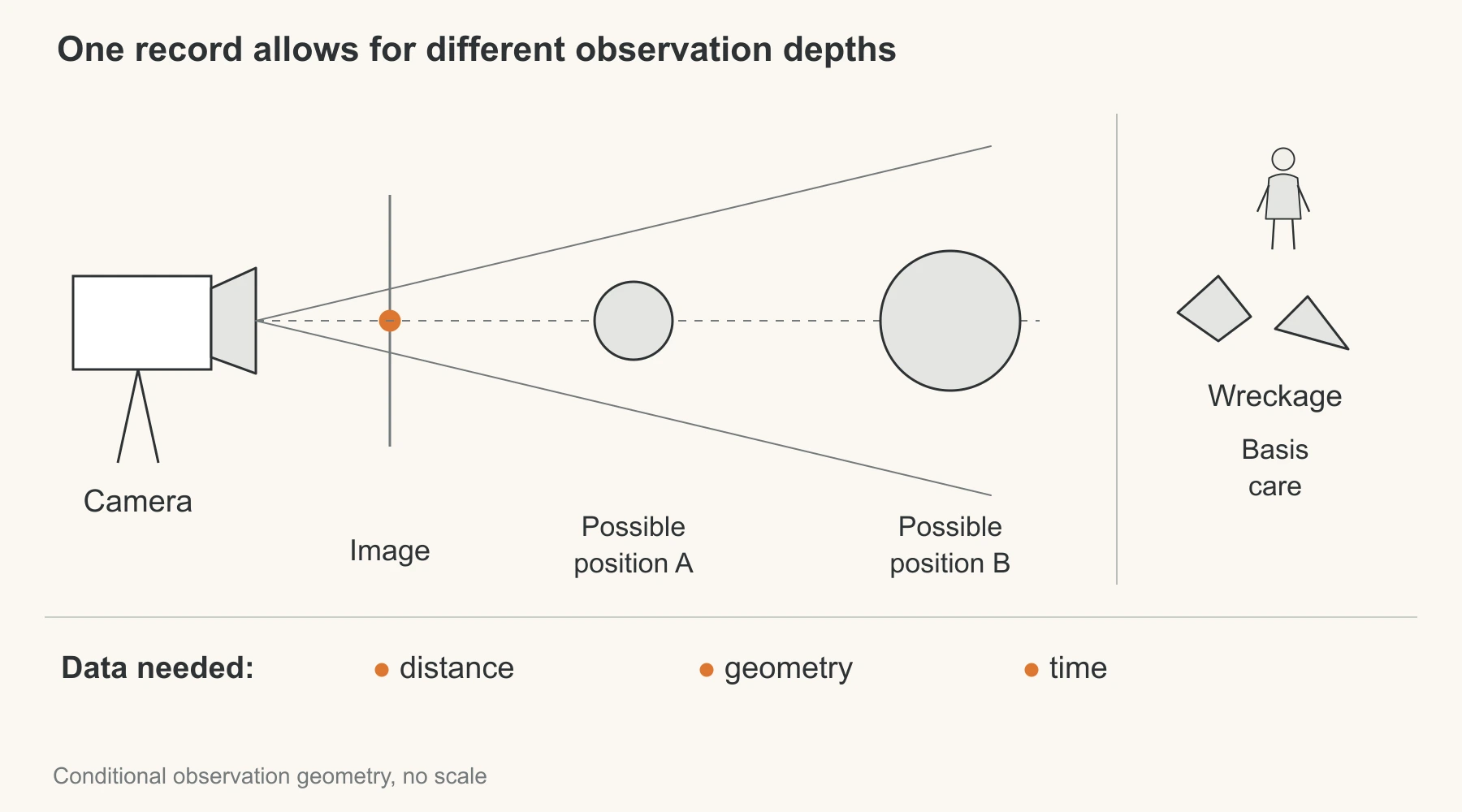
Figure 17. Light Spot and Missing Geometry
[S] Without distance, observation geometry, and a suitable timing reference, the recording does not determine the movement of the physical object. Confirmed consequences have an independent basis for assistance.
The report from NASA's independent UAP panel emphasizes measurement quality, calibration, metadata, and systematic collection. The methodological implication here is that without observational characteristics, many unusual reports cannot be reliably assessed. The report does not serve as evidence of the extraterrestrial origin of the phenomena. [O; S2]
The source is stored separately from explanations and working copies. They indicate the creator of the record, the method of determining time, the place and its error, the device, mode, environment, and the available history of changes. The screenshot and retelling are saved, but are not treated as equivalent to the original recording. Missing information is noted directly. A common source of time or processing can link seemingly different messages; independence is checked by S05.
The inspector keeps separate confirmations, objections and information that cannot yet be assessed. The organization allows the report to be corrected in advance while preserving the history. A person who discovers his own mistake should be able to communicate it without defending an earlier version for the sake of personal standing. Otherwise, administrative confidence will grow precisely when the grounds require revision.
Technical Note TN 1297 from the US National Institute of Standards and Technology (NIST) links the measurement result to a description of the uncertainty and the basis for its estimation. Probabilistic interpretation also requires a basis. This principle of presenting the result is important for the book; document 1994 and its archived page do not establish safety criteria for unknown exposure. [O; NS1]
It is practically convenient to distinguish between four gaps. We may not know the accuracy of the measurement; do not have surveillance of the desired area; not knowing whether the model connecting the data is correct; not knowing whether the chosen action will change the consequences. One overall percentage of confidence masks the difference. It is better to indicate the specific gap and dependent decision in the report.
Received information | What can already be said | What it doesn't establish itself |
A few posts about the episode | Messages exist | Independence of observations |
The results of the instruments coincided | Available results are consistent | No general error |
After the measure the anxiety disappeared | The order of events is fixed | Eliminating the source |
The system continued to work | The function was preserved under the observed conditions | Suitability of all systems and future states |
There are more registrations | More registrations counted | Reproduction, general intelligence, intentional environment |
No new complaints | No new complaints registered | No harm beyond the reach of observation |
After the appeal the trajectory changed | The movement has changed | Understanding the message and agreeing |
Separately, a distinction is made between the absence of a characteristic in a suitable observation, insufficient distinguishability and lack of data. The non-working device did not give a negative result. A working device that does not cover the desired location or feature also does not answer the question about it. These differences are kept in the summary, even if the screen is better off with a single green icon.
For a controversial conclusion, two short notes are useful: what is already reliable enough to act and what has not yet been established. For example, damage to the ceiling justifies the restriction of passage regardless of the glow hypothesis. Fixing the latter does not open the damaged corridor. Each measure is given its own basis so that the overall version of the event does not hold the entire plan hostage.
A change in the algorithm, survey area, reporting rules, or composition of the observed group is noted in the history. By combining the data before and after it, the analyst explains the basis for the comparison. The exotic version requires a distinctive observation: an outcome that it expects and which the main alternatives do not explain without an additional assumption. If such a result cannot yet be formulated, the version remains a research question and does not justify special intervention.
Model and protection have application limits
NASA-STD-7009B, approved 5 March 2024, relates to the development and use of models and simulations, assessment of the validity of results, and acceptance criteria for a specific project. For the book, the suitability of the model for a specific decision is essential. This standard does not confirm the properties of a hypothetical extraterrestrial system or convert a simulation into an observation. [O; NS2]
Before calculation, choose a question. “How is the threat structured?” does not determine the end of work. “Will assistance continue after this site is closed?” specifies the task to be checked. First, the desired result is named, then the input information and method. A program with greater computing power does not choose the question for the leader.
Input data is divided into measured, accepted by analogy and specified by a script. Repeated calculation at a fictitious speed tests the consequences of an assumption rather than predicts reality. Model verification also consists of different parts: internal consistency of units, coordinates, people and resources; consistency with available similar observations; stability of the decision with an acceptable change in the initial conditions. Their results are reported separately. A successful software test does not prove a physical hypothesis.
Available safe ways of working - archive, staff logs, permitted remote observation, organizational layout, tabletop exercise. A path closure or sensor failure can be set as an input, keeping the actual system running. For a technical stand, the organization separately establishes safety and acceptable modes. Unknown effects are not reproduced in humans and animals for the sake of a convincing result.
Each protective measure answers four questions: what harm is it intended to reduce; what observations support the expectation; what assumptions are needed; what happens if they are incorrect. Restricting access can reduce contact while also closing the path to help. Therefore, the measure passport contains a stored function, a sign of operation, a way to detect its own failure, collateral damage and an available reserve.
There are four possible failures: the barrier does not affect the intended channel; the main and backup options fail at the same time due to a common dependency; defense creates other harm; the person misunderstands the rule and applies it inappropriately. The latter is revealed even when reading the card. If the contractor does not understand who has the right to open the premises, the problem already exists.
When comparing measures, they take into account the cost of error, reversibility and urgency. A temporary decision is also unacceptable if the delay deprives the person of needed assistance. Research into the mechanism is sometimes justifiably delayed: additional knowledge is not worth the impact that will make the situation worse. The postponement receives the terms of returning to the issue. The episode summary shows preserved functionality, reduced risk, unnecessary measures and remaining questions. Lost applicability is sorted out according to S14; termination of a specific impact is formalized according to G12 and F09.
S05 Independence of evidence and general error
Who uses it. Data verification supervisor, deputy who knows the registration chain, and source systems operators.
Where to start? Name the statement being verified and trace each message back to an accessible source.
When to delegate a task. When a detected dependency changes the security decision or the check goes beyond secure access to production systems.
The reason may be a divergence of channels, too exact a match, a new general dependence, or a difficult decision based on the agreement of the devices. The operator provides the data, but does not solely certify the independence of his own conclusion. The incident director maintains the independent defense while the reviewer reports which findings have weakened.
For preparation, you need a list of sources and their owners, processing versions, dependent decisions and storage location for copies. Receiving material should not require shutting down a vital system. The statement being verified is formulated narrowly: physical movement, simultaneity, damage to the environment. These questions cannot be combined with the “all confirmed” status.
The test goes from origin to consequences:
1. Note sources, derivatives, paraphrases, and unknown origins. The latter is not independence.
2. Find common dependencies: power, time synchronization, coordinate base, transmission, processing and operator instructions. Check also the general summary: an error may occur after registration.
3. Group the chains by possible common cause of the error, indicating unknown connections. Groups do not automatically receive equal evidentiary weight.
4. Compare raw results with summary: order, units, coordinate transformations, versions. Correct copies while preserving history.
5. If available, obtain a suitable independent review with a neutral question. Information about risks should not be hidden.
6. Submit retained, weakened, and refuted findings along with specific actions for revision. Recipients confirm the meaning of the amendment.
For a general error, the affected system and dependent decisions are corrected. Real damage preserves the grounds for assistance. With partial confirmation, the measure is correlated with the confirmed part and the cost of uncertainty. If there is a contradiction, protection based on the consequences and search for data continue. Voting by members of one chain does not replace another chain.
Without communication, the local group retains the sources and versions. It communicates the identified local danger to available participants, but does not propagate the unacknowledged amendment as a general command. The review is changed or terminated if access disrupts required services, history is lost, or the review team depends on the same unverified result. The result is a dependency map and a conclusion limit, including the inability to install it. Conveys approvals, source groups, constraints, and change holders.
Twelve messages
Training data [S]. The duty officer receives twelve messages about the movement of an object through an industrial area. The automatic summary calls these twelve independent confirmations. Two sites simultaneously report equipment shutdown. The manager needs to support the assistance and understand whether the indicated direction of movement can be used as the basis for a further plan.
Received material | Number of messages | Available Origin |
Forwarded video | 7 | One original video |
Operator messages | 3 | One shared screen |
Own recording of the first source | 1 | Separate registration chain |
Second source's own recording | 1 | Another registration chain |
Four chains of representation are identified; full independence has not yet been established. The next check reveals a common time reference system between the video and one of its own recordings. The images exist, but the previous rationale for the sequence has weakened. Equipment shutdowns are confirmed separately by local logs; the connection to the image is not yet known.
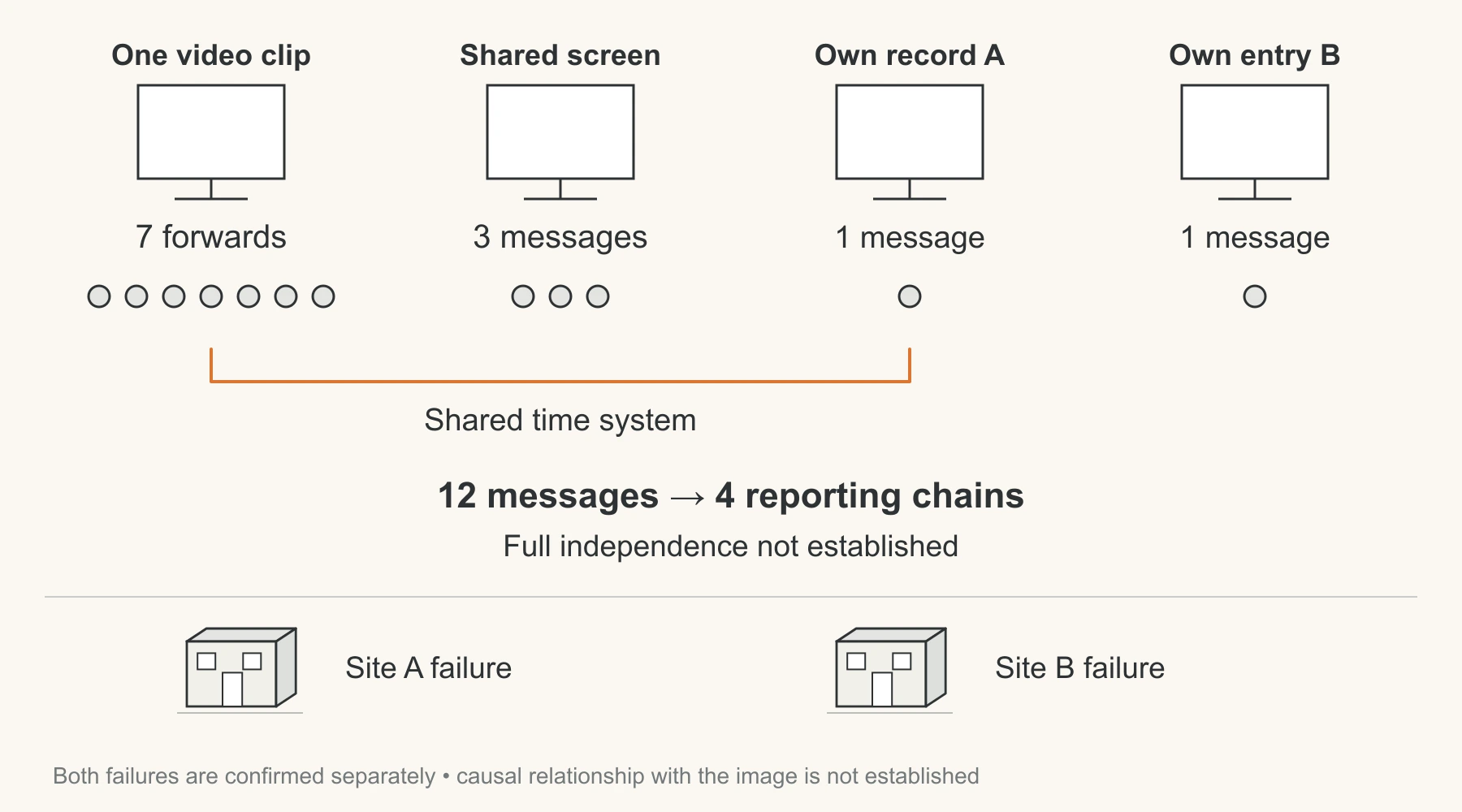
Figure 18. Twelve Messages: Origin of Evidence
[S] In the training set, twelve messages form four presentation chains; their complete independence has not been established. Confirmed failures of the two sites are investigated separately.
The manager excludes the unconfirmed direction from the basis of new movements and continues assistance at two sites. The price is the loss of previously promised certainty: part of the planning now has to be carried out without a reliable trajectory. Detection of repetitions does not allow declaring all consequences fictitious. Preserving the previous report for the sake of the number of eyewitnesses is also unacceptable.
Operators provide accessible copies without shutting down the shared server. The independent reviewer receives a question about the sequence, origin and risks, but not the expected direction. If there is not enough data, this is what becomes the result. The corrected summary reports twelve messages, four available chains, unspecified total independence, unconfirmed direction, and separate verification of two failures.
In a later introduction, it turns out that one recipient continues to use a printout of the previous summary. The scientific correction has already been made, the action has not yet been corrected. The team delivers a replacement to that worker and reviews the affected task. The exercise evaluates the latency between dependency detection and decision revision, legacy recipients, and inference traceability. The object name is not required for successful completion.
S11 A study that has yet to be answered
Who uses it. The head of the research program, his deputy, an independent inspector and responsible for work safety.
Where to start? Formulate one question, the answer to which will change the immediate decision, and determine the assistance that continues during the test.
When to delegate a task. When a special method, additional data collection, adaptation of a tool, or authority to change a practice is needed.
S11 is used if a significant choice depends on an unresolved issue, explanations require different actions, the usual method does not correspond to the effect, or the possibility of a negative result is unclear. G03 helps verify the suspected threat limitation; S11 builds a program when there is no suitable answer or method yet.
A man without instruments reports what is observed, the location, the sequence and his limitations. A small group verifies provenance and keeps a log. Local specialists resolve issues using standard means. The relevant organization determines the suitability of the methods and the limits of use. The absence of the last level does not deprive the first levels of available work.
The response leader defines the practical task and consequences of the expectation. The researcher organizes the program, an independent inspector evaluates the grounds, and the person responsible for safety has the right to stop a specific work. The combination of roles is recorded: the small group does not become independent from the renaming of the participants. Prepare a source archive, current decisions, operator contacts and real monitoring capabilities. Originals and copies are separated; for transmission use F01, F02 and F05. Lack of a form does not delay assistance.
Question, data and acceptable result
Instead of “find out the nature of the object,” a choice is formulated: is it possible to maintain this service if control of the premises is lost; whether independent records confirm the connection between the two failures; will the decision change after correcting the time? For each meaningful answer, an action is recorded in advance. If the answer makes no difference, the issue may be scientifically important, but operational priority does not automatically arise.
The cost of error, delay and verification is compared, as well as the opportunity to obtain a discriminating result. Questions are divided into those that can be solved using available material, those that require new data, and those that do not yet have a verifiable method. The last category remains visible without the promise of a quick response. An irreversible action requires a stronger test than a temporary reversible decision; the expectation itself is included in the assessment of consequences.
Observation | Practical question | Required information and reviewing party |
The state of people has changed | What help do you need now? | Condition and history of stay; medical assessment |
The surface becomes hot or damaged | Is the desired functionality retained? | Size, mode, staff logs; engineering assessment |
Lost connection or control | Where does the confirmed failure end? | Nodes, power, versions, errors; system operator |
The routes diverge | What transitions are available? | Landmarks, diagrams, references; navigation and operation |
The environment has changed | What uses are justified? | Previous condition, comparable observations; environmental assessment |
The source behaves differently | What has changed and what is the reason? | Episodes, registration conditions, our actions; specialized group |
This table sets the task without obliging the citizen to find all the specialists before taking his own safe action. The coincidence of complaints does not identify the agent; the glow does not evaluate the design; a failure does not establish intent; an unusual map does not prove an extra dimension; one good environmental indicator does not permit any use; the reaction after the message does not confirm understanding.
The program sequentially goes through the following decisions:
1. Designate a person who has the right to use the answer. Record the retained function and help for the duration of the test.
2. Separate explanations, their support, contradictions, and discriminating observations. The version compatible with any outcome should be left as a separate question.
3. Determine the path to the answer: a suitable existing method, testing an adaptation, developing a new one, or an established inability to distinguish between versions now.
4. Describe the observation: sign, area, operator, tool, dependencies, source and what this channel is not capable of establishing.
5. Set the suitability criterion to the desired result. Test the method on safe, available material; Separately store development and independent evaluation data.
6. Perform permitted work with stopping conditions, then parse the result along with the observation state.
7. Convey limited conclusion, objections, and affected actions. Close questions that have lost their significance and assign the next step to the remaining ones.
A negative result preserves the question, method, setting, and available description of sensitivity. Without them, it is not transferred to another area or mechanism. The new method goes through understandable stages: the question is formulated; the method is described; check completed; limited use permitted. These are job statuses, not universal certifications. The absence of independent support narrows the purpose of the result and is not eliminated by voting.
Training kit: what happened to the readings in the north hall
All places, values, and records in the following analysis are fictitious [S]. This is an archived tabletop exercise; its numbers are not safety thresholds. The supply center has a north hall and an operating south service point with one backup distribution window. The north hall is temporarily closed following an unusual flash, a high temperature reading on the central screen, and a confirmed loss of ventilation. The operator has already stopped normal work under the facility’s procedure. One repair team is assigned to the center; its planned tasks had to be postponed. The scenario provides no additional room, second repair team, or new instruments. Assistance and distribution through the south service point continue, while some scheduled requests are postponed.
The researcher's first question is narrow: Does the available data explain the high number on the screen due to physical heating at the local sensor point? The answer is needed by the operator to check the readings and by the manager to report closures. It does not replace separate environmental inspection and ventilation repair.
Participants receive the following material. The indices n1–n3 refer to the order of the stored samples; The clocks of different systems have not yet been compared.
Record | Content Provided | Limitation |
Local channel N log | n1: 22.1 °C; n2: 22.3 °C; n3: 22.2 °C | Describes one point, not the entire room |
Exporting the center screen | n1: 72.1 °C; n2: 72.3 °C; n3: 72.2 °C | Completed software conversion |
Automatic alarm message | Repeats central export numbers | Does not constitute a new measurement |
South Point Journal | No temperature change was recorded at its point | Doesn't confirm the state of the north |
Operation log | The ventilation of the northern hall has stopped working | The reason and validity of the resumption are checked by the operator |
Two employee appeals | Feeling warm after a flash | Status messages, no temperature measurement |
Video recording | Light stripe in the frame | Distance, cause and temperature are not obtained from it |
The local log source and description of the installed channel are available; center screen lookup table requested. An independent verifier obtains copies and provenance. The presenter holds one more entry to check the selected explanation; participants are aware of the presence of the control material, but do not see its meanings.
Version | What it explains | What should distinguish it from others |
Heating at point N, local channel shows incorrectly | High number and possible connection to complaints | Checking the suitability of the channel and searching for other evidence of heating in the provided archive |
Error converting local data on screen | Constant divergence of pairs of numbers | History of setup and playback of the conversion on the archive |
The N symbol shows data from another channel. | Discrepancy with correct measurements | Matching identifiers, data route and signatures |
These versions do not exhaust the reasons for the flash and stoppage of ventilation. They answer one question about numbers. You cannot explain the entire episode by simply selecting one row of a table. A confirmed service failure retains its own limitation basis.
The group notices a difference of 50 degrees for all three pairs. This is a reason to check the transformation, but not yet proof of an error. It asks for an authorized copy of the settings and the history of identifiers, without disabling the working southern point. The second version becomes testable without new exposure to people. Analysis of a copy is separated from the correction of the working system, which the operator has the right to perform.
The following input reveals the configuration: in the previous update, an additional offset of 50 degrees was mistakenly applied to channel N. The identifiers show that the channel has not been changed. On the original recordings, the group reproduces exactly the numbers that hit the screen. The verifier then opens the held entry: local value 23.0 °C, central value 73.0 °C. The shift explains it too without changing the rule after viewing. This is a conversion check; it is not an independent physical measurement of the entire room.
Now we can say: the high value in this central export was obtained by an erroneous transformation; automatic alarm repeats the same source; the physical heating finding for this export has been withdrawn. The suitability of the local channel and its area are confirmed only within the limits of the documents provided. The cause of the flash and the cause of the sensations have not been established. Ventilation remains a separate technical challenge.
The manager corrects the report of proven ‘abnormal heating of the entire hall.’ The operator receives the rationale for correcting the configuration and checking its systems. The north hall remains closed: ventilation performance and environmental suitability have not yet been accepted under the facility’s procedure. The south backup window continues to serve people. The cost of the limited decision remains—a queue, postponed distributions, and a reserve in use. The sole repair team completes the emergency task; its earlier planned work remains unfinished.
After authorized repairs and separate acceptance, the operator resumes the intended operation of the northern hall. This is a new basis for reopening, different from the explanation for the erroneous figures. The facilitator then supplies a later record: the setting has now been corrected, local channel N actually shows an increase from 22.4 to 30.8 °C, and the independent operational log records a new cooling failure. The number itself does not serve as a universal command; the decision is determined by the procedure of the given object and the confirmed loss of function.
The group isn't chalking up the new episode to an old programming bug. The operator again limits the normal operation of the northern hall according to the procedure for the current failure, the manager maintains the available backup reception, and the researcher opens a new task for S14. The previous conclusion about the shift remains true for the old version of the data. It no longer answers the current question. The outcome includes a corrected chain of origin, audit trail results, two different grounds of restriction, delayed commitments, and an open question about the original flash.
The analysis is completed without a complete theory of the event. Provides a reproducible explanation for one result, prevents error transfer to action, and preserves the ability to detect a new real failure. To repeat, the presenter only needs the indicated tables, a hidden control record and a late introductory note; The safe operating system is not affected.
Transfer of the result and further program
When transferring the result to another site, conditions, observation requirements and signs of unsuitability are transmitted. Other equipment, load or dependent function may require new testing. Local assistance continues even when the application of a specialist conclusion elsewhere is postponed.
Without communication, they retain the originals and journal, close available local issues, and highlight pending external review. An unconfirmed conclusion does not become a general order. After the exchange is restored, the identifiers, versions and meaning of the question are checked. Work is stopped if there is an unintended impact, loss of control, damage to the source code, substitution of the task, or the inability to separate the result from a method error. Help with your own foundation is preserved.
S11 ends with a suitable answer, proven by the limit of the method or justified by the next step. Transfer the question, alternatives, data, method status, test result, scope and specific tasks to the performers. The failed approach is described so that another group does not repeat it as a new hope. The wording “research continues” without the next verifiable step does not close the work.
The event continues in its aftermath
The first episode may end before its consequences. People stop seeing the object, but continue to wait for water; the connection has been restored, but the order remains on the old paper; the protective measure still exists, but the previous load has already changed. The next shifts need a story that distinguishes between the event itself, the state of observation, and people's own actions. Without it, every new problem looks like a new attack, and every calm looks like the end of danger.
S12 Deferred, cumulative and compound consequences
Who uses it. Event history coordinator and designated successor along with medical, engineering and environmental specialists.
Where to start? Save the order of observations, changes in registration methods, and your own actions between episodes.
When to delegate a task. When a detected connection requires a decision by the service operator, medical evaluation or a long-term monitoring program.
The protocol is included if the consequences appeared after a visible end, increased with repetition, moved to another system, or resumed after a pause. The reason may be the assumption of a common chain of two previously independent tasks. The coordinator combines information, but does not make a diagnosis and does not change the technical regime according to his own scheme.
To work, you need an event log, previous function states, accessible archives, and transfer between shifts. A gap in the original picture remains a gap; memory does not replace an accurate record. A person without instruments maintains a known sequence and seeks help based on his current condition. The local team reviews available service dependencies, and the dedicated service determines the program and specific usage criteria.
Temporal pattern | The main question | A Mistake to Avoid |
One short episode | What continues after it? | Close all tasks along with the source |
Ongoing action | What is happening now? | Take a transmission pause as an interruption |
Recurring episodes | Are the conditions comparable? | Infer periodicity from convenient matches |
Late manifestation | Which sequence is confirmed? | Declare a later event a proven consequence |
Possible accumulation | What changes between episodes? | Reset the status history each time |
Composite chain | How does failure of one function affect another? | Fix the end of the chain, leaving the effective cause |
These are ways of asking a question. They do not specify an incubation period, acceptable dose, decay time, or universal observation time. When a hazard is known, the applicable procedure is used. When the timing is unknown, organizational review means evaluating the plan and data rather than promising that the threat to it will go away.
Each episode is assigned an identifier, preserving the original words, location, source, and time accuracy. One consequence can be seen several times, several consequences can be included in one message. At each site, a known “earlier - later” and an unknown order are noted. Someone else's clock is not adjusted retroactively without reason.
Adding to this story is the inclusion and loss of channels, the relocation of residents, changes in the rules of appeals and processing. A late flow of messages may mean new harm, late discovery of a previous one, or a restored opportunity to ask for help. Then the schemes are compared: independent events; common source; the first event changed the system and created the second. Relationships are marked as confirmed, suspected, or not yet discernible.
Own movements, restrictions, repairs and communications are also included in the scheme. Otherwise, the consequences of human decisions will be attributed to the source. For dependent services, energy, communications, people, supplies, premises and permitted substitutions are checked. If two institutions call one reserve, this fact can be established without a special device; It is impossible to change the regime of the reserve itself without authority.
They act on the confirmed part of the chain. An unknown first cause does not prevent recovery of an identified fault. Repairing one service does not cover the rest. To repeat, specify a specific revision attribute, message recipient, and available step. Loss of surveillance changes confidence, not automatically the state of the area.
Two aid points and one lost commitment
Case Study [S]. After observing an unusual object in the city, a failure of part of the communication was confirmed. After the next shift, aid station A reports that it cannot confirm the delivery, and aid station B reports that the prepared premises does not accept arrivals. There is a designated delivery group, cargo prepared for it, and a single employee assigned to receive it at B. There is no additional transport or free receiving space in the task.
Two versions appear in the summary: a new physical impact on the points and secondary violations after a communication failure. The first could require relocating work, but such a measure is not yet based on the confirmed danger of the premises and requires an absent reserve. The supervisor continues to provide available assistance and instructs the history to be reviewed prior to an optional move.
Record | What was confirmed during analysis |
Operator log | Part of the connection actually failed |
Point A screen | The old delivery status continued to be displayed as current |
List of item B | The printout still named the assigned employee |
Shift log | This employee has already been temporarily assigned to A |
Return messages | Reception at B has not been confirmed, the actual delivery has not been established |
Two violations involve loss of transfer of current obligations. This does not return the lost assistance to people, but it changes the action. The unconfirmed statement about a new physical lesion is removed from the report. The assigned delivery team confirms the cargo and the availability of the intended route, completes the delivery and receives an actual acceptance response. The manager returns the intended reception function to B, while simultaneously reducing the additional work in A that depended on the same employee. The next dispatch of people is associated with real confirmation B. The cost of the decision is the postponed part of work A and the already arisen expectation of arrivals; no additional personnel appear.
Later the operator reports that communication has been restored. This is the basis for resuming the exchange, but some performers continue to use paper lists. The coordinator finds out who received the correction, what obligations have been fulfilled, and who is still waiting for help. Technical restoration of the channel does not close the transfer of decisions.
Another intro brings a similar message from another room. This time the test identifies a true failure of the required local function. It cannot be explained by an old printout just because the previous scheme was successful. The room receives its own decision from the operator; the confirmed history of the first two points remains.
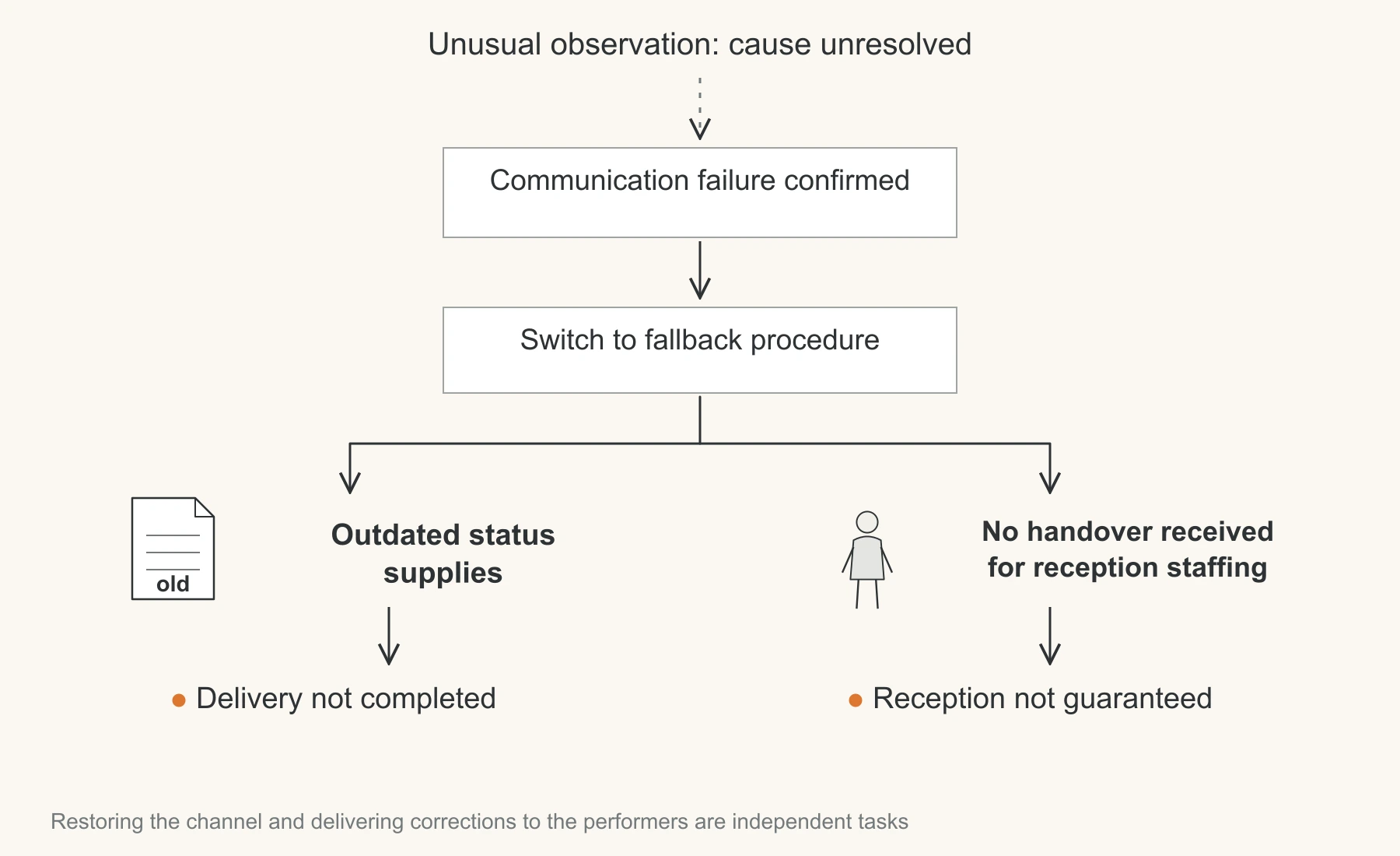
Figure 19. Two delayed failures from one loss of commitments
[S] In the study case, the two late violations involved lost commitments after a communications failure. Channel recovery is completed by delivering patches and verifying the actual services.
Totals include confirmed receipt, actual delivery, superseded listings, unfulfilled residual obligations, and local failure handed over separately. The origin of the unusual object remains open. The next shift must understand what was repeated: harm, message, measurement or assumption.
Without communication, local groups maintain consistency, latest acknowledgments, and common designations. When transmitted orally, the recipient repeats the meaning. An incomplete big picture cannot be corrected by commanding everyone to act the same way; after the exchange is restored, the events that change the assistance now are first analyzed. The check is stopped if there is dangerous reproduction, deterioration of assistance, or loss of connection with the question.
S12 is completed when confirmed connections have received actions and responsibilities, controversial ones remain visible, and repeated manifestation has a revision order. They convey time history with its accuracy, alternative schemes, own measures, actual results and open questions. The long-term state of the environment is carried out according to S10, the new method - according to S11, changing the previous protection - according to S14. The silence of inaccessible observation does not complete the card.
S14 The previous protection no longer gives the same result
Who uses it. The measure evaluation manager, his successor, the system operator, and the independent explanation review team.
Where to start? Record the new deterioration, check the current function and indicate which previous conclusion is no longer confirmed.
When to delegate a task. When you need to change help, fix a technical configuration, or develop a test for new source behavior.
The reason for S14 is a different result under comparable or supposedly comparable conditions, an effect in a new place, a change in reaction after a human action, or an outdated protection passport. This is enough for a revision, but not enough to conclude that the enemy has learned. Purposeful adaptation remains a scenario assumption until it has received its own reasons.
The prepared history should reveal the record “the measure worked”: what function, in what area, under what load and configuration it maintained, how this was confirmed and what remained unknown. The new version does not erase the old one. Then the change in applicability will not mistakenly appear to be a refutation of a valid past result.
Four things are checked: the measure itself, the conditions for its use, the method of observation and the task. Additional people or a new required function can make the previous result insufficient without changing the source. If there is no access to verification, serviceability is not assumed by default.
The group first records the harm or failure without the label “protection has been broken.” Then compares location, people, configuration, load, environment, and registration. Disparate episodes do not prove a change in source, but their present consequences require action. The operator checks the accepted version of the measure and its dependencies, the analyst checks sensors, recordkeeping and message channels. The loss of a single channel confirms neither the success nor the failure of the physical measure.
Explanations include environmental change, other cause, state of the protected system, normal feedback, predetermined behavior, learning, and coincidence. Each version requires discriminating observation. The expressiveness of the intelligent adaptation hypothesis does not give it any advantage.
After verification, the remaining benefit and the lost basis are separated. Restricting optional access may still be useful, although the specific physical effect has not been established. A healthy service may require a different assignment under new load. You can neither cancel the whole complex because of one wrong reason, nor save the whole complex because of one useful part.
The correction is communicated to those who used the previous passport: reception of people, authorization of workers, supplies, communication to the population. Everyone needs to know the changed action. A general request to “be careful” does not solve this problem. For the next version, the result, suitable observation and stopping conditions are preset; a special program is organized according to S11 without repeated exposure to people.
A new version of the passport is issued with the area of confirmed benefit and the event of the next revision. Old copies are marked as replaced, saving them in history. The change in conditions itself is transmitted to the next shift, and not just the last positive or negative assessment.
Four episodes of one measure
Learning conditions [S]. On the site, an unknown effect is accompanied by periodic loss of service. In the first episode, a permitted job change allows people to be routed through another existing site. The required function is retained. Acceptance confirms the continuity of the service under these conditions; physical impact on the source has not been established. The reserve site and its personnel are listed in the original plan, there is no additional reserve.
In the second episode the service is interrupted again. The version about training the source looks tempting. The log, however, shows that additional duties were transferred to the reserve that were not available at the initial acceptance check. First check the changed load. The manager returns priority to the original necessary task and transfers some of the additional work for which there is no confirmed provider. Help becomes available to the extent specified, but work deferred remains a loss. The passport clarifies the boundaries of previous success.
In the third episode, the load was returned to the previous one, but the duration of the violation according to the summary was different. The check reveals a change in the recording channel: the old and new intervals are not directly comparable. The failure itself was confirmed in a different way. Therefore, assistance continues, and the history of time is corrected separately. The absence of a correct comparison does not negate the established impairment.
The fourth input confirms the status of the measure, the load and the suitability of the observation. The nature of the episodes has changed though. Now the previous load alone cannot explain the result. The program includes source change along with environment change and several reasons. The group compares the available archive and independent information, without declaring training just for the sake of a dramatic conclusion.
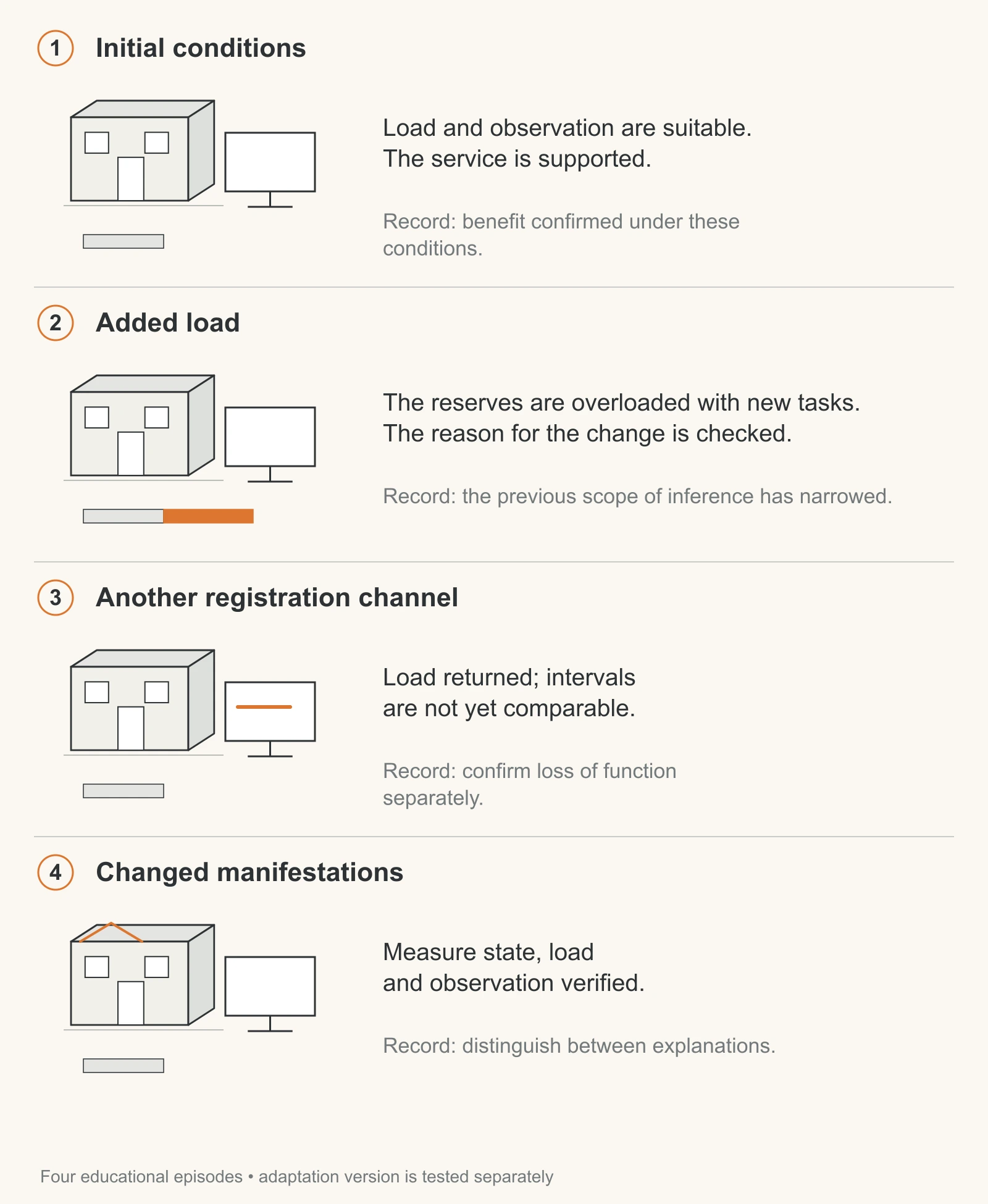
Figure 20. S14. Four episodes and the boundaries of previous success
[S] Four episodes change the applicability of the previous result for different reasons: load, observation and nature of manifestations. Each output receives its own conditions and version of the passport.
The outcome of each episode has its own basis. The original organizational benefits have not disappeared from history; the scope has been narrowed and updated. The headquarters is no longer promising the same overall efficiency. Available assistance is maintained, residual loss of service and deferred tasks are transferred to the next shift. New research questions episode differences. Its answer, which has not yet been obtained, is also transmitted - without replacing it with a confident name of the mechanism.
If a failure is identified, the measures correct the technical or organizational cause in their own way and re-evaluate the result. For a new task, the necessary functions are redefined. If there is an error, the observations narrow the conclusion and restore the check. Sustained behavior change requires an updated program; these branches can be executed simultaneously.
Without communication, the local leader communicates to the available participants the specific impairment and the limit of the current confidence, while maintaining the original grounds. After the exchange is restored, they check where the old passport continues to be valid. The study is stopped if there is dangerous reproduction, loss of control, unintended harm, or an attempt to prove a pre-selected version. A new fact may require the action to be stopped before the dispute over the cause is resolved.
S14 ends with a valid limited passport or a directly stated inability to confirm suitability in the new conditions. Report episode comparisons, configuration changes and observations, remaining explanations, corrected actions, and the next question to be tested. Historical success remains historical; It does not become a lifetime guarantee.
S10 environment after end of visible event
Who uses it. Head of environmental assessment and deputy, resource operators, medical service and authorized body making decisions on the use of the territory.
Where to start? Name the specific feature being protected and the people who need support while its use is limited.
When to delegate a task. When matters require a professional supervision program or must move from a temporary headquarters to a permanent organization with resources.
S10 is required when there are ongoing changes to water, area, habitat, recurrent impacts, or uncertainty that prevents reasonable restoration of use. The origin of the changes may remain unknown. Diagnosis of people and emergency care follow a separate medical procedure; the absence of an identified pathogen does not cover other environmental issues.
EPA's guidance on environmental risk assessment links the problem statement to the selection of natural features and properties to be protected, and the resulting characterization to a management decision. The task involves evaluators, managers and stakeholders. This is a methodological pillar; document 1998 does not set thresholds for the safety of the extraterrestrial environment and is not a new mandatory regulation for all countries. [O; NS3]
After the apparent end, the research question changes. Now we need to find out which functions are restored, what is broken, and on what basis restrictions can be reduced. A program does not continue just because it started once. Each observation must have a result that can change the decision.
The protected need is formulated specifically: water for an established use, a certain habitat, territory for a permitted activity. “Keeping track of everything” doesn’t do the work. With a limited resource, the consequences for people and nature determine the queue; a spectacular rare signal does not automatically benefit from an ongoing service failure.
The manager collects past information, actual impacts, professional practices, users of the area and a plan to support during restrictions. Appoints a representative to communicate with residents, available after the closure of the temporary headquarters. For each relationship between an inferred source, environment, and function, notes whether it is observed, inferred, or unknown. Spatial proximity is not depicted as a proven route of spread.
Check for supply damage, operation change, ground contamination, surveillance break and other suitable reasons. Gaps in the archives are preserved. A comparable area helps only to the extent of a reasonable comparison; the nearest convenient area does not become an ideal control. People, animals and ecosystems are not left unprotected for the sake of a control group. If there is no reliable initial picture, the problem is narrowed down to a question that the data can answer.
The observation program is entrusted to a professional organization: with objectives, suitability of data and communication of the result. The card does not describe self-collection, cultivation, transfer or processing of unknown material. Such work requires separate applicable permits and procedures.
Each limitation is associated with a specific use and reason. At the same time, they provide for people who have lost their usual water, food, care, work or housing. The ban itself has consequences that are included in the overall assessment. A decrease in requests when residents leave does not prove an improvement in the environment, and temporary external supply does not mean the restoration of a local resource.
An area over which an object is no longer visible
Learning conditions [S]. Following the sighting of a large object, three communities continue to report water outages and changes to the coastal environment. The property is no longer registered; some of the residents have left. The services have limited temporary supplies in place and one designated repair team. The environment is monitored by an existing specialized organization. There are no new sources of water or additional groups in the condition.
Plot | What was communicated by the primary response team | What's still missing |
First point | Previous water supply logs and confirmed supply failure | Cause of failure and assessment of further use |
Second point | Reports of changes in the coastal environment | Complete original picture before the event |
Third point | Fewer new requests | Comparability of recordkeeping after the departure of residents |
The versions “the danger left with the object” and “the territory is forever contaminated” go beyond the data. There are also discernible working explanations: a simple supply failure, a discrete change in the environment, the loss of part of the observed population. They may end up working together.
The manager retains temporary support and assigns the established technical task to the repair group. The medical service receives complaints, the environmental service receives specific questions about the state of the coastal environment. Residents are not involved in collecting unknown material to fill the research gap. The cost of the decision is already visible: the repair of one service takes up the existing group, temporary supplies require distribution, limited access disrupts the lives of families.
Late operator recording establishes damage to the water supply after a general power failure. The repair restores technical flow. The suitability of water for a specific application is confirmed by a separately authorized service. Only after this the corresponding service is accepted in the specified volume. The environmental issue of the second point remains open; it does not reset the confirmed repair and does not solve the repair itself.
The following introductory explanation explains part of the decline in requests in the third point: residents moved away and stopped using the previous channel. The group corrects the trend assessment and notes areas and people not represented. The public is informed of incomplete surveillance rather than a proven increase in unknown exposure. Temporary support is not reduced only according to the general falling line of claims.
For one type of activity, reasons have been collected to lift the restriction under certain conditions; for the other, the question of specialist assessment remains. The decision lists what is allowed, the conditions to be saved, the next step, and who is responsible. Families with limited access receive information about support and review procedures; its cost is included in the response. Lost income, long-term displacement and uncertainty do not disappear from the assessment after a carefully crafted ban.
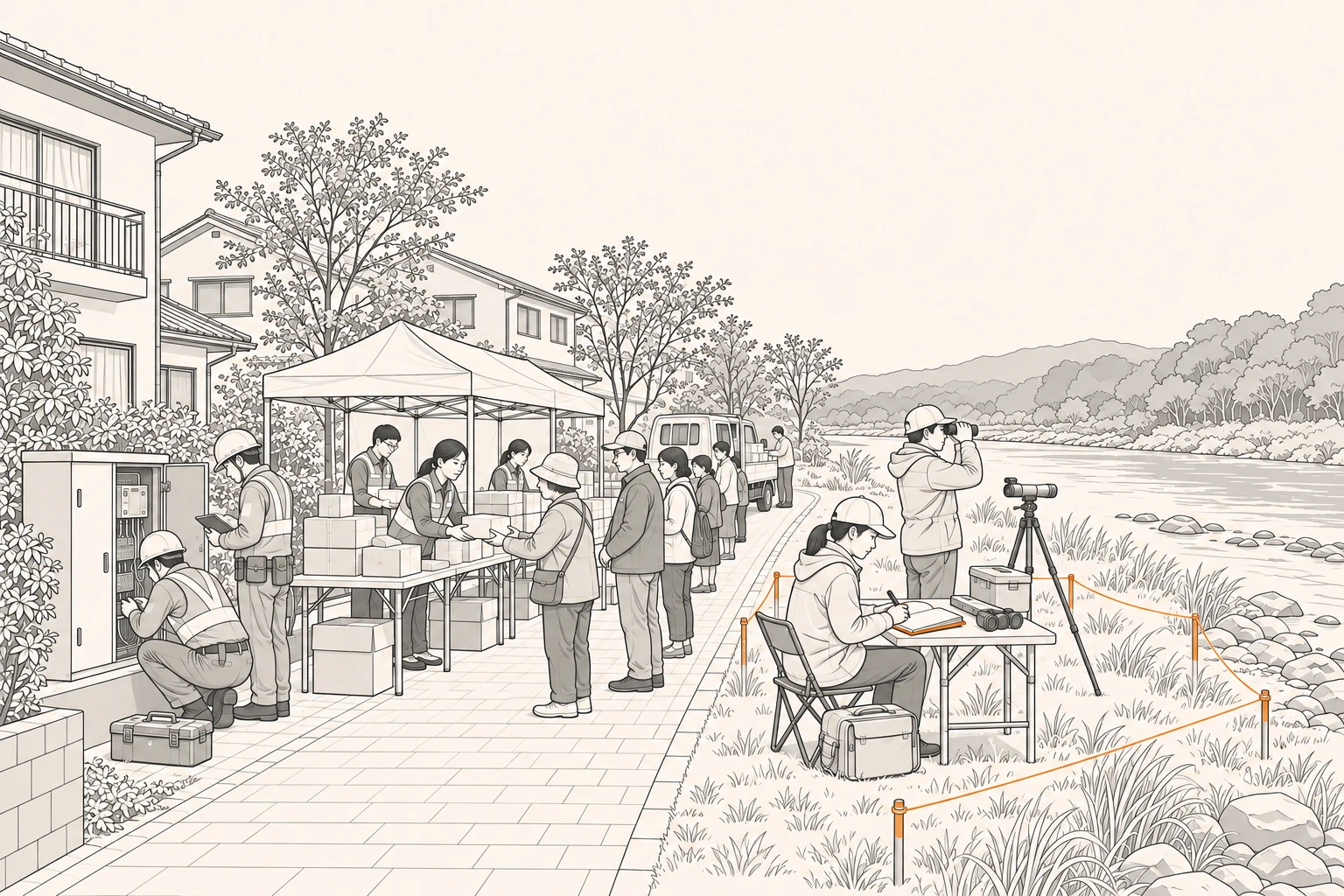
Figure 21. After the object leaves, various unfinished tasks remain
[S] Completion of a visible episode, restoration of a specific service, and assessment of the state of the environment have different reasons and timing. Open tasks retain the owner and the revision condition.
Closing has several independent results: the operation of a specific service, the terms of use, the transfer of residual issues, the availability of data for acceptable independent verification. Visible episode, supply failure and environmental assessment end on different grounds. The origin of the object may remain unknown.
For the gradual restoration of each activity, the reasons, conditions, way to notice the deterioration and action to take when it occurs are indicated. Brief professional work in the territory does not equal permanent residence permit. Return is organized according to C14, termination of a specific impact is formalized according to G12 and F09. The need for one limitation does not justify maintaining all the others indefinitely.
The deadline for organizational review is determined by task. This is not a fictitious time of danger decay. If the information does not change, check the ability of the method to distinguish the desired states; in case of contradictions - comparability of places and methods. Extension of the program requires justification of the benefits and costs to affected people.
Without communications, local services continue to provide available coverage and store observations with time accuracy. The absence of a central summary does not permit unverified use; immediate rescue does not wait for a general assessment of the environment. Risky or fruitless research work is suspended while essential services are maintained.
S10 ends with informed decisions or transfer to an ongoing long-term program. Along with the question, resources, powers, procedures for complaints, publication of amendments and closure of unnecessary observations are transferred. The recipient accepts the function map, grounds and gaps, permitted uses, measures and conditions of revision. The formal name of the person in charge without the ability to work does not complete the transfer.
How to test the scientific procedure itself
Good wording can hide something that doesn't work. Before implementing project cards, the group needs a safe analysis of the entire path: the message has arrived, the version has changed, the provider received an amendment, the person received the necessary service. The exercise tests the procedure, not the ability to guess the presenter's explanation. The actual verification of these cards is not confirmed by the mere presence of such a description.
Indicators that do not replace the result
Metrics refer to the quality of performance rather than assigning an exact probability to an unknown threat. For each, a person is assigned to collect the data, store the numerator and denominator, and explain the comparison conditions. A convenient improvement in the report does not compensate for the deterioration in assistance.
Indicator | What is counted | What conclusion remains unavailable? |
Traceability | Significant conclusions with available base chain / all significant conclusions of the version | The complete chain may still contain an incorrect method |
General dependencies | Chains with considered dependencies / all used chains | What is considered is not necessarily fully known |
Correction decision | Interval from disconfirming information to confirmed revision | This is not the time for danger to end |
Delivery of amendments | Addressees who have confirmed the current version / all mandatory addressees | Delivery does not prove understanding |
Task coverage | Tasks with suitable data / predefined observation tasks | The area and number of devices do not replace the number of issues being resolved |
Verifiability of measures | Measures with result criterion, failure sign and responsible person / all valid measures | Passport does not prove physical efficiency |
Submitting questions | Open questions with person responsible, resource and next step / all open questions | Assignment does not demonstrate actual ability to complete the task |
The significance of a conclusion is determined by its influence on the decision before calculating the result. Otherwise, “increase in traceability” can be achieved by excluding controversial lines. When the set of problems changes, the sets themselves are compared; they cannot be depicted as one unchanging object.
The correction delay is analyzed for detection, recognition of the need for revision, decision making and receipt of the version by the person responsible. With inconsistent clocks, consistency and a limit of accuracy are maintained. Backdating a convenient confirmation does not make the job any faster.
Coverage relates to a specific issue. Several devices in one place do not confirm the neighboring site, and the ability to detect one sign does not provide general control of all mechanisms. The report lists the tasks and open questions that received data.
For protection, the stored function, detection of own failures, side effects and decision transfer are separately checked. Adding this into a single score can only be done with an explanation of the weights and limitations. It is especially unacceptable to hide the loss of a necessary service behind a large number of completed documents.
Acceptance exercise
The facilitator prepares a safe set with several acceptable explanations; another group stores late input. To get started, you can use the S11 kit. Participants must act according to the information from their stage. Knowing the outcome is not considered an advantage.
The first stage verifies the origin. The original recording, derivative, retelling and material without an accessible original source are transmitted. The group maintains the differences and writes acceptable conclusions. Incompleteness does not mean automatic rejection of a message: it may justify urgent assistance or verification without establishing the exact reason.
The second stage reveals a shared dependency. Participants must identify the affected conclusions, correct the map, and notify the people responsible. If they withdraw all protective measures, check whether they have recognized the independent grounds for retaining some of them. If they leave everything unchanged, they must explain why the new information changes nothing.
The third stage makes the previous path unavailable and assigns one resource to another task. The scientific model must now connect to the provision. You cannot continue to use a busy reserve, or invent transport or a receiving point. The group writes down the cost of the changed plan: what is saved, what is delayed, who else needs help.
The fourth stage gives grounds to close one question, leaving another open. Proper completion differentiates decisions. The restriction that has lost its basis is canceled, the remaining issue is transferred to the executor and the next step. Continuing the entire mode indefinitely and removing all protection for one improvement are different mistakes.
Acceptance ends with a correction card: which card field, communication tool, authority or resource needs to be changed. Repeat the affected chain. If, after correction, reasonable action is still not possible without dangerous delay, the procedure requires further work, no matter how well the report is written.
The scientific part ends where the result becomes understandable through the action of another person. He needs a basis, a limit, available help and an event for revision. There may not be a definitive explanation yet. It is enough for the uncertainty to remain visible, and for the knowledge already gained to actually change what happens to people.